
TL;DR:
- The venue determines the lighting, architecture, and layout that impact the quality of event photos. Selecting a space with good natural light and connected areas enhances candid and portrait images. Venue character also influences guest comfort and the visual story conveyed through photographs.
The venue you choose sets the absolute ceiling for what your event photography can achieve. Before your photographer arrives, the building's lighting, architecture, and layout have already determined which shots are possible and which are not. The role of venue in photo ops is not a secondary consideration. It is the foundational decision that shapes every image your guests will remember. Originsranch has seen this truth play out at hundreds of events, and the difference between a venue chosen for photos and one chosen only for aesthetics is visible in every album.
What venue features most influence successful photo ops?
Venue selection for photo shoots starts with understanding which physical features create or destroy photographic opportunity. Experts recommend evaluating at least 10 key venue criteria, including lighting, architecture, layout, amenities, accessibility, and flow, because each one directly affects photography outcomes. Skipping this evaluation is one of the most common and costly mistakes event planners make.
Lighting quality
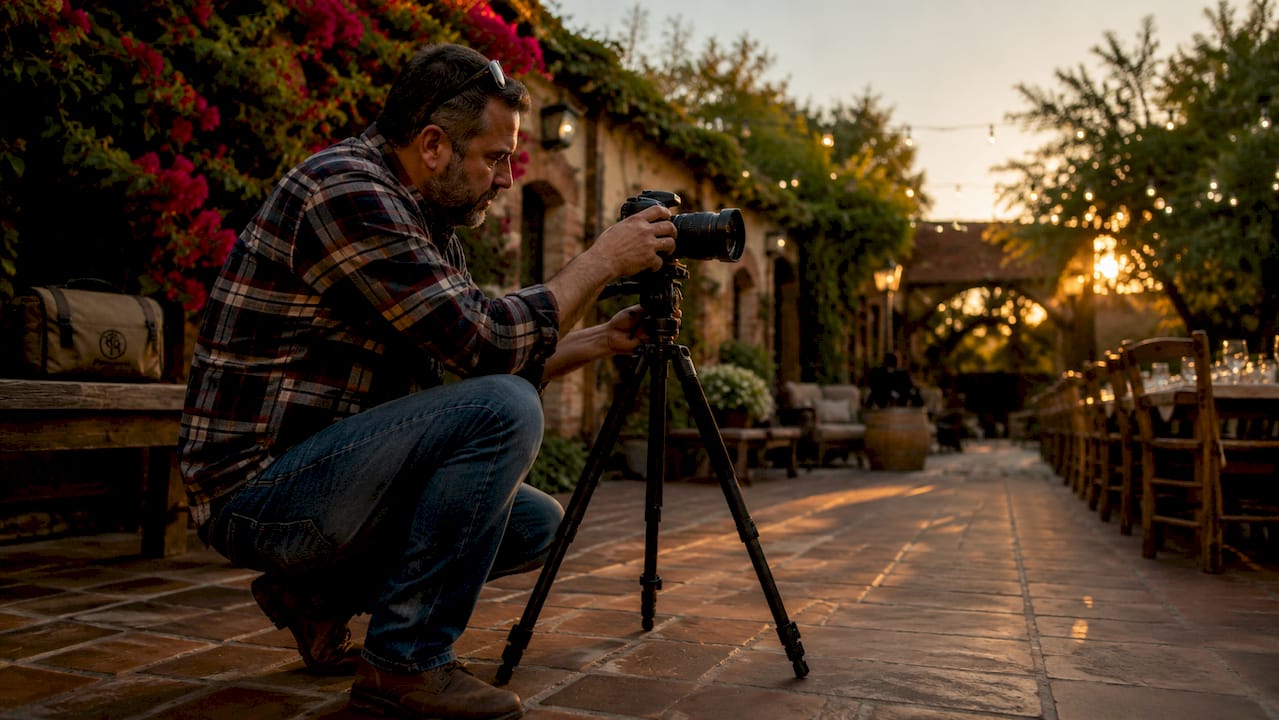
The size of the light source relative to the subject is the single most important lighting variable in photography. Large windows act as big, soft light sources that wrap around faces and eliminate harsh shadows. Overhead downlights do the opposite. They cast unflattering shadows under eyes and chins, and no amount of post-production editing fully corrects them.
Architectural features
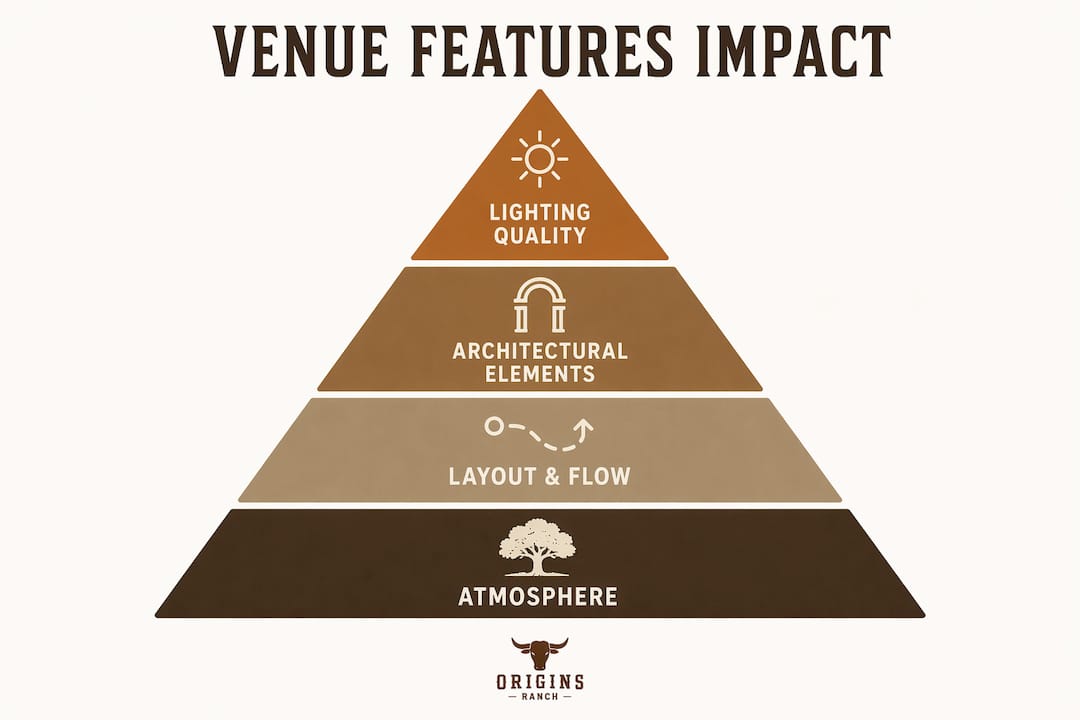
Architectural lines, natural frames, columns, and textured walls give photographers tools to build a visual story. A bare white room offers one composition. A barn with exposed beams, a stone archway, or a wraparound porch offers dozens. Architectural details add depth, scale, and narrative weight to images that would otherwise read as flat.
Layout and flow
A venue's floor plan determines how guests move and gather. Tight, well-connected spaces keep guests close and create natural clusters that photographers can capture. Sprawling, disconnected layouts scatter guests and reduce the frequency of genuine, unposed moments.
Atmosphere and ambiance
Atmosphere shapes the emotional tone of every image. A candlelit barn feels warm and intimate. A glass-walled modern space feels bright and airy. Neither is wrong, but the atmosphere must match the story you want your photos to tell.
Pro Tip: Walk through the venue at the same time of day your event will be held. The light you see during a midday tour is not the light your photographer will work with at a 6:00 PM ceremony.
How do venue layouts and flow affect candid and portrait photography?
Venue layout impacts guest flow in ways that directly shape the quality and quantity of candid photographs. All-in-one venues, where ceremony, cocktail hour, and reception happen in connected spaces, typically produce more relaxed and documentary-style images. Guests settle in, relax, and interact naturally when they are not constantly moving between distant locations.
Disjointed or overly spacious venues scatter guests across multiple areas. That dispersion means your photographer spends time traveling between zones rather than capturing moments. The result is gaps in your photo timeline and fewer images of the genuine interactions that make an album feel alive.
Pro Tip: Ask your venue coordinator to walk you through the guest flow from arrival to reception. Identify the three or four spots where guests will naturally gather. Those are your best candid photography zones, and your photographer needs to know them in advance.
Key photographic zones to identify at any venue include:
- The entrance or arrival area: First impressions and genuine reactions happen here.
- The cocktail hour space: Guests are relaxed, drinks are flowing, and conversations are natural.
- The ceremony backdrop: This is the most photographed single moment of any event.
- The reception dance floor perimeter: Emotion peaks here, and the light is often the most dramatic.
- Outdoor transition spaces: Covered patios, garden paths, and barn doors create natural portrait settings.
Understanding these zones before you book lets you evaluate whether a venue actually supports the photo coverage you want. A venue that lacks a defined cocktail space or has no outdoor transition area is already limiting your options before the event begins.
Why does natural light matter so much for venue photography?
Natural light produces soft, flattering images because it is diffuse and comes from a large source. Mixed lighting environments introduce complex color casts when daylight mixes with tungsten bulbs or fluorescent fixtures. These casts are difficult to correct in post-production and often result in skin tones that look unnatural or inconsistent across a set of photos.
The time of day and the venue's orientation both matter. A west-facing ceremony space catches golden hour light in the late afternoon. That same space at noon produces harsh, overhead sun that creates deep shadows on faces. Arriving early at iconic venues during a 60–90 minute window before crowds arrive yields crowd-free, high-quality images. The same principle applies to any popular event venue.
Here is a practical framework for evaluating natural light at any venue:
- Visit at event time. Schedule your venue tour at the exact hour your ceremony or reception will begin.
- Check window placement. North-facing windows provide consistent, soft light throughout the day. South-facing windows produce stronger, more directional light.
- Identify backup spaces. Every outdoor venue needs a covered or indoor alternative for overcast or rainy conditions.
- Ask about artificial lighting. Find out what fixtures are installed and whether they are dimmable. Fixed, non-dimmable overhead lighting is a red flag.
- Photograph the space yourself. Take a few photos on your phone during the tour. If they look flat or orange-tinted, your photographer will face the same challenge.
Artificial lighting solutions like uplighting and string lights can supplement natural light beautifully. They work best when used to add warmth and depth rather than to replace natural light entirely. A venue that relies solely on artificial lighting requires a photographer with advanced technical skills and more time in post-production.
How does venue character shape the visual story of your event?
Venue architecture acts as a narrative tool, not just a backdrop. The character of a space tells guests and future viewers what kind of event this was, what emotions were present, and what values the hosts wanted to express. A historic ballroom communicates elegance and tradition. A modern minimalist space communicates clarity and sophistication. A barn venue communicates warmth, authenticity, and a connection to something real.
Comfort and familiarity at the venue also influence how guests behave in front of the camera. Feeling comfortable in a venue space helps guests settle and express genuine emotions. Stiff, unfamiliar environments produce stiff, guarded expressions. The best photos emerge when your venue matches your style and comfort level, not just when you select the "right" category of venue.
Venues that function as visual co-hosts also serve a marketing purpose long after the event ends. Well-photographed architecture promotes event prestige and engagement when shared on social media or in planning publications. The venue's character becomes part of your event's identity.
A venue with genuine character gives photographers something to work with. Exposed wood, natural textures, open sky, and architectural scale transform a photo from a record of what happened into a story worth telling again and again.
Key ways venue character shapes your visual story:
- Texture and material: Wood, stone, brick, and fabric each photograph differently and add tactile depth to images.
- Scale and proportion: High ceilings and open spaces create dramatic wide shots. Intimate spaces create close, emotional portraits.
- Color palette: The venue's dominant colors set the tonal mood of your entire photo collection.
- Unique details: A hand-painted mural, a vintage chandelier, or a field of wildflowers gives photographers a signature element that makes your album unmistakably yours.
For event planners working with decor and vendor coordination, aligning the venue's existing character with your decor choices amplifies both. Fighting the venue's personality with clashing decor creates visual noise in photos.
Key Takeaways
The venue is the single most powerful variable in event photography because it sets the physical and aesthetic conditions that every image depends on.
| Point | Details |
|---|---|
| Venue sets the photo ceiling | No camera or editing can fix poor lighting or a bad layout after the event. |
| Natural light is the top priority | Large windows and correct venue orientation produce soft, flattering images without heavy correction. |
| Layout drives candid quality | All-in-one venues keep guests together and produce more natural, documentary-style photos. |
| Venue character tells the story | Architecture, texture, and scale give photographers tools to build a visual narrative, not just snapshots. |
| Visit at event time | Tour the venue at the exact hour of your event to see the actual lighting conditions your photographer will face. |
What we have learned about venue and photography after years of events
Most couples and event planners walk into a venue tour thinking about capacity, catering, and cost. Photography is usually an afterthought. That is the wrong order of priorities, and we have seen it cost people dearly.
We have watched photographers work miracles in difficult spaces. But we have also seen beautiful, heartfelt moments lost because the lighting was impossible or the layout scattered guests so widely that the photographer could not be in two places at once. No amount of talent fixes a venue that works against you.
The misconception we hear most often is that a beautiful venue automatically means beautiful photos. It does not. A venue can be visually stunning in person and still produce flat, shadow-heavy images if the lighting is poor or the layout is chaotic. Beauty in person and beauty on camera are two different things.
What actually works is treating venue selection as a photography decision first and a design decision second. Bring your photographer to the venue tour, or at minimum, share photos of the space with them before you sign a contract. Ask them directly: "Can you work with this light?" Their answer will tell you more than any venue brochure.
At Originsranch, we designed our venue layout and flow with photography in mind from the start. The barn's natural wood, the open sky, and the connected event spaces were not accidents. They were choices made because we know what makes a wedding album extraordinary. We want every couple who celebrates here to open their photos years later and feel the magic all over again.
— Origins
Originsranch: a venue built for beautiful photo ops
Originsranch in Plant City, FL was built on the grounds of a former World Champion Horse Ranch, and that history shows in every beam and board. The barn's warm wood tones, open-sky ceremony spaces, and connected event areas create the exact conditions that photographers love: soft natural light, strong architectural character, and a layout that keeps guests close and moments within reach.
Our event photo gallery shows what is possible when a venue is designed with photography in mind. From golden hour portraits against the barn exterior to candid reception moments under string lights, every image reflects a space that works with your photographer, not against them. We are also proud to support our military community through Weddings For Warriors, helping veterans and active duty service members celebrate their love in a venue worthy of their story. Reach out to us and let's talk about making your event unforgettable.
FAQ
What is the most important venue feature for event photography?
Lighting is the single most critical venue feature for photography. Large windows and natural light sources produce soft, flattering images that are difficult to replicate with artificial lighting alone.
How does venue layout affect photo quality?
All-in-one venues that keep guests in connected spaces produce more candid, natural photos. Disjointed layouts scatter guests and reduce the photographer's ability to capture genuine moments.
Can a photographer fix bad venue lighting in editing?
Mixed lighting introduces color casts that are difficult to fully correct in post-production. Choosing a venue with good natural light prevents the problem rather than requiring a fix.
When should I involve my photographer in venue selection?
Bring your photographer to the venue tour or share detailed photos of the space before signing a contract. Their input on lighting and layout can save you from a venue that limits your photo outcomes.
Does venue character really affect how photos look?
Yes. Venue comfort and character influence guest behavior and emotional expression, which directly shapes the authenticity and mood of every image in your album.