

Lovebug season can overlap with Tampa wedding dates, and yes, it is worth planning around. Florida's two main emergence windows typically run in spring and late summer, and while lovebugs are harmless, they can leave a mess on cars and crash a photo session. If your date falls inside one of those windows, the most effective fix is not a spray or a scent trick. It is airflow, smart scheduling, and a venue team that already knows how to manage it, something a knowledgeable venue builds into its planning process for couples marrying in the area.
TL;DR:
- Lovebug season in Florida typically occurs in spring and late summer, lasting several weeks each, with activity influenced by temperature and soil moisture.
- Scheduling outdoor events early in the morning or late in the evening reduces exposure because lovebug activity peaks during warmer, sunnier parts of the day.
- Using airflow from fans and choosing shaded, breezy locations significantly decreases lovebug contact with guests, photos, and vehicles.
- Chemical sprays, citrus oils, and fogging are ineffective; the best prevention involves planning timing, airflow, and staging rather than relying on repellents.
- An indoor or fully air-conditioned venue offers a reliable fallback, especially during peak season, to avoid disruptions caused by lovebug activity.
Table of Contents
- When does lovebug season actually hit Florida?
- What lovebugs do and why they matter for your wedding day
- How to choose your timing and protect photos and transportation
- Your venue-day checklist for fans, staging, and guest comfort
- What not to do when lovebugs show up
- Your Plant City wedding run sheet, adapted from venue experience
- Keeping your catering safe and appealing during lovebug season
- Natural ways to keep lovebugs away from people and pets
- Choosing florals and plants that won't invite more lovebugs
- When an indoor backup makes the most sense
- Local tips for handling lovebug season around Tampa
- Why we don't see lovebugs as a dealbreaker for a Tampa wedding
- Why Origins Ranch makes lovebug season easier to plan around
- Sources
- FAQ
When does lovebug season actually hit Florida?
Florida sees two predictable emergences each year, and knowing the pattern helps you choose a date with your eyes open. According to UF/IFAS, each major wave generally lasts several weeks, with the spring cycle usually occurring in spring months and the fall cycle in late summer to early fall. Adults can show up in smaller numbers outside those windows too, so a clear calendar in June or October is not a guarantee.
University of Florida reporting from 2026 confirms the pattern holds steady year to year, with timing shifting slightly based on temperature and soil moisture. Warmer springs can nudge the emergence earlier.
Within a swarm day, activity is not constant. A few patterns matter for your run sheet:
- Lovebugs tend to be more active during the warmer parts of the day, so scheduling ceremonies in the morning or evening can reduce exposure.
- Activity increases at higher afternoon temperatures, which are common in Tampa during peak windows.
- Shaded, breezy spots on the property see noticeably less swarm activity than sunny, still corners near pavement or parking.
What lovebugs do and why they matter for your wedding day
Lovebugs are a nuisance, not a danger. UF/IFAS confirms they do not bite, sting, or carry disease, so there is no health concern for guests or the wedding party. The real issues are cosmetic and logistical, and they show up in three places:
- Vehicle grilles, hoods, and windshields collect lovebug residue quickly, especially on highways and in hot, sun-exposed lots.
- A swarm drifting through the frame during portraits or the ceremony can show up in final photos.
- Lovebugs are weak fliers, which is exactly why a steady breeze from a fan or open airflow keeps them from landing on guests, cake tables, or the aisle runner.
That last point is the one worth remembering. A weak flier cannot fight a consistent cross-breeze, which is the foundation of nearly every practical mitigation that follows.
How to choose your timing and protect photos and transportation
Your calendar and your clock matter more than any product you could buy. A few scheduling choices do most of the work:
- If your date is flexible, aim outside the April to May and August to September windows, or at least outside the multi-week peak inside them.
- Book portraits and the ceremony for early morning or golden hour rather than the midday stretch, since activity drops sharply once temperatures cool and light softens.
- Ask your photographer to schedule the formal shots away from sunlit, paved areas where swarms concentrate, favoring shaded lawns or covered porches instead.
- Route limousines, shuttles, and the wedding party's cars away from highway stretches during peak afternoon hours, when exhaust and heat draw the heaviest activity.
- Have vehicles washed and waxed a day or two ahead, since a waxed finish wipes clean far more easily than bare paint.
None of this requires canceling an outdoor celebration. It just means treating lovebug activity the way you would treat afternoon heat or rain: a known variable you plan around, not a surprise you react to. Our guide to outdoor weddings in a Florida rustic barn setting walks through more of this seasonal planning.
Your venue-day checklist for fans, staging, and guest comfort
A well-run wedding day during peak season comes down to airflow and a few staging choices made in advance. Here is what actually makes a difference:
- Place multiple lower-speed fans around the ceremony and reception perimeter to create a steady cross-breeze, rather than one strong fan blasting a single direction.
- Use a mix of ceiling, box, and pedestal fans depending on the space, keeping airflow moving across seating areas and the aisle rather than just the stage.
- Choose shaded ceremony sites and covered seating where possible, since sun-heavy pavement and open lawn draw heavier activity.
- Lean on darker backdrops and decor where you can, since lovebugs are drawn more to light, heat-reflecting surfaces.
- Set up a guest comfort station with wipes and microfiber towels near photo areas, so anyone who needs a quick cleanup is not stuck searching for a napkin.
- Keep beverage stations covered, and post small, friendly signage near fan zones so guests understand the setup rather than wondering why fans are running on a mild evening.
- Offer a waxed parking lane for the wedding party's vehicles and a rinse or wipe zone near the photo area for last-minute touch-ups.
Pro Tip: Assign one staff member as the "car liaison" for the day, someone whose only job is tracking vehicle cleanliness and directing drivers to the designated parking lane.
Our transportation logistics checklist covers more detail on routing and parking setup if your wedding involves multiple vehicles or a shuttle service.
What not to do when lovebugs show up
A few common reactions do more harm than good. Chemical sprays top that list. UF/IFAS extension guidance is clear that pesticides are not effective against lovebugs and are not recommended as a control strategy, since products built for mosquitoes or other flying pests simply do not work on them.
A few other mistakes to skip:
- Do not rely on citrus oils, candles, or other scent-based "repellents." No scent has been shown to reliably keep lovebugs away, so building a plan around one sets you up to be disappointed.
- Do not fog the property the morning of the event. Heavy spraying near a ceremony site risks guest comfort and health, and new lovebugs will simply fly in from elsewhere since fogging does not address the source.
- Do not wait until the day of to make a plan. Airflow and staging decisions work far better when set up the day before, not scrambled together during cocktail hour.
Your Plant City wedding run sheet, adapted from venue experience
A little advance work covers most of what a peak-season wedding day throws at you. Build your plan in three stages:
- Before the event: Walk the site to flag sun-heavy zones, confirm fan rental counts, and send guests a short, friendly note mentioning Florida's seasonal insects so nobody is caught off guard.
- Day of: Assign clear roles, a fan operator who checks placement through the afternoon, a car liaison for the parking lane, and a small photo tidy crew with microfiber cloths ready near the portrait area.
- Backup plan: Keep an air-conditioned indoor space on standby for the ceremony or reception if activity spikes past what fans can manage.
Pro Tip: Build your timeline backward from golden hour, since the last ninety minutes before sunset are consistently the calmest window of a peak-season day.
Keeping your catering safe and appealing during lovebug season
Outdoor catering during a peak lovebug window needs a few adjustments beyond the usual Florida heat precautions. Covered serving stations matter more than usual, since open trays and buffet lines sitting in sun-heavy, still air are exactly where lovebugs tend to land. Ask your caterer to use chafing dish covers, mesh food tents, or simply position serving tables under a tent or porch rather than open lawn.

Timing helps here too. A buffet or plated service that runs during the cooler early evening window sees far less activity than one held at 2 p.m. in August. If your reception stretches into the hottest part of the afternoon, consider staggering service so food is uncovered for the shortest time possible, refilled from a covered staging area rather than left exposed the whole event.
Bar service deserves the same thought. Covered beverage stations keep glasses and garnishes cleaner, and a quick-change policy for any drink that sits too long avoids an awkward moment for guests. None of this requires a different caterer or a different menu, just a conversation ahead of time about where stations sit relative to shade and airflow, and how quickly uncovered food gets refreshed.
Natural ways to keep lovebugs away from people and pets
Since no scent has been proven to repel lovebugs, the safest and most reliable approach skips repellents altogether in favor of physical barriers. Fans remain the strongest tool available, since lovebugs are weak fliers and cannot hold a position against a steady breeze. Beyond airflow, a few non-chemical options are worth considering for guest comfort.
Mesh tent netting around a dining or lounge area creates a physical barrier without any spray or scent, which matters if children or pets will be present. Citronella candles and torches are popular at outdoor events, but treat them as ambiance rather than a real deterrent, since there is no reliable evidence they keep lovebugs away specifically.

For guests who want something for their skin after a long day outdoors, a chemical-free option like Just Bite Me's bug bite relief is worth having on hand at a comfort station, since it is gentle enough for sensitive skin and does not rely on any chemical repellent that could irritate guests or pets nearby.
Choosing florals and plants that won't invite more lovebugs
Lovebugs are not drawn to flowers the way mosquitoes are drawn to standing water, but a few choices still make a difference in how your decor holds up through a peak-season event. Lighter, bright white arrangements tend to show any contact more visibly than deeper-toned blooms, simply because residue stands out more against pale petals. Leaning toward burgundy, deep green, eucalyptus, or rich jewel tones keeps your arrangements looking fresh in photos even if a few insects pass through the area.
Avoid heavily fragrant, overripe, or fermenting florals and fruit displays, since decaying plant matter draws a range of insects, lovebugs included, more than fresh-cut arrangements do. Keep floral displays elevated off open ground where possible, and swap out any arrangement that starts wilting early in a hot reception rather than letting it sit through the night.
If you are planning your color palette with this in mind, our gallery of venue setups shows a range of staging and backdrop choices that hold up well across seasons.
When an indoor backup makes the most sense
Some couples prefer to sidestep the question entirely by building their day around an indoor space from the start. If your date falls inside a peak window and you would rather not manage fans, staging, and timing around swarm activity, an air-conditioned indoor venue removes the variable altogether.
This does not mean giving up a Florida wedding's character. A barn-style venue with full climate control and a view out to the property can offer the charm of a rural setting with the comfort of a controlled indoor space for the ceremony, reception, or both. For couples who want flexibility, keeping an indoor option on standby, even if the plan is an outdoor ceremony, gives you a fallback if activity spikes beyond what fans and shade can handle.
Local tips for handling lovebug season around Tampa
Tampa-area planners have learned a few things that are specific to the region's heat and traffic patterns. Local homeowner guides for Tampa Bay recommend waxing vehicles well ahead of peak weeks and shifting outdoor chores like mowing away from midday, advice that applies just as well to a wedding day as it does to yard work.
Highway corridors tend to see heavier swarm concentrations than quieter inland roads, so a shuttle route planned through Plant City's back roads rather than the interstate can mean cleaner cars and calmer guests on arrival. A dedicated photo tidy team stocked with microfiber cloths and a spray bottle of plain water keeps portrait sessions moving without an awkward pause to deal with a smudge on a dress hem or a groomsman's jacket.
Our Tampa wedding photography location guide covers more on choosing shaded, photogenic spots that also happen to see less swarm activity, useful whether your ceremony is outdoors or you are stepping out for portraits between an indoor ceremony and reception.
Why we don't see lovebugs as a dealbreaker for a Tampa wedding
After years of hosting weddings and events on a working Plant City property, we have learned that Florida's seasonal quirks are a planning detail, not an obstacle. A committed venue team builds fan placement and timing into the run sheet for every peak-season booking. If your date falls inside a lovebug window, reach out and we will walk you through how we handle it.
— Origins
Why Origins Ranch makes lovebug season easier to plan around
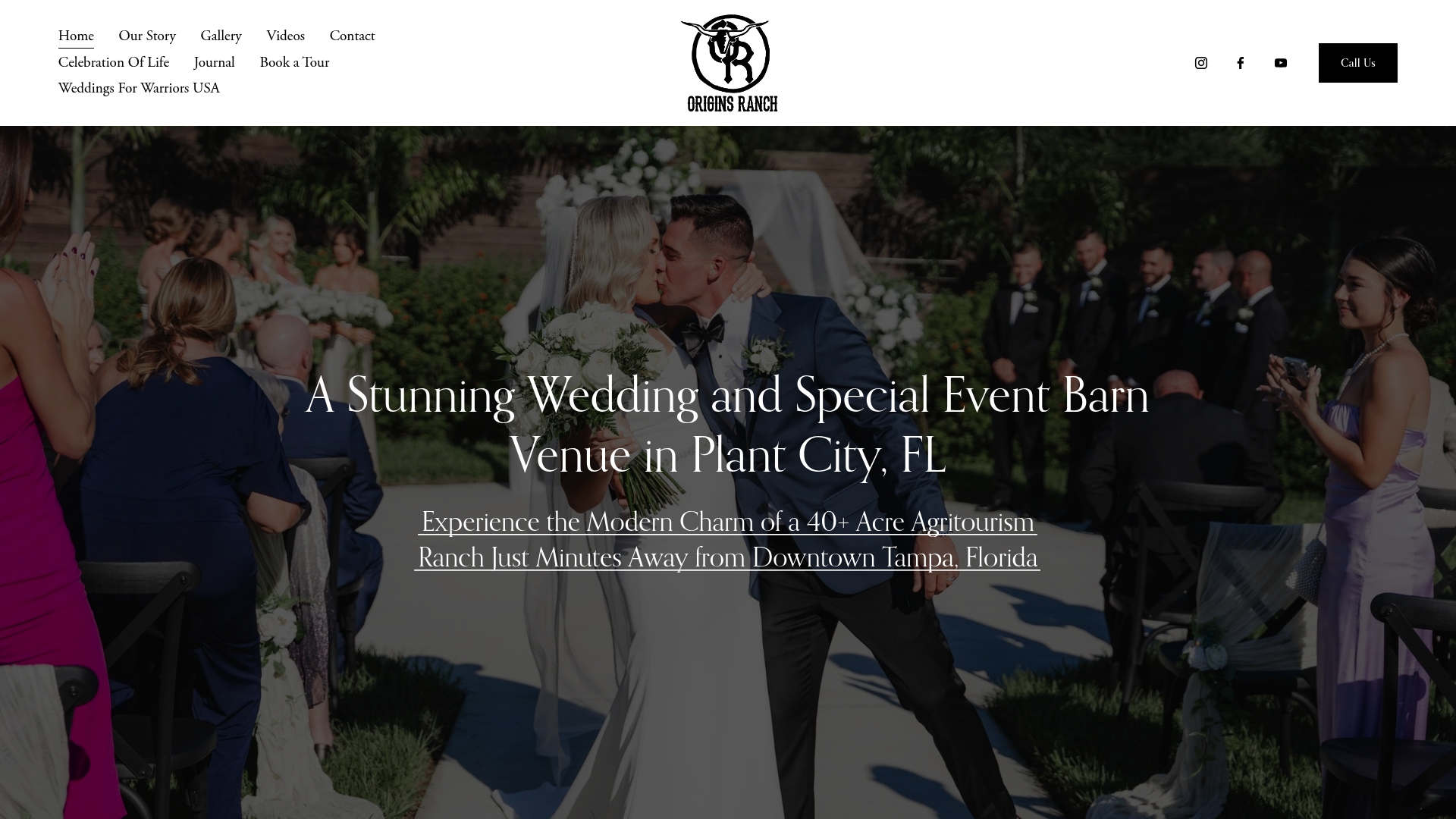
A fully air-conditioned barn means a peak-season afternoon never has to threaten your ceremony or reception. Couples booking a date in peak months get comfort and staging support comparable to other times.
A few reasons our setup works well for a seasonal date:
- A fully air-conditioned barn provides a comfortable backup space without losing the venue's ranch setting.
- On-site lodging can help reduce travel concerns during peak swarm hours.
- Staff typically handle fan placement and cleanup stations as part of standard event-day processes, easing planning efforts.
If you are planning a wedding or special event during lovebug season, check availability or request our seasonal run sheet at Origins Ranch.
Sources
This guide draws on UF/IFAS publication IN694, UF/IFAS publication IN204, and 2026 University of Florida reporting on seasonal lovebug activity.
- ENY-840/IN694: Living with Lovebugs (UF/IFAS)
- Lovebugs are back! But experts say the familiar Florida pest is a harmless nuisance (University of Florida News, 2026)
- Sustainability - Love Bugs (UF/IFAS extension page)
FAQ
What month is lovebug season in Florida?
Florida's lovebug activity peaks twice a year, once in April and May and again in August and September, according to UF/IFAS. Each peak window lasts about four weeks, though smaller numbers of adults can appear in other months too.
Will lovebugs be present in Florida in 2026?
Yes. University of Florida reporting from 2026 confirms lovebugs remain a predictable annual nuisance, with activity tied to seasonal temperature and soil-moisture patterns rather than a one-time event.
What gets rid of lovebugs in Florida?
Nothing eliminates them outright, and UF/IFAS extension guidance specifically advises against chemical sprays, since they are not effective against lovebugs. The most reliable approach for an outdoor event is steady airflow from fans, since lovebugs are weak fliers and struggle against a consistent breeze.
What smell do lovebugs hate?
There is no scent proven to reliably repel lovebugs, so relying on citronella, citrus oils, or similar products as a primary defense is not a dependable strategy. Physical measures like fans and shaded staging do far more to keep them away from guests and photos.