
TL;DR:
- A Quinceañera is a traditional Latin American celebration marking a girl's 15th birthday and her transition into womanhood. It includes a Catholic Mass, symbolic rituals like the shoe change and crowning, and a festive reception with family and friends. Planning should start 12 to 18 months in advance, with careful attention to court size, dress, venue, and meaningful traditions.
A Quinceañera is defined as a traditional Latin American celebration marking a girl's 15th birthday and her formal passage into womanhood, combining a Catholic thanksgiving Mass with a festive reception. The celebration begins with a Mass accompanied by family, godparents, and a court of honor, followed by symbolic rituals and a party filled with food, music, and dancing. Rooted in a blend of indigenous coming-of-age customs and Spanish Catholic traditions, this milestone is one of the most meaningful events a family can organize. Getting it right takes planning, cultural understanding, and the right team around you.
What are the key traditional elements of a Quinceañera ceremony?
The Quinceañera ceremony is built around a series of deeply symbolic moments that mark the transition from girlhood to womanhood. Each ritual carries specific meaning, and together they create an emotional arc that moves from spiritual gratitude to joyful celebration.
The thanksgiving Mass opens the event, with the quinceañera entering the church accompanied by her parents, godparents, and court of honor. Integrating the Mass with family and godparents first grounds the event's spiritual significance before the party begins. This sequence is not just tradition. It sets the emotional tone for everything that follows.
The symbolic rituals that follow the Mass are the heart of the ceremony:
- Cambio de zapatillas: The father changes his daughter's shoes from flats to heels, representing her step into womanhood.
- La coronación: The mother places a tiara or crown on her daughter's head, symbolizing her new status as a young woman.
- La última muñeca: The quinceañera receives a final doll, signifying farewell to childhood and the toys of her younger years.
- The waltz: The father-daughter waltz is choreographed and often rehearsed for weeks before the event, making it one of the most emotionally charged moments of the night.
The court of honor, made up of damas (young women) and chambelanes (young men), surrounds the quinceañera throughout both the ceremony and reception. Their role is both symbolic and practical. They represent the community of peers who have supported her, and their coordinated dances are a visual highlight of the reception.
Pro Tip: Build the event schedule around the Mass and symbolic moments first, then fill in the reception timeline. This creates a natural emotional flow and prevents the party from feeling disconnected from the ceremony.
How far in advance should you start planning a Quinceañera?
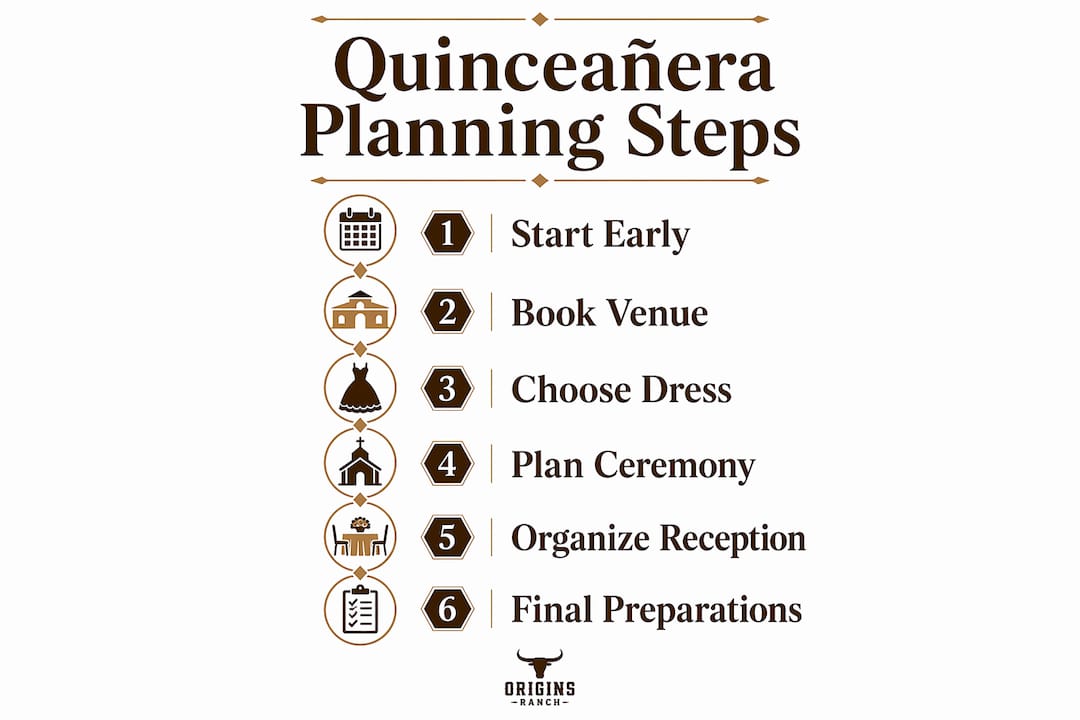
Planning a Quinceañera ideally starts 12 to 18 months in advance to secure venues, vendors, and the dress without stress. That timeline may feel long, but popular venues and photographers book out fast, especially for spring and fall dates. Starting early also lets you spread costs over time rather than absorbing them all at once.
Here is a practical timeline to follow:
- 12 to 18 months out: Book the church or ceremony space and the reception venue. These are the hardest items to reschedule and the most likely to be unavailable if you wait.
- 12 months out: Begin dress shopping. The quinceañera dress should be ordered 6 to 9 months in advance to allow time for custom sizing, alterations, and shipping.
- 9 to 10 months out: Hire your photographer, videographer, DJ or band, and caterer. Confirm your court of honor and begin choreography planning.
- 6 months out: Send save-the-dates. Finalize the theme, colors, and décor direction. Begin coordinating with padrinos on their sponsorship commitments.
- 3 to 4 months out: Mail formal invitations. Schedule dress fittings. Confirm all vendor contracts and deposits.
- 4 to 6 weeks out: Begin rehearsals for the waltz and court dances. Confirm final guest count with the caterer.
- 2 to 3 weeks out: Final dress fitting and steaming. Confirm arrival times with all vendors. Prepare the day-of timeline.
Padrinos often sponsor big-ticket items like the dress, venue, or music, which meaningfully reduces the financial pressure on the immediate family. Assigning padrino responsibilities early, ideally at the 12-month mark, gives sponsors time to budget and prepare.
Pro Tip: Create a shared planning document or spreadsheet that includes every vendor, their contact information, payment schedule, and deadline. Reviewing it monthly keeps nothing from slipping through the cracks.
What are modern options for the Quinceañera court size?
The traditional court of honor has 14 pairs of damas and chambelanes, with each pair symbolizing one of the 14 years leading up to the quinceañera's 15th birthday. That classic structure is still used, but modern courts have shifted significantly toward smaller, more manageable groups.
| Court style | Size | Best for |
|---|---|---|
| Traditional | 14 damas + 14 chambelanes | Families honoring full cultural tradition |
| Modern standard | 5 to 10 pairs | Easier rehearsal scheduling and tighter budgets |
| All-damas court | Varies | When chambelanes are unavailable or not preferred |
| Solo chambelán de honor | 1 escort + damas | Intimate feel with a single male escort |
| No court | Just the quinceañera | Smaller, more personal celebrations |
Courts of 7 to 10 pairs are common today for practical reasons: fewer people means fewer rehearsals, lower costume costs, and simpler choreography. This is not a compromise on tradition. It is a recognition that the court's meaning comes from the closeness of the relationships, not the headcount.
A few things to consider when deciding on court size:
- Rehearsal availability matters more than most families expect. A court of 14 pairs requires multiple full-group rehearsals, which is hard to coordinate with teenagers' school and activity schedules.
- Budget for attire, shoes, and hair for each court member adds up quickly. A smaller court can free up funds for better food, photography, or décor.
- Court size directly affects the choreography complexity and the amount of floor space needed at the venue.
Choosing court size based on realistic rehearsal availability produces a more polished performance and a more meaningful experience for everyone involved.
What should you know about selecting a Quinceañera dress?
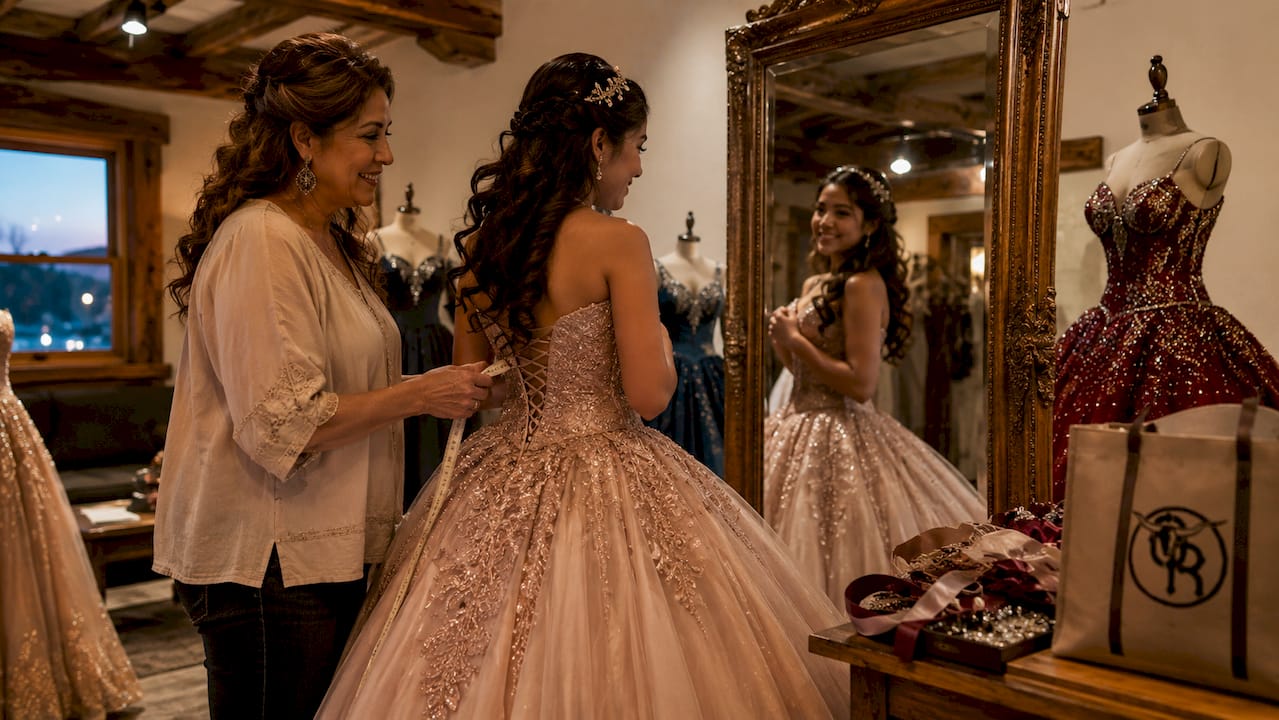
The dress is the visual centerpiece of the celebration, and treating the purchase as a production project with set milestones reduces stress and last-minute problems. Most families underestimate how long the process takes from first appointment to final fitting.
Key guidance for the dress selection process:
- Start shopping 9 to 12 months out. This gives you time to visit multiple boutiques, compare silhouettes, and place a custom order without rushing.
- Order the dress 6 to 9 months before the event. Custom and semi-custom gowns require production time, and shipping delays are common.
- Schedule at least three fittings. The first confirms the initial fit, the second addresses major alterations, and the third is a final check two to three weeks before the event.
- Steam or press the dress one to two days before the celebration, not the morning of. Last-minute steaming adds unnecessary stress.
- Match the silhouette to the venue. A full ballgown is stunning in a grand ballroom or a barn with high ceilings, but it can feel overwhelming in a smaller space. A-line and fit-and-flare silhouettes work across more venue types.
Accessories deserve the same planning attention as the dress itself. The tiara used in la coronación, the heels used in the cambio de zapatillas, and the jewelry should all be selected and confirmed well before the event. Trying to source accessories in the final weeks creates unnecessary pressure.
Pro Tip: Bring the quinceañera's mother or a trusted family member to every fitting, not just the first one. Alterations can change the overall look significantly, and having a consistent second opinion prevents surprises on the day.
How to choose the right venue for your Quinceañera celebration
The venue shapes everything: the atmosphere, the logistics, the photography, and the guest experience. Venue planning must consider the flow between the religious ceremony space and the reception to maintain event cohesion and avoid rushed transitions between the two.
When evaluating venues, look for these qualities:
- Adequate capacity for both the ceremony and reception, including a dance floor large enough for the court choreography and waltz.
- Vendor flexibility, meaning the venue allows your preferred caterer, DJ, and decorator rather than locking you into an in-house list.
- Indoor and outdoor options for photos, especially if you want natural light shots before the reception begins.
- Clear rain or weather policies if any portion of the event is outdoors.
- Early access for setup, so vendors can arrange décor, sound, and lighting without rushing.
Barn venues, ranch properties, and garden estates have become popular choices for Quinceañeras because they offer a warm, photogenic setting that works with almost any theme. Venues that accommodate both the Mass and reception within one property reduce transportation logistics and keep the event timeline tight. Booking your venue should happen before almost anything else. Once the date and location are locked, every other vendor decision becomes easier.
Pro Tip: Before signing a venue contract, ask specifically about key venue questions like noise curfews, parking capacity, and whether the space has a dedicated bridal or quinceañera suite for the honoree to prepare.
Key takeaways
A Quinceañera requires 12 to 18 months of planning, a clear understanding of its symbolic traditions, and a venue that supports both the Mass and the reception to create a celebration that is meaningful and memorable.
| Point | Details |
|---|---|
| Start planning early | Book the venue and church 12 to 18 months out to secure your preferred date. |
| Honor the symbolic rituals | The shoe change, crowning, and last doll are the emotional core of the ceremony. |
| Right-size the court | Choose court size based on rehearsal availability and budget, not just tradition. |
| Treat the dress as a project | Order 6 to 9 months ahead and schedule at least three fittings with a final steam. |
| Match venue to your vision | Look for spaces that accommodate both ceremony flow and reception energy. |
Our take on planning a Quinceañera that truly honors the moment
Here at Origins Ranch, we have had the privilege of hosting Quinceañeras that range from intimate 50-person celebrations to full 200-guest receptions with elaborate court choreography. What we have learned is that the families who enjoy the process most are the ones who decide early what matters most to them and let that guide every other decision.
The families who struggle are usually the ones trying to honor every tradition perfectly while also chasing every trend they saw on social media. Those two goals are not always compatible, and the tension between them creates stress that the quinceañera herself can feel. Our honest advice: pick three or four traditions that are non-negotiable for your family, plan those with care, and let the rest be flexible.
We also see families underestimate the emotional weight of the day itself. The Mass, the waltz, the moment the father changes his daughter's shoes. These are not just program items. They are the reason the whole event exists. When the planning stays connected to that meaning, the celebration feels different. Guests feel it. The quinceañera feels it. That is what makes the night unforgettable.
— Origins
Celebrate her milestone at Origins Ranch
Origins Ranch in Plant City, FL offers a stunning setting for your daughter's Quinceañera, with flexible indoor and outdoor spaces that accommodate both the ceremony and reception in one breathtaking location.
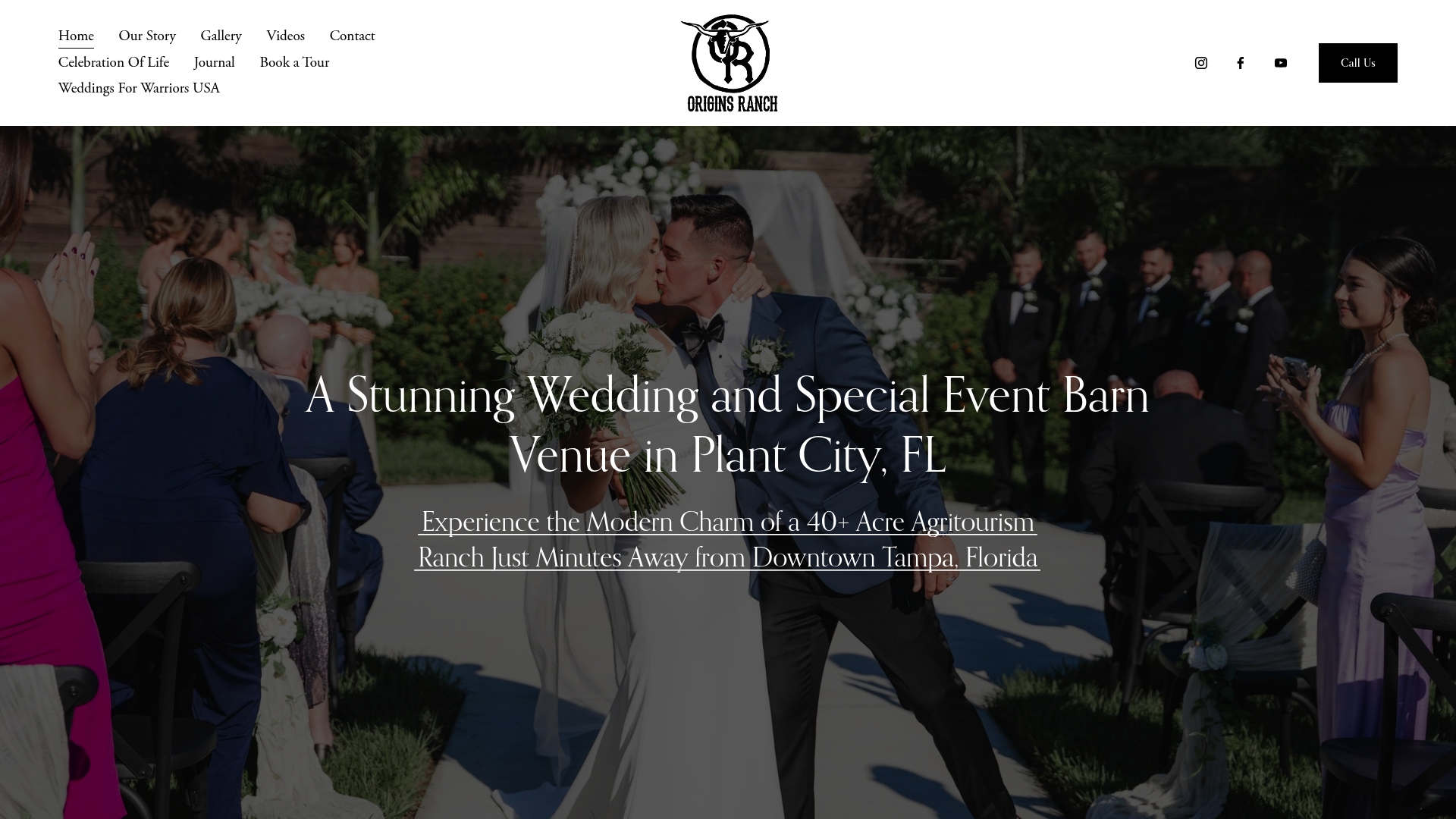
Our grounds are designed for photography, with natural light, lush surroundings, and elegant barn architecture that complements any theme or dress style. Our experienced event staff works closely with your vendors to keep the day running smoothly from the first dance to the last toast. Explore our Quinceañera venue options and browse our reception gallery to see how we bring these celebrations to life. Contact us today to check availability for your date.
FAQ
What is a Quinceañera?
A Quinceañera is a Latin American celebration marking a girl's 15th birthday and her transition into womanhood. It combines a Catholic thanksgiving Mass with a festive reception featuring symbolic rituals, dancing, and family traditions.
How much does a Quinceañera typically cost?
Costs vary widely based on guest count, venue, and court size, but padrinos traditionally help sponsor major expenses like the dress, venue, and music to ease the financial burden on the family.
How long should a Quinceañera reception last?
Most Quinceañera receptions run four to six hours, allowing time for the grand entrance, symbolic rituals, dinner, court dances, the waltz, and open dancing.
Do you need a church for a Quinceañera?
A Catholic Mass is traditional, but not required. Some families hold a blessing ceremony at the venue itself, especially when guests travel from multiple locations or the family prefers a non-denominational approach.
How many people are in a Quinceañera court?
Traditional courts include 14 pairs of damas and chambelanes, but modern courts commonly range from 5 to 10 pairs. Some celebrations feature an all-damas court or a single chambelán de honor alongside the quinceañera.