

Planning a Florida barn wedding brings excitement and big decisions—but venue terminology like "catering-inclusive" and "capacity allowance" often leaves couples frustrated and confused. Misunderstandings about these core terms lead to overpriced rentals and stressful surprises on your special day. Gaining clarity on the most important venue language lets you confidently review proposals, protect your budget, and craft a wedding that truly reflects your vision. Clear definitions are the key to a smooth and joyful barn celebration.
Table of Contents
- Defining Wedding Venue Terminology And Misconceptions
- Types Of Venue Spaces And Configurations
- Contract Clauses And Legal Terms Decoded
- Vendor Policies And Service Restrictions
- Hidden Fees, Responsibilities, And Avoidable Pitfalls
Key Takeaways
| Point | Details |
|---|---|
| Understand Venue Terminology | Familiarizing yourself with key terms like capacity, setup fees, and blackout dates can prevent misunderstandings that lead to budget overruns. |
| Request Detailed Proposals | Always ask for a comprehensive breakdown of all costs and included services to avoid hidden fees that can inflate your total wedding budget. |
| Clarify Vendor Policies | Knowing whether you can use outside vendors or must select from a preferred list will impact your overall costs and choices significantly. |
| Review Contracts Thoroughly | Make sure to read and understand contract clauses related to payments, cancellations, and liability to protect your investment in the event of discrepancies. |
Defining Wedding Venue Terminology and Misconceptions
When you're planning a rustic barn wedding in Florida, venue terminology can feel like a foreign language. You'll encounter phrases like "catering-inclusive," "setup fees," and "capacity allowance" without clear definitions. Misunderstanding these terms costs couples thousands in unexpected charges and logistical headaches.
The good news: once you understand the key terminology, you'll negotiate contracts confidently and avoid costly mistakes.
Understanding Core Venue Terms
Capacity doesn't mean what most couples think. It's not just the number of people who physically fit in your barn. True venue capacity includes fire code limits, furniture arrangements, dance floor space, and AV equipment placement. A 300-person barn might only safely accommodate 200 guests when you factor in tables, bars, and staging.
When Origins Ranch discusses your guest count, we're thinking about creating an experience—not cramming people in. The actual usable space differs from the advertised number.
Blackout dates are calendar days when the venue is unavailable, regardless of your timeline. Many barns have seasonal events, family gatherings, or maintenance periods you can't book around. Some venues don't disclose these upfront, leaving you disappointed after planning your date.
Setup and teardown are separate line items from rental fees. This covers when vendors arrive early and how long they can stay after your reception. Understanding these windows prevents your photographer from arriving before access or your caterer from needing to leave before dinner service.
Other essential terms include:
- Catering-inclusive vs. vendor-approved: Whether you must use the venue's caterer or can bring your own
- Rental fee: The base cost for barn access and basic amenities
- Audio-visual equipment: Sound systems, projectors, and microphones—sometimes included, sometimes not
- Banquet Event Order (BEO): Your custom agreement detailing your specific day's logistics
- Accessibility requirements: Parking, restrooms, pathways for guests with mobility needs
These terms shape your actual costs and guest experience far more than venue square footage alone.
Common Misconceptions That Cost Money
Here's what engaged couples commonly misunderstand:
Venues often list a "rental fee" that sounds affordable until you add chairs, tables, linens, lighting, and parking. The $2,000 barn rental becomes $8,000 once you account for everything. Always ask for an itemized breakdown of what's included versus what costs extra.
"Bring your own caterer" sounds great until you discover the venue charges a "kitchen fee" or "outside catering fee" that effectively makes outside food cost more than using their preferred vendor. Read the fine print.
Many couples assume weather contingencies are included. Rustic barns in Florida mean afternoon thunderstorms are real. Ask explicitly whether the venue provides a covered backup space or tent allowance if rain hits your outdoor ceremony.
Clear terminology in your contract prevents confusion, protects your budget, and ensures your rustic Florida barn wedding unfolds exactly as you envisioned it.
When reviewing event space definitions and terminology, you'll find industry-standard language that applies to any venue, including rustic barn spaces. This helps you compare apples-to-apples when evaluating different properties.
The final misconception: thinking all barn venues operate the same way. Each property has different included amenities, restrictions, and pricing structures. Two barns might both say "300-person capacity," but one includes tables and chairs while the other charges separately for every stick of furniture.
Pro tip: Request a detailed proposal showing exactly what's included in the rental fee, what costs extra, and what happens if weather forces you to shift timing or location—this single document eliminates 90% of venue disputes.
Types of Venue Spaces and Configurations
Your barn venue choice depends on understanding how different spaces function and what each configuration offers. A rustic barn in Florida can feel completely different depending on whether it's completely open-air, partially covered, or enclosed. These distinctions affect everything from guest comfort to weather contingencies to equipment placement.
Choosing the right configuration means matching your vision with practical logistics.
Indoor vs. Outdoor vs. Hybrid Spaces
Indoor barn spaces offer climate control and weather protection. Florida heat and humidity become manageable when you have air-conditioned barn interiors. You can control lighting, temperature, and acoustics precisely. The trade-off: less natural light and that quintessential rustic outdoor feel.
Outdoor barn settings deliver the scenic countryside charm you're after. Open-air ceremonies under oak trees create unforgettable moments. Rain becomes your enemy, though, and summer heat testing for guests in Florida.
Hybrid configurations give you both. A covered pavilion or barn structure with open sides lets you enjoy outdoor aesthetics while staying protected from afternoon storms. This flexibility is why many Florida barn couples choose this option.
When reviewing different venue types and their characteristics, you'll see how barns compare to ballrooms, gardens, and other spaces. Barns uniquely offer that blend of rustic authenticity with modern amenities when configured properly.
Specific Barn Configuration Options
Understanding venue components and spatial arrangements helps you visualize how your celebration flows. Consider these common barn setups:
- Single-space barn: One large area for ceremony, cocktails, and reception—simple logistics, limited flexibility
- Divided spaces: Separate ceremony area and reception barn allowing guest flow and timing control
- Covered pavilion plus barn: Outdoor ceremony shelter with indoor reception backup
- Multiple outbuildings: Ceremony site, reception barn, and separate lounge spaces for mingling
- Open field with structures: Ceremony in open pasture, reception in barn—maximum visual impact
Each configuration impacts traffic patterns, vendor access, restroom locations, and parking needs. Origins Ranch's transformation from a historic horse ranch into a modern event space showcases how thoughtful configuration creates both charm and functionality.
Here's a quick reference comparing key barn venue configuration types and their main implications:
| Configuration Type | Guest Experience Impact | Weather Preparation | Vendor Access |
|---|---|---|---|
| Indoor Barn | Comfortable climate | Excellent protection | Easy access |
| Outdoor Barn | Scenic atmosphere | Poor in storms | Moderate |
| Hybrid Barn | Flexible and scenic | Good coverage | Flexible |
| Multi-Building | Varied spaces | Multiple options | Complex |
| Open Field w/Barn | Visual drama | Limited protection | Challenging |
Key Spatial Considerations
Ceiling height matters more than you'd think. Tall barn ceilings accommodate uplighting, draping, and chandeliers beautifully. Low ceilings limit decoration options and can feel cramped despite adequate floor space.

Column placement affects table arrangements and sightlines. Barn posts might look rustic but create obstacles for ceremony viewing and dancing.
Natural light sources like barn doors and windows add character but complicate timing. An afternoon ceremony facing west means harsh light in photos. Evening receptions benefit from doors opening to twilight ambiance.
Utility access determines where caterers work and vendors set up. A barn with a separate kitchen preparation area versus one requiring all setup through the main space changes your entire day's logistics.
Your ideal barn configuration balances aesthetic beauty with practical functionality—because a stunning photo backdrop means nothing if your guests are uncomfortable or your vendors can't access necessary spaces.
Pro tip: Visit your barn during the same time of day and season as your planned wedding to see actual light, temperature, and weather conditions—this single visit reveals configuration challenges photos and tours miss.
Contract Clauses and Legal Terms Decoded
Your venue contract is the most important document you'll sign for your wedding. It's not just paperwork—it's your protection against unexpected costs, disputed dates, and legal disputes. Yet most couples skim contracts without understanding critical clauses that govern payments, cancellations, and liability.
Understanding these terms prevents thousands in losses and protects your day.
Payment Terms and Deposit Policies
Deposit requirements typically range from 25% to 50% of your total contract value. This secures your date and covers the venue's costs holding the space for you. Understand whether this deposit is refundable if you cancel or if it becomes non-refundable after a certain date.
Payment schedule outlines when remaining balances are due. Most venues require final payment 30 days before your event. Missing this deadline might result in cancellation or additional fees.
Late fees apply if you don't meet payment deadlines. Some venues charge percentage-based late fees that multiply quickly, transforming a $500 missed deadline into $750 owed.
When reviewing essential contract clauses for venue rentals, clarify exactly which payments are refundable, when final payment is due, and what penalties apply for late payment.
Cancellation and Force Majeure Clauses
Cancellation policies define your options if circumstances change. Can you cancel with notice? Will you lose your deposit entirely? Some venues offer rescheduling options instead of refunds.
Force majeure clauses address catastrophic events beyond anyone's control—hurricanes, severe illness, pandemic restrictions. Understanding force majeure and indemnification provisions matters in Florida where weather can shift wedding plans dramatically.
These clauses typically specify whether you can reschedule without losing your deposit or if the venue considers force majeure events as cancellations resulting in forfeited payments. Florida barn weddings especially need robust weather contingency language.
Critical Liability and Damage Clauses
Liability limitations define who's responsible if someone gets injured or property gets damaged during your event. Some venues limit their liability entirely, making you responsible for all accidents regardless of venue negligence.
Security deposits (separate from rental deposits) cover potential damage. You might pay $1,000 as a damage deposit, refundable if the space remains undamaged. Know exactly what the venue considers "damage" requiring deduction.
Indemnification clauses require you to hold the venue harmless for certain incidents. This means you agree to cover their legal costs if guests sue them for injuries allegedly caused by your event.
Key clauses to review:
- What's covered under the venue's insurance versus your responsibility
- Whether vendors' damage falls under the security deposit or your liability
- Whether weather-related damage is covered
- Guest injury liability limits
- Alcohol-related incident responsibility
Timing and Access Provisions
Event timing specifies exactly when you can access the venue. If your contract says 6 p.m. start with midnight end time, arriving at 5:45 p.m. for setup might violate the agreement. Know precisely when vendors can arrive and access ends.
Setup and breakdown windows are negotiable. Clarify whether setup time is included in your rental hours or extends beyond.
A venue contract protects both parties when written clearly—ambiguous language creates disputes that overshadow your memories and drain your budget.
Pro tip: Before signing, have an attorney review your venue contract, focusing on payment terms, cancellation policies, and liability clauses—this $300 investment prevents $5,000+ disputes and protects your wedding investment.
Vendor Policies and Service Restrictions
Vendor policies are where hidden costs hide and creative dreams get restricted. Your barn venue might seem affordable until you discover you're required to use their caterer, florist, or DJ. These mandates directly impact your budget, style choices, and guest experience.
Knowing vendor policies before signing saves thousands and protects your wedding vision.
Types of Vendor Policies
In-house catering requirements mean you must use the venue's kitchen and catering team. This eliminates your ability to hire your grandmother's favorite caterer or that farm-to-table restaurant you love. While convenient, in-house catering typically costs 15-25% more than outside vendors.
Preferred vendor lists restrict your choices to pre-approved professionals. The venue claims these are vetted for quality, but they're often chosen because they offer kickbacks to the venue. You pay more; the venue profits.
Open vendor policies let you hire anyone. This flexibility comes with costs—mandatory service fees, kitchen access charges, or parking restrictions for vendor vehicles.
Understanding common vendor policy types and restrictions helps you evaluate how much control you actually retain over your celebration. A barn with an open vendor policy empowers you to build your perfect team.
Hidden Fees Behind Vendor Restrictions
Kitchen fees apply when you bring outside caterers. These range from $200 to $1,000+ depending on prep space requirements and kitchen equipment access. Some venues charge this regardless of how much the caterer actually uses the kitchen.
Service fees are percentages added when vendors aren't from the preferred list. You might pay 20% markup on your outside caterer's total cost as a "service charge" to the venue.
Equipment rental restrictions prevent you from bringing sound systems, lighting, or décor if the venue requires you purchase these through their preferred vendors. This locks you into their pricing.
Common hidden vendor fees include:
- Kitchen access and preparation charges
- Outside vendor service percentages
- Equipment rental markups
- Parking or loading zone fees for vendor vehicles
- Setup and breakdown coordination fees
- Alcohol service markups if you bring outside beverages
What to Ask About Vendor Policies
Ask explicitly: "Can I hire my own caterer, photographer, florist, and DJ without additional fees?" Listen for what they don't mention—unmarked restrictions hide in contract fine print.
Request the preferred vendor list with exact pricing for each service. Compare these costs against your own vendors. The difference reveals how much you're paying for restrictions.
Clarify kitchen access if you're considering outside catering. Can your caterer arrive early? How many people can work in the kitchen? What equipment is available?
When reviewing vendor management expectations, understand that professional venues establish clear vendor communication protocols. You should receive written vendor guidelines, parking information, and setup timelines—not verbal instructions that change day-of.
Vendor policies are revenue opportunities for venues—your freedom to choose independent vendors directly correlates with lower total costs and greater creative control over your celebration.
Pro tip: Get all vendor restrictions and associated fees in writing before signing your contract; if the venue won't clarify costs, they're likely hiding something, and that's a red flag to negotiate differently or choose another barn.
Hidden Fees, Responsibilities, and Avoidable Pitfalls
The $3,000 barn rental you loved suddenly becomes $8,500 when hidden fees appear in your final invoice. Overtime charges, setup fees, cleanup costs, and service surcharges multiply without warning. These aren't always deceptive—they're just fees venues expect you to discover too late to negotiate.
Understanding where hidden costs hide prevents budget disasters.
Common Hidden Fees That Surprise Couples
Setup and cleanup fees are frequently separate from rental costs. You might pay $500 to have the venue prepared before your event and another $500 to clean afterward. Some venues charge per hour, turning a 6-hour event into 8 billable hours when vendors need extra time.
Overtime charges kick in if your reception extends past contracted hours. Florida barn venues might charge $100-$300 per hour if your dancing extends 30 minutes beyond your agreement. Most couples don't track time carefully enough to avoid this.
Corkage and cake cutting fees apply if you bring beverages or desserts from outside. A $0.50 per-person cake fee adds $150 to your bill for 300 guests, even if the venue barely participates in serving.
When reviewing hidden wedding venue costs and charges, pay special attention to per-person fees. These multiply across your guest count and become significant line items.
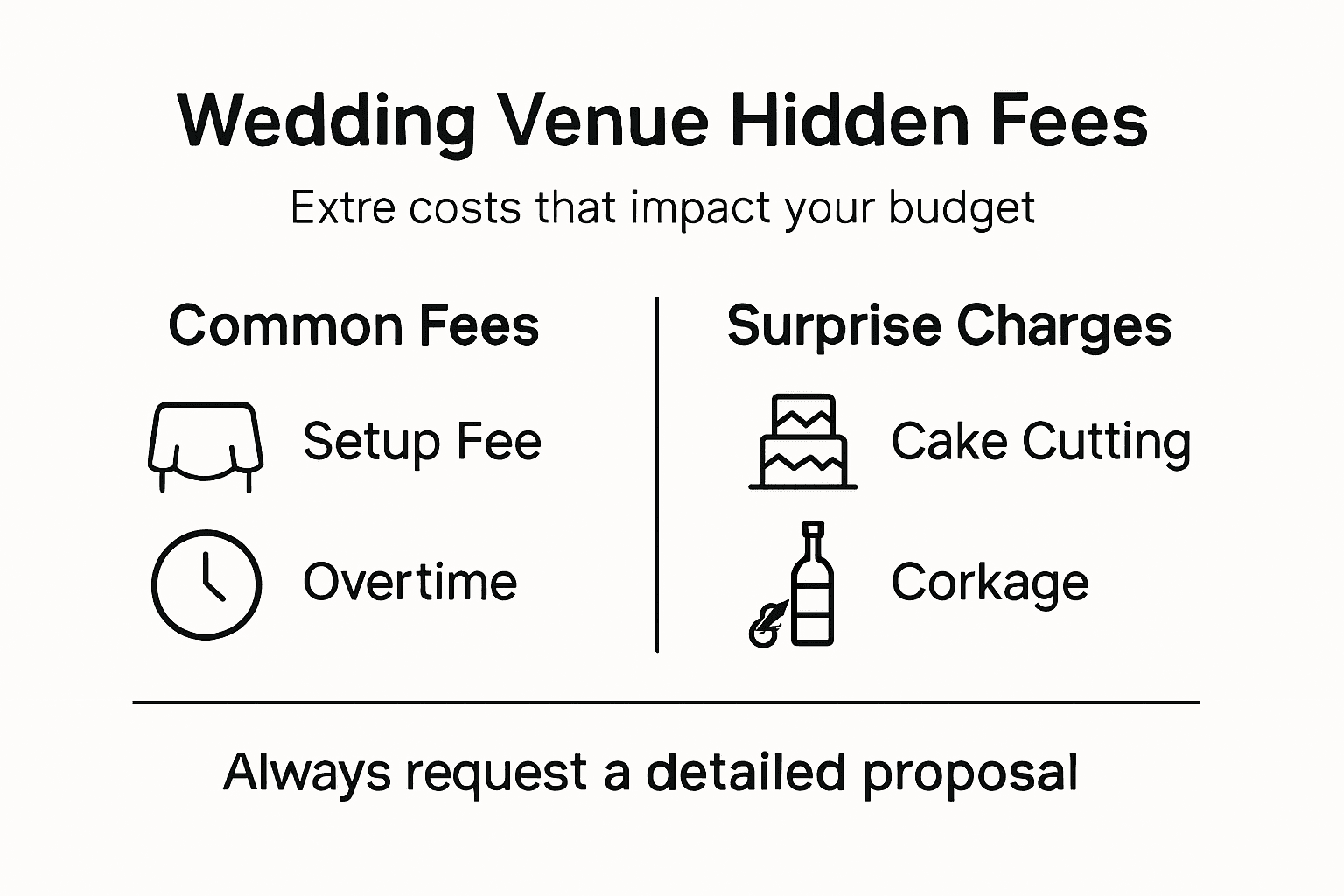
Use this table to understand typical hidden fees and how they can affect your wedding budget:
| Fee Type | Typical Amount/Rate | Budget Impact | When Applied |
|---|---|---|---|
| Setup/Cleanup Fee | $500–$1,000 | Adds service cost | Before and after event |
| Overtime Charges | $100–$300 per hour | Inflates total cost | Events running late |
| Corkage/Cake Fees | $0.50–$2 per guest | Multiplies quickly | Outside food/beverages served |
| Service Charge | 18–20% of invoice | Significant expense | All catering and bar services |
| Equipment Rental Fee | $300–$1,000+ | Core expense | Chairs, tables, linens needed |
Service Charges and Gratuity Mandates
Automatic gratuities are added to catering costs—typically 18-20% before tip. You might pay 20% to the venue plus another 20% you choose to add. That's effectively 40% gratuity on food costs.
Service charges differ from gratuities. These are facility fees for staff coordination, table service setup, or event management. They're mandatory regardless of whether service quality justifies the charge.
Labor surcharges apply during peak seasons or weekend dates. Summer barn weddings in Florida cost 15-25% more than winter events, sometimes with no quality difference.
Fees that sneak into final invoices:
- Equipment rental (chairs, tables, linens not included)
- Parking attendant fees for guest vehicles
- Trash removal and recycling charges
- Electricity surcharges for vendor equipment
- Alcohol service permits and liability fees
- Day-of coordination and timeline management
Your Responsibilities vs. Venue Responsibilities
Damage liability often falls on you. If a guest spills wine on barn wood or a vendor's equipment damages flooring, you're charged for repairs. Understand damage definitions before signing—some venues classify normal wear as damage requiring charges.
Guest conduct responsibility is murky. If intoxicated guests cause disturbances or damage, are you liable? The contract should specify. At rustic barn venues, weather-related incidents might fall on you despite being uncontrollable.
Setup and vendor access are your responsibility once the contract begins. If your florist arrives early and the venue charges for early access, you pay. If your caterer needs extra parking and the venue charges per vehicle, that's your cost.
Hidden fees aren't always intentional deception—they're fees venues expect you to discover late in planning when you're too committed to renegotiate, so get everything itemized upfront and in writing.
Red Flags That Signal Hidden Costs
Be cautious when venues:
- Won't provide written itemized pricing
- Quote a price but say "plus fees"
- Offer verbal agreements instead of written contracts
- Pressure you to sign quickly
- Keep preferred vendor pricing confidential
- Won't explain specific line items
Pro tip: Request a detailed estimate showing every charge including setup, cleanup, service fees, gratuities, and overtime rates; then multiply the guest count by per-person charges to verify the math and catch fees that compound unexpectedly.
Navigate Wedding Venue Terms with Confidence at Origins Ranch
Understanding wedding venue terminology can be overwhelming, especially when hidden fees and complex contracts threaten to derail your dream day. This article breaks down crucial concepts like setup fees, capacity limits, and vendor restrictions, helping you avoid costly mistakes that many couples face. At Origins Ranch, we recognize these challenges and provide a transparent, personalized approach to ensure your wedding planning is stress-free and your budget stays intact.

Discover how our charming barn venue in Plant City, FL combines rustic beauty with clear, upfront communication. From detailed contracts to flexible vendor policies, Origins Ranch empowers you to make informed decisions every step of the way. Don’t let confusing terminology or surprise charges cloud your special day. Visit Origins Ranch now to learn more about how we support your vision and protect your celebration from unexpected pitfalls. Start planning your perfect barn wedding with confidence today.
Frequently Asked Questions
What does 'capacity' mean when selecting a wedding venue?
Capacity refers not only to the physical number of guests a venue can hold but also includes fire code limits, space for tables and dancing, and equipment placement. This means that a venue advertised for 300 may only comfortably host around 200 guests.
What are blackout dates, and how can they affect my wedding planning?
Blackout dates are specific days when the venue is unavailable for events. These dates can be due to pre-scheduled events, maintenance, or seasonal closures, and it's important to confirm these when selecting your wedding date to avoid disappointment.
Are setup and teardown fees always included in rental costs?
Usually, setup and teardown fees are separate from the base rental fees. It’s crucial to clarify these costs in your contract to understand when vendors can access the venue and how long they can stay after the event.
What should I know about vendor restrictions at my wedding venue?
Vendor restrictions can greatly impact your choices and budget. Some venues may require you to use their in-house catering or a preferred vendor list, which can come with additional fees. Always ask for a full breakdown of any mandated guidelines before finalizing your contract.