
A winter wedding in Florida works best when you plan around three things: a mild but changeable climate, an early sunset and a guest list traveling in peak season. Get those right and you have comfortable afternoons, golden light and no summer heat. At Origins Ranch, our barn in Plant City sits just east of Tampa, with indoor and outdoor ceremony spaces and air conditioning, so a chilly front or a passing shower changes your plan, not your day.
TL;DR
- November through April is the comfortable window for Florida weddings, and December through February is typically dry, with brief cold-front showers.
- Winter evenings can drop 20 degrees from the afternoon high, so plan wraps, blankets and a ceremony that finishes before the light fades.
- Start the ceremony in the mid-to-late afternoon and work backward from sunset so portraits happen in golden light.
- Pick a venue with indoor and outdoor space so a cold snap or rain is a Plan B you already own.
- Book guest lodging early: January and February are peak snowbird months.
Table of Contents
- What Florida winter weather is really like
- Why the dry season is popular
- Timing your ceremony around an early sunset
- Build a weather plan that does not depend on luck
- Keeping guests comfortable on a chilly evening
- What to wear
- Flowers, décor and photos
- Planning a small winter wedding
- Lodging and travel for guests
- Why a Plant City barn suits a Florida winter
- Our perspective
- Plan your winter date with us
- FAQ
- Sources
What Florida winter weather is really like
Florida is not one climate. Visit Florida notes that northern cities such as Jacksonville, Tallahassee and Destin have cooler winters, with average lows in the 40s and highs in the 70s, while Central and South Florida stay in the 60s and 70s. Check the forecast for your actual venue area, not the state.
For the Tampa and Orlando corridor, one guide reports that from December through February Orlando and Tampa average highs in the low 70s, and that north of Orlando overnight lows can dip into the 30s a few times each winter. Another puts Orlando's January average at 61°F, with cold spells possible from late November into March.
The practical lesson is the swing. A winter afternoon can feel perfect and the same evening can feel chilly. For Orlando, one dress guide cites National Weather Service normals of a January high near 71°F and a low near 49°F, a swing of more than 20 degrees. That is the number to design your day around.
Cold fronts come and go quickly
Two or three times a winter, a cold front sweeps down the peninsula, dropping nighttime lows into the 40s in North Florida and the 50s farther south. Fronts typically pass in 24 to 48 hours. You cannot predict which weekend it will hit, which is why flexibility beats optimism.
Rain is lighter than in summer
December is one of Florida's driest months, and rain usually arrives as brief cold-front showers, more often in the north of the state. Winter rainfall averages 6 to 7 rainy days a month in central and southern Florida. That is far gentler than a summer afternoon storm, but it is still a reason to have a roof.
Why the dry season is popular
January averages a 71°F high and 50°F low with low rainfall, and February runs a little warmer with low humidity. That is prime weather for guests in suits and dresses who would melt in August. It also means every couple wants the same dates. Saturdays go first, so flexibility on the day of the week or the month (November, early December or March) can open up more choices.
We suggest couples start the venue search early for any date between November and April, then lock the guest-facing details once the date is set.
Timing your ceremony around an early sunset
Winter sunsets arrive early, so the order of your day matters more than in summer. One Florida planning guide suggests starting ceremonies in the late afternoon or early evening, working backward from sunset and leaving 20 to 30 minutes after the ceremony for couple portraits in golden hour, typically the hour before sunset.
A simple way to build the day:
- Look up sunset for your exact date and town.
- Subtract the portrait window (about 20 to 30 minutes) and your ceremony length.
- Start the ceremony there, and schedule family photos right after, while the light is still warm.
- Let the reception become the candlelit half of the day, with warm string lights, candles and dance-floor lighting.
- If you want more time with your photographer before dark, consider a first look earlier in the afternoon.
We wrote a full guide to Tampa ceremony timing before sunset if you want the reasoning in more detail. Tell your guests the start time clearly on the invitation, because late arrivals cost you light.
Build a weather plan that does not depend on luck
The best backup plan is a venue that already has indoor and outdoor space. Wedding planning guidance puts the cost of the alternatives in perspective: for 100 guests, pre-booked tents run $3,000 to $15,000, and heated tents with walls $5,000 to $15,000, with tent heating add-ons of $500 to $2,000. The same guide suggests budgeting an extra 10 to 15 percent for weather and making the move-indoors call 48 hours before the event. It advises moving indoors for lightning or winds over 30 mph.

A full backup plan covers more than the location. Brides.com lists an alternate ceremony and reception space, layout changes, lighting, vendor re-coordination and a revised timeline. It also points out that wind, heat and even sound can force a change, not only rain.
Questions to ask any venue
- Where does the ceremony move if it is cold, windy or wet, and does it hold your whole guest list?
- Can the aisle, altar and florals translate to the indoor space?
- Who makes the call, and when?
- Is the indoor space comfortable all day, or only a shelter?
- Where will musicians and the DJ set up in either plan?
We cover this decision in more depth in our guides to Florida indoor weddings and the covered outdoor ceremony.
Keeping guests comfortable on a chilly evening
You do not need a ski lodge. You need a few small, thoughtful touches that make a 55-degree evening feel intentional:
- Wraps, pashminas or fleece blankets in a basket at the ceremony.
- A warm drink option beside the cocktails, such as hot chocolate or spiked coffee.
- A shaded or sheltered seating plan, since sun angle matters as much in winter as in summer.
- A clear note on the invitation or wedding website about layers.
Outdoor space is still a gift in winter. Without humidity or bugs, guests linger longer. For ideas on how a Florida barn setting uses its grounds, see our guide to why outdoor weddings work at a rustic barn.
What to wear
For the couple, the rule is dress for the afternoon and carry the evening. A December guide to Miami suggests a breathable wool-linen or tropical-wool suit in mid-gray, navy, deep blue or warm tan, with a light jacket handy for after sunset. In that guide's Miami example, days reach about 75°F and fall to 63°F after dark.
For gowns, long sleeves, a wrap or a jacket can move you from ceremony to reception comfortably. If you are ordering a made-to-order gown, one bridal shop recommends ordering six to nine months ahead and allowing another eight to ten weeks for fittings. It also suggests a chapel or sweep-length train for outdoor ceremonies, since winter morning dew on lawns is real.
For guests, a short line on your website does the job: "Florida evenings can be cool, so bring a layer."
Flowers, décor and photos
Winter in Florida is kind to a rustic palette: warm woods, candlelight, greenery, white and cream florals, deep berry or burgundy accents. Because cold snaps can still arrive, keep the ceremony arrangements sturdy and hold delicate blooms in the cooler indoor space until needed. Ask your florist what holds up outdoors on the forecast days nearest your wedding.

For photos, the low winter sun is flattering. Plan a first look if you want daylight portraits, and keep the golden hour window protected on the timeline. Ask your photographer to walk the ceremony and reception spaces so lighting is planned for the dark half of the evening.
Planning a small winter wedding
A smaller guest list suits winter well: fewer moving parts, easier lodging and a warmer, more personal feel. The same timing and weather rules apply. A small ceremony can sit comfortably in an indoor space while photos happen outside in the best light. Because the cost of a small wedding depends heavily on the venue and what is included, ask each venue for a written list of what the rental covers before you compare.
Lodging and travel for guests
January and February are peak tourist and snowbird months, so hotels and flights fill up. Release your date early and give guests a few lodging options. A shared block is one way to do it, and this comparison of a hotel block versus Airbnb for group trips helps you decide what suits your group.
On-site lodging is one of the things we offer at Origins Ranch, which can simplify the weekend for a wedding party that would rather stay together.
Why a Plant City barn suits a Florida winter
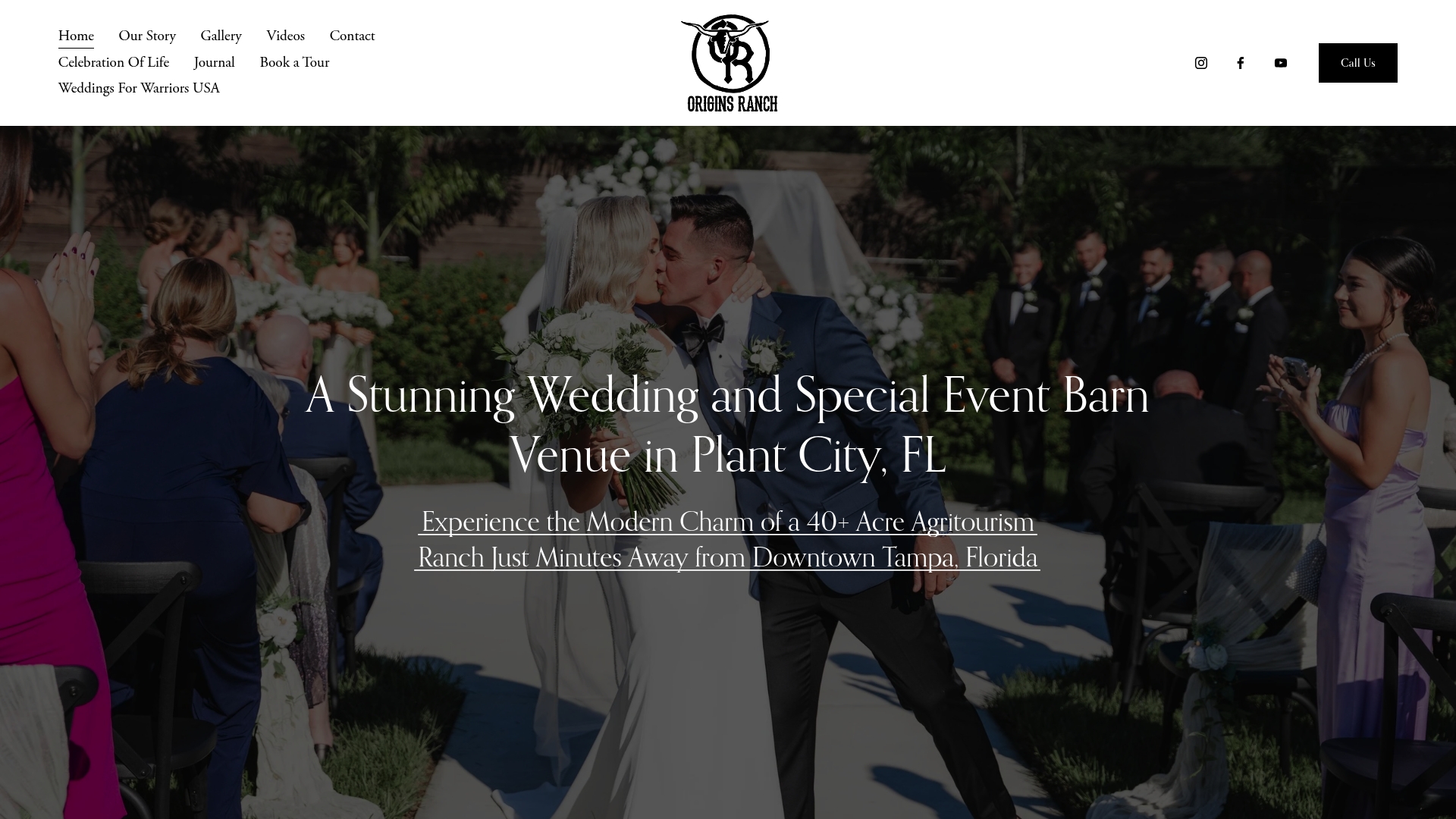
Our barn began as sugar sand and a World Champion horse ranch, and we have turned it into a modern, elegant venue that keeps its country character. For a winter date, the combination matters: indoor and outdoor ceremony spaces, an air-conditioned barn, and room to move the day if the weather turns. We believe it is the only fully air-conditioned large barn of its scale near Tampa. The ranch also has farm animals on the grounds, which makes for lovely photos.
We offer venue-only and all-inclusive packages, customizable in-house table settings and décor, onsite catering options and on-site lodging. For a wider look at what to expect, see our barn wedding planning checklist for Florida couples.
Our perspective
We have always believed a Florida winter is one of the loveliest times to celebrate. The air is gentle, the light is golden and the country feels like a place you want to linger.
What we tell every couple is to plan for the evening, not the afternoon. Give your guests somewhere comfortable to gather, give your photographer the golden hour, and give yourself a Plan B that you actually like. That is why we built a barn that works indoors and out, and why we pay attention to each event personally.
Barry, our founder, has spent more than 20 years in the event service industry as a DJ, and he has seen how a good timeline keeps a day relaxed. Through Weddings For Warriors, our charity, we also help veterans and active duty service members have their dream weddings. Where our ranch is your ranch.
Origins
Plan your winter date with us
If you are picturing a winter wedding in Florida with a barn, an easy Plan B and a team that cares about your day, we would love to show you the ranch. We host weddings, quinceañeras and other celebrations in Plant City, and we offer venue-only and all-inclusive options. Visit Origins Ranch to start planning your date.
Military couples can learn about our veteran-focused mission at Weddings For Warriors.
FAQ
Is winter a good time to get married in Florida?
Yes. November through April is often the most comfortable stretch for outdoor weddings, with lower humidity and typically less rain than summer. The tradeoff is demand, since the best dates book up early. Plan for cooler evenings and an early sunset.
How cold does it get for a winter wedding in Florida?
It depends on where you marry. Tampa and Orlando average highs in the low 70s through winter, but overnight lows can reach the 40s or occasionally the 30s north of Orlando during a cold front. Fronts usually pass in 24 to 48 hours, so build in layers and a backup space.
What time should a winter ceremony start in Florida?
Mid-to-late afternoon is typical. Find your sunset time, then work backward, leaving 20 to 30 minutes after the ceremony for portraits in golden light. Our Tampa ceremony timing guide walks through the steps.
Should I book a tent for a winter wedding?
A venue with indoor and outdoor space often removes the need. For 100 guests, tents can run from $3,000 to $15,000 and heated tents with walls from $5,000 to $15,000, so a built-in indoor option can protect both your budget and your timeline.
Sources
- Visit Florida: The Most Common Florida Weather Myths
- The FL Guide: Best Time to Visit Florida
- Climates To Travel: Florida climate
- The Droom Celebration: Winter Wedding Dresses for a Central Florida Wedding
- GoVisit Florida: Florida Weather By Month
- Florida December Weather
- Wedding Chicks: Planning an Outdoor Florida Wedding
- Wedding Notepad: Rainy Day Wedding Backup Plan
- Brides.com: How to Create a Backup Plan for Your Wedding
- Nathan Tailors: What to Wear to a Wedding in Miami in December
- CrewsCanvas: Airbnb vs Hotel Block for Group Trips