
A country wedding bouquet looks gathered, not engineered. Think loose stems, a mix of shapes and sizes, greenery tucked into every gap, and a wrap of twine, lace or ribbon at the handle. Sunflowers, roses, daisies, baby's breath, lavender and wildflower-style blooms are the classic choices, and the right ones depend mostly on your wedding month. Here is how to pick the flowers, shape the bouquet and add the details that make it yours.
We are a barn wedding venue in Plant City, Florida, and we see bouquets walk down our aisle all year. The ones that photograph best against weathered wood and open pasture share a few simple habits, and we have gathered them below.
TL;DR
- A country bouquet is loose, full and a little wild: mixed flower shapes, a relaxed rounded form and greenery filling the gaps, rather than a tight dome.
- Reliable country flowers include sunflowers, roses, daisies, baby's breath, lavender, peonies and Queen Anne's lace, with eucalyptus or ferns for texture.
- For a wildflower look, use cultivated cousins such as cosmos, chamomile, zinnias and scabiosa. They hold up better than true wildflowers.
- Choose blooms in season where you can: in-season flowers can cost far less than imported ones, and they look fresher on the day.
- Start with one focal flower and one greenery. If that pairing works, build outward from there.
Table of Contents
- What makes a bouquet feel country
- The best flowers for a country wedding bouquet
- A wildflower wedding bouquet, styled loose and natural
- Rustic bridal bouquet ideas to borrow
- Which flowers to choose for your wedding month
- Our perspective: let the bouquet belong to the ranch
- Build your own country bouquet, step by step
- Personal touches that make it yours
- Capture the bouquet before the day gets busy
- Planning your country wedding at Origins Ranch
- FAQ
- Sources
What makes a bouquet feel country
Before you pick a single stem, it helps to know what the style actually is. Country and rustic bouquets celebrate organic texture, seasonal flowers and a relaxed shape that feels effortlessly gathered rather than overly arranged. The same source notes that country bouquets tend to be fuller and less edited than refined rustic designs, and that their wraps are more casual: natural twine, burlap ribbon or a simple cotton wrap tied at the stem.
Several design guides describe the same shape. Country bouquets use loose stem placement, mixed flower sizes, greenery in the gaps and a relaxed rounded outline instead of a tight dome or a formal cascade.

Relaxed does not mean careless. One florist's guide points out that rustic sophistication comes from controlled variation: organic shapes, different textures and an intentional color balance. A jar of grocery-store stems is not the same thing. A clear idea sits under the casual surface of the best bouquets, and a good way to find it is the two-ingredient test. Pick one focal flower and one greenery. If the pair works together, add to it. If it does not, extra material will not rescue it.
Rustic, country or boho?
The three overlap, and you do not need to pick a label. Country leans toward familiar field and farm flowers like sunflowers, daisies and roses. Rustic often adds darker, earthier tones and dried accents. Boho tends to be airier and more trailing. If your ceremony is in a barn, all three sit comfortably against wood beams and string lights.
The best flowers for a country wedding bouquet
There is no single correct list, but the same names appear again and again. Common choices are roses, sunflowers, daisies, baby's breath, lavender and peonies. Roses and sunflowers work as strong focal anchors, while baby's breath and greenery provide filler and texture.
Sunflowers
Sunflowers are often called the most iconic rustic wedding flower, and they look especially at home in barn, lodge or camp-style venues. They suit summer and early-fall weddings best, and pair naturally with burlap, wooden crates and mason jars.
Roses and garden roses
Roses are the quiet workhorse. One florist reports that roses appear in roughly 86% of American bridal bouquets, citing IBISWorld data. Garden roses have ruffled, peony-like petals and a strong scent. Warm-toned roses fit a farmhouse palette with dahlias, chamomile, yarrow and wheat, according to a rustic design guide.
Queen Anne's lace, daisies and baby's breath
Queen Anne's lace is the flat, lacy white bloom that makes a bouquet look gathered rather than built. Daisies and chamomile suit spring and summer, and baby's breath is an airy filler available year-round.
Lavender, herbs and greenery
Lavender runs from late spring through mid-summer, and dried lavender makes a lovely keepsake or confetti, per the same Whole Blossoms guide. Herbs such as rosemary, mint or lavender can add fragrance and homegrown character. Eucalyptus and other local greenery add structure without straining the budget, as one wedding resource notes.
A Southern note
Our home state sits in the South, and Southern weddings have their own favorites. Large blooms like hydrangeas, big roses and gardenias are expected in Southern bouquets and centerpieces, where they add a dramatic but elegant touch. Another florist says Southern couples lean toward magnolias and gardenias. If you are marrying in Florida, ask your florist which of your favorites hold up best in the warmth, and plan the bouquet's time out of water accordingly.
A wildflower wedding bouquet, styled loose and natural
Wildflower bouquets are the most searched version of this look, and there is a trick to them. True wildflowers are unpredictable, short-lived and often too fragile for wedding work. The solution is to recreate the feeling with cultivated flowers chosen for color harmony, stem strength and longevity.
The same guide suggests cosmos, chamomile, scabiosa, Queen Anne's lace, stock or snapdragons, and zinnias or dahlias, with assorted greenery. Other flowers named as country staples include zinnias, cosmos and marigolds, and wildflower mixes of Queen Anne's lace, cornflowers and black-eyed Susans give an authentic look in spring and summer when sourced locally.
Five habits for a loose, natural shape
- Limit your colors. Stay with two or three complementary shades rather than the whole rainbow.
- Think in odd numbers. Place focal flowers in odd counts, with supporting blooms grouped in threes or fives, as the same guide recommends.
- Vary stem depth. Placing every flower at the same level looks flat. Varied depth creates movement.
- Mix textures. Pair round, spiky and feathery shapes so the eye keeps moving.
- Let one flower lead. A single flower used with intention can make the statement. One farmland wedding bouquet used 30 to 50 stems of feverfew daisy, loosely gathered and tied with soft ribbon, for a light, airy, romantic effect.
Rustic bridal bouquet ideas to borrow
Here are combinations drawn from published bouquet recipes, grouped by mood. Use them as starting points and swap in whatever is blooming for your date.
| Mood | Flowers | Finish |
|---|---|---|
| Sunny field | Sunflowers, asters, zinnias and daisies with wheat or berries, per a sunflower bouquet guide | Lace or plaid ribbon |
| Yellow and blue | Sunflowers, cornflowers, black-eyed Susan and blue thistle, with white gypsophila to soften the color, per this fall bouquet roundup | Twine |
| Earthy fall garden | Dahlias, zinnias, celosia, strawflowers, cosmos, hydrangea, amaranthus and autumn fern, with colors kept in a similar range and textures varied, per this bouquet recipe | Satin or silk ribbon in a matching tone |
| Meadow | Cosmos, chamomile, ranunculus and baby's breath in a loose gathered cascade with minimal greenery, per a DIY guide | Soft ribbon |
| Soft and romantic | Blush roses, succulents and eucalyptus, or hydrangea with baby's breath, among these rustic examples | Cotton wrap or lace |
A tip we share with couples: choose the bouquet to flatter your dress and your colors first, then check it against the barn. Warm wood and soft light flatter almost every palette on this list.
Which flowers to choose for your wedding month
Season matters for look and for budget. Paperlust's guide says in-season flowers typically cost 30 to 50 percent less than the same variety imported out of season. It also lists roses, orchids, hydrangeas, carnations, baby's breath and most greenery as year-round staples. Regional timing varies across the country, so treat the list below as a guide and confirm with a local florist.
| Season | Country-friendly flowers |
|---|---|
| Spring | Peonies, tulips, ranunculus, lilacs, daisies and baby's breath |
| Summer | Sunflowers, zinnias, lavender, wildflowers, black-eyed Susans and cosmos |
| Fall | Dahlias, chrysanthemums, marigolds, berries, warm roses and foliage |
| Winter | Roses, carnations, greenery, cotton, wheat and dried lavender |
That rough seasonal split comes from a country bouquet guide. For more precision, Paperlust's monthly breakdown shows August as sunflower peak with dahlias, hydrangeas, zinnias, lisianthus, cosmos and stock, and September offering dahlias at their peak alongside chrysanthemums, celosia, cosmos and scabiosa. It also notes that August and September have the widest range of in-season blooms.
Peonies and their stand-ins
Peonies are a favorite, but they are only reliably available in the US from late April through early June. Outside that window, the same guide points to garden roses, lisianthus and carnations as year-round alternatives, ranunculus for winter and spring and dahlias for late summer and fall. Dahlias bloom from late July through the first frost, according to another florist.
Planning a fall or winter date
For an October wedding, one florist lists dahlias, chrysanthemums, celosia, amaranthus and marigolds, with eucalyptus and hypericum berries available all year. If you want a broader look at how each season changes your day, from light to guest comfort, our seasonal wedding planning tips walk through it.
Our perspective: let the bouquet belong to the ranch
We have watched a lot of brides step out of our barn doors into the pasture light, and the bouquets people remember are never the most expensive ones. They are the ones that look like they belong to the couple and the place.
Our ranch started as sugar sand and an old barn that was once a World Champion Horse Ranch. Everything we have added since is meant to keep that character while feeling elegant. A country bouquet works the same way: relaxed on the surface, with real intention underneath.
That is why we encourage couples to bring something personal into the flowers, whether it is a sprig from a family garden or a ribbon cut from a grandmother's dress. Our space is designed to carry that kind of detail, with indoor and outdoor ceremony options and air-conditioned comfort so your bouquet and your guests stay fresh through the day.
Our founder, Barry, a veteran with over 20 years in the event service industry, puts it simply: your ranch is our ranch, and your day should feel like you.
Origins
Build your own country bouquet, step by step
Hand-tying a bouquet is a popular project for bridesmaids' bouquets or a small elopement, and a good idea to practice before a bigger day. A step-by-step guide from Jamali Garden suggests gathering focal blooms such as ranunculus, peonies, hydrangeas or roses, fillers such as baby's breath or Queen Anne's lace, greenery such as eucalyptus or dusty miller, floral wire and tape, and ribbon, lace or satin for the handle, per its assembly guide.
- Prep the stems. Strip the lower leaves so nothing sits below the binding point, as this DIY guide advises.
- Start with the focal flowers. Begin with three to five focal blooms in your hand, or with a single one if the bouquet is small.
- Build a loose triangle. Add two or three more blooms and rotate the bouquet as you layer, alternating larger blooms with smaller fillers and cascading greenery, per Jamali Garden.
- Angle the greenery. Add eucalyptus and ferns at an angle, fill gaps with dried grasses or seed pods, then add trailing ivy last.
- Bind and finish. Wrap with floral tape, then finish with ribbon or twine.
The closer you get to the wedding day, the more it pays to keep things simple. Fewer flower types, handled well, beat a crowded mix every time.
Sourcing without overspending
If you grow flowers or have family who do, use them. The Dyck Arboretum describes a summer-fall Kansas wedding whose bouquet mixed wheat, lavender, yellow wildflowers, roses, baby's breath, echinacea, rudbeckia, yarrow and hydrangeas, including flowers from family gardens that made it more meaningful. The arboretum cautions against trespassing or over-harvesting, so pick only from places where you have permission and take little.
If you buy, ask your florist to build around what is in season for your date. That is where the savings and the freshness come from.
Personal touches that make it yours
The wrap is where a bouquet tells a story. Twine, burlap ribbon or lace are the classic country handles, per one guide, and a cotton wrap tied at the stem is just as charming. A few ideas we have seen work at barn weddings:
- A strip of lace from a family wedding dress or veil
- A small charm or locket tied into the ribbon
- Herbs from a family garden, for scent and meaning
- Dried lavender or wheat for a keepsake you can display afterward
- A ribbon color pulled from your bridesmaids' dresses or table linens
To carry the same personal details into the rest of the barn, our guide to personalizing a barn wedding has more ideas, and our country wedding decor ideas show how florals can tie into tables, arches and aisles. For Florida outfits that suit a barn setting, see our barn wedding outfit ideas.
Matching the bouquet to your barn decor
Burlap, wooden crates, mason jars and galvanized metal all suit a rustic bouquet and the same materials show up in barn table styling, as noted by Poppy Flowers' design guide. Our barn wedding decor guide shows how to repeat a few flowers across the space so everything feels connected. Repeating your bouquet's focal flower in the centerpieces is the easiest way to do it.
Capture the bouquet before the day gets busy
Your bouquet is at its best in the first hours of the day, so plan a few quiet minutes for photos of it, flat on a linen or held against the barn wood. Guests will snap their own shots too, and collecting them in one place saves you hunting later. These wedding photo gallery tips cover how to gather the guest photos and videos after the party.
Planning your country wedding at Origins Ranch
If you are picturing your bouquet against a real barn, we would love to show you ours. Origins Ranch is a barn wedding and special event venue in Plant City, Florida, with indoor and outdoor ceremony spaces, air conditioning, customizable in-house table settings and decor, and on-site catering options. We also offer venue-only and all-inclusive packages and on-site lodging.
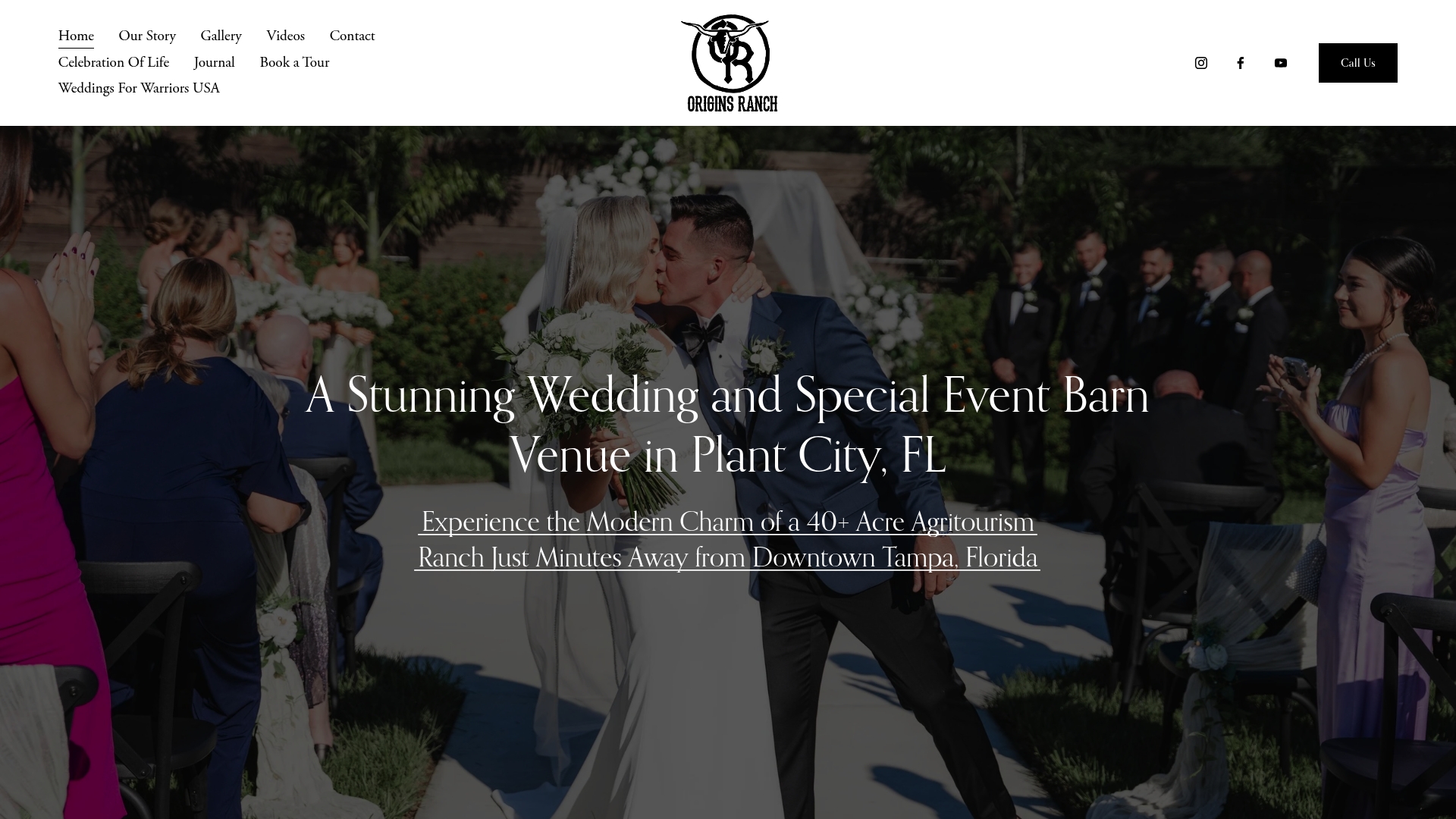
Every event gets personal attention, and we proudly support military and veteran weddings through our charity, Weddings For Warriors. See our barn wedding venue and packages to start planning, or browse our ceremony gallery to see how couples have styled their flowers here.
FAQ
What flowers are best for a country wedding bouquet?
Sunflowers, roses, daisies, baby's breath, lavender and peonies are all strong choices. Roses and sunflowers anchor the bouquet, while baby's breath and greenery fill it out. Choose by season and ask your florist what is freshest for your date.
How do I make a wildflower wedding bouquet look natural?
Use cultivated flowers that resemble wildflowers, such as cosmos, chamomile, scabiosa, Queen Anne's lace and zinnias, and keep to two or three colors. Vary the stem depths and add loose greenery. The goal is a gathered, slightly asymmetrical shape rather than a tight dome.
Can I make my own country wedding bouquet?
Yes. Start with three to five focal blooms, build a loose triangle, add angled greenery and bind it with floral tape and ribbon or twine. Practice once before the wedding week so you know the stems and timing.
What should I wrap a country bouquet with?
Twine, burlap ribbon, lace or a simple cotton wrap are the classics. A strip of lace from a family dress or a ribbon matching your table linens makes it personal.
Do bouquets hold up at a Florida barn wedding?
Our main barn is air-conditioned, which helps keep the day comfortable for guests and flowers alike. Sturdier blooms such as roses and hydrangeas are worth discussing with your florist. Keep the bouquet in water until just before the ceremony.
Sources
- Rustic Wedding Bouquets: Wildflower & Country Ideas
- Simple Country Wedding Bouquets: Flowers, DIY Tips & Ideas
- Rustic Wedding Flowers: Complete Design Guide
- 15 Rustic Wedding Flowers We Love
- Country Wedding Flowers: Rustic Barn & Outdoor Charm
- Best Wedding Bouquet Flowers: Styles, Types & Ideas
- 10 Must-Have Country Wedding Flowers
- 8 Southern Wedding Traditions
- 8 Charming Country-Inspired Wedding Flower Ideas
- Wildflower Wedding Bouquets: A Guide to Colors and Seasons
- Boho Wedding Bouquets: 15 DIY Ideas That Actually Work
- Make This Look: Wildflower Wedding on Virginia Farmland
- The Most Beautiful Fall Sunflower Bouquet Ideas
- 21 Rustic Fall Wedding Bouquets
- Bouquet Recipe: Fall Garden Wedding Bouquet
- 10 Most Ravishingly Rustic Wedding Bouquets
- In-Season Wedding Flowers by Month (2026 Guide)
- Peony Alternatives When Peonies Aren't in Season
- What Flowers Are in Season for an October Wedding?
- How to Make a Bridal Bouquet: A Step-by-Step Guide
- Using Natives in Floral Design, Dyck Arboretum
- 10 Tips for the Perfect Wedding Gallery