
TL;DR:
- A farm wedding involves careful planning of budget, venue, vendors, and decor to ensure a smooth event. Early booking, outdoor experience, and strategic lighting create a refined rustic atmosphere while managing outdoor logistics and weather contingencies. Proper timeline buffers and vendor coordination are essential for guest comfort and event success.
A farm wedding, step by step, is a structured planning process covering budget, venue, vendors, decor, timeline, and contingency plans to create a refined rustic celebration. Done well, it produces one of the most personal and visually stunning weddings possible. Done without a clear plan, it becomes an expensive lesson in outdoor logistics. This guide walks you through every stage in order, with specific timing benchmarks, practical tips, and the kind of detail that separates a smooth wedding day from a chaotic one. Whether you are planning a farm wedding from scratch or refining an existing plan, these steps apply directly to your situation.
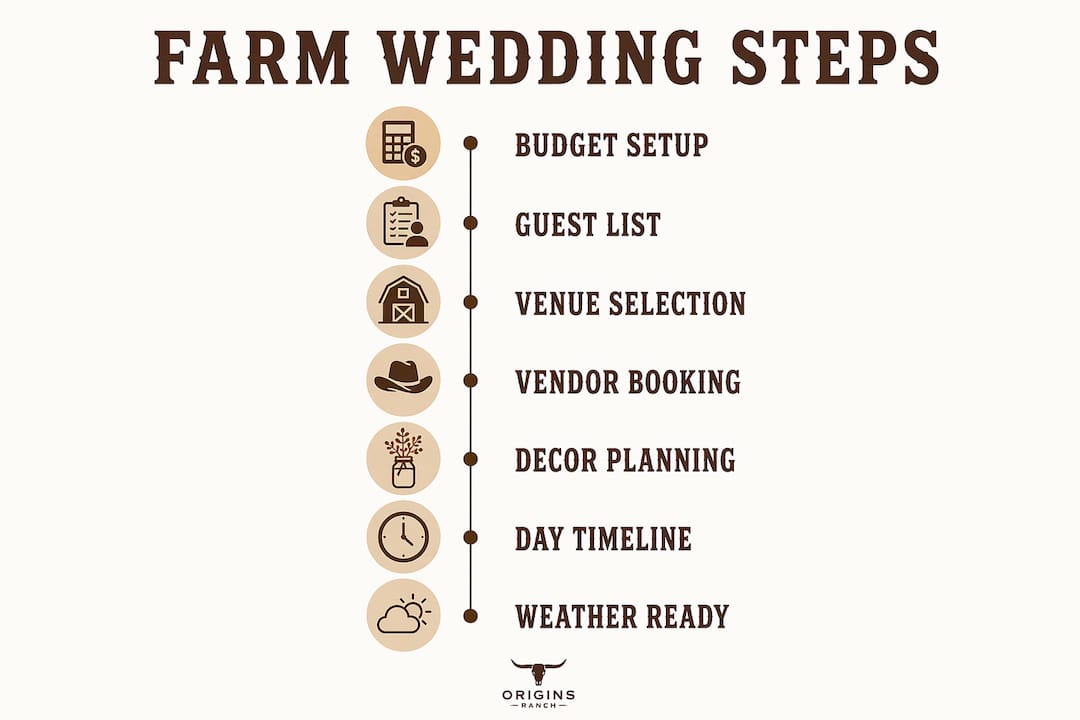
How to plan a farm wedding step by step: start with budget and guest list
The first two decisions you make control every decision that follows. Your budget sets the ceiling for your venue, vendors, and decor. Your guest list sets the floor for your venue's required capacity. Get both wrong, and you will spend months backtracking.

Book your venue 12+ months before your wedding date. Key vendors like caterers, photographers, and florists fill their calendars 9–12 months out. If you wait until six months before, your top choices will already be gone.
Farm weddings carry unique budget traps that indoor venues do not. Outdoor spaces often require rented restrooms, generators, lighting rigs, and shuttle services. These costs add up fast and catch couples off guard. Build a flex buffer of at least 10–15% into your total budget specifically for outdoor logistics.
- Set a firm total budget before visiting any venue
- Determine your guest count before you book anything
- Separate your budget into categories: venue, catering, florals, lighting, transportation, and attire
- Identify which line items are fixed costs versus adjustable ones
- Research local permit requirements for outdoor events in your county
Pro Tip: Write down your non-negotiables before your first venue tour. Knowing your top three priorities prevents you from overspending on features that do not matter to you.
A smaller guest list gives you more flexibility in venue choice and decor quality. A larger list demands a venue with clear zones for ceremony, cocktail hour, and reception. Decide on your approximate headcount before you tour a single property.
What makes a farm venue and vendor team the right fit?
The venue is the backbone of your entire wedding day. Every other decision flows from it. A great farm venue offers natural beauty, a clear layout with defined event zones, adequate restroom facilities, and a team that has hosted weddings before.
Book your venue and vendors 9–12 months before your date, especially for spring and fall weekends. Popular farm venues in the Southeast, including Originsranch in Plant City, FL, fill their best dates a year or more in advance.
Vendor selection for farm weddings requires a different filter than for ballroom events. Farm venues often lack commercial kitchens and standard power setups, which directly affects food safety and electrical capacity. Your caterer must have experience cooking off-site. Your DJ or band must bring adequate power solutions.
- Schedule a site visit at the same time of day as your ceremony
- Walk every zone: ceremony space, cocktail area, reception barn, parking, and restrooms
- Ask the venue coordinator about their preferred vendor list and any vendor restrictions
- Confirm backup power availability and generator capacity
- Discuss rain contingency options during your first walkthrough
- Ask about noise ordinances and the venue's service license end time
- Request references from at least two couples who married there in the last 12 months
Pro Tip: Visit the venue on a rainy day if you can. Seeing how water drains across the property tells you more about logistics than any sunny tour ever will.
Vendors experienced with outdoor events handle problems before they become crises. An indoor caterer placed at a farm without a prep kitchen will struggle. A lighting company unfamiliar with barn structures will underdeliver. Vet your vendors specifically for outdoor and rustic event experience.
How do you decorate a barn for a wedding with refined elegance?
The biggest mistake in farm wedding decor is confusing rustic with crafty. Mason jars, burlap, and chalkboard signs are not inherently wrong, but they become visual noise when overused. The goal is refined rustic elegance, which means letting the architecture and landscape do most of the work.
Lighting is the single most powerful decor tool at your disposal. Chandeliers and uplighting transform a barn interior from a working structure into a breathtaking event space. String lights and fairy lights add warmth, but they work best as accents rather than the primary light source. Safely lit pathways and parking areas are just as important as the barn interior.
"Maintaining a refined aesthetic is key to preventing rustic farm weddings from feeling too crafty, favoring airy fabrics and intentional lighting." — Brides.com
Natural elements anchor the decor without overwhelming it. Seasonal flowers, greenery garlands, and even farm produce like pumpkins or citrus can serve as centerpieces that feel intentional rather than improvised. Work with a florist who has done farm installations before. Large floral arches and hanging installations require structural knowledge of the barn.
- Use linen, gauze, or chiffon fabrics for drapery rather than burlap
- Choose two or three accent colors and repeat them consistently across all decor elements
- Incorporate the venue's existing architecture: exposed beams, barn doors, and stone walls
- Use potted herbs or wildflowers as escort card holders for a personal, functional touch
- Place lanterns or solar path lights along guest walkways for both safety and atmosphere
- Rent wooden farm tables instead of standard banquet tables to reinforce the aesthetic
Pro Tip: Rent a few statement pieces, like a large chandelier or a floral installation arch, rather than buying dozens of small decorations. One dramatic focal point reads better in photos and costs less than you expect.
For more ideas on classy reception decor that translates well to rustic spaces, lighting design and intentional material choices make the biggest difference.
What does a realistic farm wedding day timeline look like?
A farm wedding timeline requires more buffer time than a hotel or ballroom event. The terrain, multiple event zones, and outdoor conditions all slow guest movement. Moving guests between zones typically takes 20–25 minutes at a farm, compared to roughly 10 minutes at a standard venue. That difference compounds across a full wedding day.
The morning schedule sets the tone. Bridal party hair and makeup requires approximately 3 hours, plus 30–45 minutes for dressing. Start earlier than you think you need to. A delayed morning creates a cascade of late arrivals throughout the day.
| Event | Suggested Duration | Notes |
|---|---|---|
| Bridal party prep | 3.5–4 hours | Hair, makeup, and dressing combined |
| Vendor setup arrival | 4–6 hours before ceremony | Caterers, florists, and AV need early access |
| Guest arrival and seating | 30 minutes | Allow extra time for parking and terrain |
| Ceremony | 20–30 minutes | Standard civil or religious ceremony |
| Guest transition to cocktail zone | 20–25 minutes | Account for terrain and golf cart logistics |
| Cocktail hour | 90–120 minutes | Extends to 2 hours for large groups or photo sessions |
| Dinner and speeches | 90 minutes | Limit each speech to 10–15 minutes |
| Dancing and reception | 2–3 hours | Confirm venue curfew before scheduling |
| Last song and exit | 10–15 min before curfew | Sparkler exits need advance coordination |
Rural venue noise licenses typically end at midnight or 1 AM. Last bar orders should close 30 minutes before the venue's end time. Plan your last song and any sparkler exit 10–15 minutes before the hard curfew. Communicate these times clearly to your DJ, caterer, and coordinator.
Pro Tip: Build your timeline backward from your venue's curfew. Starting at the end and working forward prevents the most common scheduling mistake: running out of night before the party ends.
For a detailed rustic barn timeline broken down hour by hour, the specific sequencing of vendor arrivals and event transitions makes the biggest difference in day-of flow.
How do you prepare for weather and guest comfort at a farm wedding?
Outdoor weddings live and die by their contingency plans. A beautiful farm setting becomes a stressful one the moment rain arrives without a backup plan in place. Finalize your Plan B at least 48 hours before your wedding date. That window gives your caterer time to adjust setup, your florist time to reposition installations, and your venue team time to prepare covered spaces.
"Plan B for weather contingency must be decided at least 48 hours in advance to allow vendors to adjust catering and ceremony setup as needed in open-air spaces."
Guest comfort is a logistics problem, not just a hospitality gesture. Guests who are hot, muddy, or confused about where to walk have a worse experience regardless of how beautiful the decor looks. Address comfort proactively with these measures:
- Send a dress code note with your invitations: suggest block heels or flats over stilettos for grass terrain
- Set up hydration stations with infused water and lemonade near high-traffic areas
- Provide blankets or wraps in a basket near the reception entrance for cool evenings
- Place portable fans in the barn or tent if your event falls in summer months
- Arrange shuttle service or golf carts between parking, ceremony, and reception zones
- Confirm accessible pathways for guests with mobility needs during your site walkthrough
Transportation across the property is often overlooked until the day itself. A golf cart shuttle between parking and the ceremony site takes pressure off guests and prevents late arrivals from disrupting the processional. Confirm this logistics detail with your venue coordinator at least one month out.
Key Takeaways
A successful farm wedding requires early decisions, specialized vendors, and a timeline built around outdoor realities rather than ballroom assumptions.
| Point | Details |
|---|---|
| Start 12+ months early | Book your venue and set your budget before any other planning step. |
| Hire outdoor-experienced vendors | Caterers and AV teams must have farm event experience to handle power and food safety. |
| Use lighting as your primary decor tool | Chandeliers, uplighting, and path lights elevate the space and keep guests safe. |
| Build 20–25 min transitions into your timeline | Farm terrain slows guest movement; standard venue timing will leave you behind schedule. |
| Finalize your weather backup 48 hours out | Vendors need that window to adjust setup and protect your day from weather disruptions. |
What we have learned from years of farm weddings at Originsranch
After hosting countless weddings at Originsranch, the pattern is clear: the couples who enjoy their day the most are the ones who made their big decisions early and trusted their vendors to execute. The couples who struggle are the ones who waited too long on the venue, underestimated outdoor logistics costs, or tried to manage every detail themselves on the wedding day.
The detail most couples underestimate is the timeline buffer. Twenty-five extra minutes for guest transitions sounds like a lot until you are watching 120 people navigate a gravel path in the dark. Build that time in deliberately, and your day flows. Skip it, and your dinner runs late, your speeches get cut, and your DJ is packing up before the last dance.
Refined aesthetics matter more than most couples realize going in. The farm's natural character is the backdrop. Your job is to complement it, not compete with it. A single dramatic floral arch, warm uplighting, and clean linen tablecloths will photograph better than a barn stuffed with DIY crafts. Less is genuinely more in a space that already has beauty built in.
The vendor conversation that saves the most stress is the one about power and kitchen access. Have it early. Ask directly whether your caterer has worked without a commercial kitchen before. Ask your DJ what generator capacity they need. These are not awkward questions. They are the questions that prevent the problems you cannot fix on the wedding day itself.
Farm weddings are worth every bit of the extra planning they require. The setting creates an atmosphere that no ballroom can replicate. The key is treating the outdoor environment as a feature to plan around, not a backdrop to ignore.
— Origins
Originsranch: a farm wedding venue worth seeing in person
Originsranch in Plant City, FL began as a World Champion Horse Ranch and has been transformed into a modern, elegant event venue that still carries all of its original charm. The property offers flexible event spaces, a stunning barn interior, and the kind of personalized attention that makes planning feel less like a project and more like a collaboration.

Our founder Barry brings over 20 years of event service experience to every wedding, and his charity, Weddings For Warriors, is dedicated to giving veterans and active duty service members the wedding day they deserve. Whether you are envisioning a grand celebration or an intimate gathering, we would love to show you what is possible. View our wedding gallery to see real setups and get inspired, then reach out to start a conversation about your date.
FAQ
How far in advance should you book a farm wedding venue?
Book your farm venue at least 12 months before your wedding date. Key vendors like caterers and photographers fill their calendars 9–12 months out, so early booking protects your preferred date and team.
What vendors do you need for a farm wedding?
Farm weddings require vendors experienced with outdoor logistics, including caterers who can work without a commercial kitchen, AV teams with generator capacity, and florists familiar with barn installations.
How long should a farm wedding day timeline be?
A full farm wedding day typically runs 10–12 hours from vendor setup to last song. Build in 20–25 minutes for each guest transition between zones, and schedule your last event 10–15 minutes before the venue's noise curfew.
What is the best way to decorate a barn for a wedding?
Use lighting as your primary tool: chandeliers, uplighting, and string lights transform the space. Complement the barn's existing architecture with natural florals and airy fabrics rather than layering in heavy DIY decor.
When should you finalize your weather backup plan?
Finalize your rain contingency at least 48 hours before the wedding. That window gives every vendor enough time to adjust their setup and protects your outdoor ceremony and reception from last-minute disruptions.