
TL;DR:
- Creating a detailed wedding timeline ensures all events are well-coordinated and buffer times are included to prevent delays. Starting backward from the ceremony and accurately allocating time for hair, makeup, and photography helps the day run smoothly. Sharing customized timeline versions with vendors and the bridal party fosters trust and seamless event execution.
A step by step wedding timeline is a detailed, time-blocked schedule that guides you and every vendor through your entire wedding day, from the first curl set to the grand exit. Without one, small morning delays compound into a rushed reception and stressed guests. Resources like Bliss & Bone, Brides, and Kaiplan all confirm the same foundational truth: a full wedding day spans 10 to 14 hours, and every block of that time needs a plan. The industry term for this document is a "wedding day itinerary," though most couples and planners use both terms interchangeably. Build yours correctly, and the day practically runs itself.
What is a step by step wedding timeline?
Your ceremony start time is the single fixed point around which every other event on your wedding day schedule is built. Everything before it gets scheduled backward. Everything after it gets scheduled forward. This is not a suggestion. It is the structural rule that separates smooth weddings from chaotic ones.
Planning backward from the ceremony
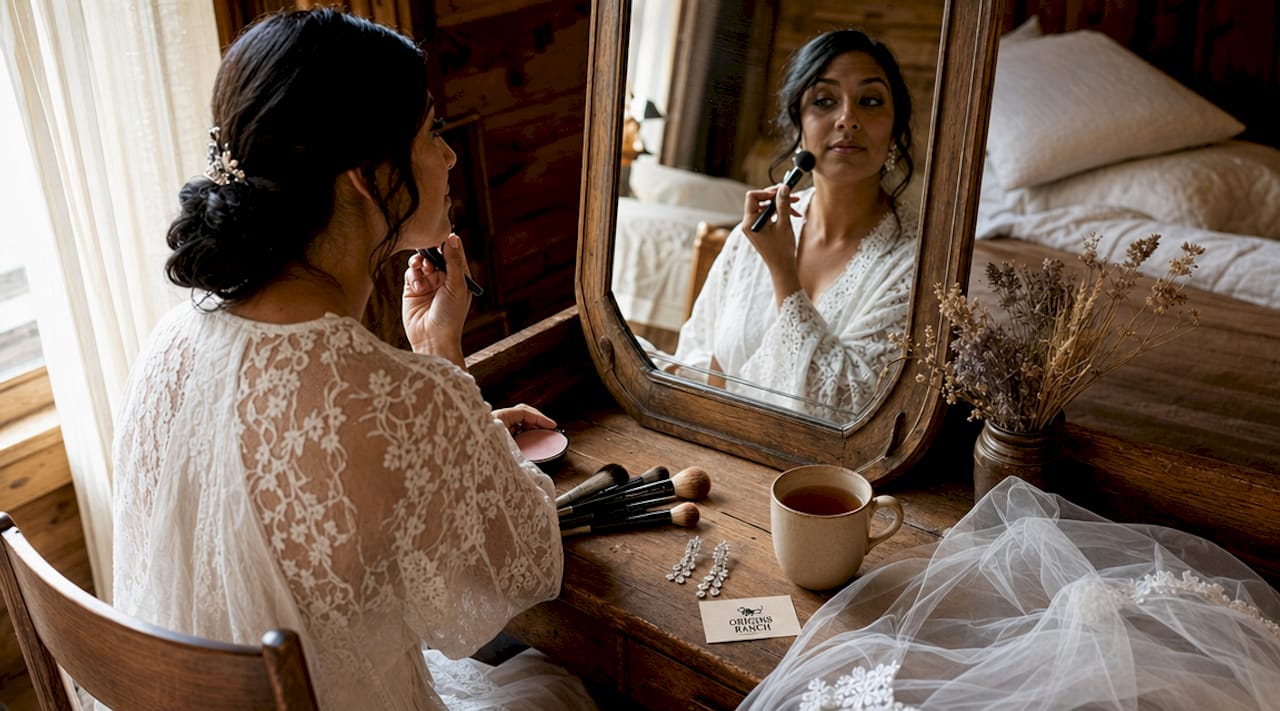
Start with your ceremony time and subtract. If your ceremony begins at 4:00 PM, your photographer needs to arrive no later than 12:30 PM. Photo and video coverage should start at least 3.5 hours before the ceremony to capture preparation and complete portraits. That means hair and makeup must be finished well before the photographer arrives for getting-ready shots, which pushes your bridal prep start even earlier.
Here is how common ceremony times shape the rest of the day:
- 2:00 PM ceremony: Getting ready begins around 7:00 AM. Golden hour falls during cocktail hour, giving your photographer a natural window for portraits without pulling you from guests.
- 3:00 PM ceremony: Getting ready starts around 8:00 AM. Cocktail hour and early reception overlap with the best afternoon light.
- 4:00 PM ceremony: Getting ready starts around 9:00 AM. Sunset portraits happen during the reception, typically around 7:00 to 7:30 PM depending on season and location.
- 5:00 PM ceremony: Getting ready starts around 10:00 AM. Sunset light requires a 30-minute portrait window, so plan to step away from the reception briefly.
Planning forward from the ceremony
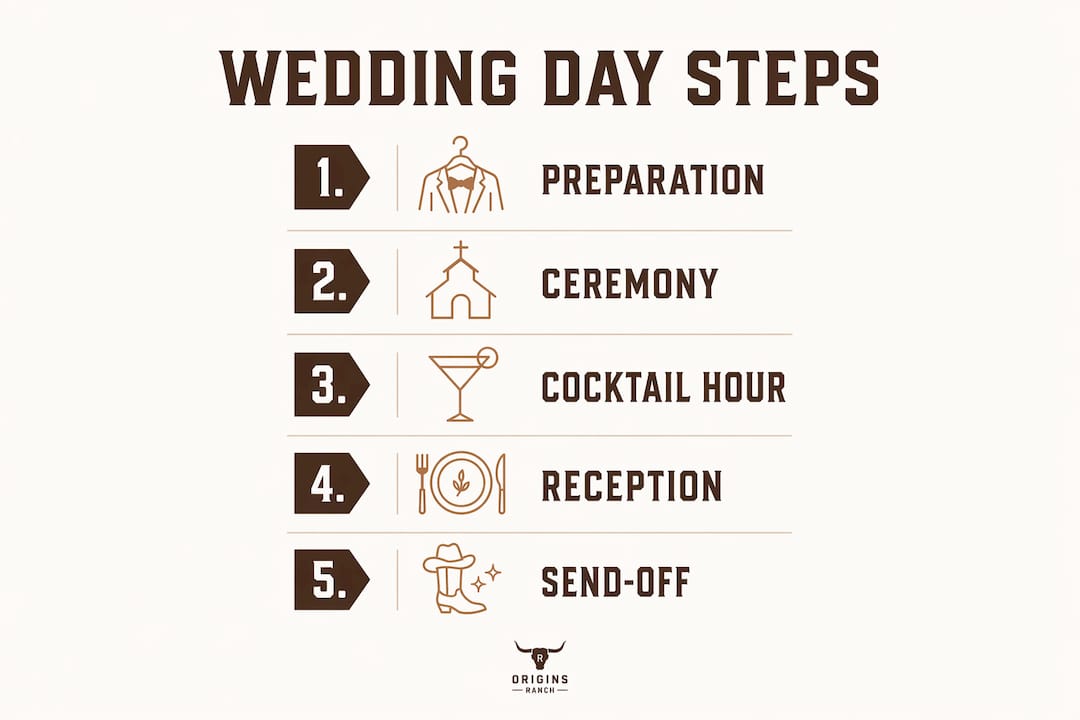
After the ceremony, your wedding day itinerary moves through cocktail hour, reception entrance, dinner, toasts, dances, cake cutting, open dancing, and the grand exit. Each block needs its own time allocation and a buffer on either side.
Pro Tip: Place 15 to 30 minute buffers between every major transition, not just at the end of the night. A buffer after getting ready, one before the ceremony, and one between cocktail hour and reception entrance will absorb almost any delay without affecting the guest experience.
How to schedule each key event in your wedding day
Building out each block of your bridal timeline requires specific time allocations, not rough estimates. Here is a sequential guide to the full day.
-
Hair and makeup. Allocate 90 to 120 minutes for the bride's hair and makeup, and 45 to 60 minutes per bridesmaid. Underestimating this block is the single most common cause of late ceremonies. If you have four bridesmaids, that is up to four additional hours of prep time before you even sit in the chair.
-
Getting-ready photography. Your photographer captures detail shots (dress, rings, shoes, florals) and candid prep moments during this window. Schedule this for the final 60 to 90 minutes of the getting-ready block so the space is tidy and the energy is calm.
-
First look session. A first look, where you and your partner see each other privately before the ceremony, is one of the most time-efficient decisions you can make. It allows you to complete couple portraits before the ceremony, which frees the entire cocktail hour for you to actually enjoy with your guests.
-
Wedding party and family formals. Schedule these immediately after the first look or directly after the ceremony. Allow 10 to 15 minutes for wedding party portraits and 20 to 30 minutes for family formals, depending on the size of your family groupings. Prepare a shot list in advance and share it with your photographer.
-
Ceremony. A typical ceremony runs 30 to 60 minutes. Religious ceremonies, especially Catholic or Jewish services, often run longer. Confirm the exact duration with your officiant and build your timeline around the realistic number, not the optimistic one.
-
Cocktail hour. This 60-minute block serves two purposes: it gives guests a comfortable transition while you complete portraits, and it sets the social tone for the reception. Do not cut it short. Guests who feel rushed during cocktail hour arrive at dinner already unsettled.
-
Reception events. A typical reception lasts 4 to 5 hours and includes the grand entrance, dinner service, toasts, first dance, parent dances, cake cutting, open dancing, and grand exit. Decide the order of these events before assigning clock times. Fitting times to your chosen sequence produces better pacing than forcing events into a rigid structure.
Pro Tip: Toasts placed during dinner service keep the energy high and eliminate the awkward pause between dinner and dancing. Ask your DJ or emcee to cue each speaker between courses rather than stacking all toasts at the end of the meal.
Common mistakes couples make with wedding timelines
Most wedding day delays are predictable and preventable. These are the pitfalls that show up most often, and what to do instead.
-
Skipping buffer time. Small morning delays accumulate and push the ceremony late, which compresses cocktail hour, which rushes dinner, which eliminates open dancing. One 20-minute buffer placed after getting ready prevents this entire chain reaction.
-
Underestimating hair and makeup. This is the most common timeline error. Couples plan for the best-case scenario and get the realistic one. Always add 30 minutes to whatever your stylist quotes you, especially if you have a large bridal party.
-
Ignoring sunset time. Your photographer needs about 30 minutes of sunset light for the best couple portraits. Check the exact sunset time for your wedding date and location, then block that window on your timeline weeks in advance.
-
Not sharing the timeline with vendors. A timeline that lives only on your phone helps no one. Every vendor, including your caterer, florist, DJ, and coordinator, needs a copy before the wedding day.
-
Cramming too many events into the reception. Couples sometimes plan anniversary dances, bouquet tosses, garter tosses, multiple slideshows, and surprise performances all in one evening. Each addition compresses the time available for everything else. Choose the moments that matter most and cut the rest.
-
Using one timeline document for everyone. Your caterer needs load-in times, meal service windows, and vendor meal breaks. Your maid of honor needs to know when to be dressed and where to stand. These are different documents.
"The best wedding timelines are dynamic, collaborative documents shared with all vendors to synchronize operations — not static schedules handed out the morning of the wedding."
For more on how venue coordination affects your day-of timeline, the role of your venue coordinator is worth understanding early in the planning process.
How to finalize and share your wedding timeline
A finished timeline is only useful if the right people have it in the right format. Here is how to close the loop before your wedding day.
Walk through the timeline as a guest. Read it from start to finish and ask: does this feel rushed anywhere? Are there gaps where guests will be waiting with nothing to do? Adjust before you share.
Collect input from your photographer and coordinator. Your photographer knows how long portraits actually take at your venue. Your coordinator knows how long the venue's kitchen needs between courses. Build their feedback into the document before it becomes final.
Create two versions. Separate your vendor timeline from your bridal party summary. The vendor version includes load-in times, parking instructions, meal break windows, and logistical notes. The bridal party version is a clean, one-page summary with only the times they need to know.
Here is what each version should include:
- Vendor timeline: Contact list for all vendors, load-in and setup windows, ceremony and reception start times, meal service schedule, vendor meal break, breakdown and load-out time.
- Bridal party summary: Getting-ready location and start time, first look time and location, ceremony call time, reception entrance time, and any special roles (readings, toasts, dances).
Share it early and update it. Send the vendor timeline at least two weeks before the wedding. If anything changes, send an updated version immediately. Day-of surprises caused by outdated information are entirely avoidable.
Pro Tip: Use your wedding planning checklist to track which vendors have confirmed receipt of the timeline. A quick reply-confirmation from each vendor gives you peace of mind and catches miscommunications before they become problems.
For couples planning a barn or rustic venue wedding, this barn venue workflow guide covers how to reduce delays specific to outdoor and open-air settings.
Key takeaways
A well-built wedding day schedule anchors every event to the ceremony start time, places buffers between major transitions, and reaches every vendor in a format they can actually use.
| Point | Details |
|---|---|
| Anchor to ceremony time | Build backward for prep and forward for reception using ceremony start as the fixed point. |
| Buffer every transition | Place 15 to 30 minute buffers between major blocks, not just at the end of the night. |
| Time hair and makeup accurately | Allow 90 to 120 minutes for the bride and 45 to 60 minutes per bridesmaid to protect the schedule. |
| Create two timeline versions | Send a detailed logistics document to vendors and a simplified one-page summary to the bridal party. |
| Share early and confirm receipt | Distribute the vendor timeline at least two weeks out and collect confirmation from each vendor. |
Why a great timeline is really about trust
After more than 20 years in the event service industry, our founder Barry has seen what separates a wedding that flows from one that fights itself all day. It is almost never the flowers or the food. It is the timeline.
What we have noticed, working with couples at Originsranch, is that the timeline is not just a logistical tool. It is a trust document. When your photographer knows exactly when portraits start, they show up prepared. When your caterer knows the reception entrance time, dinner is hot when guests sit down. When your DJ knows the toast order, transitions feel effortless. Every vendor performs better when they are not guessing.
The couples who enjoy their wedding day the most are not the ones with the most elaborate plans. They are the ones who planned with enough breathing room to be present. A 20-minute buffer feels like wasted time on paper. On the day itself, it feels like a gift.
One more thing worth saying: flexibility is not the opposite of structure. A well-built timeline gives you the freedom to linger in a moment because you know the next one is protected. That is the real value of doing this work in advance.
— Origins
Plan your perfect day at Originsranch
At Originsranch in Plant City, FL, we have built our venue around the kind of wedding day that actually flows. From the spacious getting-ready suites to the open barn and surrounding grounds, every space is designed with your wedding day itinerary in mind. Our team works alongside your photographer, coordinator, and vendors to keep the day on schedule without it ever feeling rushed. Browse our recent wedding gallery to see how real couples have used our space to bring their vision to life, and reach out to start planning yours.
FAQ
What is a wedding day timeline?
A wedding day timeline is a detailed, time-blocked schedule covering every event from getting ready through the grand exit. It serves as the master coordination document for the couple, wedding party, and all vendors.
How far in advance should I build my wedding timeline?
Build a draft timeline as soon as you have confirmed your ceremony start time and venue. Finalize it with vendor input at least four to six weeks before the wedding and distribute it two weeks out.
How long should hair and makeup take on the wedding day?
Allow 90 to 120 minutes for the bride and 45 to 60 minutes per bridesmaid. Underestimating this block is the most common cause of late ceremonies and cascading delays throughout the day.
Should I do a first look before the ceremony?
A first look allows you to complete couple portraits before the ceremony, which frees the cocktail hour for you to spend with guests. It is one of the most practical timeline decisions a couple can make.
How many timeline versions should I create?
Create two versions: a detailed vendor document with load-in times, service windows, and logistical notes, and a simplified one-page summary for the bridal party with only the times they need to know.