
TL;DR:
- A venue coordinator manages venue logistics, staff, and safety but does not handle overall wedding planning.
- Having a venue coordinator reduces delays, manages vendors, and improves guest experience significantly.
- Couples should clearly communicate, share responsibilities, and understand each role to ensure a seamless wedding day.
Planning a barn wedding in Plant City, FL is exciting, but it comes with one persistent source of confusion: the difference between a venue coordinator and a wedding planner. Many couples assume these roles are interchangeable, and that misunderstanding can quietly unravel even the most carefully planned day. Knowing who handles what, and when to lean on each person, is one of the most practical things you can do before your wedding. This article walks you through exactly what a venue coordinator does, why their role matters deeply at rustic and barn venues, and how to make the most of their expertise from your very first site visit.
Table of Contents
- What does a venue coordinator actually do?
- Key benefits of having a venue coordinator at your rustic wedding
- Venue coordinator vs. wedding planner: Who handles what?
- How to work with your venue coordinator for a flawless wedding day
- Our take: Why the venue coordinator is your secret wedding asset
- See how Origins Ranch makes your wedding seamless
- Frequently asked questions
Key Takeaways
| Point | Details |
|---|---|
| Venue coordinator duties | Your coordinator manages logistics, vendor access, and keeps your barn wedding on track. |
| Not a wedding planner | Venue coordinators handle the site; planners oversee the entire event vision and details. |
| Better guest experiences | Weddings with a dedicated coordinator see fewer delays and happier guests. |
| Clear roles prevent stress | Understanding who handles what helps avoid wedding day surprises or miscommunications. |
What does a venue coordinator actually do?
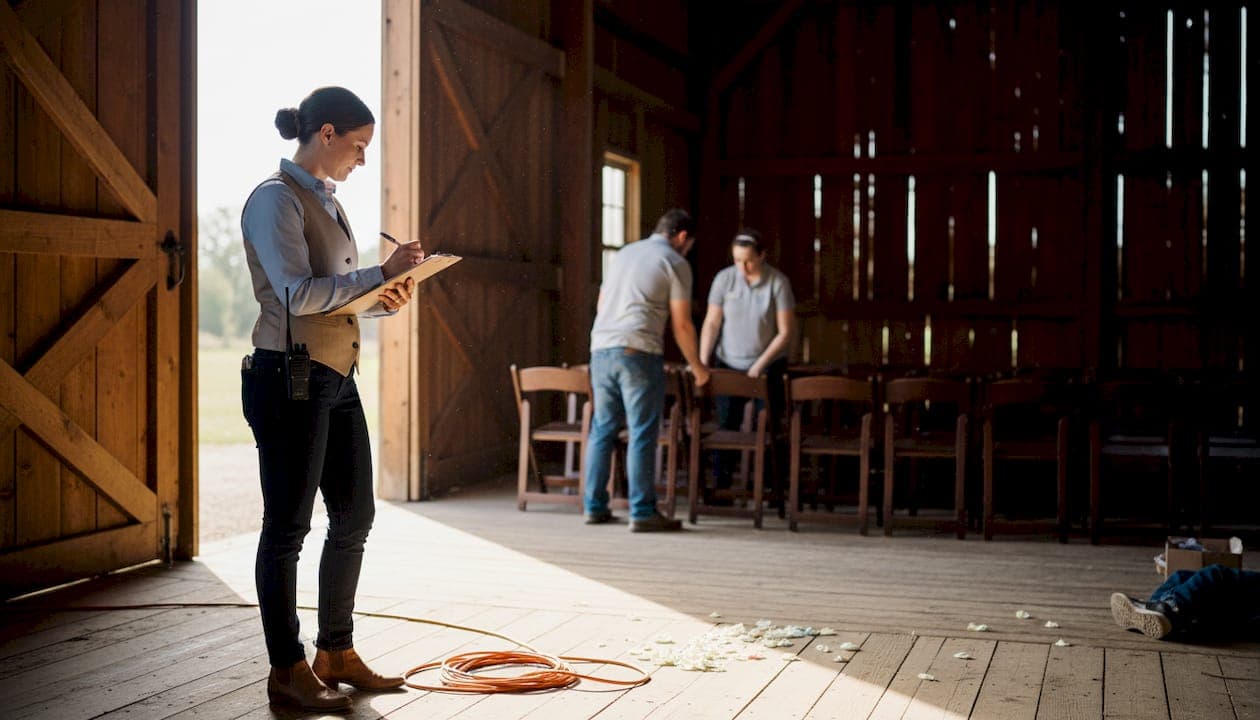
A venue coordinator is the person your venue assigns to manage everything that happens on their property. Their job is to make sure the space runs smoothly, not to plan your entire wedding. This distinction matters more than most couples realize until the big day arrives.
At a barn or rustic wedding venue, the coordinator's responsibilities are very specific. They oversee:
- Venue setup and breakdown: Ensuring tables, chairs, lighting, and decor are arranged according to your approved floor plan
- Staff management: Supervising venue employees including servers, security, and cleaning crews
- Timeline enforcement: Keeping the event on schedule according to your contracted time block
- Vendor access: Letting approved vendors into the space at designated times
- Safety and compliance: Making sure the venue meets fire codes, capacity limits, and other regulations
As explained in who does what in wedding planning, a venue coordinator is focused on venue-related logistics, staff, and basic event flow, not on your overall wedding vision. They are not tracking down your florist's delivery or confirming your officiant's arrival. That falls to a wedding planner.
The venue staff's importance becomes especially clear at barn venues, where the space itself requires careful management. Rustic properties have unique features like outdoor pathways, open-air sections, and non-traditional layouts that need experienced eyes to run properly.
"A venue coordinator is your on-the-ground expert for everything tied to the property. They know every corner of the space, every quirk, and every backup plan."
Pro Tip: Before signing any venue contract, ask your coordinator to provide a written list of every service they cover. This removes guesswork and helps you identify gaps a wedding planner or day-of coordinator will need to fill.
Understanding this role early gives you a clear starting point. You will stop wondering who to call about the catering kitchen layout and who to call about your custom ceremony script.
Key benefits of having a venue coordinator at your rustic wedding
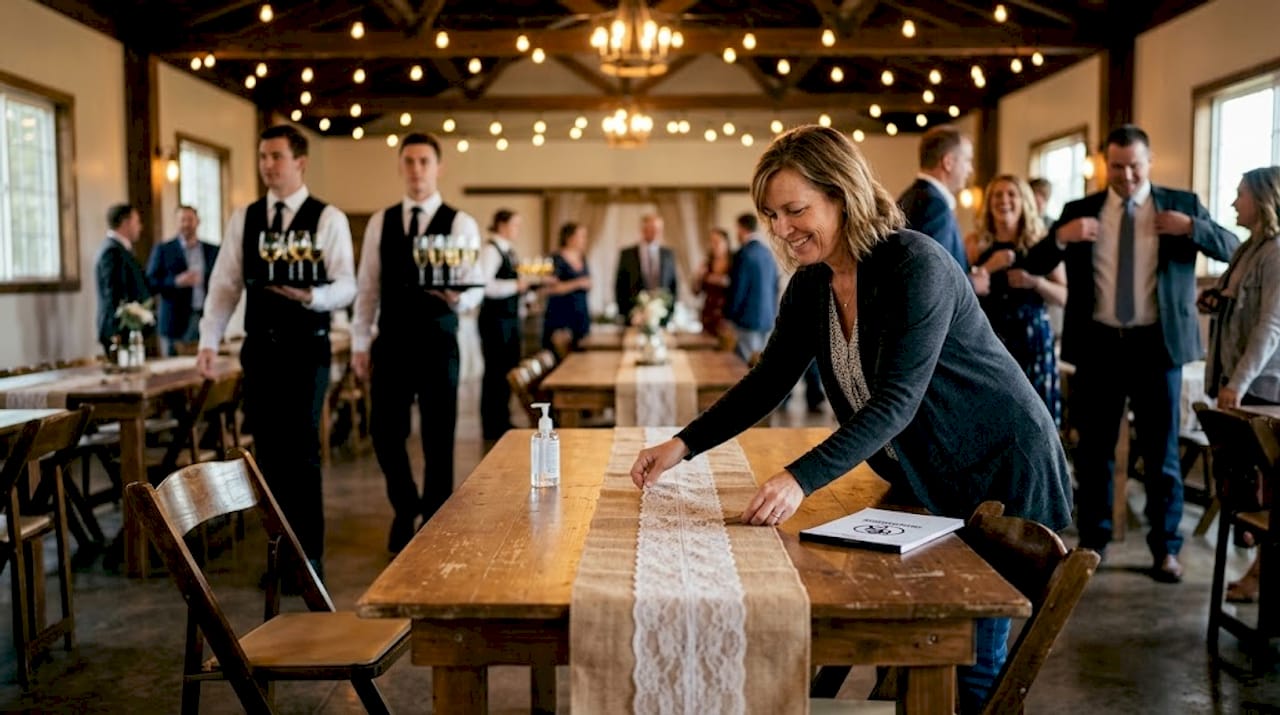
A venue coordinator does more than manage logistics. Their presence on your wedding day creates a ripple effect that improves nearly every part of the experience.
Wedding workflow improvements show that weddings with venue coordinators see up to 70% less delay and 40% higher guest satisfaction. That is not a small impact. Those numbers represent the difference between a seamless evening and a stressful scramble.
Here is a snapshot of what you gain:
| Benefit | Without a coordinator | With a coordinator |
|---|---|---|
| Timeline delays | Common and stressful | Actively managed and minimized |
| Vendor access issues | Frequent miscommunication | Handled before you notice |
| Guest confusion | Guests left to figure it out | Staff guides guests throughout |
| Emergency response | Reactive and chaotic | Calm, practiced, and quick |
| Setup accuracy | Depends on vendor assumptions | Confirmed against your floor plan |
Beyond the numbers, there are real, felt benefits:
- Peace of mind: You stop worrying about whether the tables are set correctly because someone who knows the venue has already checked.
- Vendor troubleshooting: If the DJ arrives late or the caterer needs an extension cord, your coordinator handles it so you never know it happened.
- Guest comfort: At rustic venues, guests sometimes need guidance on parking, restrooms, or outdoor pathways. The coordinator ensures every guest feels welcome and cared for.
Improving guest experience at rustic weddings is one of the most underrated benefits of having a strong coordinator in place. Guests who feel taken care of enjoy the celebration more. And when your guests are happy, you are too.
The value shows up most in the quiet moments you never notice, the things that almost went wrong but didn't.
Venue coordinator vs. wedding planner: Who handles what?
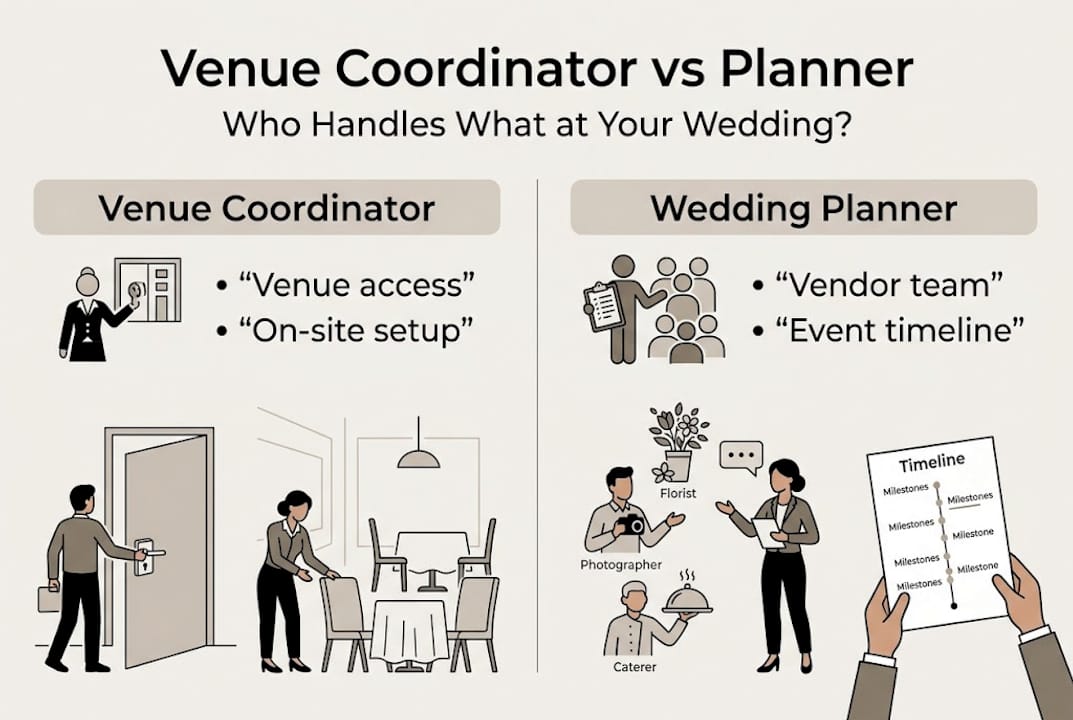
This is the question almost every couple asks. And honestly, the confusion is understandable. Both roles involve managing people and timelines. But as venue event terminology clarifies, venue coordinators focus on the property and included services, while planners manage the entire event vision.
Here is a side-by-side look at how their duties differ:
| Task | Venue coordinator | Wedding planner |
|---|---|---|
| Managing venue staff | Yes | No |
| Overseeing ceremony setup | Yes (within venue scope) | Yes (full vision) |
| Vendor communication before the wedding | No | Yes |
| Day-of vendor troubleshooting | Yes (onsite only) | Yes (full scope) |
| Budget tracking | No | Yes |
| Guest transportation | No | Yes |
| Venue safety and compliance | Yes | No |
| Seating chart coordination | No | Yes |
The numbered breakdown of how wedding planning responsibilities are typically divided can help you build your team:
- Identify your priorities. Start with what matters most to you and map each task to the right person.
- List every vendor and decision. Anything tied to the venue goes to your coordinator. Everything else goes to your planner.
- Confirm coverage gaps. Some tasks fall between both roles. Assign someone explicitly so nothing slips through.
- Put it in writing. Both your coordinator and planner should have documented responsibilities before your wedding week.
Pro Tip: When in doubt about who to contact, ask yourself: "Does this involve the building, the property, or the venue's staff?" If yes, it's your venue coordinator. If it involves outside vendors, guest logistics, or your wedding vision, it's your planner.
Most couples are surprised to learn how many details fall outside the coordinator's scope. That awareness helps you build the right team and avoid gaps that can disrupt your day.
How to work with your venue coordinator for a flawless wedding day
Having a great coordinator is only part of the equation. Knowing how to work with them is what turns a good experience into a great one. As research on the role of venue in celebrations confirms, venue coordinators are most effective when couples communicate regularly and clarify all expectations early.
Here is a step-by-step approach:
- Schedule an early walkthrough. Visit the venue with your coordinator several months before the wedding. Walk the entire property and ask about every logistical detail.
- Discuss your timeline. Share your ceremony and reception schedule in detail. Ask your coordinator to flag any conflicts or concerns.
- Confirm vendor access times. Every vendor who enters the venue should be on an approved list with specific arrival windows.
- Revisit closer to the date. Meet again two to three weeks before your wedding to confirm all details and address any changes.
- Create a shared contact sheet. Give your coordinator the contact information for every vendor. Give every vendor the coordinator's number.
Common mistakes couples make when working with their coordinator:
- Assuming the coordinator has information they were never given
- Failing to share the final guest count or seating chart until the last minute
- Contacting the coordinator for tasks outside their scope instead of asking the wedding planner
- Not reading the venue contract carefully to understand exactly what is and isn't included
Pro Tip: Keep a running two-column checklist labeled "Coordinator" and "Planner." Every time a task comes up during planning, assign it to one column. Review this list at every meeting so nothing gets lost.
This kind of clear, consistent communication builds a working relationship that truly serves you on the most important day of your life.
Our take: Why the venue coordinator is your secret wedding asset
We have seen hundreds of weddings unfold at Origins Ranch, and here is something most planning articles won't tell you: the venue coordinator is often the most underestimated person on your entire team.
Everyone talks about the photographer, the caterer, the DJ. But when rain moves unexpectedly, or a vendor shows up to the wrong entrance, or the ceremony runs 20 minutes long, it is the coordinator who quietly solves the problem before it ever reaches you.
Not all coordinators are equal, though, and your first meeting tells you a lot. A great coordinator asks questions. They want to understand your vision, not just your timeline. They talk about contingency plans before you think to ask. That curiosity and preparation are the marks of someone who genuinely cares about your day.
We also believe the relationship matters. Treating your coordinator as a partner, not just a staff member, changes everything. Share your concerns. Tell them what matters most to you. When they understand the emotional weight of specific moments, they protect those moments instinctively.
For a deeper look at how thoughtful venue transformation insights shape the wedding experience, we encourage you to explore what goes into creating a space that feels both polished and personal. The coordinator is part of that transformation every single time.
See how Origins Ranch makes your wedding seamless
At Origins Ranch, coordination is built into the heart of what we do. Our roots as a World Champion Horse Ranch shaped a space full of charm and character, and our team brings that same spirit to every event we host in Plant City, FL.

We would love to show you how a well-coordinated barn wedding actually looks and feels. Browse our real wedding receptions for inspiration and a glimpse into what seamless execution can look like in a space as stunning as ours. We are also proud to support military families through our weddings for warriors event program, because every love story deserves to be celebrated right. Reach out and let's start planning yours together.
Frequently asked questions
What should I expect from a venue coordinator at a barn wedding?
Expect logistical support, timeline management, staff supervision, and help with vendor access, but not full event planning. As clarified in roles in wedding planning, venue coordinators focus on running the venue and event flow, not overall planning.
Can the venue coordinator replace a wedding planner?
No. A venue coordinator handles only venue-specific operations, while a wedding planner manages the full scope of your wedding details. Venue coordinators handle onsite tasks, not event-wide design or logistics.
How early should I meet with my venue coordinator before our wedding?
Ideally, meet several months in advance and again a few weeks before to confirm details and clarify duties. Early and clear communication maximizes your coordinator's effectiveness.
Do I still need a day-of coordinator if my venue has a coordinator?
Yes, some couples hire a day-of planner for guest management and details not covered by venue staff. Venue coordinators focus on property and staff, not full event execution.
Recommended
- Event success: the strategic role of venue staff
- Streamline Your Barn Wedding: Perfect Ceremony Workflow
- How wedding vendors make your rustic barn wedding happen
- Roles in Wedding Planning: Who Does What Matters
- Your essential guide to wedding event management success - team I
- How to Coordinate with Wedding Photographer for Seamless Coverage