
TL;DR:
- A well-planned ceremony workflow prevents awkward silences and enhances emotional impact.
- Customizing elements allows personal expression while maintaining smooth transitions.
- Clear roles and rehearsals are crucial to avoid delays and ensure seamless ceremony execution.
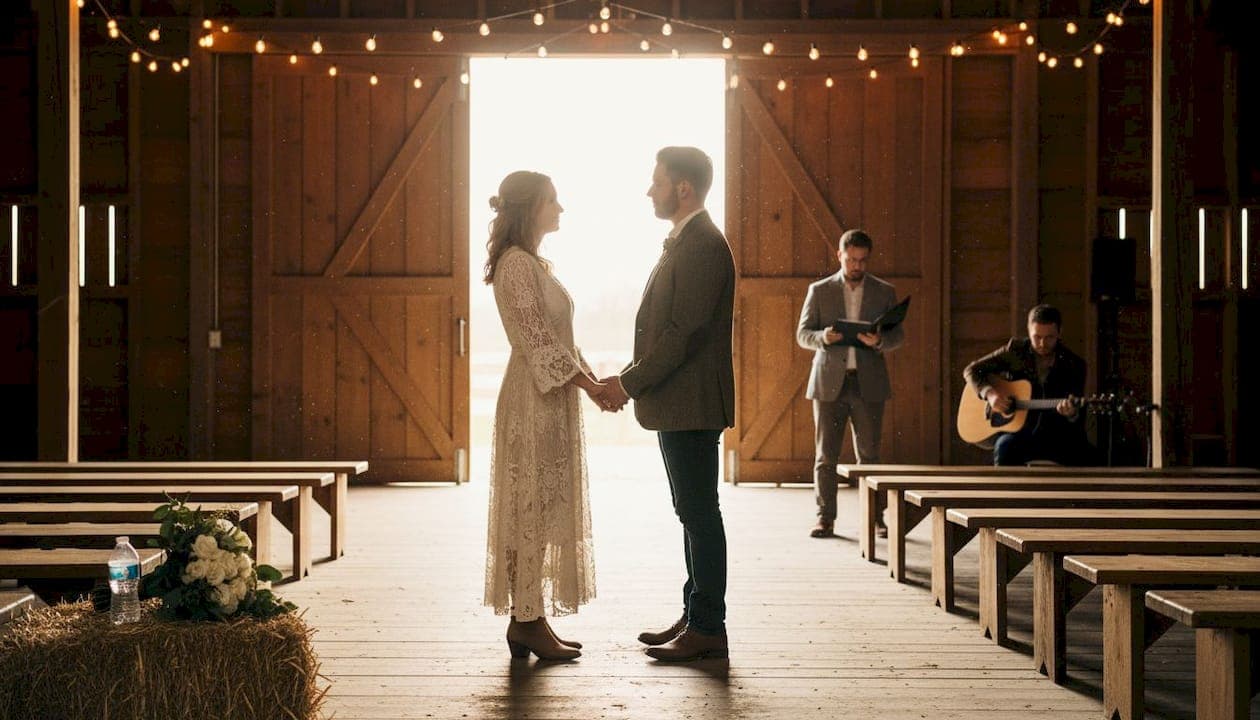
Picture this: your guests are seated, the music fades, and everyone waits. Then nothing happens. A minute passes. Whispers start. That awkward silence is every couple's nightmare, and it happens more often than you'd think at barn weddings across Florida. The good news is that it is completely avoidable. A well-planned ceremony workflow eliminates dead air, keeps emotions running high, and makes every moment feel intentional. In this guide, we'll walk you through exactly how to build a ceremony workflow that fits your rustic barn wedding, from the first note of the processional to the last cheer of the recessional.
Table of Contents
- Understand the essentials: What makes a great barn wedding ceremony workflow
- Step-by-step ceremony flow: The ideal order and timing
- Customize your workflow: Traditional vs. personalized ceremony structures
- Troubleshooting and expert tips: Preventing common workflow mistakes
- Why great ceremony flow is the secret to memorable barn weddings
- Host your perfect ceremony at Origins Ranch
- Frequently asked questions
Key Takeaways
| Point | Details |
|---|---|
| Plan clear transitions | Scheduling and rehearsing transitions prevents awkward silences and confusion during your ceremony. |
| Tailor to fit your day | You can customize your ceremony workflow to reflect your personalities, regardless of tradition. |
| Assign roles early | Designate specific ceremony roles ahead of time to ensure each moment flows smoothly. |
| Rehearse your sequence | A practice run gives everyone clarity and boosts your confidence on the big day. |
Understand the essentials: What makes a great barn wedding ceremony workflow
A ceremony workflow is simply a detailed, timed sequence of every event that happens during your wedding ceremony. Think of it as a stage manager's script for your big day. It tells everyone involved exactly what happens, when it happens, and who is responsible. Without it, even the most beautifully decorated barn can feel chaotic.
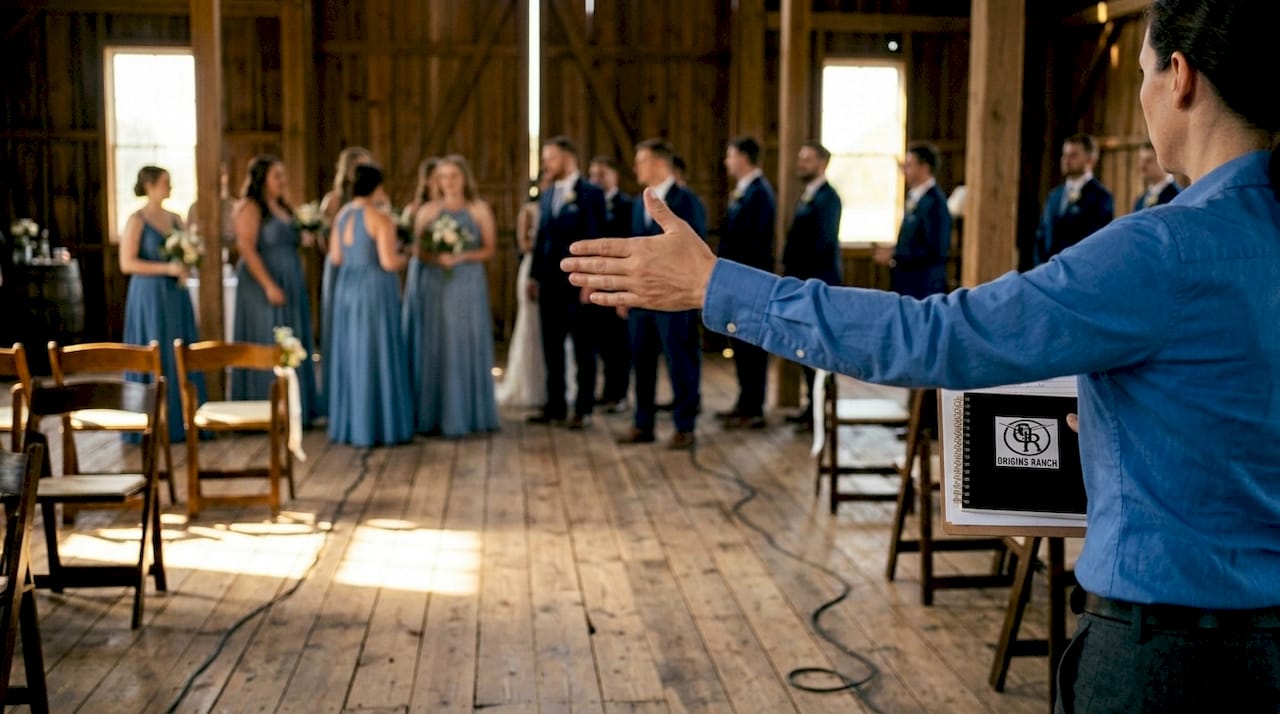
For rustic barn weddings in Florida, a solid barn venue wedding workflow has to account for some unique challenges. Florida summers bring sudden afternoon rain, which means you need a backup plan baked right into your timeline. Barn acoustics can be tricky too. Sound bounces differently in an open wood structure compared to a traditional church, so microphone placement and speaker positioning matter more than most couples expect.
The role of venue in weddings goes far beyond providing a pretty backdrop. Your venue's layout shapes how guests move, where the wedding party assembles, and how sound travels. Understanding these factors before you finalize your workflow saves you from scrambling on the day itself.
One often-overlooked tip: avoid dead air and rehearse transitions, and consider an unplugged ceremony to improve photo quality and keep guests fully present.
Typical ceremony elements and timing
| Element | Estimated time | Key considerations |
|---|---|---|
| Guest seating | 20 to 30 min | Ushers guide guests, music sets mood |
| Processional | 5 to 8 min | Music cues, pace, wedding party order |
| Welcome and opening | 3 to 5 min | Officiant tone, microphone check |
| Readings or rituals | 5 to 10 min | Reader placement, timing |
| Vows and ring exchange | 5 to 10 min | Personal vow length, ring bearer cue |
| Pronouncement and kiss | 1 to 2 min | Photographer position |
| Recessional | 3 to 5 min | Music cue, exit order |
Must-have roles to assign for a smooth ceremony:
- Officiant: Leads the ceremony and keeps pacing on track
- Wedding coordinator: Manages the workflow behind the scenes
- Musicians or DJ: Executes all music cues on time
- Ushers: Direct guests and manage seating flow
- Ring bearer and flower girl wrangler: Keeps little ones on cue
- Photographer and videographer: Positioned and briefed on the sequence
Step-by-step ceremony flow: The ideal order and timing
With requirements and roles clear, here's exactly how the ceremony should flow for maximum impact and minimal stress.
- Guest seating (20 to 30 minutes before start): Ushers guide guests to their seats while soft background music plays. This sets the emotional tone before anything formal begins.
- Seating of family members (5 to 8 minutes before start): Grandparents and parents are escorted in a specific order, usually grandparents first, then parents. This signals that the ceremony is about to begin.
- Wedding party processional: Bridesmaids, groomsmen, flower girls, and ring bearers walk in sequence. Music tempo and cue changes matter here.
- Entrance of the couple: The most anticipated moment. Music shifts, guests stand, and emotions peak.
- Welcome and opening words (3 to 5 minutes): The officiant sets the tone with a brief, warm welcome.
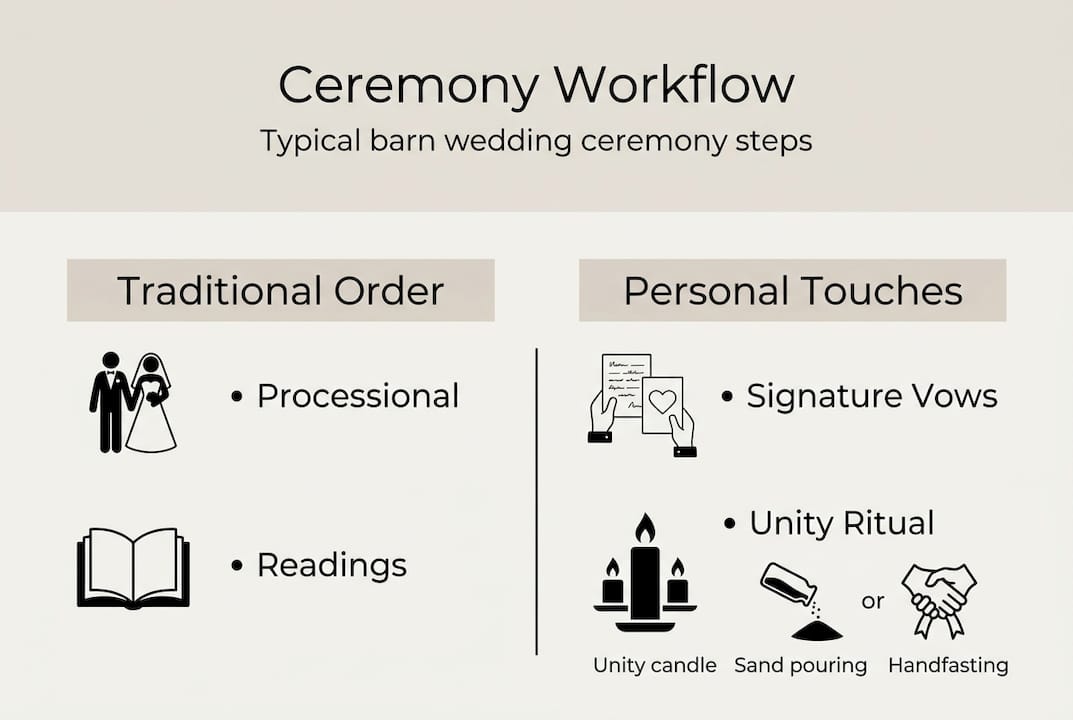
- Readings or unity rituals (5 to 10 minutes): A friend or family member shares a reading, or the couple performs a unity candle or sand ceremony.
- Vows and ring exchange (5 to 10 minutes): The heart of the ceremony. Personal vows should stay under three minutes each to keep energy high and guests engaged.
- Pronouncement and first kiss (1 to 2 minutes): Brief, powerful, and perfectly timed with the photographer.
- Recessional: The couple exits to celebratory music, followed by the wedding party and then guests.
Knowing your roles in wedding planning ensures each step has a person responsible for executing it. Familiarize yourself with wedding venue terminology so everyone on your team speaks the same language during planning.
Pro Tip: Walk through every transition at your rehearsal, not just the processional. Practice the handoff from readings to vows, and from vows to the recessional. These micro-transitions are where dead air sneaks in.
Customize your workflow: Traditional vs. personalized ceremony structures
After building on a solid standard workflow, consider how you might tailor the experience to fit your personalities and priorities.
Traditional ceremony structures follow a fixed order that most guests recognize. They feel familiar and comfortable, which can be reassuring for older relatives or more formal families. Custom workflows, on the other hand, give you the freedom to reflect who you are as a couple. As wedding processional experts note, traditional fixed ceremonies contrast sharply with custom workflows tailored to each couple's needs, and neither approach is wrong.
Traditional vs. customizable ceremony elements
| Element | Traditional approach | Customizable option |
|---|---|---|
| Processional order | Groomsmen first, then bridesmaids | Any order, including couples together |
| Readings | Religious scripture | Personal poetry, song lyrics, letters |
| Vow style | Standard vows | Fully written personal vows |
| Unity ritual | Candle lighting | Sand, wine, tree planting |
| Seating arrangement | Bride's side, groom's side | Open seating for all guests |
| Exit | Couple first, then party | Couple and guests exit together |
When you personalize your barn wedding ceremony, you create moments that feel genuinely yours rather than borrowed from a template. Many couples find that personalized weddings for Tampa couples resonate more deeply with guests because the details feel authentic.
Top ways to personalize your ceremony:
- Adjust the processional order to honor your family structure, including same-sex couples or blended families
- Choose readings that reflect your relationship, not just tradition
- Declare an unplugged ceremony moment so guests are fully present
- Add a surprise musical performance or a meaningful ritual
- Write a custom welcome from the officiant that tells your story
Learning how to personalize a barn wedding is about knowing which elements are flexible and which ones anchor the experience for your guests.
Troubleshooting and expert tips: Preventing common workflow mistakes
Even with the best plan, things can go sideways. Here's how to solve problems before they sour your big moment.
Top 5 mistakes couples make with ceremony workflow:
- Skipping the rehearsal entirely or running through it too quickly
- Leaving roles undefined so no one knows who gives the music cue
- Building a timeline with zero buffer time between elements
- Forgetting to brief vendors on the ceremony sequence beforehand
- Writing personal vows with no time limit in mind
As ceremony planning experts emphasize, clear transitions and engaged staff are essential to avoid awkward silences that pull guests out of the emotional moment.
"Dead air is the enemy of emotion. The second guests notice a pause that wasn't planned, they disconnect. Your ceremony workflow should make every silence feel intentional, not accidental."
Your wedding planning roles should be documented and shared with every vendor at least a week before the wedding. Visit the ceremony gallery to see how seamless transitions look in action at a real barn venue.
Pro Tip: Add five minutes of buffer time after guest seating and before the processional begins. It sounds small, but it absorbs late arrivals, last-minute adjustments, and nervous energy without derailing your entire timeline.
If timing slips during the ceremony, your coordinator should have a quiet signal system with the officiant to gently speed up or slow down a section. A brief reading can be shortened. A unity ritual can be simplified. Having a plan B for each element keeps you in control even when surprises happen.
Why great ceremony flow is the secret to memorable barn weddings
Here's what we've learned from hosting dozens of ceremonies at Origins Ranch: couples obsess over centerpieces and florals, but guests remember how the ceremony felt. They remember whether they cried, whether they laughed, and whether they felt connected to the moment. None of that happens without smooth flow.
We've seen stunning ceremonies in simple settings and forgettable ones in breathtaking spaces. The difference is almost always the barn venue wedding workflow. When transitions are clean and every person knows their role, the emotional arc of your ceremony builds naturally. Guests lean in. Tears happen at the right moments. The kiss lands with full impact.
The trend toward personalization is real and wonderful. But here's our honest take: no amount of custom vows or creative rituals saves a ceremony that keeps stalling. Flow is the invisible architecture that holds everything else together. Get that right first, then layer in the personal touches. That's the order that actually works.
Host your perfect ceremony at Origins Ranch
If you're ready to turn this ceremony workflow into reality, Origins Ranch is here to help bring your vision to life. Our team has the experience and passion to support every detail of your ceremony logistics, from acoustics to timing cues.
Explore our ceremony inspiration gallery to see how real couples have created seamless, emotional ceremonies right here on our ranch. If you're a veteran or active duty service member, learn how our Weddings For Warriors USA program can help make your dream wedding a reality. And when you're ready to start making memories, reach out to schedule your personal tour. We'd love to show you the magic of Origins Ranch firsthand.
Frequently asked questions
How long should a barn wedding ceremony last?
Most barn ceremonies last 20 to 30 minutes, striking the right balance between meaningful moments and keeping your guests fully engaged throughout.
How do you avoid 'dead air' during the ceremony?
Rehearse every transition at your rehearsal and assign clear roles to each team member so that each part of the ceremony moves along seamlessly without awkward pauses.
What are the key roles in managing ceremony flow?
The officiant, coordinator, musicians, and ushers are the four pillars of a smooth ceremony, as outlined in roles in wedding planning, ensuring every moment happens right on cue.
Can we customize the processional order for our ceremony?
Absolutely. You can personalize any element of your workflow, including the wedding order of procession, readings, and rituals, to reflect your unique story as a couple.