
TL;DR:
- Creating a detailed wedding timeline ensures all vendors and family members move smoothly through the day, allowing you to enjoy the moments that matter most.
- Start with fixed anchor times, include buffer periods, and confirm details with vendors well in advance to prevent delays and chaos.
Your wedding day moves fast. Without a clear plan in place, even the most beautifully arranged celebration can spiral into a stressful blur of missed cues, rushed photos, and frantic vendor calls. That is why knowing how to create wedding timelines is one of the smartest things you can do before the big day arrives. A good timeline does not just list times on a page. It keeps your photographer, caterer, hair team, and family all moving in the same direction, so you can actually be present for the moments that matter most.
Table of Contents
- Key Takeaways
- How to create wedding timelines: what you need first
- Building your wedding day timeline step by step
- Common mistakes that derail your wedding schedule
- Finalizing and verifying your timeline before the wedding
- Our honest take on wedding timeline perfection
- Let Origins Ranch help you plan your perfect day
- FAQ
Key Takeaways
| Point | Details |
|---|---|
| Start with anchor times | Build your entire timeline backward from the ceremony start, sunset, and venue end times. |
| Buffer time prevents chaos | Add 15 to 30 minutes between major transitions to absorb real-world delays without panic. |
| Finalize 30 days out | Lock in your timeline one month before the wedding and confirm with vendors 5 to 7 days prior. |
| Create two versions | Give vendors a logistics-heavy version and keep a clean, simple version for yourselves and family. |
| Assign a point person | Designate someone other than the couple to handle vendor communication on the wedding day. |
How to create wedding timelines: what you need first
Before you write a single time slot, you need the right information in front of you. Trying to build a timeline without confirmed details is like mapping a road trip without knowing your destination. Gather these before you sit down to plan.
Here is what to confirm before you start:
- Ceremony start time and venue access hours. Know exactly when vendors can begin load-in and when the venue closes. These two times form the boundaries of your entire day.
- Vendor commitments and arrival windows. Confirm every vendor's expected arrival, setup time, and departure. Your florist, photographer, caterer, and DJ all need to be accounted for.
- Guest headcount and seating chart status. Finalize your headcount approximately one month before the wedding. This affects catering setup, seating arrangements, and reception flow.
- First look decision. If you choose a first look, you can move couple portraits to before the ceremony, which frees up cocktail hour and dramatically relaxes your schedule.
- Photo locations and travel logistics. If portraits happen off-site, even a 10-minute drive needs to be built into the timeline with cushion on both ends.
Pro Tip: Ask your photographer how much time they need for each photo segment before you finalize anything. Photographer time for portraits typically runs 60 to 90 minutes for couple photos with a first look and 30 to 45 minutes for wedding party shots. Most couples underestimate this significantly.
Understanding the typical structure of a wedding day also helps. A ceremony usually runs 20 to 30 minutes, and a reception typically spans 4 to 5 hours of total event time. When you add getting-ready time, portraits, and transitions, the full day often stretches 8 to 12 hours.
Building your wedding day timeline step by step
Now you are ready to build. The method that works best for most couples follows a backward-planning approach. You start with the fixed moments and fill in everything else around them.
Step 1: Identify your anchor times.
Start with the ceremony start time and work backward. Also note your sunset time (critical for golden-hour photos) and your venue's hard end time. These three anchor points structure everything else.
Step 2: Work backward through the day.
From your ceremony start, subtract the time needed for each segment leading up to it. This is where most couples need to think carefully. Hair and makeup alone can take far longer than expected.
| Segment | Time to Allow |
|---|---|
| Hair per person | 45 to 60 minutes |
| Makeup per person | 30 to 45 minutes |
| Getting dressed and detail photos | 30 to 45 minutes |
| First look and couple portraits | 60 to 90 minutes |
| Wedding party photos | 30 to 45 minutes |
| Buffer before ceremony | 30 minutes |
Step 3: Schedule hair and makeup strategically.
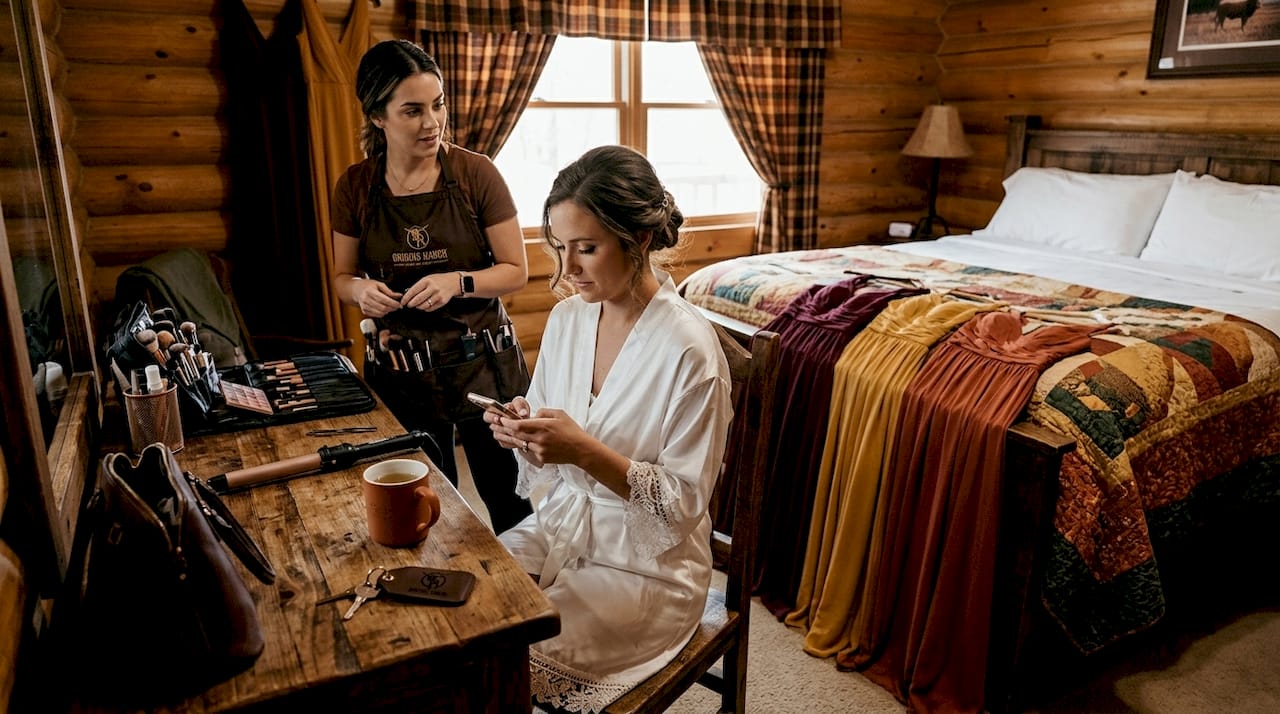
Schedule the bride last for hair and makeup so her look stays fresh for photos and the ceremony. Work backward from her appointment time to figure out when the first bridesmaid needs to sit in the chair.
Step 4: Add buffer time throughout.
Build in 15 to 30 minutes of buffer between every major transition. This is not wasted time. It is the breathing room that keeps a 10-minute delay from becoming a 45-minute crisis. Add at least 30 minutes of buffer immediately before the ceremony start.
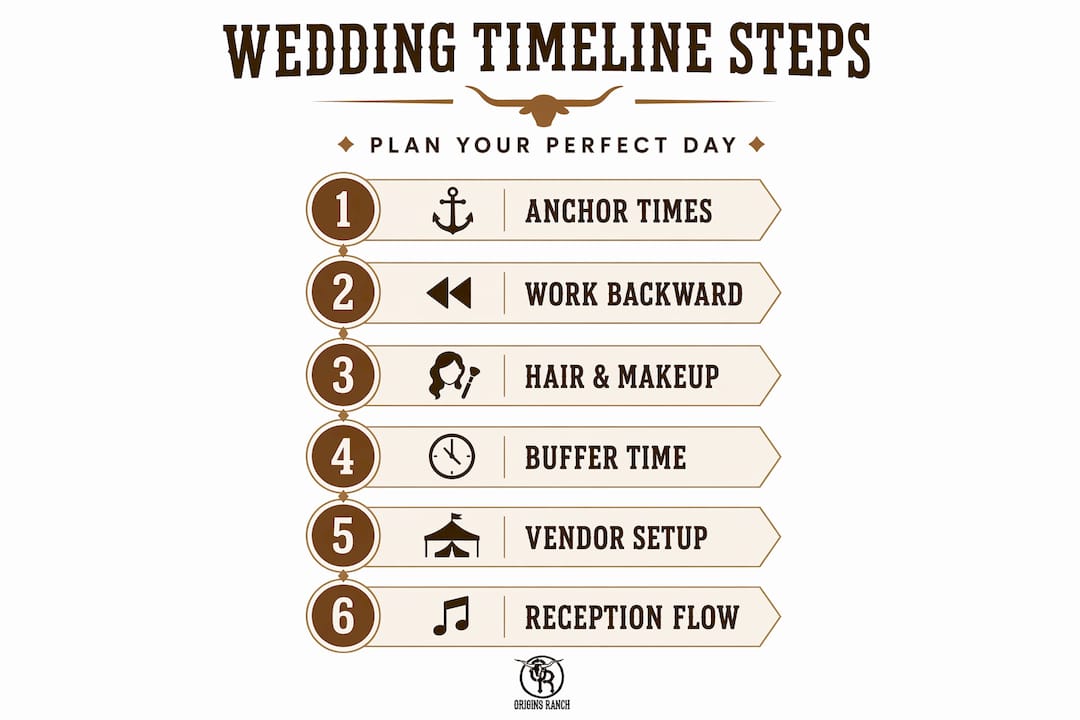
Step 5: Coordinate vendor arrival and setup separately.
Vendors need to know their load-in times, not just event times. A photographer arriving at the same time as guests cannot capture those candid getting-ready moments. Create a vendor-only timeline that includes parking details, load-in instructions, and access codes so they arrive prepared and do not need to interrupt you with questions.
Step 6: Map out reception flow.
Once the ceremony ends, your reception timeline takes over. Plan your cocktail hour, grand entrance, first dance, toasts, dinner service, cake cutting, and any open dancing segments in sequence. Avoid scheduling dinner too late in the evening, and be realistic about how long toasts actually run.
Pro Tip: Print physical copies of the timeline for your wedding party, family leads, and venue coordinator. Text messages get lost in the excitement of the day. A laminated or printed sheet is far more reliable.
Common mistakes that derail your wedding schedule
Even couples who create wedding agendas carefully can fall into predictable traps. Knowing what goes wrong most often helps you avoid it.
- Underestimating hair and makeup time. If you have five bridesmaids, a flower girl, a mother of the bride, and yourself, you could easily be looking at six or more hours of beauty prep. Count every person, multiply by their service times, and add buffer.
- Skipping buffer times entirely. This is the single most common mistake. Every transition, every drive, every family photo gathering takes longer than planned. Buffer times prevent small delays from cascading into major disruptions.
- Not sharing the timeline in advance. Share your timeline with vendors at least two weeks before the wedding. A vendor who sees the timeline for the first time on the wedding day is a vendor who may show up late or unprepared.
- Cramming too many activities into the reception. A slideshow, a shoe game, a sparkler send-off, a bouquet toss, and a photo booth can all sound great individually. Stacked back to back, they eat your dance floor time and leave guests feeling like they are watching a production rather than a party.
- Skipping the first look to stay traditional. Many couples feel strongly about not seeing each other before the ceremony, and that is completely valid. But if you skip the first look, make sure your timeline accounts for the fact that all couple and wedding party portraits must happen after the ceremony, which typically compresses cocktail hour significantly.
"The goal of a timeline is not to control every minute. It is to protect the moments that matter most by creating space around them."
Finalizing and verifying your timeline before the wedding
A timeline is only useful if it is confirmed, distributed, and ready to be acted on. Here is how to close the loop in the final month.
- Lock it in 30 days out. Finalize your timeline approximately 30 days before your wedding. This gives you time to catch gaps and make adjustments before vendors' schedules fill up.
- Create two separate documents. One is your couple-facing timeline, clean and simple, listing events by time. The other is your vendor timeline, which includes load-in details, parking info, point-of-contact names, and service end times. A detailed vendor timeline reduces day-of confusion without you having to field questions.
- Make your confirmation calls. Five to seven days before the wedding, call or email every vendor to confirm their arrival time and answer any remaining questions. This final check surfaces last-minute conflicts before they become wedding-day surprises.
- Assign your day-of point person. Designate someone other than the couple to manage vendor communication on the day itself. This person handles questions, keeps things moving, and acts as the liaison between your timeline and the real world.
- Accept that adjustments will happen. The timeline is a flexible playbook, not a rigid contract. A wedding coordinator or experienced venue team can absorb minor delays and keep flow intact without the couple ever noticing.
Pro Tip: Give your point person a printed vendor contact list alongside the timeline. If the florist is running late or the caterer has a question, your point person should be able to handle it with one phone call, not five frantic texts to you.
Our honest take on wedding timeline perfection
I have been part of more weddings than I can count, and the one thing that surprises most couples is this: the timeline matters far less for its precision than for its existence. What I mean is that having a written plan, even an imperfect one, gives every person on your team a shared reference point. Without it, each vendor operates in isolation and makes independent decisions that can conflict with each other.
What I have seen go wrong most often is not a ceremony running 10 minutes long. It is the ripple effect when no one on the team knows what was supposed to happen next. The photographer waits for direction. The caterer holds the appetizers. The DJ plays filler music for 20 minutes. A timeline, even a loose one, prevents that vacuum.
I have also seen couples drive themselves to tears trying to make the day run exactly on schedule. The couples who enjoy their weddings the most are the ones who built in buffer, trusted their vendors, and made peace with the idea that the day would flow, even if it did not run precisely to the minute. A good venue coordinator role is invaluable here. They carry the timeline so you can carry the moments.
My advice: build your timeline with care, share it generously, and then let it do its job while you focus on getting married.
— Origins
Let Origins Ranch help you plan your perfect day
At Origins Ranch in Plant City, FL, we know that a beautiful wedding starts with a thoughtful plan. Our experienced team has worked alongside couples and vendors to create days that feel effortless, because the hard work of coordination happened long before the first guest arrived.

Whether you are in the early stages of figuring out how to plan a wedding or you are ready to finalize every detail, our team is here to support you. We offer personalized attention, gorgeous event spaces, and the kind of hands-on coordination that makes your timeline actually work. And if you or your partner has served our country, we hope you will explore our Weddings For Warriors program, our founder Barry's heartfelt commitment to giving veterans the wedding they deserve. Come see what is possible at Origins Ranch.
FAQ
How far in advance should you create your wedding timeline?
Start building your wedding day timeline three to six months before the wedding, and finalize it about 30 days out. Send it to all vendors at least two weeks before the event.
How long should a wedding day timeline be?
A typical wedding day runs 8 to 12 hours from the start of hair and makeup through the end of the reception. Planning for the full span helps you avoid scheduling gaps or a rushed exit.
What is the best way to build a wedding schedule in hours?
Start with your ceremony start time and work backward, assigning realistic time blocks for each segment. Add 15 to 30 minutes of buffer between major transitions to prevent delays from snowballing.
Should you give vendors a copy of the wedding timeline?
Yes, always. Share a vendor-specific version of your timeline at least two weeks before the wedding. This version should include load-in times, parking details, and contact information so vendors can operate independently.
What is a day-of point person and do you need one?
A day-of point person is someone you designate, not the couple, to manage vendor questions and keep the timeline on track throughout the wedding day. Having this person in place allows you to stay focused on celebrating rather than coordinating.