
TL;DR:
- Rustic weddings require detailed logistical planning for venues, transportation, staffing, and technology.
- Starting logistics preparations 6 to 12 months ahead ensures smooth execution and reduces stress.
- Managing transportation, weather risks, and vendor coordination is crucial for rural Florida wedding success.
You can spend months choosing the perfect wildflower bouquet, sourcing reclaimed wood centerpieces, and tasting every cake on the menu, yet one overlooked logistical detail can unravel your entire wedding day before the first dance even begins. Couples planning rustic and country weddings in Plant City, FL face a unique set of challenges that go far beyond décor decisions. Rural venues bring magic, but they also bring real logistical puzzles: unpaved roads, Florida heat, distant parking, and vendor coordination across wide open spaces. This guide walks you through every critical step so your wedding day feels effortless, charming, and exactly as you imagined.
Table of Contents
- What is event logistics? The foundation of your wedding day
- Key steps and timelines for rustic wedding logistics
- Managing transportation and guest movement in rural venues
- Coordinating vendors, staff, and day-of execution
- What most wedding guides overlook about rural logistics
- Stress less, discover expert venues and planning tools
- Frequently asked questions
Key Takeaways
| Point | Details |
|---|---|
| Logistics are everything | Well-managed logistics are essential for a seamless and memorable rustic wedding experience. |
| Plan with extra buffer | Extra time for arrivals, vendors, and weather makes a huge difference in Florida weddings. |
| Coordinate all roles | Clearly assign tasks and use checklists to keep staff, vendors, and guests in sync throughout the event. |
| Test and communicate | Do test drives on all routes and clearly communicate transportation and site logistics to your guests beforehand. |
| Start early and review | Begin logistics planning months ahead and measure event success with both guest feedback and timing. |
What is event logistics? The foundation of your wedding day
Let's start with a simple question that many couples skip entirely: what exactly is event logistics? You hear the word thrown around, but it's worth understanding clearly because it shapes every decision you'll make.
Event logistics involves planning and coordinating operational aspects like venue selection, transportation, catering, staffing, and technology to ensure smooth execution across pre-event, during-event, and post-event phases. In plain terms, it's the invisible framework that keeps everything moving. Think of it like the bones beneath the beautiful body of your wedding. Nobody sees the bones, but without them, nothing holds together.
For rustic and country weddings specifically, this framework matters even more. A traditional hotel ballroom comes with built-in infrastructure: elevators, loading docks, climate control, on-site parking. A barn venue in Plant City does not. Every element must be intentionally planned and managed, which is both the challenge and the joy of this setting.
Here are the core elements of wedding event logistics you need to account for:
- Venue logistics: Layout, capacity, power supply, restrooms, and indoor-outdoor flow
- Transportation: Shuttle coordination, parking management, accessibility routes, and signage
- Staffing: Who manages setup, serves guests, handles emergencies, and leads tear-down
- Catering logistics: Kitchen access, food safety in heat, delivery timing, and dietary needs
- Technology: Sound systems, lighting rigs, generators, and backup power sources
Skipping even one of these areas creates stress on the day. We've seen stunning weddings nearly derailed because no one accounted for where the food trucks would park, or because the power supply couldn't handle both the DJ booth and the catering equipment simultaneously.
"The best wedding logistics work like a backstage crew at a theater performance. The audience sees only magic. Behind the scenes, every move is choreographed."
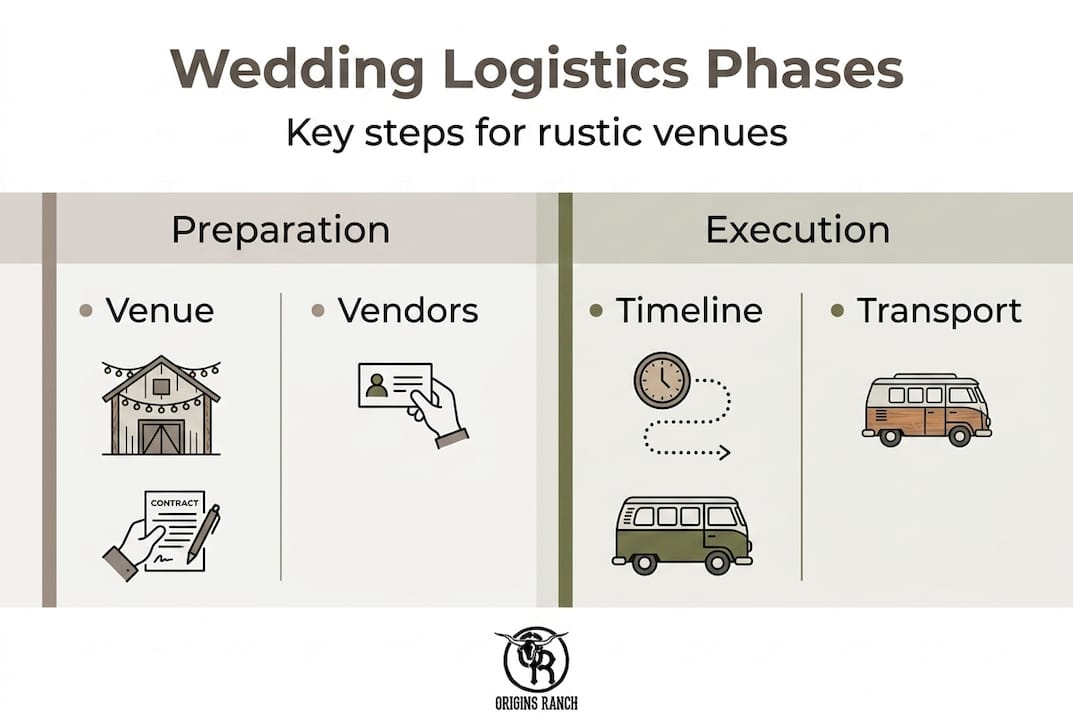
There are three main logistical phases every couple should understand. First comes preparation, where everything is planned, contracts are signed, and walk-throughs happen. Second is active management, meaning the live execution on the wedding day itself. Third is wrap-up, which includes vendor departures, venue reset, and collecting feedback. Understanding these phases helps you stay organized and know when each decision needs to be made. If you're still getting familiar with the language of venues, this venue terminology explained guide is a great place to get grounded.
Key steps and timelines for rustic wedding logistics
Now that you understand what event logistics actually means, let's get into the practical work: when to do what, and in what order.
Planning a rustic wedding in Plant City is a layered process. Couples who start early and work in phases have dramatically smoother experiences than those who try to sort everything in the final two months. Here's a step-by-step approach that works:
- 12+ months out: Choose and contract your venue, confirm the date, and do your first site walk-through. Identify power supply limitations, parking capacity, and any physical accessibility needs for guests.
- 9 months out: Book your key vendors (caterer, photographer, DJ, florals). Share the venue layout with each vendor so they can plan their setup needs in advance.
- 6 months out: Draft your full event-day timeline. Map out arrival windows for each vendor, ceremony start time, reception flow, and departure times.
- 3 months out: Confirm all contracts, share finalized timelines with every vendor, and plan a second venue walk-through with your coordinator present.
- 4-6 weeks out: Finalize transportation plans, communicate parking details and maps to guests, and test all technology and sound systems at the venue.
- 1-2 weeks out: Do a final run-through of driving routes to the venue. Confirm all vendor arrival times one more time in writing.
- Wedding day: Have a printed timeline ready for every team lead. Designate a point person to handle questions so you stay focused on celebrating.
According to best practices in event planning, early planning, venue site visits for accessibility, detailed timelines with buffers, vendor coordination, and contingency plans for weather or delays are the hallmarks of a successful event.
Here's a sample rustic venue logistics timeline to help you visualize a typical wedding day:
| Time | Activity | Who is responsible |
|---|---|---|
| 9:00 AM | Venue opens for vendor access | Venue manager |
| 9:30 AM | Catering team arrives, begins kitchen setup | Catering lead |
| 10:00 AM | Florals and décor delivery begins | Floral team and coordinator |
| 12:00 PM | AV and sound check complete | DJ and AV tech |
| 2:00 PM | Bridal party arrives for photos | Photographer and coordinator |
| 3:30 PM | Guest shuttle service begins | Transportation lead |
| 4:00 PM | Ceremony begins | Officiant and coordinator |
| 5:00 PM | Cocktail hour starts | Catering and bar team |
| 6:00 PM | Reception formally begins | MC or DJ |
| 10:00 PM | Last dance, farewell | Venue and coordinator |
| 10:30 PM | Vendor breakdown and departure | All vendors |
Pro Tip: Always build in a 15 to 20 minute transit buffer for guests traveling Plant City's backroads, and at least a 2-hour vendor arrival buffer if you're running a multi-day event. Florida traffic and afternoon storms can and will show up uninvited. Building buffer time into your barn venue wedding workflow is one of the smartest moves you can make.
Managing transportation and guest movement in rural venues
With your timeline mapped, the next puzzle is getting everyone where they need to be, when they need to be there. Transportation is consistently one of the trickiest logistical challenges for rural weddings, and it deserves serious attention.
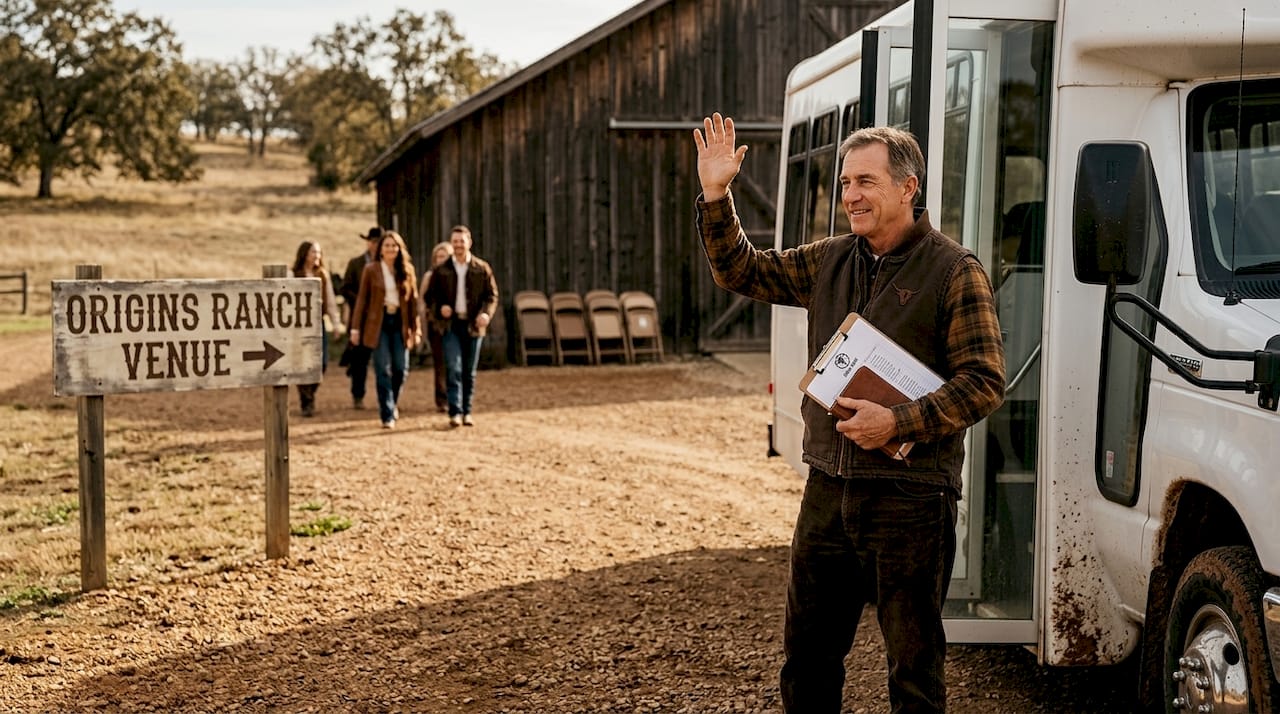
Wedding transportation logistics covers bridal party vehicles, guest shuttles, parking management, and route testing one to two weeks prior to the event. At a rural venue in Plant City, this is not a box to check lightly. Dirt roads, limited parking, and guests unfamiliar with backroads mean a clear transportation strategy is essential.
Here are the key transportation needs you must plan for:
- Bridal party transport: Dedicated vehicles for the wedding party to travel between getting-ready locations, ceremony, and reception
- Guest shuttles: Buses or vans that run set routes between a central meeting point (like a hotel) and the venue
- Parking management: Clear designated areas with a volunteer or attendant directing arrivals
- Accessibility vehicles: Transport options for elderly guests or those with mobility needs
- Late-night departures: A pickup schedule for guests leaving after the reception, especially if alcohol is served
When it comes to getting guests to a rural venue, the two main strategies are shuttle buses or individual cars. Here's how they compare:
| Factor | Shuttle buses | Individual cars |
|---|---|---|
| Cost | Higher upfront, shared among guests | Minimal to zero added cost |
| Guest convenience | High, especially for those unfamiliar with area | Moderate, requires clear directions |
| Parking demands | Low, fewer cars on property | High, needs a managed lot |
| Environmental impact | Lower per-person footprint | Higher per-person footprint |
| Control over timing | Strong, set schedule | Unpredictable, guests straggle in |
| Best for | Remote venues, larger guest counts | Venues with ample parking and easy access |
For most Plant City barn venues, a combination works best. Offer a shuttle option for out-of-town guests and those staying at nearby hotels, while welcoming local guests who prefer to drive.
Pro Tip: Drive the route to your venue yourself, one to two weeks before the wedding day. Do it at the same time of day as your expected guest arrival. You'll catch any surprises: road construction, poor signage, or sections where GPS leads people astray. Share a custom map with guests alongside any digital invitations or wedding websites.
Clear communication is your best tool. Digital tools like Google Maps pins, printable map cards, and wedding websites with directions all help. Pair them with physical signage near the venue entrance and any tricky turns along the route. Helping guests understand venue choice and guest experience starts with making them feel confident they can actually find the place.
Coordinating vendors, staff, and day-of execution
Your venue is stunning. Your guests are arriving. Now every vendor and staff member needs to perform their role flawlessly, and they need to do it as one team.
Day-of coordination is where months of preparation either pay off or fall apart. The key is clear role assignments, shared timelines, and one designated decision-maker who is not you. Here are the essential team members for a smooth rustic wedding:
- Venue manager: Oversees the physical space, manages setup access, and handles facility issues
- Wedding coordinator: Manages the overall timeline, keeps vendors on track, and troubleshoots in real time
- Catering lead: Supervises food timing, service flow, and kitchen logistics
- AV technician: Manages sound, lighting, and any technical equipment throughout the event
- Transportation coordinator: Keeps shuttle schedules running and manages parking
Every one of these team members should receive a printed copy of the finalized timeline and your contact sheet at least 48 hours before the wedding. Relying on text messages on the wedding morning is a recipe for missed messages and miscommunication. Clarity and preparation are what separate a good event from a great one, and understanding the distinct wedding planning roles each person carries helps you build the right team.
Industry insight: On-time vendor arrivals and well-organized staff can reduce day-of stress by up to 50%, which means more energy and joy for you and your guests from ceremony to last dance.
Contingency planning is not pessimistic. It's wise. In Florida, afternoon thunderstorms are practically a tradition. Have a plan for moving portions of the event indoors, protecting your sound equipment, and keeping guests comfortable if the heat spikes. Your venue staff roles should include someone whose job it is to monitor the weather and activate the backup plan when needed.
After the wedding, gather feedback. Ask your coordinator to document what ran smoothly and what caused friction. These post-event notes become invaluable if you're hosting another event, and they help venues like ours improve your experience over time.
What most wedding guides overlook about rural logistics
Here's a perspective we've earned through years of experience in the event industry: most wedding guides focus almost entirely on aesthetics and almost not enough on operational reality.
Gorgeous photos of chandeliers in barn rafters and wildflower arches are inspiring. But what happens when the generator trips at 6 PM because three vendors plugged into the same circuit? What happens when the only road to the venue floods after a 30-minute storm? What happens when bugs arrive at dusk and no one planned for pest control? These are not edge cases at rural Florida venues. They are real scenarios that we have navigated, and that you should plan for.
The contrarian truth is this: great aesthetics cannot compensate for overlooked logistics. A venue can be breathtakingly beautiful and still produce a miserable experience if the operational details are not handled. The couples who look back on their wedding day with pure joy are almost always the couples who gave equal weight to the logistics as to the flowers.
Rural Florida venues demand specific preparation that urban venues simply do not require. Backup power is not optional. It's a necessity when your ceremony relies on a microphone and your DJ is running a full lighting rig. Extra water stations and shade structures are not afterthoughts during a Florida summer wedding. And bug control, especially at dusk near wooded areas, requires a proactive plan rather than a reactive scramble.
Our deepest advice: over-budget on time, not just money. Give vendors more arrival time than you think they need. Build longer cocktail hours. Add a buffer between ceremony and dinner service. The couples who tell us they loved every moment of their wedding almost universally had those "empty" extra minutes baked into the day. They used them to breathe, to hug their family, to take in the moment. That's what the role of venue in weddings should ultimately support: space for you to actually be present.
The best weddings feel effortless to guests. That feeling is never an accident. It is the result of someone, usually a dedicated coordinator and an experienced venue team, who sweated every detail long before the first guest pulled into the parking lot.
Stress less, discover expert venues and planning tools
Planning a rustic wedding in Plant City should feel exciting, not overwhelming. At Origins Ranch, we've spent years helping couples transform the beautiful chaos of wedding planning into a smooth, joyful experience grounded in real operational expertise.

Our team brings hands-on venue management, AV expertise, and a genuine love for making your day exactly right. Whether you're still in the dreaming stage or ready to nail down the details, we'd love to show you what the ranch can do. Book a venue tour and see the space in person, or browse our wedding venue gallery to spark ideas and picture your celebration on our grounds. Where our ranch is your ranch, and every couple deserves a wedding that feels like magic from the first hello to the last dance.
Frequently asked questions
What's the biggest logistical challenge at rural wedding venues?
Transportation and coordinating guest arrivals are the top logistical challenges, especially when venues are remote or have limited parking and access routes.
How early should I start logistics planning for my rustic wedding?
Begin at least 6 to 12 months in advance, following best practices that include site visits, timeline drafts, and vendor contracts well before the event date.
Should I hire a coordinator for day-of logistics?
Yes. A day-of coordinator manages vendor arrivals, keeps timelines on track, and handles unexpected issues, which ensures smooth execution and lets you focus fully on celebrating your day.
How are weather risks managed for Florida country weddings?
Build contingency weather plans into your schedule from the start, following event planning best practices that account for heat, rain delays, and outdoor-to-indoor transitions well before the wedding day.