
TL;DR:
- Planning a country wedding requires early venue booking, thorough vendor coordination, and a solid weather contingency plan. Layered decor combining rustic charm with elegant touches creates a warm and visually appealing atmosphere. Attention to guest comfort and logistics ensures a memorable celebration that seamlessly integrates with the rural setting.
A country wedding is defined as a celebration that blends rustic outdoor charm with the practical demands of a full-scale event. Knowing how to organize a country wedding means coordinating venue selection, vendor scheduling, decor, guest logistics, and weather backup plans well before your wedding day arrives. The couples who pull it off beautifully share one trait: they start early and plan for every detail specific to rural settings. This guide walks you through each phase, from choosing the right barn venue to keeping guests comfortable on uneven terrain, so your celebration feels effortless even when the planning behind it was anything but.
How to choose the right venue for a country wedding
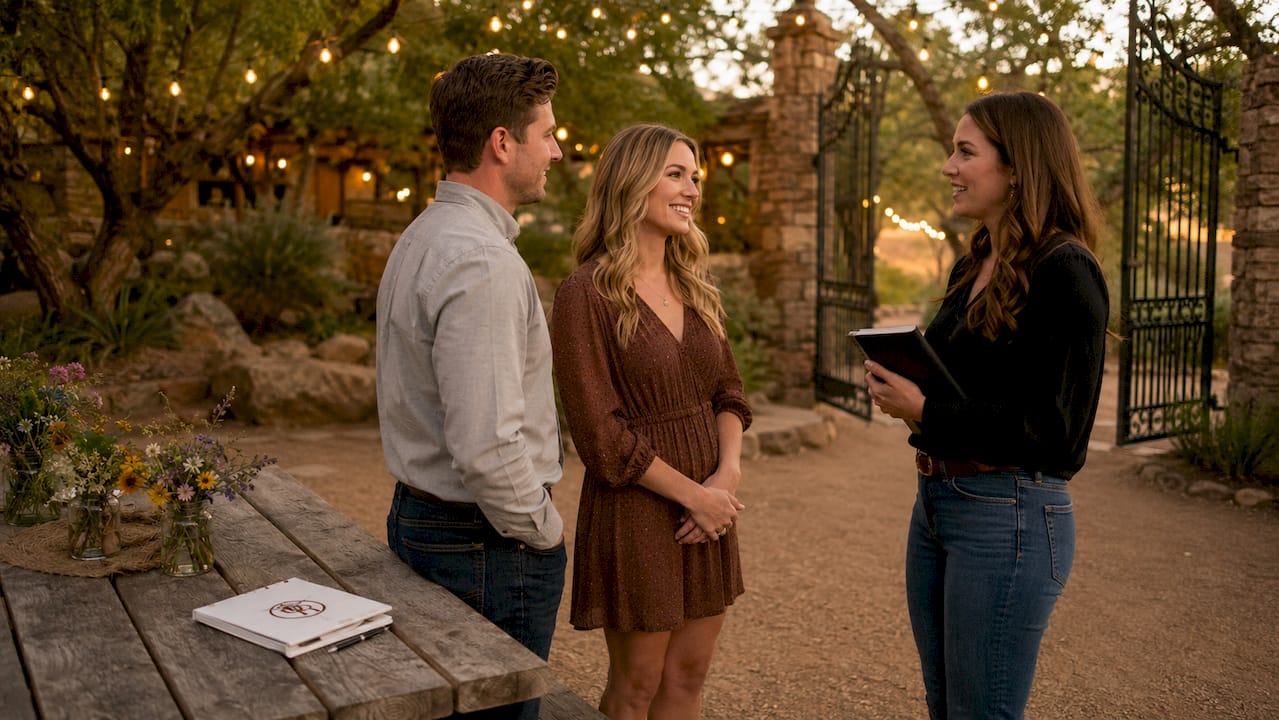
The venue is the single most consequential decision in rustic wedding organization. Everything else, from your catering setup to your floral choices, flows from what the space can physically support.
What to look for in a barn or outdoor venue
Start your venue selection process by evaluating these core factors before you fall in love with the aesthetics:
- Booking window: Book 12–24 months ahead for peak season dates. May, June, September, and October fill fastest at popular rural venues.
- Budget range: Barn venues typically cost between $3,000 and $15,000. That range shifts significantly based on whether furniture, lighting, and climate control are included.
- Electrical capacity: Historic barns often lack the electrical infrastructure to run lighting, sound, and catering equipment at the same time. Always request an electrical load test during your site visit.
- Parking and access: Confirm paved or gravel parking areas, ADA accessibility, and whether the venue allows vendor vehicles near the loading zone.
- Vendor restrictions: Some venues require you to use their preferred vendor list. Know this before you sign.
Pro Tip: Ask the venue coordinator to walk you through the property during the same time of day your ceremony will take place. Lighting conditions, sun angles, and noise from nearby roads change everything.
Terrain is a detail many couples overlook until the day of the wedding. Gravel paths and uneven ground are charming in photos but genuinely hazardous for guests in formal footwear. Flag this early so you can address it in your invitations and on your wedding website.
What vendors do you need for a rustic country wedding?
Vendor coordination is where many country wedding plans break down. Rural venues present logistical challenges that urban banquet halls simply do not. The right vendors know this going in.
How to build and manage your vendor team
- Caterer: Confirm whether the venue has a commercial kitchen or requires a self-contained catering setup. Many barns have no kitchen at all, which limits your options and raises costs.
- Florist: Choose someone experienced with wildflowers, dried botanicals, and outdoor installations. Arrangements wilt faster in heat and wind than in air-conditioned ballrooms.
- Photographer: Hire a photographer who has shot at rural venues before. They understand golden hour light in open fields and know how to work around barn shadows.
- Wedding coordinator: A coordinator familiar with rustic venues is not optional. Vendor coordination must include clear setup and teardown times and full familiarity with venue restrictions. Without this, you risk vendors arriving without a plan.
- Sound technician: Outdoor acoustics are unpredictable. A professional who has worked open-air or barn events will bring the right equipment and know where to position speakers.
Pro Tip: Request a single-page vendor contact sheet with names, cell numbers, arrival times, and assigned setup zones. Share it with every vendor two weeks before the wedding. This one document prevents most day-of communication failures.
Lean on your venue's preferred vendor list when you can. These vendors already know the property, the electrical panel, the loading dock, and the quirks of the space. That familiarity is worth more than you might expect on a high-pressure day. For a deeper look at what services matter most, the essential barn wedding services guide covers the full picture.
How do you decorate a country wedding beautifully?
The best country wedding decor does not choose between rustic and refined. It uses both. The goal is a space that feels warm and natural without looking unfinished.
Rustic vs. elegant: finding the right balance
| Element | Rustic approach | Elegant upgrade |
|---|---|---|
| Centerpieces | Mason jars with wildflowers | Crystal vases with garden roses |
| Lighting | String lights on exposed beams | Chandeliers with warm Edison bulbs |
| Table linens | Burlap runners | Linen or gauze overlays |
| Seating | Hay bales with blankets | Wooden cross-back chairs |
| Backdrop | Raw barn wood | Draped fabric with greenery |
Gauzy drapes, chandeliers, and warm uplighting can transition a barn from raw to refined without erasing its character. That transformation is the heart of what makes country weddings so visually striking.
Lighting deserves its own planning conversation. String lights create warmth but do not provide enough illumination for dining or dancing. Layer your lighting: ambient string lights overhead, uplighting along walls, and focused task lighting at the bar and buffet. For a full walkthrough of how to achieve this, the barn wedding decor guide breaks it down step by step.
Seasonal color palettes make decor decisions easier. Spring calls for blush, sage, and cream. Summer works well with sunflower yellow, terracotta, and white. Fall is the natural home of burgundy, rust, and deep green. Lavender themes work across late spring and early summer with minimal effort.
DIY decor is genuinely achievable for country weddings. Wooden signs, hand-tied bouquets, and mason jar centerpieces are all manageable projects. The limit is time, not skill. Be honest about how much you can take on in the final weeks before your wedding.
How do you keep guests comfortable at a country wedding?
Guest comfort at a rural venue requires more deliberate planning than at a hotel ballroom. The setting is beautiful precisely because it is natural, and natural settings come with real-world challenges.
Here is what to address before your guests arrive:
- Transportation: Shuttle services or parking attendants reduce stress at rural venues with limited or unpaved parking. Coordinate pickup points from a nearby hotel or town center.
- Footwear guidance: Gravel paths and uneven ground make stilettos hazardous. Add a note to your wedding website and invitations suggesting block heels, wedges, or flats.
- Seating style: Family-style dining and food truck setups encourage social interaction and fit the country atmosphere far better than formal plated meals. Guests move around, mix, and relax.
- Restrooms: Confirm the venue has adequate restroom facilities for your guest count. If not, rent upscale restroom trailers. This is not a place to cut costs.
- Bug and climate comfort: Set out citronella candles, personal fans, or small bug spray stations. Provide blankets for evening ceremonies in cooler months.
Clear directions matter more than you think. Rural addresses often confuse GPS apps. Send a custom map or written directions with your invitations, and post them again in your wedding app or group chat the week of the event. For more on what barn venue amenities to prioritize, that resource covers the specifics well.
What is the best weather contingency plan for an outdoor wedding?
Weather is the one variable you cannot control, and it is the one most couples underplan for. A solid contingency plan does not just mean "we'll move inside if it rains." It means every vendor, every guest, and every timeline has a clear backup.
- Identify your indoor alternative early. If your venue has an indoor space, confirm its capacity and layout for your full guest count. If it does not, book a tent at least one month before the wedding.
- Finalize backup arrangements 30 days out. A weather contingency plan should be locked in at least one month before the event. This includes heating or cooling solutions for temperature swings and protection from wind-driven rain.
- Brief every vendor on the backup plan. Your caterer, florist, photographer, and coordinator all need to know the trigger point for switching to Plan B and exactly what that means for their setup.
- Communicate with guests in advance. Send a brief note one week before the wedding letting guests know a weather plan is in place. This reduces anxiety and prevents last-minute questions.
- Hire a coordinator who pivots fast. A coordinator experienced with outdoor events has managed weather changes before. Their calm and their pre-built vendor relationships are your best insurance.
"The couples who enjoy their wedding day the most are the ones who made peace with the weather before it ever arrived. Plan for it, communicate it, then let it go."
Temperature swings are common at outdoor country venues, especially in Florida where an afternoon ceremony can shift from warm to cool within an hour of sunset. Portable heaters and industrial fans are inexpensive rentals that make a real difference for guest comfort.
Key takeaways
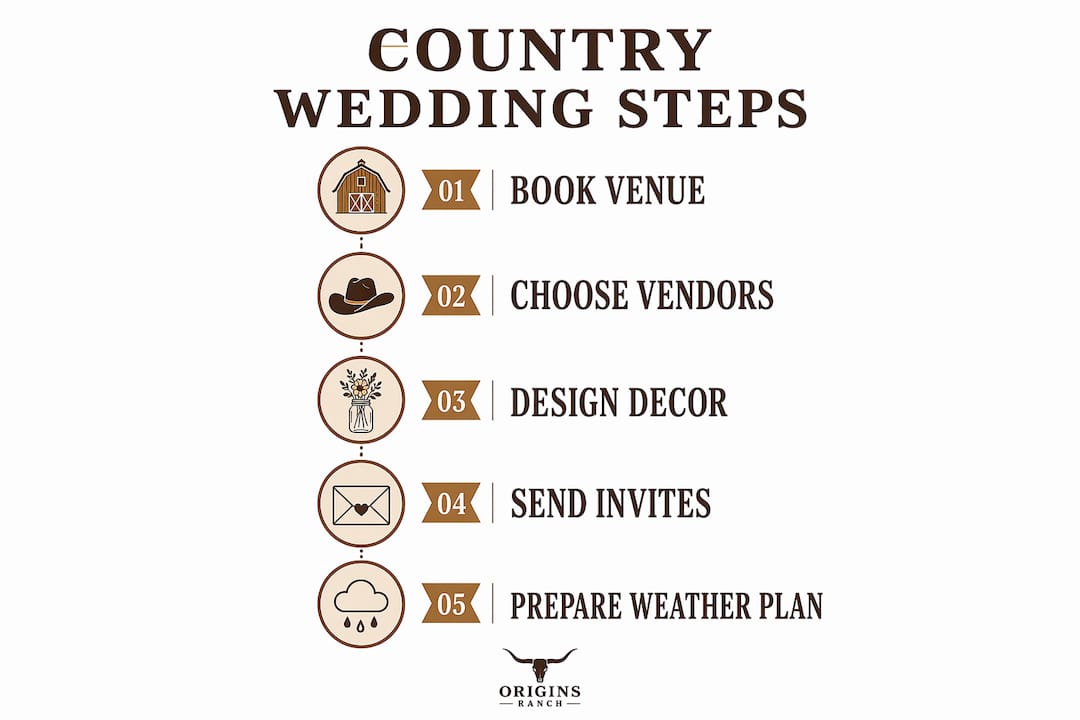
A successful country wedding requires early booking, thorough vendor coordination, layered decor, and a locked-in weather backup plan well before the wedding day.
| Point | Details |
|---|---|
| Book early | Reserve your venue and key vendors 12–24 months ahead for peak season dates. |
| Test the electrical system | Confirm barn electrical capacity supports lighting, sound, and catering simultaneously. |
| Layer your decor | Combine natural rustic elements with elegant touches like chandeliers and draped fabric. |
| Plan guest logistics | Arrange shuttles, share footwear advice, and confirm restroom capacity before the event. |
| Lock in weather backup | Finalize your contingency plan at least one month before the wedding and brief all vendors. |
What we've learned from hosting country weddings
We have watched hundreds of couples walk through the gates of Originsranch with a vision and a Pinterest board, and the ones who leave with the wedding of their dreams share a common thread. They planned for the details that guests feel but never consciously notice: the temperature of the air, the ease of finding a seat, the moment the lights came on at dusk.
The biggest mistake we see is treating the venue as a backdrop rather than a partner. A barn is not a blank canvas. It has electrical limits, terrain quirks, and acoustic behavior that shape every decision you make. Couples who learn the space early, and build their vendor team around it, avoid the scrambles that derail otherwise beautiful days.
Decor is where we see the most creative freedom, and the most overspending. Our honest advice: invest in lighting first. Nothing transforms a barn faster or more affordably than warm, layered light. Flowers and table settings matter, but they are secondary to how the space feels when the sun goes down.
Guest logistics get underestimated every single time. Parking, footwear, restrooms, and directions are not glamorous planning tasks. But they are the difference between guests who feel cared for and guests who feel like an afterthought. The couples who get this right earn the best compliments at the end of the night.
Start early, stay flexible, and trust the process. A country wedding done well is one of the most memorable celebrations you can create.
— Origins
Plan your country wedding at Originsranch
If you are looking for a venue that takes the guesswork out of rustic wedding planning, Originsranch in Plant City, FL is built for exactly this. What began as a World Champion Horse Ranch is now a modern, elegant event space that still carries every bit of its original country character.

Our team provides personalized attention to every couple, and our founder Barry brings over 20 years of event service experience to every wedding we host. Browse our venue photo gallery to see how the space transforms for real weddings, from ceremony to reception. Whether you are drawn to sunflower themes, lavender palettes, or classic barn elegance, you will find inspiration in every corner of the ranch. Come see what your wedding could look like here. We would love to be part of your story.
FAQ
How far in advance should you book a country wedding venue?
Book your venue 12–24 months before your wedding date, especially for peak months like May, June, September, and October. Popular barn venues fill quickly during these seasons.
How much does a barn wedding venue cost?
Barn wedding venues typically range from $3,000 to $15,000 depending on location and included amenities. Costs rise when furniture, climate control, and lighting are not part of the base fee.
What should guests wear to a country wedding?
Advise guests to wear block heels, wedges, or flat shoes on your wedding website and invitations. Gravel paths and uneven terrain make stilettos and thin heels genuinely uncomfortable and unsafe.
Do you need a wedding coordinator for a country wedding?
A coordinator familiar with rustic venues is strongly recommended. They manage vendor setup and teardown schedules, handle venue-specific restrictions, and execute weather contingency plans without disrupting your day.
What is the best way to decorate a barn for a wedding?
Start with layered lighting: string lights for ambiance, uplighting for walls, and task lighting at the bar and buffet. Then add natural elements like wildflowers and wood accents, and finish with elegant touches such as chandeliers or draped fabric.