

One anchor statement piece paired with layered warm lighting delivers the biggest visual payoff for any indoor ceremony. A dramatic floral arch or a draped ceiling installation gives guests one clear focal point, while warm uplighting turns a plain room into something that feels intentional in photos. Everything else, from aisle petals to seating shape, supports those two decisions.
TL;DR:
- A strong focal point, such as a floral arch or geometric frame, should be prioritized as the hero element before adding supporting decor to avoid visual clutter.
- Indoor ceremony layouts depend heavily on guest count, with classic rows suited for 50 to 200 guests and semi-circle arrangements better for smaller groups around 30 to 80 guests.
- Lighting investments, like uplighting combined with a warm spotlight on the couple, yield the highest visual impact and should be planned carefully with backup supplies.
- Backdrop choices should match your priorities, with dense florals providing scent and softness and structural designs offering durability and minimal floral cost.
- Accessibility features like wider aisles, wheelchair spots, and sound system accommodations are easier to implement indoors and should be incorporated early in planning.
Table of Contents
- High-Impact Indoor Wedding Ceremony Decor Ideas
- Choosing a Seating Layout That Works for Your Room
- Lighting Moves That Change the Whole Room
- Florals, Preserved Greenery, or Non-Floral Backdrops
- Designing From the Ceiling Down
- Small-Space and At-Home Ceremony Ideas
- Seasonal Palettes for Indoor Ceremonies
- Practical Planning Checklist for Any Indoor Ceremony
- What We've Learned Hosting Indoor Ceremonies at Origins Ranch
- Sound and Acoustics for Indoor Ceremonies
- Using Technology to Enhance an Indoor Ceremony
- Accessibility in Indoor Ceremony Layouts
- Cultural and Religious Traditions and Their Space Needs
- Why Indoor Ceremonies Often Win on Comfort and Control
- Bring Your Indoor Ceremony Vision to Origins Ranch
- Where These Ideas Came From
- Sources
- FAQ
High-Impact Indoor Wedding Ceremony Decor Ideas
Every strong indoor ceremony design starts with a hero moment. Design guides consistently point to the altar or backdrop as the single decor element that shapes the whole ceremony's visual identity, so this is where your budget should work hardest before you spend a dollar on anything else.
Backdrop and altar options:
- A floral arch, dense enough to hold its shape under indoor lighting, works for couples who want a soft, romantic frame.
- A geometric metal frame photographs cleanly and needs far less floral density than a full arch, which keeps costs down.
- A draped mantle or fireplace treatment uses architecture the room already has, so you're layering instead of building from scratch.
- A suspended floral or greenery installation hung above the couple creates depth without crowding the floor space.
Aisle decor: Runners set a color tone before guests even sit down. Petals scattered along the edges soften a hard floor. Lantern clusters at every third row add warmth without blocking sightlines, and greenery runners along the aisle edges scale up nicely for larger guest counts without multiplying cost per foot.
Ceiling treatments: Draping softens a tall, boxy room. Hanging florals add texture directly over the altar. Bistro or string lights work best in barns and lofts with exposed beams, since they can clip onto existing structure instead of requiring new rigging points.
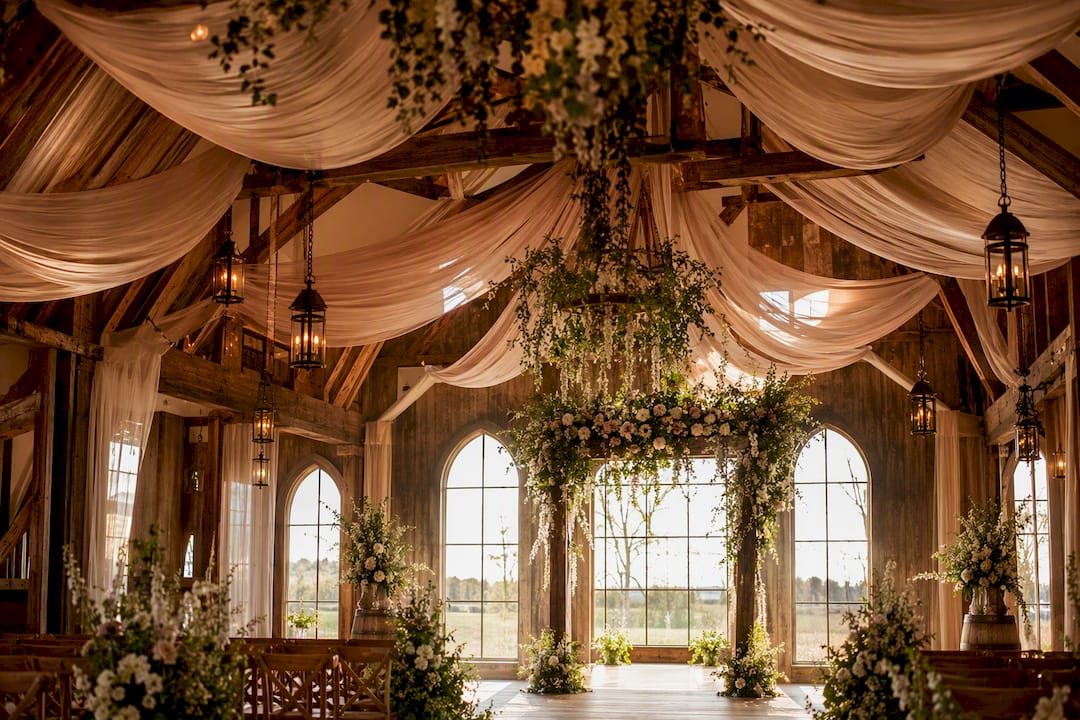
Non-floral statement options: A neon sign with your names or a short vow, a preserved moss wall, or a vintage rug-and-furniture cluster can all serve as the anchor piece for couples who want texture over blooms. Renting these tends to cost less than fresh florals and requires zero day-of maintenance.
Pro Tip: Pick one hero installation and let the rest of the room breathe. Designers who work indoor spaces consistently find that one strong focal point with intentional negative space photographs better than several medium-effort decorations spread thin.
Choosing a Seating Layout That Works for Your Room
Layout decisions come down to guest count, room shape, and what your photographer needs to move freely.
- Classic rows with a center aisle fit ceremonies of roughly 50 to 200 guests and give every row a clear line of sight to the altar.
- Semi-circle or round seating suits smaller groups, typically 30 to 80 guests, and pulls everyone physically closer to the couple, which reads as intimacy in photos.
- Corner or offset placement lets you use a room's existing architecture, like a fireplace or a bank of windows, as a natural backdrop instead of building one.
- Run the checklist before you commit: confirm guest count, aisle width for a comfortable walk, clear photographer access on both sides, and enough width at the front for a full family group photo.
Layout choice tends to track guest count fairly predictably, which makes this one of the easier early decisions in the planning process.
Lighting Moves That Change the Whole Room
Lighting is where indoor ceremonies either look flat or look designed, and the gap between the two is smaller than most couples expect.
- Wash the walls with uplighting and add one focused warm spot on the couple. This combination consistently ranks as the highest-return decor investment for indoor spaces.
- If your room has windows, schedule the ceremony one to two hours before sunset to catch soft natural light without harsh shadows.
- Use battery-powered LED candles and lanterns wherever open flame isn't practical. They're safer around fabric draping and easier to reposition.
- Stick to 2700K warm white bulbs throughout and avoid mixing color temperatures, since a cool-toned fixture next to a warm one shows up as an odd color cast in photos.
Pro Tip: Always bring spare bulbs and a backup battery pack for your uplighting. A single dead fixture an hour before the ceremony is a fixable problem only if you planned for it.
Florals, Preserved Greenery, or Non-Floral Backdrops
Your backdrop material choice hinges on what you're optimizing for: scent and softness, durability, or a clean editorial look.
- Fresh florals deliver scent and a luxury feel, but indoor lighting exposes gaps fast. Indoor installations need denser stem packing than outdoor ones to avoid looking thin in photos.
- Preserved moss or greenery walls hold up for the entire day with zero wilting, which makes them a strong pick for venues with long install windows or rental programs.
- Metal or geometric frames and fabric backdrops are lightweight, hold their shape under any lighting setup, and photographers often prefer them because they need far less floral density to look finished.
If photography is your top priority, lean structural. If scent and softness matter more than cost, lean fresh floral.
Designing From the Ceiling Down
Treat the ceiling first, then the walls, then the tables. That ceiling-first sequence is what turns a blank ballroom into a designed room instead of a rented space with decorations added on top.
- Full draping suits tall ceilings and creates the most dramatic transformation.
- Hanging florals work well over a specific focal point, like directly above the altar.
- Bistro lights suit exposed-beam rooms, barns, and lofts where you want warmth without a heavy install.
Always ask the venue about load limits and rigging permission before you fall in love with a specific installation. When rigging isn't allowed, layered uplighting combined with tall fabric panels can mimic a similar visual weight.
Pro Tip: Scale your ceiling installation to the room's actual height. A modest arrangement in a 20-foot barn ceiling will look undersized in every wide photo.
Small-Space and At-Home Ceremony Ideas
Small rooms need scaled-down versions of the same principles, not a completely different plan.
- Swap a full arch for a tabletop floral stand, a small hoop, or a rug-and-lantern cluster as your focal point.
- Choose a tight semi-circle or a few short rows to keep sightlines clear in a room where space is limited.
- Use clip-on uplights, battery candles, and one compact speaker instead of a full sound and lighting rig.
- Check condo, HOA, or home insurance rules on open flame and guest capacity before you finalize anything.
Small at-home ceremonies benefit most from reimagined focal points and portable lighting rather than trying to replicate a full-scale venue install in a living room.
Seasonal Palettes for Indoor Ceremonies
Your color palette should respond to season and time of day, not just personal preference.
- Fall and winter: jewel tones, evergreen garlands, amber uplighting, and clusters of candles for warmth.
- Spring and summer: pastels, abundant fresh florals, lighter fabrics, and daytime ceremonies that maximize window light.
- Evening ceremonies year-round: deeper fabric tones, metallic accents, and layered candlelight to compensate for lost natural light.
Practical Planning Checklist for Any Indoor Ceremony
- Lock in your budget priority first: one anchor statement piece and a lighting plan, before spending on filler decor.
- Ask your venue about rigging permission, electrical access, and any open-flame or candle policy well before booking vendors.
- Confirm install windows with your florist and lighting team, and schedule around your photographer's preferred light.
- Build in contingency items: battery spares, secure fastenings for hanging pieces, and an electrician on call if your uplighting plan is complex.
A well-run barn wedding often needs a detailed rain and weather contingency plan even for indoor ceremonies, especially when guests move between outdoor and indoor spaces during the day.
What We've Learned Hosting Indoor Ceremonies at Origins Ranch
Origins Ranch started as sugar sand and a former World Champion horse barn, now converted into an air-conditioned, modern venue that still keeps its rustic bones intact.
- We coordinate rigging and electrical access directly with couples so lighting plans don't hit last-minute surprises.
- Our owner Barry's 20-plus years running events means staging positions get planned around your photographer's needs, not against them.
- One lesson we see repeat: backdrops built for couple-only poses often look narrow once the whole wedding party steps in for group photos. We now design width around the full group from the start.
- We handle in-house table settings and decor coordination so your ceremony and reception feel like one designed space, not two separate events.
For barn-specific decor inspiration, our rustic decor guide covers styling choices that work especially well in converted barn spaces like ours.
Sound and Acoustics for Indoor Ceremonies
Indoor rooms trap and bounce sound differently than an open field, which means your vows can either carry clearly or get swallowed by an echo, depending on the space.
Hard surfaces like exposed brick, tile floors, and high glass windows create reverb that muddies speech. Softer surfaces like drapery, carpet, and upholstered seating absorb sound and keep voices crisp. If your venue leans hard-surfaced, ask about adding fabric panels or heavy curtains near the altar, which double as decor and acoustic treatment.
A lavalier or clip-on wavelength microphone on the officiant, paired with a small lapel mic for each partner during vow exchanges, covers most indoor ceremony needs without visible cable clutter. For larger rooms, a compact PA speaker positioned near the front, angled toward guests rather than the wedding party, keeps sound even without blasting the front rows.
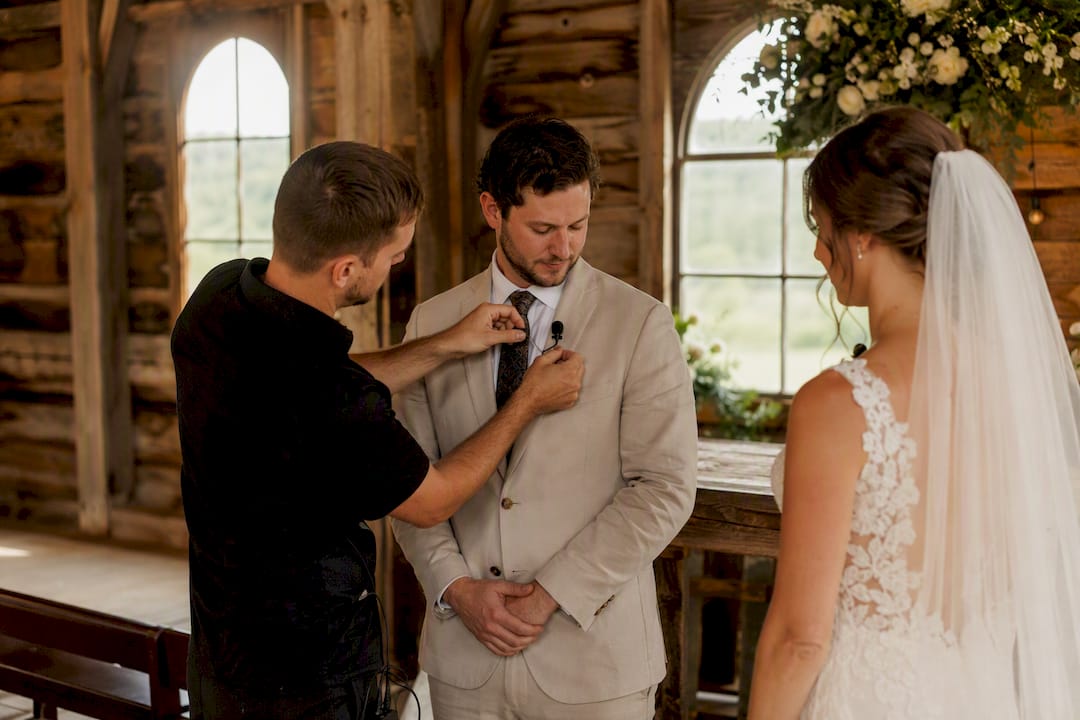
Test your sound setup in the actual room, at the actual time of day, since a full room of guests absorbs sound differently than an empty one during a walk-through. HVAC systems, especially in barns and converted spaces, can hum audibly on recordings, so ask your venue whether the air conditioning can be paused briefly during the vows.
Live musicians, whether a string quartet or a single guitarist, tend to work better in reverberant rooms than heavily amplified speakers, since acoustic instruments blend more naturally with a room's natural echo instead of fighting it.
Using Technology to Enhance an Indoor Ceremony
Live streaming has become a standard request, especially for guests who can't travel or for military families separated by deployment. A stable indoor Wi-Fi connection matters more than the camera itself. Most venues can support a tripod-mounted phone or a dedicated streaming service positioned at the back of the aisle, angled to catch both the couple and the reactions of close family.
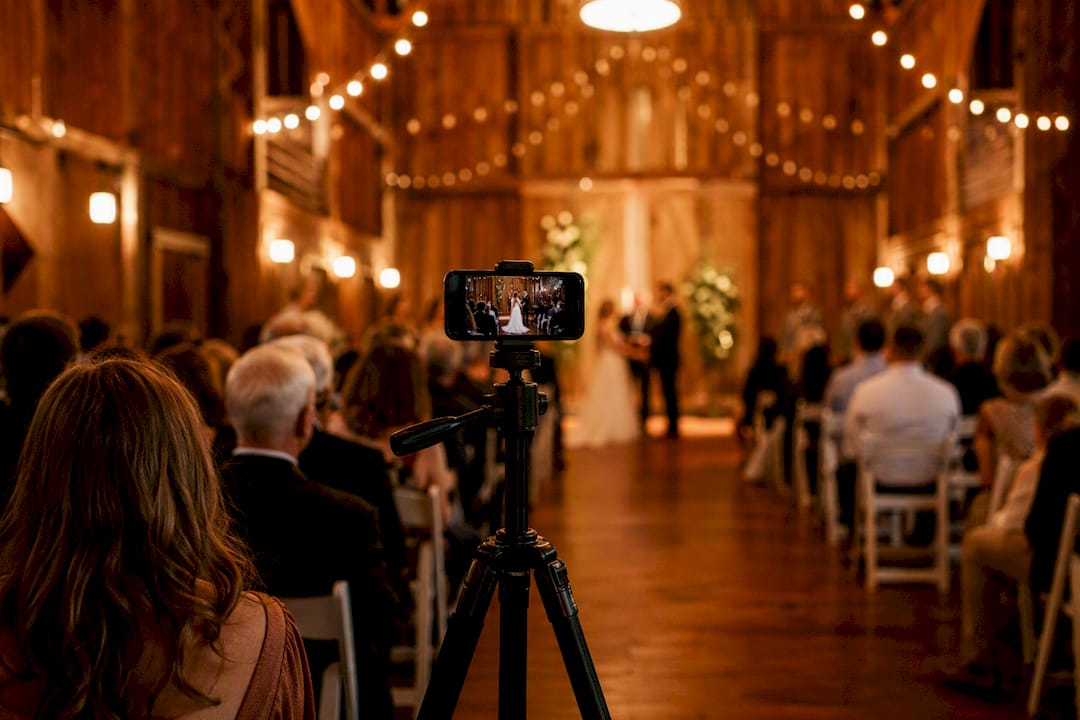
Projection screens work well for ceremonies that include a slideshow tribute, a translated program for multilingual guests, or a live-streamed feed for overflow seating in a second room. Keep screens off to the side of the altar rather than directly behind it, so they don't compete with your backdrop as the visual focal point.
Some couples add a subtle projection-mapped design onto a plain wall or drape as a modern, non-floral backdrop option, which pairs naturally with the preserved moss walls and projection techniques already popular for indoor backdrops. This works especially well for evening ceremonies where ambient light is already low.
Whatever technology you add, test it during your rehearsal, not the morning of. A streaming feed that drops mid-ceremony or a projector bulb that overheats is far easier to fix with 24 hours of lead time than five minutes before you walk down the aisle.
Accessibility in Indoor Ceremony Layouts
An accessible layout benefits every guest, not just those who need it, and it's far easier to plan indoors than outside on uneven ground.
Reserve at least one or two spots at the end of a row, close to the aisle, for wheelchair users and guests with mobility aids, rather than placing them at the back where sightlines are worst. Aisle width matters here too: a minimum of four feet keeps enough room for a wheelchair or walker to pass without guests needing to shift chairs.
Skip raised platforms for the altar area if any guests or wedding party members use mobility devices, or make sure a ramp is available if a platform is unavoidable. Indoor venues with existing ADA-compliant entrances, restrooms, and flat flooring, like most converted barns and modern event halls, remove a lot of the guesswork that outdoor ceremonies create with grass, gravel, or slope.
For guests with hearing loss, consider requesting a hearing loop system if your venue supports one, or seat those guests close to your speaker placement. Large-print or braille programs are a small addition that meaningfully helps guests who are low-vision.
Cultural and Religious Traditions and Their Space Needs
Many faith and cultural traditions carry specific spatial requirements that shape your layout choices long before decor enters the conversation.
A Jewish ceremony held under a chuppah needs open space on all four sides for the structure and enough clearance for the couple to circle beneath it. Hindu ceremonies often center around a mandap and require floor space for a fire ritual, which means checking your venue's open-flame policy early. Catholic and many Christian ceremonies follow a processional structure that favors the classic center-aisle row layout, since it echoes the formality of a traditional sanctuary.
Some traditions, like certain Filipino or Latin American Catholic ceremonies, incorporate unity candles, cord, or veil rituals that need a small side table near the altar. Quinceañera ceremonies, which Origins Ranch also regularly hosts, often include a court of honor that requires wider front-row seating to accommodate the full group.
Talk with your officiant or religious leader early about spatial needs specific to your tradition, since these requirements often determine your layout before anything else does.
Why Indoor Ceremonies Often Win on Comfort and Control
We've watched enough ceremonies unfold to know indoor spaces give couples something outdoor settings can't guarantee: predictable weather, controlled lighting, and full command over every visual detail guests will remember. If you're weighing your options, we'd genuinely welcome the chance to walk you through a tour and talk specifics.
— Origins
Bring Your Indoor Ceremony Vision to Origins Ranch
Origins Ranch gives you a converted barn with modern, air-conditioned comfort and the rustic charm that photographs beautifully year-round, without you having to build a design from a blank hotel ballroom. We handle in-house table settings and decor coordination directly, so the anchor piece and lighting plan this article walks through don't fall entirely on you to source and install.
Founder Barry brings over 20 years of event and DJ experience to every ceremony we host, and his charity, Weddings for Warriors, helps veterans and active-duty service members plan their dream wedding at little to no cost. If you want a fully styled ceremony without piecing together vendors on your own, our styled event packages cover decor, layout, and lighting as one coordinated plan. Reach out to schedule a tour and see the barn in person before you commit to a date.
Where These Ideas Came From
- Brides' altar and backdrop gallery for arch and chuppah variations.
- Blessed Vows' indoor decor guide for the ceiling-first and anchor-piece design principles.
- Harbor View Loft's layout guidance for seating format by guest count.
- Rise Wedding's backdrop roundup for non-floral and projection-based alternatives.
- Winelands Function's venue-selection guide for general planning checklist context.
Sources
- 65 Incredible Wedding Altar Ideas for Your Ceremony — Brides
- 10 Indoor Wedding Decor Ideas That Actually Transform a Space - Blessed Vows
- Indoor Wedding Ceremony Ideas: Decor, Layouts, and Setups — Harbor View Loft
- 50+ Stunning Wedding Backdrop Ideas For Every Style, Venue & Budget (2026 Guide) — Rise Wedding
FAQ
What Are Some Fun Activities for an Indoor Wedding Reception?
Indoor receptions handle interactive elements well, since weather is never a factor. A live band or DJ with a full dance floor, a photo booth near the ceremony backdrop, a signature cocktail station, or a late-night snack bar all work smoothly indoors.
Who Does the Bride Sleep With the Night Before?
Tradition varies widely by family and culture, but many brides spend the night before with close family or their bridal party rather than their partner, often as part of a "no seeing each other before the ceremony" custom. This is optional and increasingly skipped by modern couples.
What Are Some Unique Wedding Ceremony Ideas?
Suspended floral installations, projection-mapped backdrops, preserved moss walls, and non-floral statement pieces like neon signage all stand out as modern alternatives to a traditional arch. Origins Ranch's barn setting also lends itself to unique touches like exposed-beam bistro lighting paired with a vintage rug ceremony space.
How Many Guests Fit in a Small Indoor Ceremony Setup?
A semi-circle or round layout comfortably seats 30 to 80 guests for an intimate indoor ceremony, while classic rows with a center aisle scale up to 200 guests in larger venues or barns.