
Whether your wedding falls under City of Tampa rules or Hillsborough County rules depends entirely on your venue's exact location, and that distinction decides which standard applies. Inside city limits, the "plainly audible" test governs: sound heard 100 feet from its source creates a rebuttable presumption of a violation. In unincorporated county areas, the Environmental Protection Commission uses measured decibel limits instead. Either way, lowering volume and knowing who to call keeps a celebration from turning into a citation.
TL;DR:
- Outside Tampa’s entertainment districts, music audible 100 feet away creates a rebuttable presumption of violation, and quiet hours run from 10:00 p.m. to 7:00 a.m.
- In unincorporated county areas, the EPC averages sound over 10 minutes; residential limits are 60 dBA by day and 55 dBA overnight.
- Tampa officers need an identified, willing complainant and personal observation, then must give hosts five minutes to lower volume before citing them.
- Before booking, verify the parcel’s jurisdiction rather than relying on its mailing address, then aim speakers inward and reduce volume before quiet hours.
Table of Contents
- Tampa's noise code: limits, quiet hours, and the "plainly audible" trigger
- Hillsborough County rules: how the EPC measures noise outside Tampa
- Who enforces Tampa wedding noise rules, and what happens when they do
- A pre-event checklist that keeps the celebration on track
- How we think about sound and neighbors at Origins Ranch
- What the research actually tells hosts to prioritize
- Book a venue built with sound management in mind
- FAQ
- Sources
Tampa's noise code: limits, quiet hours, and the "plainly audible" trigger
Inside Tampa city limits, Sec. 14-153 and Sec. 14-154 of the city code prohibit "unreasonably excessive noise." Outside the city's entertainment districts, officers rely on a sensory test rather than a meter: if amplified music, a DJ, or a live band is plainly audible 100 feet from where it originates, that fact alone creates a rebuttable presumption that the noise violates the ordinance. You can push back on that presumption, but the burden shifts to you once an officer hears it from that distance.
Entertainment districts like Ybor City, the Channel District, and the Arena District operate under different numbers. City code language sets district-specific ceilings, including levels as high as 85 dBA or 87 dBC between 6:00 p.m. and 3:00 a.m. in certain zones. Those exceptions exist for nightlife corridors, not residential backyards, so a barn or estate wedding outside those districts should plan around the plainly audible standard instead.
At least 100 feet is the distance that matters most for a Tampa ceremony or reception: sound audible beyond that threshold is where enforcement risk begins, according to the city's own noise complaint guidance.
A few practical takeaways for hosts planning outside the entertainment districts:
- Quiet hours generally run from 10:00 p.m. to 7:00 a.m. outside entertainment districts, so a late-night dance floor needs a volume plan for that window.
- The 100-foot threshold applies regardless of decibel level, which means a quiet bass line can still trigger a complaint if it carries.
- City Council workshop materials have discussed tightening amplified outdoor sound rules further, so it's worth confirming current language before your date.
Hillsborough County rules: how the EPC measures noise outside Tampa
If your venue sits in unincorporated Hillsborough County, a different agency and a different method apply. The Environmental Protection Commission's noise rule measures sound as an Leq, an energy-averaged level, over a 10-minute period rather than relying on an officer's ear at a fixed distance. That makes county enforcement more objective but also more data-driven: a handheld meter reading matters more than how a neighbor describes the noise.
The county's residential-impact limits are straightforward:
- 60 dBA is the daytime limit (7:00 a.m. to 10:00 p.m.) for noise affecting a residential property.
- 55 dBA is the nighttime limit (10:00 p.m. to 7:00 a.m.) for the same residential measurement.
- 65 dBA applies when the noise source and the receiving property are both commercial, a higher ceiling than the residential standard.
Low-frequency noise, the deep bass common in DJ setups and live percussion, carries farther than mid-range frequencies and can register on a meter even when the overall sound feels moderate to the ear. If you're not sure whether your venue falls under city or county jurisdiction, the safest move is to confirm the parcel's status through the county property appraiser's site or ask your venue directly, since a mailing address alone can be misleading.
Who enforces Tampa wedding noise rules, and what happens when they do
Enforcement mechanics differ depending on which side of the city line your event falls on, and knowing the sequence in advance helps you respond quickly if someone calls.
- A neighbor or guest contacts the appropriate agency: the Tampa Police non-emergency line at (813) 231-6130 for city addresses, or the EPC complaint line at (813) 627-2600 for unincorporated county areas.
- For city complaints, an officer typically needs an identified, willing complainant and must personally observe the plainly audible condition before acting.
- Tampa officers are required to give a five-minute warning before issuing a citation, giving the host a real window to lower volume and avoid a formal violation.
- If noise continues past that warning, a civil citation can follow, and for venues operating under a temporary alcohol or special event permit, repeated violations can complicate future permit approval.
Five minutes is the exact warning period Tampa's noise ordinance guarantees before a citation is written, which means a quick response from the DJ or band can resolve most first-time complaints on the spot. County enforcement under the EPC follows a more technical path, with a meter reading replacing the officer's sensory judgment, so disputes there often hinge on documented decibel levels rather than a warning conversation.
A pre-event checklist that keeps the celebration on track
Most noise complaints come from gaps in planning rather than genuinely loud weddings, and a little preparation goes a long way toward a peaceful evening.
- Confirm whether your venue sits inside Tampa city limits or unincorporated Hillsborough County, since that determines which rulebook and which phone number apply.
- Check whether your event needs a temporary special event or alcohol permit, since those often come with their own time limits and coordination requirements with city departments.
- Give nearby neighbors a heads-up about your date and expected end time, and share an on-site contact number they can reach directly instead of calling the police first.
- Position speakers to face inward toward the dance floor rather than outward toward property lines, and consider closing barn doors or moving amplified music indoors as the night winds down.
- Keep a simple decibel meter app running periodically during the reception so you have a record of sound levels if a dispute arises later.
Pro Tip: Schedule a volume step-down 30 minutes before your area's quiet hours begin, so the transition feels natural to guests instead of abrupt.
Our DJ coordination guide walks through speaker placement and volume planning in more detail, and couples weighing a Plant City venue can also review our Plant City audibility breakdown for a closer look at how the 100-foot test plays out in practice. For technical speaker directionality guidance, professional DJ sound setup resources cover placement principles that translate well to outdoor barn settings.
How we think about sound and neighbors at Origins Ranch
At our venue, we've learned that good neighbor relations start long before the first song plays. Experience in the event service industry shapes how we think about speaker placement, indoor versus outdoor amplification, and timing a reception's loudest hours around what's reasonable for the surrounding area. We believe a proactive conversation with neighbors, paired with a venue layout that naturally contains sound, prevents far more complaints than reacting after the fact. When couples book with us, we talk through these details early so the celebration stays focused on joy, not citations.
What the research actually tells hosts to prioritize

The conventional advice, "just keep it quiet," misses the real lesson buried in these ordinances: Tampa and Hillsborough County measure noise in completely different ways, and most planning mistakes happen because hosts never confirm which rulebook applies to their exact address. A couple who diligently keeps the volume moderate can still get a citation if an officer hears the music plainly from 100 feet away, while a venue in the county could run louder and stay compliant simply because the Leq average over 10 minutes never crosses 60 dBA.
The single highest-leverage step isn't buying a sound meter or hiring extra security. It's a five-minute phone call or parcel lookup before you ever sign a contract, confirming jurisdiction so you know which standard, and which phone number, actually applies to your event. Everything else, speaker placement, quiet-hour scheduling, neighbor outreach, follows naturally once that foundation is set.
— Origins
Book a venue built with sound management in mind
We designed our barn with these exact concerns in mind. It is fully air-conditioned, which means your reception can move indoors when the evening calls for a quieter finish, without losing the energy of the celebration.
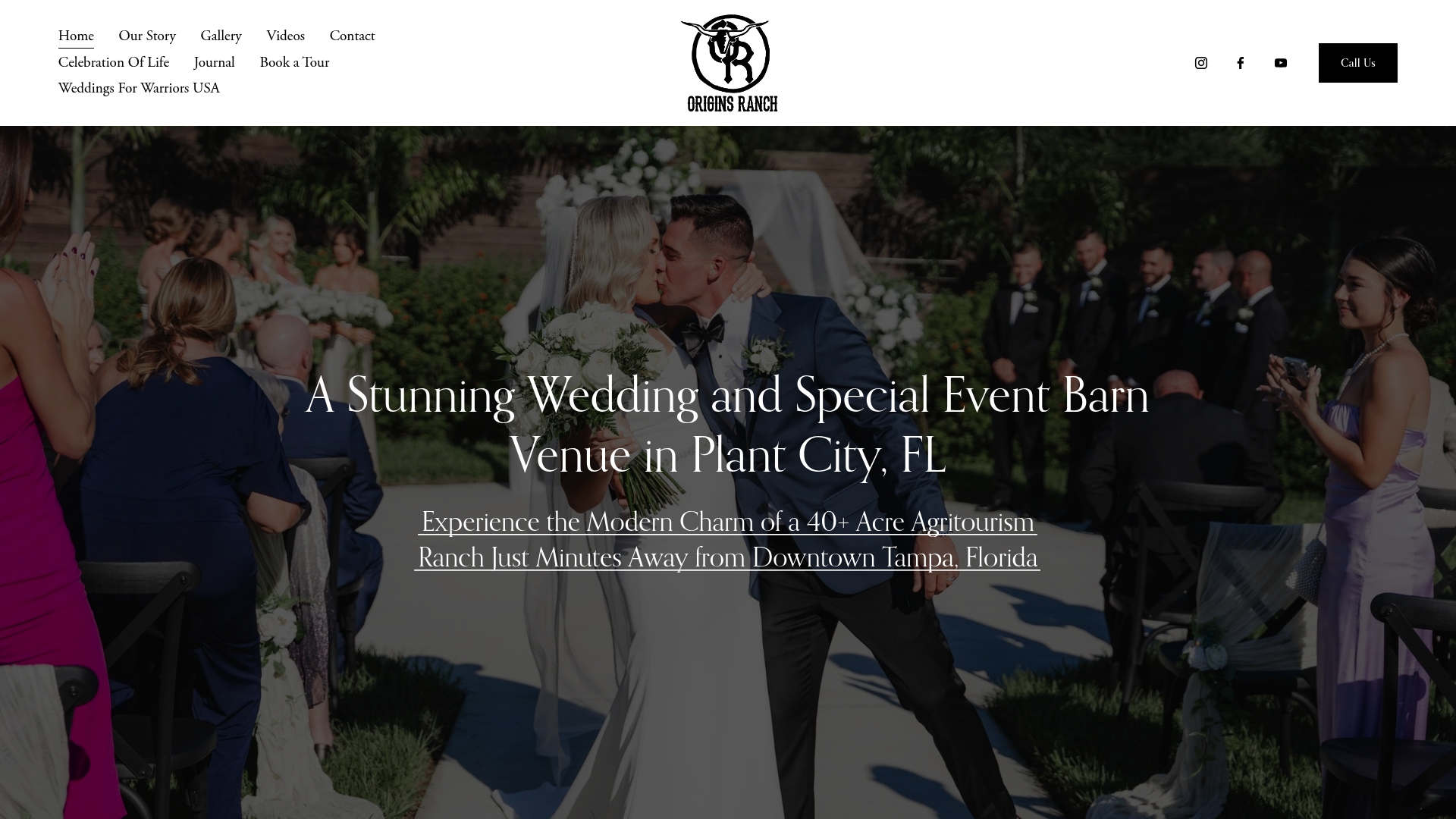
- Indoor, climate-controlled barn space that helps keep amplified sound contained as the night winds down.
- Staff familiar with local timing expectations and neighbor communication.
- Event coordination support that helps you plan your music schedule around a smooth, complaint-free evening.
Whether you're planning a full wedding through our venue and package options or considering one of our other celebration formats, we're glad to talk through your date, your guest count, and your sound plan together. Reach out through our main site to check availability and start building a timeline that keeps the party, and your neighbors, happy.
FAQ
What are the noise complaint hours in Tampa?
Tampa's quiet hours generally run from 10:00 p.m. to 7:00 a.m. outside entertainment districts, though the city's plainly audible standard can apply at any hour if sound carries 100 feet from its source. Entertainment districts like Ybor City follow extended hours with higher decibel allowances late into the night.
Is there a noise ordinance in Hillsborough County, Florida?
Yes, the Environmental Protection Commission enforces a countywide noise rule for unincorporated areas, using measured decibel limits rather than a distance-based test. Residential limits are 60 dBA during the day and 55 dBA at night, measured as a 10-minute average.
What time can you make a noise complaint in Florida?
There's no single statewide answer since noise rules are set locally, but in Tampa a complaint can be filed any time noise is plainly audible 100 feet away, day or night. In unincorporated Hillsborough County, complaints go to the EPC noise line, which evaluates the reading against the applicable daytime or nighttime decibel limit.
What time is quiet time in Hillsborough County?
The EPC's residential nighttime limit of 55 dBA applies from 10:00 p.m. to 7:00 a.m., with a higher 60 dBA limit allowed during daytime hours from 7:00 a.m. to 10:00 p.m. These limits apply in unincorporated areas outside Tampa city limits.
Sources
- Noise Complaint | City of Tampa
- Noise Program | EPC of Hillsborough County, FL (Noise rule / Chapter 1-10)