
TL;DR:
- An outdoor wedding ceremony involves careful planning beyond selecting a scenic setting, including permits, sound, weather contingencies, and guest comfort. Effective logistics, such as designated backup plans and early permit applications, are essential for a smooth event, while natural surroundings enhance atmosphere and photography. Proper coordination and preparation allow the natural environment to elevate your ceremony without stress or chaos.
Most couples picture an outdoor wedding ceremony and think: fresh air, golden light, and nature doing most of the work. What they underestimate is the planning that sits behind those magical moments. Understanding what is outdoor ceremony really means goes far beyond choosing a pretty backdrop. It means thinking through permits, sound systems, weather contingencies, and guest comfort before a single flower gets placed. This guide walks you through everything — from the charm and genuine benefits of outdoor ceremonies to the logistics that separate a stunning event from a stressful one.
Table of Contents
- Key takeaways
- What is an outdoor ceremony, exactly?
- Benefits of outdoor ceremonies worth knowing
- Planning logistics for outdoor ceremonies
- Common challenges and how to handle them
- Creative outdoor ceremony ideas that work practically
- My honest perspective on outdoor ceremony planning
- Plan your outdoor ceremony at Origins Ranch
- FAQ
Key takeaways
| Point | Details |
|---|---|
| Outdoor ceremonies need real backup plans | A weather contingency with a clear decision-maker and firm timeline prevents day-of chaos. |
| Permits and sound rules vary by location | Many public venues require applications 30+ days in advance with specific noise level limits. |
| Guest comfort is non-negotiable | Shade, hydration, stable seating, and amplified sound keep guests present and comfortable. |
| Natural settings shape the entire design | Your venue's terrain, light, and surroundings should guide decor choices, not compete with them. |
| Venue staff and coordination matter enormously | A well-coordinated team is often the difference between a smooth ceremony and a frantic scramble. |
What is an outdoor ceremony, exactly?
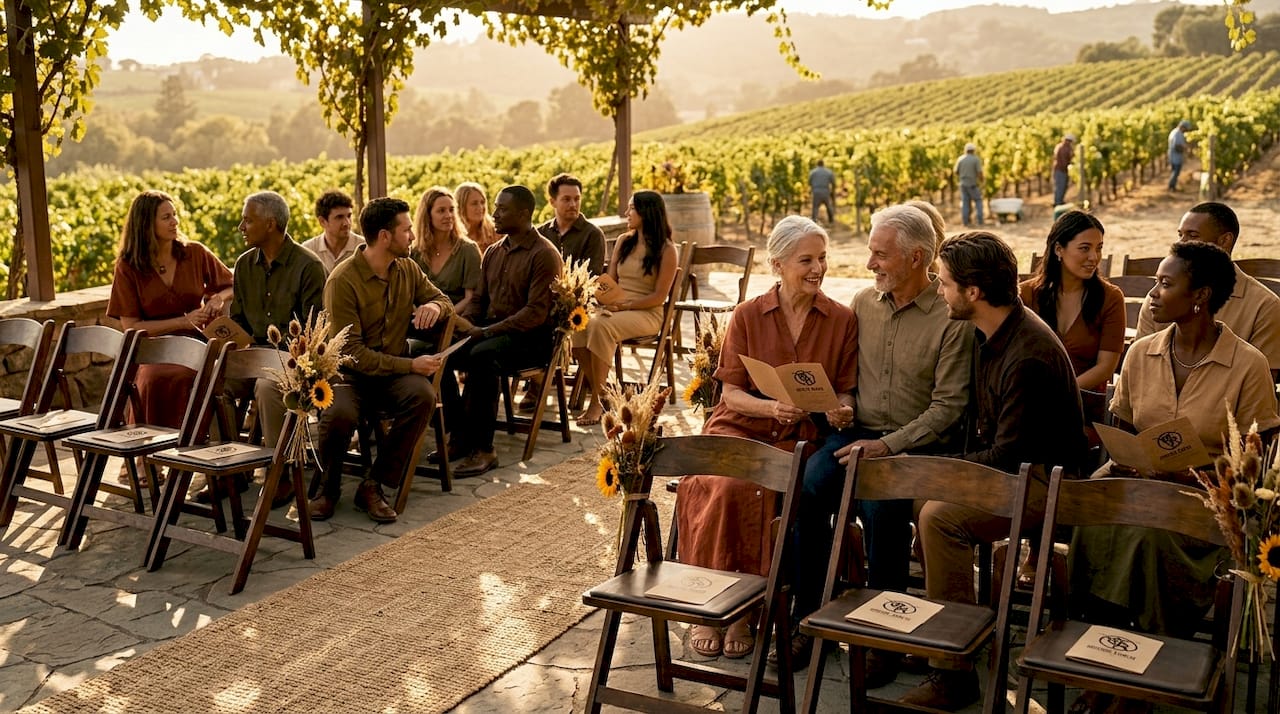
An outdoor ceremony is any formal event, most commonly a wedding, held in an open-air or semi-open setting rather than a fully enclosed indoor space. The definition sounds simple, but the variety of settings it covers is genuinely wide. You might picture a garden gazebo or a beach at sunset, but outdoor ceremonies also happen in vineyards, state parks, private ranch estates, rooftop terraces, and historic grounds.
What sets an outdoor ceremony apart from an indoor one is not just the absence of a ceiling. It is the way the natural environment becomes an active participant in the event. Light shifts throughout the day. Wind moves through floral arrangements. The sound of birds or rustling leaves creates an ambient texture no indoor venue can replicate. That organic quality is exactly why outdoor weddings succeed in ways that feel deeply personal and memorable.
Common outdoor ceremony settings include:
- Garden venues: Manicured lawns, hedged pathways, and floral borders that provide natural decor
- Beach and waterfront locations: Dramatic light, open horizons, and a relaxed atmosphere
- Ranch and barn estates: Rustic character with flexibility for both outdoor ceremonies and covered receptions
- Public parks and reserves: Accessible and scenic, though permit-dependent
- Private estates: Maximum control over layout, access, and aesthetics
Each setting carries its own set of practical requirements and aesthetic possibilities. A beach wedding calls for wind-resistant decor and stable seating on sand. A ranch ceremony might incorporate existing structures for shade and shelter. The theme you choose should respond to the environment rather than fight it.
Benefits of outdoor ceremonies worth knowing
The appeal of an outdoor wedding ceremony is real, and the benefits go well beyond aesthetics. Natural light is perhaps the most talked-about advantage. Outdoor ceremonies are beautiful in large part because golden-hour light flatters everyone and gives photographers images that no studio lighting can fully replicate.
Here is where the benefits genuinely stack up:
- Flexible layout options: Outdoor spaces rarely impose the same rigid floor plans that ballrooms do. You can orient seating toward a mountain vista, a lake, or a grove of trees and build your ceremony layout around what moves you.
- Atmosphere and emotional resonance: Open air creates a sense of freedom and intimacy at the same time. Guests feel less contained. The ceremony breathes. That emotional quality is hard to engineer indoors.
- Expanded guest capacity: Many outdoor venues can accommodate larger guest counts than equivalently priced indoor spaces.
- Cost flexibility: Depending on the venue type and location, outdoor spaces can be more cost-effective. The natural surroundings reduce the need for heavy decor investment.
- Photography and videography: Natural backdrops give your photographer an enormous canvas. Greenery, water, open sky, and architectural elements all contribute without a single rental fee.
Pro Tip: Book your outdoor venue for a site visit at the same time of day your ceremony is scheduled. Light, shadows, and ambient noise all behave differently at 4 p.m. versus noon, and seeing it firsthand changes how you plan seating, speaker placement, and decor.
One underrated benefit is the way outdoor settings ease guest nerves. People naturally relax when they are not confined to a formal room. That ease tends to translate into a warmer, more connected ceremony experience for everyone present.
Planning logistics for outdoor ceremonies
This is where the real work happens. Planning an outdoor ceremony well means thinking in layers: legal logistics, physical comfort, sound quality, and contingency planning all need attention before the day arrives.
Weather backup planning
A genuine weather backup plan is not just a tent on standby. The best outdoor weddings have a detailed Plan B that is visual, communicated to every vendor, and emotionally accepted by the couple well before the wedding day.
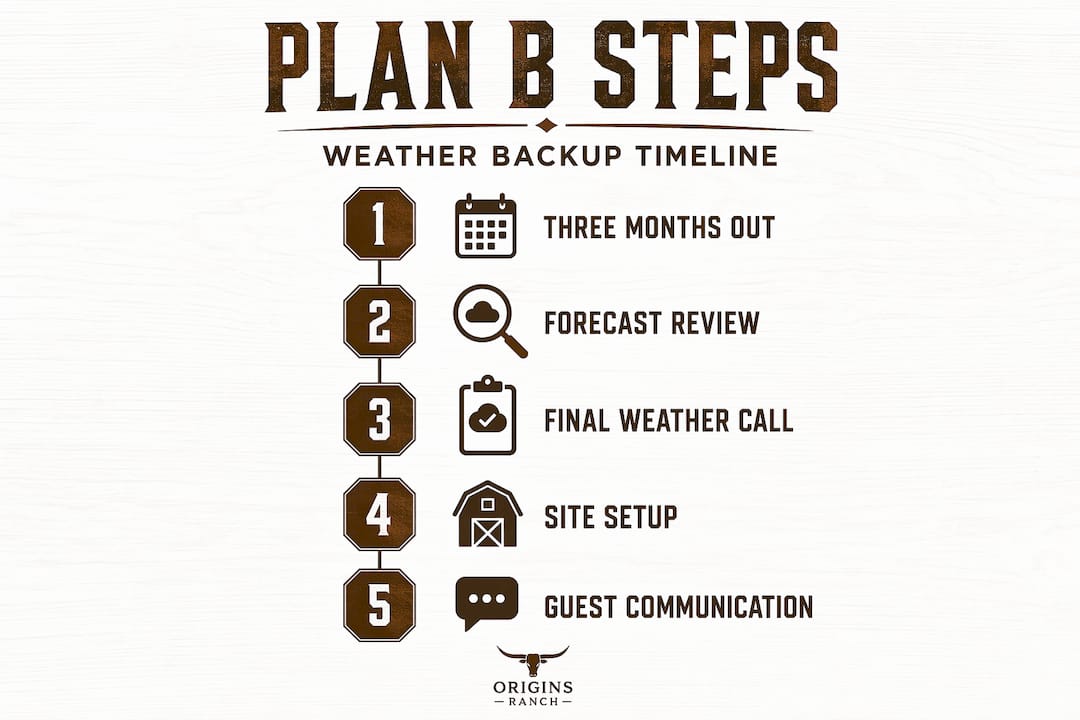
Decision timelines matter. Weather call timing typically involves an early confirmation around three months out, progress updates as the date approaches, and a final decision roughly 48 hours before the event. Designate a single person — a planner, venue coordinator, or trusted vendor — as the decision-maker. Ambiguity on the day itself creates avoidable stress. A single decision-maker with agreed timing prevents logistical failures that cost far more than a plan costs to prepare.
If a tent is your backup, treat it as a full venue. Tent setup needs include sides for weather protection, flooring for ground stability, lighting for visibility, and climate considerations. Couples who underestimate tent infrastructure end up with cold, uncomfortable guests and costs they did not budget for.
Permits and sound regulations
Here is a planning step many couples skip until it is almost too late. Permit requirements for public land events frequently require applications more than 30 days in advance, include fees for temporary structures, and impose specific sound limits. Some municipalities specify limits as precise as 75 decibels measured at 150 feet from the speakers. Noise exemption permits are required in many cities for events that exceed standard sound ordinances.
For tented ceremonies on public land, utility notification requirements like contacting underground utility services before staking can affect your entire setup timeline. Start permit research early and build the application deadlines into your planning calendar from day one.
Sound, seating, and guest comfort
The practical checklist below covers what couples most often overlook when organizing outdoor events:
- Test sound on site. Speaker placement and sightlines must be validated during planning, not on the wedding day. Microphone type, speaker orientation, and seating arrangement all affect whether guests hear the vows clearly.
- Stabilize your seating. Natural ground — grass, gravel, or sand — creates uneven surfaces. Chairs need to sit firmly without sinking or tipping.
- Plan for shade and temperature. This is especially critical for afternoon ceremonies in warm climates. Fans, parasols, or a shaded structure keep guests present and comfortable.
- Provide hydration stations. Water available before and during the ceremony is not a luxury. It is a basic comfort that guests remember.
- Address pest management. Particularly in humid or wooded settings, bug spray stations or citronella elements make a real difference in guest experience.
Pro Tip: Walk the ceremony site at least twice: once during planning and once in the week before the event. Ground conditions change, new obstacles appear, and your layout may need adjustments you would never catch on a venue brochure.
| Planning element | Action required | Timeline |
|---|---|---|
| Weather backup plan | Designate decision-maker, map both layouts | 3+ months before |
| Permits and sound limits | Research local regulations and apply | 30+ days before |
| Sound system testing | On-site rehearsal of speaker placement | 1 to 2 weeks before |
| Seating and ground prep | Assess terrain, order appropriate chairs | 2 to 3 weeks before |
| Guest comfort logistics | Arrange shade, hydration, and pest control | Final week |
Common challenges and how to handle them
Even the best-planned outdoor wedding ceremony runs into friction. Knowing what to expect — and how to respond — is what separates couples who stay calm from those who spend their wedding day managing a crisis.
- Weather pivots on the day: Communicate your backup plan to guests before the event through your wedding website or a brief note in the program. When people know what will happen if it rains, they relax. Confusion is the real enemy, not weather.
- Protecting decor from the elements: Lightweight floral arrangements can topple in wind. Candles are nearly impossible outdoors without hurricane glass. Choose decor that works with the environment, not against it. Potted plants, weighted centerpieces, and lanterns handle outdoor conditions far better than tall, top-heavy designs.
- Noise curfews and compliance: Know your venue's cutoff time and build it into your run of show. Vendors, particularly DJs and bands, need to know the exact time amplification must stop. A venue coordinator's role includes keeping all parties aligned on these requirements throughout the day.
- Managing guest expectations: Not everyone is comfortable outdoors for extended periods. Communicate dress code recommendations — flat shoes for lawn ceremonies, for example — and let guests know about the outdoor format well in advance so they can prepare.
Creative outdoor ceremony ideas that work practically
The most memorable outdoor ceremonies blend inspiration with practicality. These ideas hold up beautifully in real conditions.
| Outdoor ceremony idea | Why it works practically |
|---|---|
| Ceremony arch using living greenery | Stays fresh longer than cut flowers, anchors well against wind |
| Aisle lined with potted herbs or wildflowers | Weighted and stable, doubles as guest favors to take home |
| Circular seating arrangement | Improves sightlines, creates intimacy, works on varied terrain |
| Ceremony set facing away from direct sun | Protects guests' eyes during afternoon events and flatters photography |
| Minimal decor that highlights the natural backdrop | Reduces setup time, avoids wind damage, and lets the setting speak for itself |
Incorporating natural features into your ceremony design is one of the most effective outdoor ceremony ideas you can pursue. Use the existing tree line as a backdrop instead of a fabric drape. Let a pond or garden hedge define the aisle. When you blend outdoor spaces with thoughtful design, the result feels effortless even though it took careful planning to achieve.
The balance between aesthetics and logistics also applies to fragrance. Certain flowers attract insects in humid or wooded environments. Talking to your florist about pest-resistant options is a small detail that protects the ceremony experience significantly.
My honest perspective on outdoor ceremony planning
I've watched hundreds of outdoor ceremonies unfold, and the pattern is always the same. Couples who invest time in logistics before the day arrives walk down the aisle looking peaceful. Couples who focused entirely on the vision and skipped the operational detail spend part of their ceremony distracted by something that could have been solved three weeks earlier.
The most common oversight I see is treating the weather backup as an afterthought. Couples will spend hours choosing linens and minutes deciding what happens if it rains. That imbalance shows up on the day. The emotional relief of a solid backup plan is real and measurable. When a couple knows exactly what will happen and who will make the call, they let go and enjoy the moment instead of scanning the sky.
Venue selection and staff coordination shape outcomes in ways that decor never can. I've seen venue staff roles make the difference between a ceremony that felt like a dream and one that felt chaotic despite looking beautiful in photos. The people running the day matter as much as the place.
My honest advice: plan your outdoor ceremony with the same rigor you'd give any complex event. Then let the environment do what it does naturally. The magic shows up when preparation gives it room.
— Origins
Plan your outdoor ceremony at Origins Ranch

At Originsranch, we understand that planning an outdoor wedding ceremony involves far more than finding a beautiful setting. Our venue in Plant City, FL was built with exactly this in mind: an open-air environment with the character of a world-champion horse ranch and the infrastructure to make your day run flawlessly. From our elegant indoor spaces that serve as weather backups to our experienced on-site coordination team, we take the stress off your shoulders so you can be fully present.
We also proudly support our military community through Weddings For Warriors, helping veterans and active duty service members celebrate their dream weddings. Explore our venue gallery to see how outdoor ceremonies come to life at Origins Ranch, and reach out to start planning yours.
FAQ
What is an outdoor ceremony in simple terms?
An outdoor wedding ceremony is a formal event held in an open-air setting, such as a garden, ranch, beach, or park, rather than an enclosed indoor space. The natural environment becomes part of the ceremony's atmosphere and design.
What should be included in an outdoor ceremony checklist?
A solid checklist covers weather backup plans with a designated decision-maker, permit applications, sound system testing, seating stability on natural ground, shade and hydration for guests, and pest management. Comfort items like cooling options and amplified sound are often overlooked until it is too late.
How early should I apply for permits for an outdoor ceremony?
Most public venues require permit applications at least 30 days in advance, and some require earlier submissions for temporary structures or amplified sound. Research your specific location's rules early and build application deadlines into your planning timeline.
How do I create a weather backup plan for an outdoor wedding?
Designate one person to make the final weather call, map out both your outdoor and backup layouts in detail, communicate the plan to all vendors in advance, and set a firm decision deadline around 48 hours before the event. The best backup plans are visual, shared, and decided well before the wedding day.
Can a tent serve as a full backup venue for an outdoor ceremony?
Yes, but only if you treat it as a real venue. A tent used as a backup needs weatherproof sides, stable flooring, adequate lighting, and climate control options. Skipping any of these elements results in a space that protects guests from rain but still leaves them uncomfortable.