
TL;DR:
- A signature wedding style reflects a couple's personality and story through cohesive visual and emotional elements. Defining this style early guides every decision and helps create a unified, authentic celebration. The process involves choosing 3 to 5 recurring elements and sharing a style brief with all vendors to ensure cohesion throughout the planning.
A signature wedding style is the unique visual and emotional blueprint that reflects a couple's personality, values, and shared story, making their celebration genuinely one of a kind. Unlike a generic theme picked from a mood board, a personalized wedding style shapes every sensory detail of the day, from the texture of the invitation paper to the way light falls on the reception tables. Defining your signature wedding style before any other planning decision is the single most powerful move you can make. It gives you a filter for every vendor conversation, every décor choice, and every moment you design for your guests. At Originsranch, we have seen firsthand how couples who arrive with a clear style vision plan with more confidence and far less stress.
What is signature wedding style, and why does it matter?
A signature wedding style is defined as a cohesive set of recurring visual and emotional elements that express who you are as a couple throughout every aspect of your celebration. The industry term for this practice is event design, and it goes well beyond selecting a color palette or a floral arrangement. Great wedding design tells the story of two people, focusing on who the couple is rather than just their décor choices. That story-driven approach elevates the entire event from decoration to emotional experience.
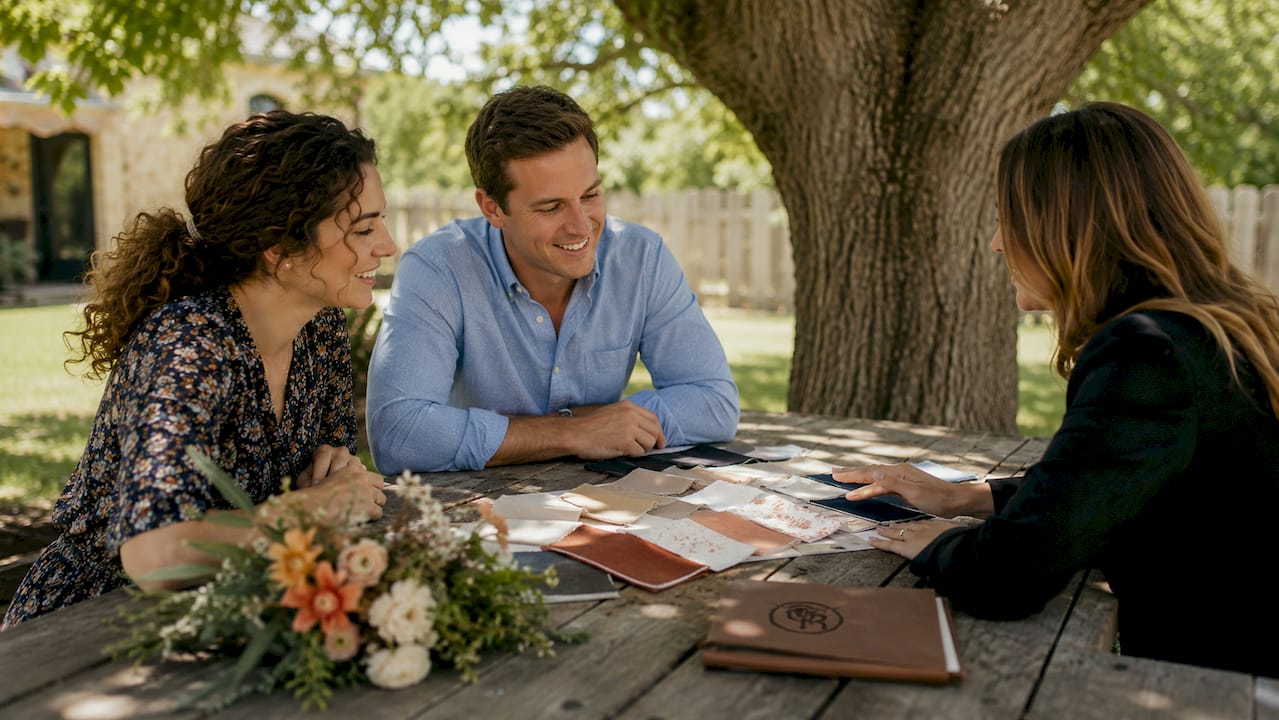
The practical difference between a styled wedding and a generic one is cohesion. Cohesion is not about matching everything perfectly. It is about repeating foundational elements like color, texture, or shape across ceremony and reception so that guests feel a subconscious sense of unity. That repetition is what makes a wedding feel professionally designed rather than assembled from separate ideas. Couples who define their style early carry that clarity into every planning conversation.
What are the essential elements that create a signature wedding style?
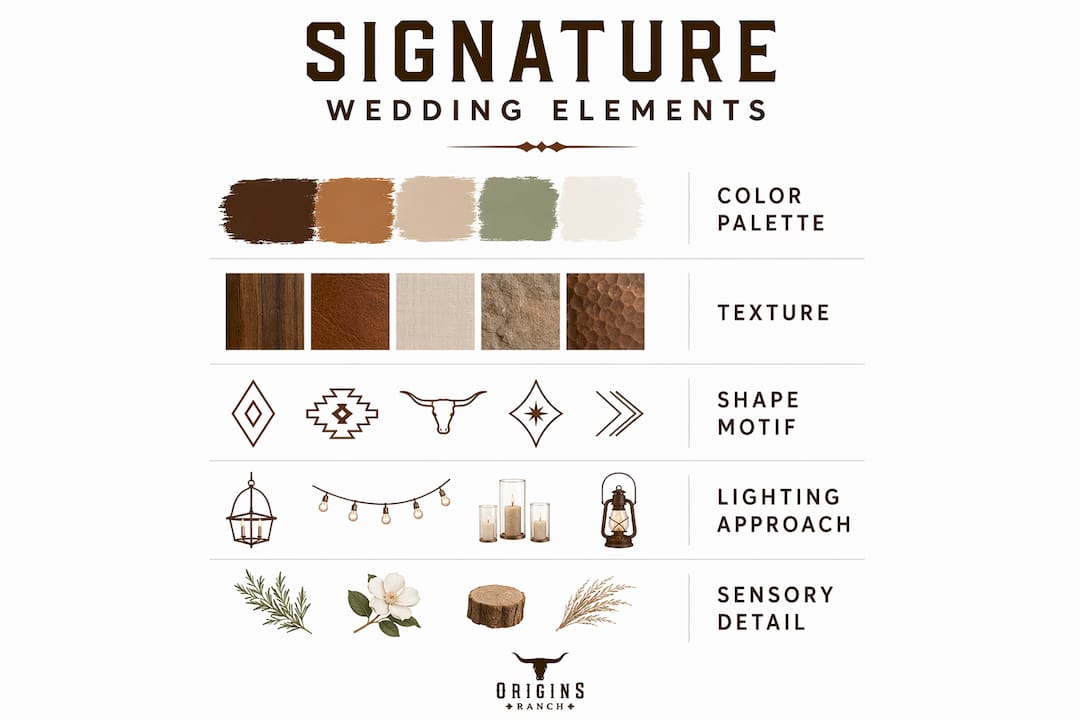
Selecting 3–5 recurring signature elements and applying them consistently from invitations to the final reception is the foundation of any polished wedding look. These elements do not need to be obvious or literal. A couple who loves the Pacific Northwest might weave deep forest greens, raw linen textures, and warm amber candlelight through every layer of their day without ever saying the word "rustic."
The categories where signature elements live most naturally include:
- Color palette: Two to three anchor colors plus one or two accent tones, repeated in florals, linens, stationery, and attire
- Texture: Velvet, linen, greenery, wood grain, or metallic finishes carried from the invitation suite to the table settings
- Shape and line: Arched doorways, circular floral installations, or geometric candle holders that echo a single visual motif
- Lighting: Warm Edison bulbs, candlelight, or cool uplighting that sets the emotional temperature of the room
- Sensory details: Scent through florals or candles, sound through curated music, and spatial flow through intentional guest movement
| Element category | Where it appears |
|---|---|
| Color palette | Invitations, florals, linens, bridesmaid attire, cake |
| Texture | Stationery, table runners, ceremony backdrop, floral arrangements |
| Shape and line | Arch design, centerpiece structure, signage style |
| Lighting | Ceremony ambiance, reception mood, highlight moments |
| Sensory details | Scent, music selection, guest flow and spatial layout |
Pro Tip: Repetition does not mean identical. Using the same dusty rose in your invitation envelope liner, your bridesmaid sashes, and your floral accents creates subconscious cohesion without feeling monotonous.
How does your personal story shape your unique wedding aesthetics?
Authenticity is the single quality that separates a memorable wedding from a forgettable one. Creating a signature style means finding your voice and communicating what makes your event unique, rather than following every trend. Social media platforms like Pinterest and Instagram surface beautiful weddings constantly, but borrowing someone else's aesthetic wholesale produces a wedding that looks styled rather than felt.
The most effective starting point is defining your emotional arc. Ask yourselves what you want guests to feel at each stage of the day. Anticipation during the ceremony processional. Warmth and laughter during cocktail hour. Joy and release on the dance floor. Professional designers choreograph placement, music, and spatial planning to align with this guest journey, not just to fill a room with pretty objects. You can apply the same thinking without a design degree by mapping your key emotional moments first and then choosing elements that support each one.
"A common mistake is prioritizing physical décor over the emotional arc. Sensory experiences like lighting, sound, and guest flow are what make a wedding feel truly signature. The best events engineer tension and release moments so guests feel emotionally connected and present throughout the entire celebration."
Balancing your personal aesthetic with one or two fresh, unexpected elements keeps your style from feeling predictable. Authentic signature styles must be rooted in the couple's unique story while including novel experiences to stay distinctive. A couple who loves classic garden parties might introduce a single unexpected element, such as a late-night food truck serving their favorite street tacos, that makes the day feel entirely their own.
Pro Tip: Write three words that describe how you want guests to feel when they walk in. Use those words as a filter for every design decision. If a vendor's proposal does not match those three words, it does not belong in your wedding.
What role does venue choice play in defining wedding style?
Your venue is not a blank canvas. It is a character in your story, and it either supports your signature style or fights against it. Venue architecture, ambiance, and character significantly impact style execution and guest experience, making venue selection a direct extension of your design vision. Couples who define their style before touring venues avoid wasting time on spaces that cannot deliver the atmosphere they need.
The practical rule is simple: style first, venue second. Couples who define their signature style and overall vibe before venue touring are far more likely to create cohesive weddings. They avoid incompatible venues early and spend their energy on spaces that genuinely fit. A couple with a moody, candlelit aesthetic will struggle in a bright, all-white ballroom no matter how talented their florist is.
Consider these questions when evaluating venue fit:
- Does the venue's existing architecture complement or clash with your color palette and textures?
- Does the spatial layout support the guest flow and emotional arc you have planned?
- Does the venue's character add to your story, or does it require expensive concealment?
- Does the lighting infrastructure support your vision, or will you need significant additions?
Understanding how venue characteristics shape guest experience is one of the most underused planning tools available to couples. A barn with original timber beams and warm wood tones does half the design work for a couple with a warm, organic aesthetic. The venue becomes a design element rather than a backdrop.
How do you practically define and express your personalized wedding style?
Translating a feeling into a tangible plan requires a clear process. The steps below move you from abstract inspiration to concrete decisions your vendors can execute.
- Identify your core values as a couple. Are you drawn to warmth and intimacy, or to drama and grandeur? Your values determine your emotional arc and filter every design choice that follows.
- Choose your 3–5 signature elements. Select one color palette anchor, one texture, one shape or line motif, one lighting approach, and one sensory detail. Write them down and keep them visible throughout planning.
- Build a one-page style brief. Describe your three emotional words, your signature elements, and two or three images that capture the feeling you want. Share this brief with every vendor before any other conversation.
- Audit every vendor proposal against your brief. If a florist's mock-up introduces a new color or texture not in your brief, ask them to revise it. Consistency is the goal, not compromise.
- Integrate style into non-décor decisions. Your music program, menu presentation, ceremony script tone, and even the wording on your signage all carry your style. Food and catering presentation contribute directly to event atmosphere and signature style within hospitality settings.
- Protect your brief from trend creep. When a vendor suggests a popular element that does not fit your brief, decline it. Trends date quickly. Your story does not.
- Review your full wedding layout for guest flow and sensory consistency. Walk through the day in your mind from the guest's perspective. Every transition, every room, and every moment should feel like part of the same story.
The most common pitfall is adding elements because they are beautiful rather than because they belong. A stunning floral installation in a style that contradicts your brief will feel jarring, not impressive. Every addition earns its place by serving the story.
Key Takeaways
A signature wedding style is the cohesive visual and emotional framework built from 3–5 recurring elements that express a couple's unique story across every detail of their celebration.
| Point | Details |
|---|---|
| Define style before venue touring | Couples who set their style vision first avoid incompatible venues and plan with greater confidence. |
| Use 3–5 recurring elements | Repeating color, texture, shape, lighting, and sensory details creates subconscious cohesion and a polished result. |
| Root style in your emotional arc | Map how you want guests to feel at each stage, then choose design elements that support those moments. |
| Share a style brief with vendors | A one-page brief with your elements and emotional words keeps every vendor aligned and prevents trend creep. |
| Venue character is a design element | Choose a venue whose architecture and ambiance actively support your signature style rather than requiring concealment. |
Why the most memorable weddings ignore trends
We have been part of hundreds of weddings at Originsranch, and the ones guests still talk about years later share one quality: they felt unmistakably like the couple who planned them. Not like a Pinterest board. Not like a magazine spread. Like two specific people who love each other and wanted everyone in that room to feel it.
The couples who struggle most are the ones who collect beautiful ideas without a filter. They end up with a wedding that looks assembled rather than designed. The couples who thrive are the ones who say "that's gorgeous, but it's not us" and move on without guilt. That kind of clarity is not restrictive. It is freeing. It means every decision gets easier because you already know the answer.
Style frameworks are tools, not rules. Use them to sharpen your instincts, not replace them. Trust what feels true to your story, and the cohesion will follow naturally. A barn with original character, warm lighting, and a couple who knows exactly who they are produces something no trend can replicate.
— Origins
Bring your signature style to life at Originsranch
Seeing a style come to life in a real space changes everything. At Originsranch in Plant City, FL, our barn venue carries its own warmth and character, built from a World Champion Horse Ranch and transformed into a modern, elegant setting that adapts beautifully to a wide range of personal aesthetics.
Browse our wedding inspiration gallery to see how couples with different signature styles have made this space entirely their own. From candlelit ceremonies with organic textures to sleek, modern receptions with bold color, the ranch provides a foundation that supports your vision rather than competing with it. If you are a veteran or active duty service member, our Weddings For Warriors program is dedicated to helping you celebrate your dream wedding with the personalized attention every couple deserves.
FAQ
What is a signature wedding style?
A signature wedding style is a cohesive set of recurring visual and emotional elements that reflect a couple's unique identity and story. It shapes every aspect of the wedding, from invitations and décor to lighting, music, and guest flow.
How many signature elements should a couple choose?
Selecting 3–5 recurring elements such as a color palette, texture, shape motif, lighting approach, and one sensory detail is the standard practice for creating a polished, unified wedding look.
Should style or venue come first in wedding planning?
Style should come first. Couples who define their signature style before touring venues are far more likely to find spaces that support their vision and avoid wasting time on incompatible options.
How is a signature wedding style different from a wedding theme?
A theme is a surface-level concept like "garden party" or "Great Gatsby." A signature style goes deeper, rooting every design decision in the couple's personal story, emotional goals, and recurring design elements that create genuine cohesion.
How do you communicate your wedding style to vendors?
Build a one-page style brief that includes your three emotional words, your 3–5 signature elements, and two or three reference images. Share this brief with every vendor before any other conversation to keep all decisions aligned.