
TL;DR:
- Visiting multiple wedding venues is essential to making an informed and confident booking decision. Touring 3 to 7 venues allows for effective comparison of costs, policies, and atmosphere without decision fatigue or missed options. Evaluating staff responsiveness, transparency, and logistics helps ensure the venue aligns with your needs and sets the right tone for your wedding day.
Touring multiple wedding venues before booking is the single most effective way to make a confident, informed decision about one of the biggest purchases of your life. The wedding venue selection process involves far more than picking a pretty space. You are comparing capacity, cost transparency, vendor policies, staff quality, and atmosphere across real options, not imagined ones. Couples who visit only one or two venues often discover too late that they missed a better fit on price, logistics, or feel. This article walks you through why visiting several venues matters, how many to tour, what to evaluate, and how to stay organized so you choose with clarity.
Why tour multiple wedding venues before committing
Touring multiple wedding venues is the industry-standard approach to avoiding costly booking mistakes. Many couples rush into booking the first venue that feels right, overlooking logistical and budgetary misalignments that cause serious stress later. A single tour gives you one data point. Multiple tours give you a real comparison.
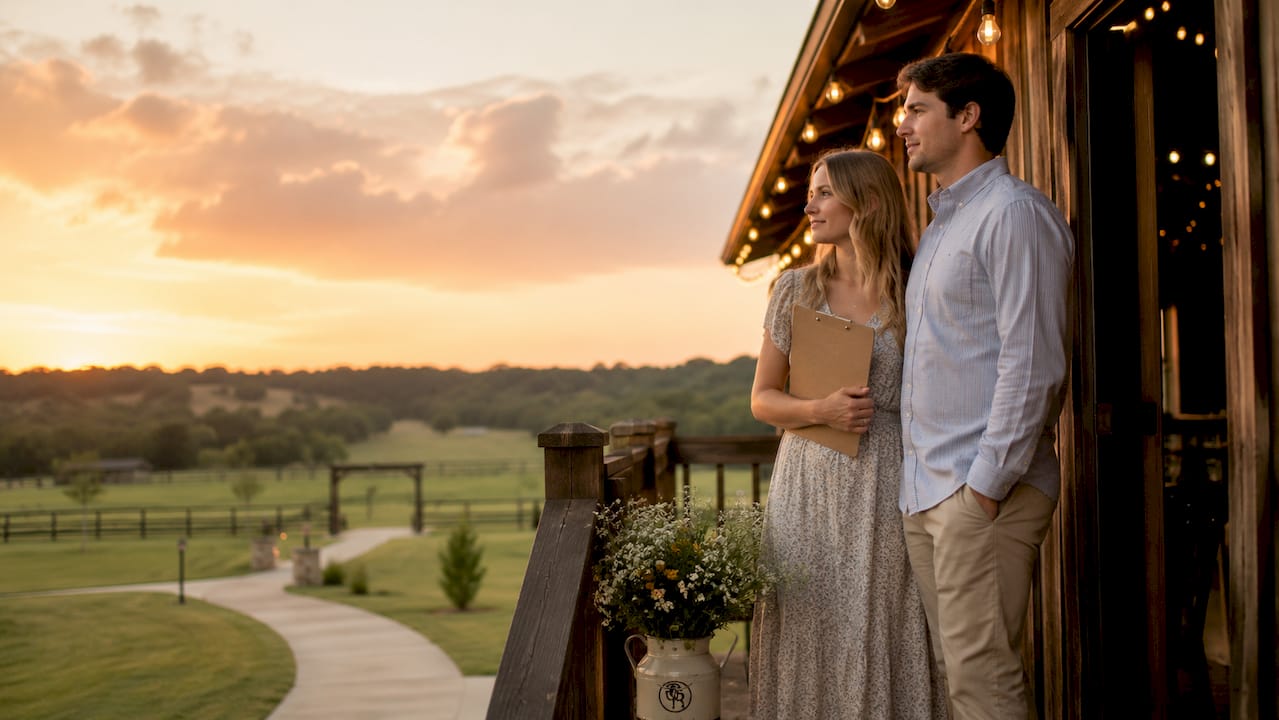
The benefits of touring wedding venues extend beyond aesthetics. You learn what questions to ask, what red flags look like, and what "good" actually means in terms of staff responsiveness, pricing clarity, and space flow. Your first tour is almost always your least informed one. By your third or fourth visit, you know exactly what you are looking for.
The role a venue plays in shaping your entire wedding experience is significant. The space sets the tone for every vendor decision that follows, from catering to photography to florals. Choosing without comparison is like buying a car after test driving only one model.
How many wedding venues should you tour?
The industry guideline is clear: tour between 3 and 7 venues for effective comparison. Fewer than three gives you too little data to make a confident choice. More than seven creates decision fatigue, where venues start to blur together and details become hard to recall accurately.
That range exists for good reason. Here is what happens at each extreme:
- Too few tours (1–2 venues): You lack a baseline for comparison. You cannot know if a price is fair, a policy is standard, or an amenity is exceptional without seeing alternatives.
- Too many tours (8 or more): Details from early visits fade. Emotional exhaustion sets in. Couples often default to the most recent venue they saw rather than the best overall fit.
- The sweet spot (3–7 venues): You gather enough data to spot patterns, compare pricing honestly, and feel genuinely confident in your final choice.
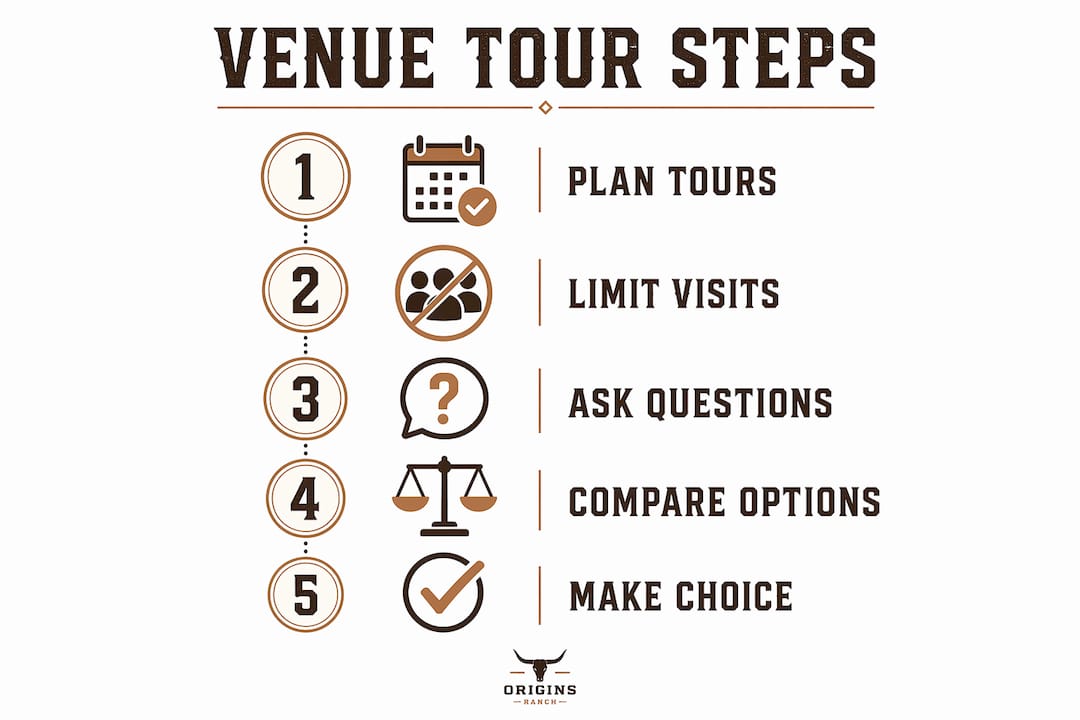
Experts also recommend limiting yourself to 2–3 venue tours per day to maintain focus and reduce confusion. Touring four or five venues in a single day means your memory of the first venue is already fading by the time you leave the last one. Schedule your visits with breathing room between them.
Pro Tip: Book your most anticipated venue as your second or third tour, not your first. Your first visit is a learning experience. By your second, you ask sharper questions and notice details you would have missed on day one.
What to compare during each venue tour
Effective venue comparison starts before you walk through the door. Defining your non-negotiables before touring, such as guest count, location, date flexibility, and accessibility requirements, filters out poor fits immediately and keeps your tours focused.
Once you are on site, evaluate each venue against the same criteria every time. Here is a practical list of what to assess:
- Capacity and layout: Does the space comfortably hold your guest count for both ceremony and reception? Ask about minimum and maximum headcounts.
- Cost transparency: Request a fully itemized pricing sheet. Venue estimates often exclude service charges, taxes, and setup fees that add up fast.
- Vendor policies: Does the venue require you to use their preferred vendor list, or can you bring your own caterer, florist, and DJ?
- Noise curfews and logistics: What time does music need to stop? Is there on-site parking? Where do guests enter and exit?
- Availability: Is your preferred date open? What are the backup date options?
- Staff responsiveness: How quickly did they reply to your inquiry? How did they treat you during the tour?
That last point matters more than most couples expect. Venue staff quality is often the deciding factor when two venues look equal on paper. A coordinator who is slow to respond during the sales process will not suddenly become attentive on your wedding day.
Using a standardized checklist during every tour prevents venue details from blurring together and keeps your evaluation grounded in facts rather than feelings. Download or create one before your first visit and fill it out at every stop.
Pro Tip: Ask each venue coordinator the same three questions at every tour: "What is included in the base rental fee?", "What happens if we need to reschedule?", and "Can we speak with a recent couple who hosted their wedding here?" Their answers reveal a lot about how they operate.
How budgeting awareness during tours prevents overspending
Venue and catering costs typically represent 25–35% of your total wedding budget. That means if your overall budget is $30,000, you should expect to spend between $7,500 and $10,500 on venue and catering combined. Knowing this number before you tour keeps you from falling in love with a space that is simply out of reach.
Set a firm venue budget range before your first tour, not after. Walking into a $15,000 venue when your budget allows for $8,000 creates emotional attachment to something you cannot afford. That attachment makes every other venue feel like a compromise, even when it is not.
Here are the budgeting habits that protect you during the venue selection process:
- Request fully itemized quotes in advance. Ask each venue to send a complete pricing breakdown before your visit. This filters out venues that are clearly over budget before you invest time in a tour.
- Ask about date flexibility. Off-peak or non-Saturday bookings can reduce venue fees by 15–25%. A Friday evening or Sunday afternoon wedding at a beautiful venue often costs significantly less than a Saturday at a lesser one.
- Compare apples to apples. One venue's base rental fee may include tables, chairs, and a coordinator. Another's may not. Always calculate the true total cost before comparing prices.
For couples watching their budget carefully, smart barn wedding strategies in Florida show that choosing the right venue type and date combination can save up to 30% without sacrificing the experience you want.
Pro Tip: Create a simple spreadsheet with each venue's name, base cost, what is included, and the estimated total after add-ons. Side-by-side numbers are far more persuasive than memory.
How to organize your venue tours for better decisions
Efficient tour scheduling is not just about convenience. It directly affects how clearly you remember and compare each venue. Clustering 2–3 tours geographically in a single day saves travel time and keeps your impressions fresh for comparison.
Follow these steps to get the most out of every visit:
- Schedule tours on the same day when possible. Seeing two venues back to back on a Saturday morning makes comparison natural and immediate.
- Take photos and short video walkthroughs. Memory fades fast. A 60-second video of the reception space tells you more two weeks later than any mental image.
- Bring a second opinion. Your partner, a trusted friend, or a wedding planner will notice things you miss when you are emotionally invested in a space.
- Fill out your checklist immediately after each tour. Do not wait until you get home. Impressions blur within hours.
- Wait 24–48 hours before making any decisions. The venue that felt magical in the moment may look different after a night's sleep and a look at the itemized quote.
The most effective venue decision process involves collecting identical data points at each venue and scoring them numerically. A weighted comparison sheet, where you assign scores to factors like cost, staff quality, location, and atmosphere, balances emotional pull with practical reality. You can find templates for this through wedding planning resources like The Knot or Zola, or build your own in Google Sheets.
Understanding wedding venue terminology before you tour also prevents costly misunderstandings. Terms like "exclusive use," "minimum spend," and "preferred vendor" mean very different things at different venues. Knowing the language keeps you from signing a contract that surprises you later.
Key takeaways
Touring multiple wedding venues is the most reliable way to make a confident, budget-conscious venue choice that matches your vision and logistics.
| Point | Details |
|---|---|
| Tour 3–7 venues | This range gives enough data for comparison without causing decision fatigue. |
| Set your budget first | Venue and catering typically cost 25–35% of your total budget; know your number before touring. |
| Use a checklist every time | Standardized evaluation keeps decisions grounded in facts, not just feelings. |
| Limit daily tours to 2–3 | Touring more in one day blurs details and reduces the quality of your comparisons. |
| Staff quality is a deciding factor | How a venue team treats you during the tour predicts how they will perform on your wedding day. |
What we have learned from watching couples choose their venue
We have seen hundreds of couples walk through our barn at Originsranch, and the ones who arrive having already toured two or three other venues are always the most confident. They ask better questions. They know what they want. They are not second-guessing themselves a week later.
The couples who struggle most are the ones who booked the first venue that gave them butterflies. That emotional rush is real, and we understand it completely. But "it felt right" is not a complete decision framework. A venue can feel magical and still have a noise curfew that ends your reception at 9 p.m., a vendor list that doubles your catering cost, or a coordinator who takes three days to return a call.
Here is what I have found to be true after years in the event industry: the quality of the venue team is the single most underrated factor in the selection process. A stunning space run by an indifferent team will frustrate you throughout planning. A warm, responsive team in a beautiful space will make every detail feel manageable. We talk about this at length in our piece on the strategic role of venue staff, and it is worth reading before your first tour.
My honest advice: go in with a checklist, a budget ceiling, and a commitment to see at least three venues before you decide anything. The right venue will still feel right after the emotions settle. And if it does not hold up to practical scrutiny, it was never the right fit.
— Origins
See Originsranch for yourself
If you are in the middle of your venue search and want a space that combines genuine charm with professional, personalized service, we would love to show you what Originsranch has to offer. Our barn in Plant City, FL has been transformed from a World Champion Horse Ranch into a modern, elegant event space that still carries all the warmth and character of its roots.
Browse our wedding gallery to get a feel for the atmosphere, or explore our 2025 and 2026 weddings to see real celebrations in the space. When you are ready to experience it firsthand, book your site tour and let our team walk you through everything. We are here to answer every question, with no pressure and no rush.
FAQ
How many wedding venues should you visit before booking?
Tour between 3 and 7 venues for the best results. Fewer than three gives you too little to compare; more than seven leads to decision fatigue and blurred details.
What should you bring to a wedding venue tour?
Bring a printed or digital checklist, your phone for photos and video, a list of your non-negotiables, and a trusted second opinion from your partner or a close friend.
How do you compare wedding venues objectively?
Use a scoring sheet that assigns numerical values to key factors like cost, capacity, staff quality, location, and vendor flexibility. Scoring each venue the same way removes emotional bias from the comparison.
Is it worth asking about off-peak wedding dates during a tour?
Yes. Date flexibility can reduce venue fees by 15–25% for non-Saturday or off-peak bookings. Always ask during the tour, before you fall in love with a Saturday price you cannot afford.
How do you know if a venue's staff is the right fit?
Pay attention to how quickly they responded to your initial inquiry and how they treat you during the tour. Venue staff responsiveness during the planning phase is the best predictor of how smoothly your wedding day will run.