
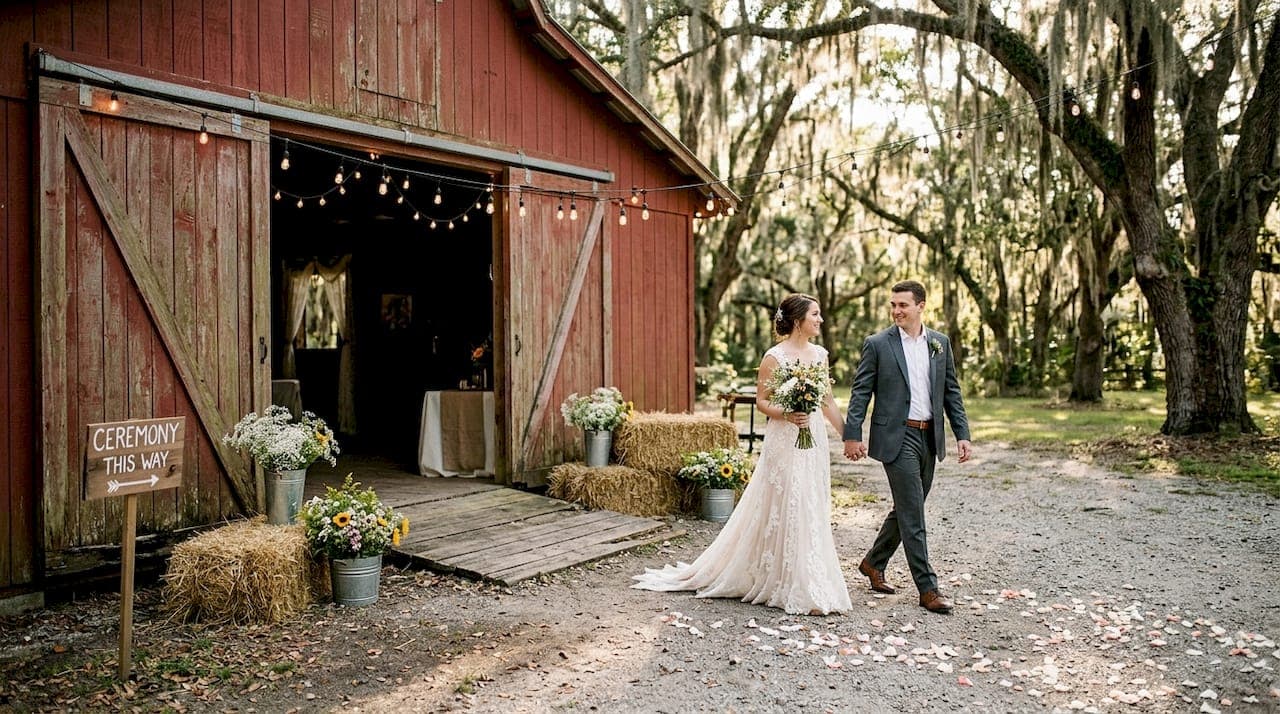
Booking a rustic barn wedding venue in Florida can feel overwhelming when you're trying to balance charm with personalized service. With over 200 barn venues across the state, couples spend an average of 40 hours researching options before making a decision. This guide walks you through each critical step, from understanding venue terminology to signing your contract, so you can secure your dream location with confidence. You'll discover how to avoid common pitfalls, verify final details, and create the magical experience you've envisioned for your special day.
Table of Contents
- Understanding The Essentials Before Booking Your Florida Rustic Barn Wedding Venue
- Step-By-Step Process To Book Your Perfect Rustic Barn Wedding Venue In Florida
- Avoiding Common Pitfalls And Mistakes When Booking A Rustic Barn Wedding Venue
- What To Expect On Your Wedding Day And Final Verification Before Your Rustic Barn Event
- Discover Your Dream Rustic Barn Wedding Venue At Origins Ranch
- FAQ
Key takeaways
| Point | Details |
|---|---|
| Preparation matters | Understanding venue terminology and service offerings prevents costly mistakes and confusion |
| Follow structured steps | A clear booking workflow reduces delays by 70% and increases satisfaction by 40% |
| Avoid common errors | Reviewing contracts carefully and clarifying policies protects your investment |
| Verify before the big day | Final walkthroughs and contingency plans ensure your vision becomes reality |
Understanding the essentials before booking your Florida rustic barn wedding venue
Before you contact venues, you need to understand the specialized language and features that define rustic barn weddings. Terms like "venue coordinator," "preferred vendor list," "buyout minimum," and "setup window" appear in every contract. Understanding venue terminology is crucial to avoid costly mistakes. When you know what these terms mean, you negotiate better and set realistic expectations.
Rustic barn venues offer unique amenities that differ from traditional ballrooms or hotels. Look for spaces that provide tables, chairs, and basic lighting as part of the package. Some venues include climate control, restrooms, and getting-ready suites, while others offer raw space requiring you to rent everything. Catering policies vary widely: some venues require you to use their in-house kitchen, others maintain a preferred caterer list, and a few allow complete vendor freedom. Décor policies matter too, especially regarding candles, hanging installations, and cleanup responsibilities.
Comparing venues systematically saves time and reduces stress. Create a spreadsheet tracking these critical parameters:
| Venue Feature | Venue A | Venue B | Venue C | | --- | --- | --- | | Guest capacity | 150 | 200 | 120 | | Included rentals | Tables, chairs | Tables only | None | | Catering policy | Preferred list | In-house only | Open vendor | | Setup time | 4 hours | 2 hours | 6 hours | | Personalization options | High | Medium | High |
Timing your booking is everything in Florida's competitive wedding market. Peak season runs from October through April when weather is ideal for outdoor ceremonies. Venues book 12 to 18 months in advance during these months. Summer weddings offer more availability and often lower rates, but you'll need robust weather contingency plans. Contact venues early to secure your preferred date, especially if you're planning a Saturday evening event.
Pro Tip: Visit venues on the same day of the week and time you're considering for your wedding. Lighting, noise levels, and traffic patterns change dramatically between afternoon and evening events.
Location impacts your guest experience significantly. Consider drive time from major airports and hotels, especially if you're hosting out-of-town guests. Rural barn venues offer stunning scenery but may require shuttle services. Urban-adjacent locations provide convenience but might sacrifice some rustic ambiance. Evaluate parking capacity, accessibility for elderly or disabled guests, and whether the venue provides directions that GPS systems recognize accurately.
Step-by-step process to book your perfect rustic barn wedding venue in Florida
Start your search by defining your non-negotiables: guest count, budget range, and must-have amenities. Browse venue websites and social media to see real weddings, not just staged photos. Read reviews on multiple platforms, paying attention to comments about responsiveness, flexibility, and hidden fees. Create a shortlist of three to five venues that match your vision and budget.
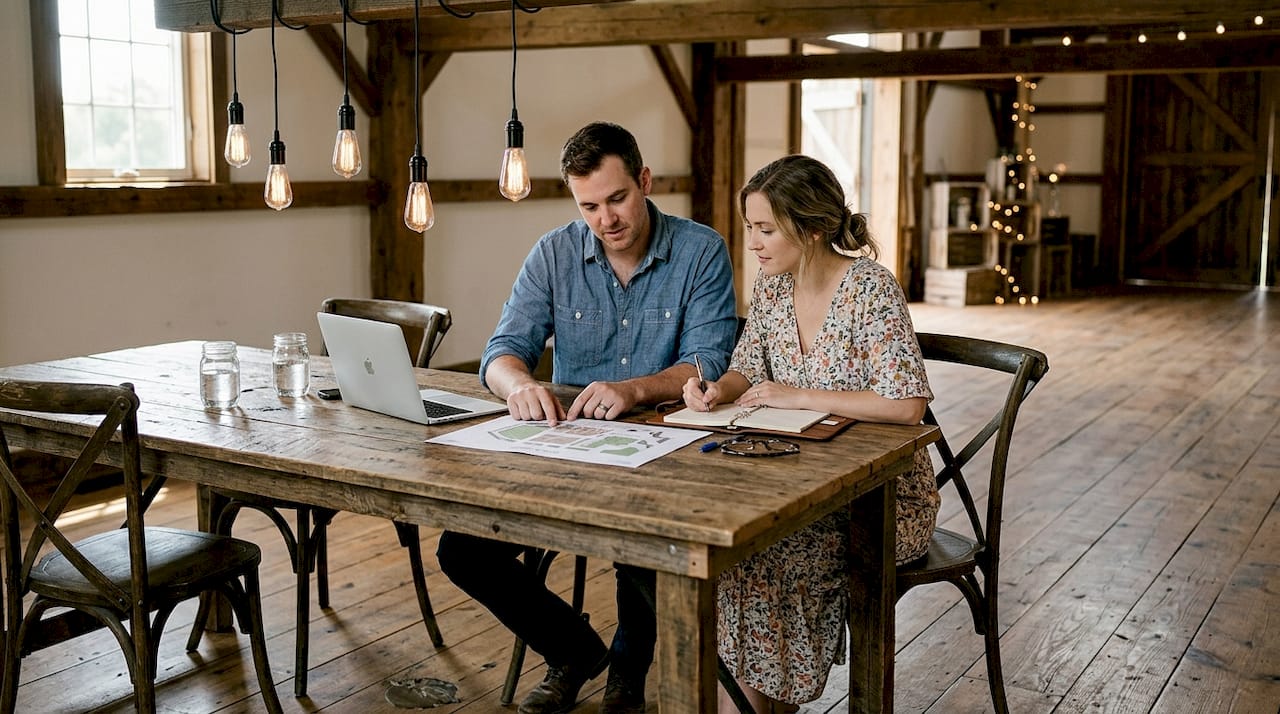
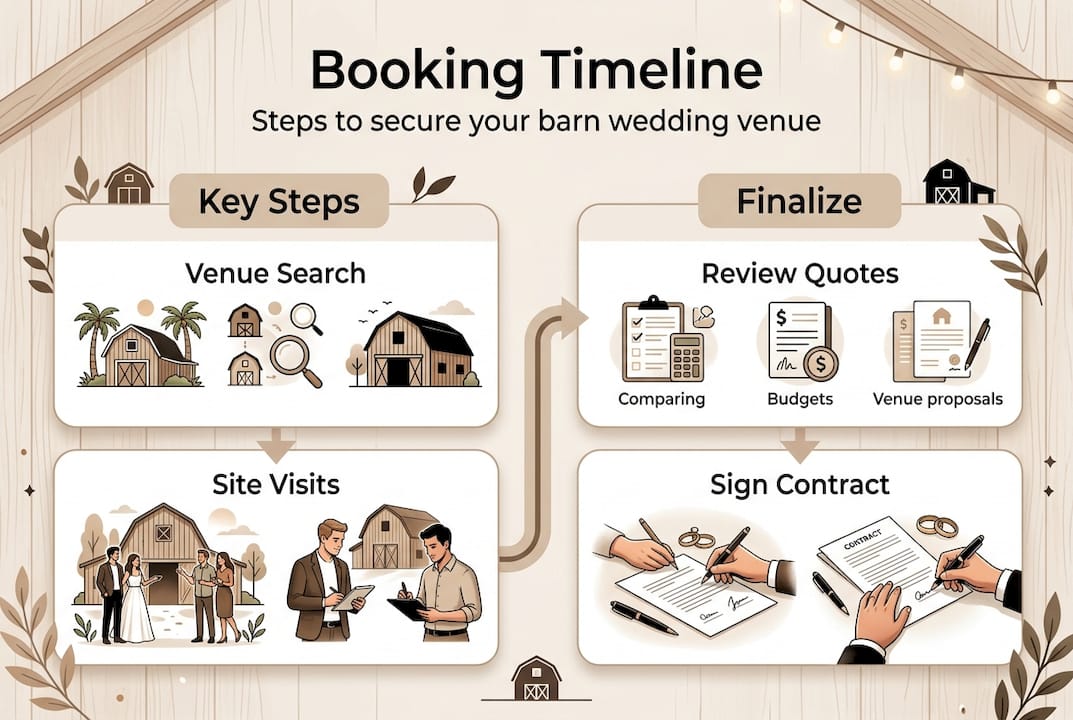
Schedule site visits during business hours when coordinators can give you full attention. Bring your partner, a notebook, and your comparison spreadsheet. Walk the entire property, imagining your ceremony and reception flow. Ask about vendor restrictions, noise ordinances, and what happens if weather forces you indoors. Request to see the space set up for an actual event if possible. Following a structured barn venue wedding workflow reduces delays by 70% and increases joy by 40%.
Request detailed quotes in writing from your top choices. Quotes should itemize every fee: venue rental, coordinator services, overtime charges, cleaning deposits, and any required insurance. Ask what's included in the base price versus what costs extra. Clarify payment schedules, typically a deposit to secure your date, a second payment at six months out, and final payment 30 days before the event. Compare quotes side by side, noting any services one venue includes that another charges for separately.
Communicate your personalization needs clearly during initial conversations. Discuss your décor vision, timeline preferences, and any special requests like late-night dancing or sparkler exits. Ask how the venue accommodates cultural traditions, dietary restrictions, and accessibility needs. Share your Pinterest boards or inspiration photos so coordinators understand your aesthetic. The best venues will offer suggestions based on their experience while respecting your creative vision.
Review contracts with a careful eye before signing anything. Read every clause, especially those covering cancellations, date changes, and force majeure events. Understand what constitutes a breach of contract and what remedies exist if either party fails to perform. Note the venue's liability limits and whether they require you to purchase event insurance. If legal language confuses you, consider having an attorney review the contract. Never sign under pressure or before you've had time to compare all your options.
Secure your date by submitting the signed contract with your deposit. Most venues require 25% to 50% down to hold your date. Get written confirmation of your booking with all agreed-upon details: date, time, guest count, included services, and total cost. Ask for the coordinator's direct contact information and preferred communication method. Set up a timeline for future check-ins, typically at 12 months, 6 months, 3 months, and 1 month before your wedding. Keep all correspondence organized in a dedicated email folder or planning binder.
Avoiding common pitfalls and mistakes when booking a rustic barn wedding venue
Couples frequently overlook cancellation policies until circumstances force them to postpone or cancel. Read these clauses carefully: some venues offer full refunds with sufficient notice, others keep your deposit regardless of timing, and many use a sliding scale where you forfeit more money as your date approaches. Ask about rescheduling options if you need to change your date due to family emergencies or military deployment. Misunderstanding legal agreements and deposits leads to frequent problems with hospitality-operated wedding venues.
Underestimating total costs is another common mistake. The venue fee represents just one piece of your budget. Factor in rentals for items not included, catering minimums, bar packages, service charges, and gratuities. Many venues require you to hit spending minimums on food and beverage, which can push your budget higher than anticipated. Ask about seasonal pricing differences and whether rates increase for holiday weekends. Hidden fees like cake cutting charges, corkage fees, or valet parking can add thousands to your final bill.
Neglecting coordination details creates stress as your wedding approaches. Clarify who manages vendor arrivals, setup supervision, and timeline coordination. Some venues provide a day-of coordinator included in your package, others charge extra for this service, and a few expect you to hire an independent planner. Understand the venue's role in managing your timeline versus what you or your planner must handle. Ask about backup power sources, emergency procedures, and who's on-call if problems arise during your event.
"The biggest regret couples share is not asking enough questions upfront. What seems obvious to you might not be included in the venue's standard package, and assumptions lead to disappointment on your wedding day."
Seasonal weather poses unique challenges for outdoor barn venues in Florida. Summer brings afternoon thunderstorms, high humidity, and intense heat. Winter offers mild temperatures but occasional cold fronts. Spring and fall provide ideal conditions but book fastest. Every outdoor venue must have a weather contingency plan: covered pavilion, barn interior space, or tent rental. Ask who decides when to move indoors, how much advance notice you'll receive, and whether moving inside changes your layout or capacity. Visit the backup space to ensure it still delivers the rustic aesthetic you want.
Maintaining clear communication prevents misunderstandings that can sour your planning experience. Respond promptly to venue emails and requests for decisions. Keep a running list of questions and address them in batches rather than sending daily emails. Document all agreements in writing, even those made during phone calls or site visits. If your coordinator changes during your planning period, request a thorough handoff meeting to ensure nothing gets lost in transition. Set realistic expectations about response times, especially during peak wedding season when coordinators manage multiple events weekly.
What to expect on your wedding day and final verification before your rustic barn event
Your wedding day timeline begins long before guests arrive. Vendors typically access the venue 4 to 8 hours before ceremony time. Florists arrive first to install ceremony arrangements and centerpieces. Caterers need several hours to set up their kitchen, arrange place settings, and prepare food. Your DJ or band requires time for sound checks and equipment setup. Rental companies deliver tables, chairs, and linens early morning. Coordinate all these arrivals with your venue to avoid bottlenecks at the entrance or conflicts over parking and loading zones.
Understanding which event milestones the venue manages versus what you control prevents confusion and gaps in responsibility. Venues typically handle facility setup, basic lighting, climate control, and restroom maintenance. They may coordinate vendor load-in and ensure everyone follows their rules. You or your planner manage the ceremony processional, reception timeline, and guest experience elements. Most couples prefer DIY décor at barn venues but appreciate clear communication about venue standards and milestones. Clarify who cues musicians, manages the microphone for toasts, and signals when to cut the cake.
| Responsibility | Venue Handles | Couple/Planner Handles | | --- | --- | | Facility setup | ✓ | | | Vendor coordination | Shared | Shared | | Timeline management | | ✓ | | Guest experience | | ✓ | | Emergency response | ✓ | | | Cleanup supervision | ✓ | |
Schedule a final walkthrough 7 to 14 days before your wedding. Bring your planner, key vendors, and anyone helping with DIY projects. Walk through your ceremony and reception setup, confirming table placement, dance floor location, and bar positioning. Review your floor plan against the actual space to catch any issues before the big day. Discuss final guest count adjustments and how they affect your layout. Confirm delivery times, parking arrangements, and which doors vendors should use. Address any last-minute questions about décor installation, cleanup responsibilities, or venue rules.
Prepare contingency plans for potential disruptions beyond weather. What happens if a vendor cancels last minute or key equipment fails? Identify backup options for critical services like catering, photography, and music. Know where the circuit breaker panel is located in case you trip a breaker with all your equipment. Have a contact list with every vendor's cell phone number and your venue coordinator's emergency line. Designate a trusted friend or family member to handle small crises so you can focus on enjoying your day.
Pro Tip: Create a "day-of" emergency kit with safety pins, stain remover, pain relievers, phone chargers, and copies of all vendor contracts and contact information. Leave it with your planner or a reliable friend who can access it quickly if needed.
Your venue coordinator becomes your partner in executing a flawless event. They'll manage facility issues, coordinate with their staff, and ensure the space functions properly. Trust their experience with the property, but don't hesitate to speak up if something doesn't match your expectations. Most coordinators want you to have an amazing experience and will work hard to solve problems quickly. Show appreciation for their efforts, as they're often managing multiple moving parts behind the scenes while you celebrate with guests.
Discover your dream rustic barn wedding venue at Origins Ranch
After learning the complete booking process, you're ready to find a venue that delivers both rustic charm and personalized service. Origins Ranch in Plant City, Florida, offers a stunning barn setting transformed from a World Champion Horse Ranch into a modern, elegant space. Our founder Barry brings over 20 years of event industry experience as a veteran and DJ, ensuring every detail receives expert attention.
Explore our extensive gallery showcasing real weddings with diverse styles and personalized touches. See how couples have transformed our space to reflect their unique vision. Ready to experience Origins Ranch firsthand? Book a tour to walk the property, meet our team, and envision your perfect day. We're proud partners with Weddings For Warriors USA, supporting veterans and active duty service members. Start planning your dream event with a venue that prioritizes your story and celebrates your love.
FAQ
How far in advance should we book our rustic barn wedding venue in Florida?
Book 12 to 18 months in advance for peak season dates between October and April. Saturday evenings fill fastest, so contact venues early if you want a weekend wedding. Summer dates offer more flexibility with 6 to 12 months' notice, but you'll need solid weather backup plans. Holiday weekends like Memorial Day or New Year's Eve require even earlier booking, sometimes 18 to 24 months out.
What should we look for in the contract before signing with a barn venue?
Focus on cancellation and postponement policies, payment schedules, and what's included versus extra charges. Review liability clauses, insurance requirements, and who's responsible for damages. Check vendor restrictions, noise curfews, and overtime fees. Understand setup and cleanup windows, alcohol policies, and whether the venue provides a coordinator. Never sign until you've read every clause and asked questions about anything unclear.
Can we personalize decorations and catering at a rustic barn venue?
Most rustic barn venues encourage DIY décor and personal touches that reflect your style. Ask about restrictions on candles, hanging installations, confetti, or sparklers before planning your design. Catering policies vary widely: some venues require in-house catering, others maintain preferred vendor lists, and a few allow complete freedom. Always verify policies in writing before booking vendors or purchasing décor items.
Are outdoor ceremonies affected by Florida weather, and what are the contingency plans?
Florida weather is unpredictable, especially during summer thunderstorm season. Every outdoor venue should offer an indoor alternative or covered space for ceremonies. Ask who makes the final call about moving inside and how much advance notice you'll receive. Visit the backup location to ensure it still provides the rustic aesthetic you want. Most venues can pivot quickly, but having a plan reduces stress if weather doesn't cooperate.