
TL;DR:
- A country venue booking workflow moves event inquiries through availability checks, holds, deposits, and final confirmation. Using automated systems with clear policies prevents lost dates and maximizes revenue by ensuring timely communication and reservation certainty.
A country venue booking workflow is the structured process that moves an event inquiry through availability checks, holds, deposits, and final confirmation to secure a rural event space. Without a clear workflow, planners and couples lose dates to faster-moving inquirers, and venues lose revenue to unconfirmed holds. The most effective rural venue reservation process treats every available date as perishable inventory, applies strict hold expiration policies, and uses automated communication to keep all parties moving forward. This guide covers every stage of that process, from the first inquiry to the final signed contract.
What are the essential prerequisites for a country venue booking workflow?
The right tools and information must be in place before a single inquiry is submitted. Venues that collect standardized data upfront, including event type, expected guest count, and two or three backup dates, can filter for fit and respond faster. Venues without automated systems experience average three-day response delays during peak season. Three days is long enough for a couple to book somewhere else.

The two foundational tools in any country event booking system are an inquiry form and a live availability calendar. A well-designed inquiry form collects all the details a venue needs to confirm fit in one pass. A live calendar prevents double bookings and gives planners real-time confidence in the dates they are considering.
Spreadsheets vs. automated booking platforms:
| Feature | Manual spreadsheets | Automated booking platforms |
|---|---|---|
| Availability updates | Manual, prone to error | Real-time, automatic |
| Hold expiration tracking | Requires manual follow-up | Auto-releases expired holds |
| Client communication | Email by hand | Triggered reminders and confirmations |
| Payment tracking | Separate spreadsheet | Integrated with booking record |
Automated platforms win on every dimension that matters for speed and accuracy. Manual spreadsheets work for very low-volume venues, but they create gaps the moment inquiry volume picks up.
- Collect event type, guest count, and backup dates on the first inquiry form.
- Use a live calendar so planners can self-check availability before reaching out.
- Connect your calendar to your communication system so holds trigger automatic follow-up emails.
- Confirm vendor availability before placing a hold on the venue calendar.
Pro Tip: Ask couples to provide at least two backup dates on their inquiry form. This single step cuts back-and-forth emails by half and keeps the booking moving when the first-choice date is unavailable.
How do you execute the step-by-step booking process for country venues?
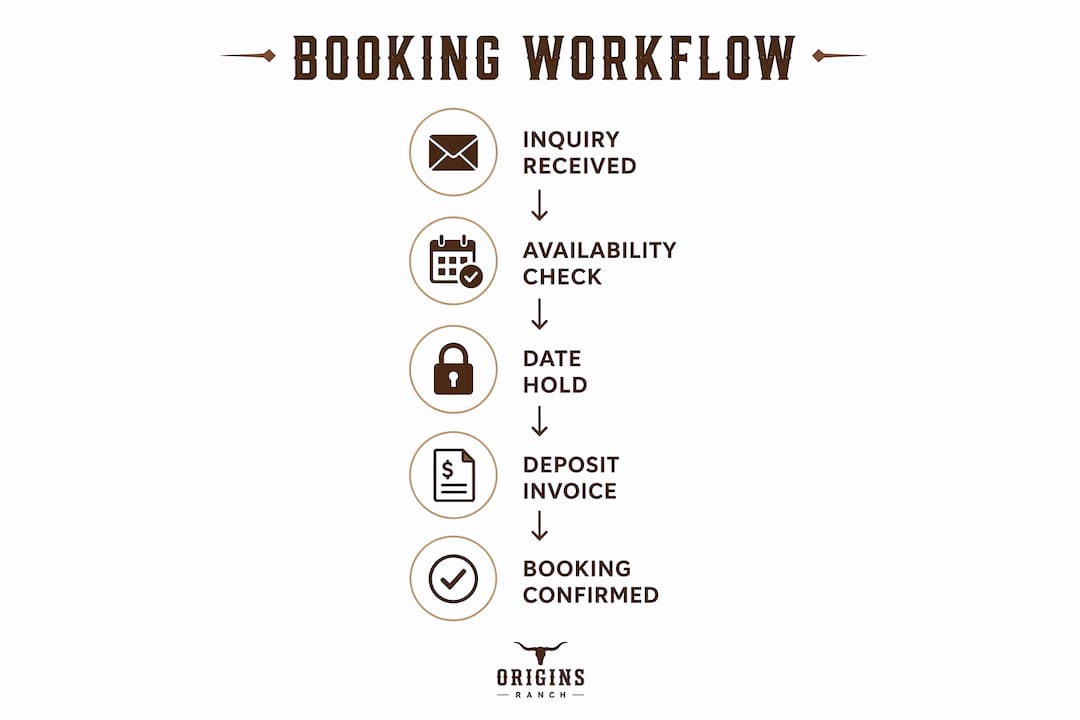
A reliable outdoor venue reservation management process follows five clear steps. Each step has a defined output, and no step should begin until the previous one is complete.
-
Initial inquiry submission. The couple or planner submits the inquiry form with event type, guest count, preferred date, and backup dates. The venue receives a complete picture of the event before any calendar space is touched.
-
Availability check and hold assignment. The venue confirms the date is open and places a tentative hold. Holds typically expire within 72 hours to 7 days, automatically releasing if a deposit is not received. This expiration window is not arbitrary. It protects the venue from holding revenue-generating dates for couples who are still undecided.
-
Deposit collection. A deposit converts a tentative hold into a confirmed booking. Deposits typically represent 25–50% of the total booking cost. That range reflects the real cost of a last-minute cancellation on a peak weekend date, not a fee for paperwork. No deposit means no guaranteed booking, regardless of how enthusiastic the couple seems.
-
Communication cadence. Once the deposit clears, automated reminders take over. Automated reminders and milestone prompts reduce manual outreach and keep planners and clients on schedule for payment deadlines and planning check-ins. A good cadence includes a deposit confirmation, a 30-day check-in, and a final balance reminder.
-
Final booking confirmation and handoff. The venue sends a signed contract and a welcome packet that outlines the next steps in event planning. This is the moment the booking workflow ends and the event planning workflow begins. For a detailed look at what comes next, the barn event planning guide from Originsranch walks through the full planning sequence.
Pro Tip: Send the deposit invoice within one hour of placing a hold. Speed at this stage signals professionalism and keeps the couple's excitement working in your favor.
What unique logistical factors affect country venue booking workflows?
Rural and country venues carry scheduling constraints that urban event spaces rarely face. These constraints must be built into the booking calendar, not managed manually on the day of the event.
Venues program constraints such as two-hour noise buffers between loud events to prevent guest complaints and comply with local ordinances. That two-hour window is not dead time. It is a scheduling rule that prevents the end of one wedding reception from bleeding into the setup of the next event. Ignoring it creates conflicts that no amount of apology can fix after the fact.
A second constraint that catches planners off guard involves staffing roles. Clients often mistake facility managers for coordinators responsible for timeline and vendor management. The on-site venue representative handles facility operations: unlocking doors, managing utilities, and overseeing the physical space. A day-of coordinator manages the event timeline, vendor arrivals, and guest flow. These are two separate roles, and confusing them creates unrealistic expectations on event day.
Key logistical factors to account for in your booking workflow:
- Setup and teardown buffers. Block calendar time before and after each event for vendor setup and cleanup. A minimum of two hours on each side is standard for country venues with outdoor spaces.
- Noise ordinance windows. Know your county's noise cutoff time and program it into every booking. Events that run past the cutoff create liability for the venue and stress for the couple.
- Multi-space coordination. If the venue has a barn, an outdoor ceremony area, and a reception hall, each space may have its own availability rules. Map these separately in your calendar system.
- Vendor access timing. Caterers, florists, and photographers often need access hours before the event start time. Build vendor access windows into the booking record so there are no surprises.
For a deeper look at how space configuration affects scheduling, the farm venue design guide from Originsranch covers the spatial planning side of country venue management.
How do you avoid common mistakes in country venue booking workflows?
The most expensive mistakes in a booking workflow happen at the transition points between steps. Slow inquiry responses, vague hold policies, and unclear deposit terms each create friction that costs bookings.
- Slow inquiry responses. Speed is the single biggest factor in converting an inquiry into a booking. A three-day response delay during peak season is enough time for a couple to tour and deposit at another venue.
- Indefinite holds. Holding a date without a firm expiration damages venue revenue. Transparent, enforceable hold expiration policies align the couple's urgency with the venue's need to keep the calendar moving.
- Holds placed before vendor availability is confirmed. A couple should not place a venue hold until their key vendors, particularly their caterer and photographer, have confirmed they are available on that date. A venue hold without vendor availability creates a booking that may unravel weeks later.
- Misunderstood deposit policies. Couples sometimes treat a deposit as a fee they can recover if plans change. Venues must communicate clearly that deposits are priced inventory commitments, not refundable reservations.
- Communication gaps between steps. Every handoff in the workflow, from hold to deposit, from deposit to confirmation, needs a triggered communication. Manual follow-up creates gaps.
"Booking workflows are a race against time. Speed and clarity in communication make the difference between securing and losing a booking. A venue that responds in minutes, not days, wins the couple before the competition even replies."
What are best practices to enhance efficiency in the booking workflow?
The best event space booking workflows combine live technology with personal communication. Neither alone is enough.
Platforms displaying live availability drastically reduce scheduling conflicts and improve planner confidence. When a couple can see in real time that a date is open, they move faster. When they have to wait for a venue to check and reply, they browse other options. Live calendars remove that waiting period entirely.
Self-service tools extend the same logic to contracts and tours. Online contract signing removes the friction of printing, scanning, and mailing. Self-scheduled site tours let couples pick a time that works without a phone tag cycle. Both tools respect the couple's time and signal that the venue runs a professional operation.
- Live calendar integration. Connect your booking calendar to your website so availability is always current. This single change prevents double bookings and reduces inbound "is this date available?" inquiries.
- Online contract signing. Use a digital signature tool so contracts are signed and returned within hours, not days.
- Off-peak date promotions. Program specific off-peak dates with promotional pricing or added perks to fill gaps in the calendar. A Friday or Sunday wedding at a reduced rate is better than an empty Saturday.
- Automated milestone reminders. Scheduling payment reminders and planning check-ins through software keeps every booking on track without manual effort from the venue team.
- Past client follow-up. Couples who had a great experience are the best source of referrals. A simple follow-up email six months after the event, asking for a review or referral, costs nothing and generates real leads.
Pro Tip: Offer a short virtual tour option for out-of-town couples. Many engaged couples planning a farm venue wedding are relocating or planning from a distance. A 15-minute video call replaces a two-hour drive and moves the booking forward.
Unified booking platforms that integrate inquiry management, calendar availability, hold expirations, and payment tracking cut inquiry response delays from days to minutes. That speed advantage compounds over a full booking season.
Key Takeaways
A country venue booking workflow succeeds when every step, from inquiry to deposit, runs on clear policies, automated communication, and real-time calendar data.
| Point | Details |
|---|---|
| Treat dates as perishable inventory | Every unconfirmed hold costs revenue; enforce expiration windows of 7 days or less. |
| Collect complete inquiry data upfront | Standardized forms with event type, guest count, and backup dates cut response time significantly. |
| Deposits confirm the booking | A 25–50% deposit is a priced commitment, not a fee; no deposit means no guaranteed date. |
| Build logistical buffers into the calendar | Program setup, teardown, and noise buffer windows to prevent conflicts between events. |
| Automate communication at every handoff | Triggered reminders for holds, deposits, and milestones keep bookings on track without manual follow-up. |
What we've learned from years of booking country events
After more than two decades in the event service industry, we have seen one pattern repeat itself more than any other: couples lose their dream date not because the venue was unavailable, but because the workflow moved too slowly on both sides.
The hardest truth we share with every couple is that a tentative hold is not a booking. We have watched couples spend weeks finalizing their guest list while their hold quietly expired. By the time they were ready to deposit, the date was gone. Clear expiration policies feel strict until the moment they protect a couple from that exact situation.
We have also learned that transparency builds more trust than flexibility. Couples who understand exactly what a deposit covers, why the hold window is firm, and what the venue representative's role is on event day arrive with realistic expectations. Those events run better. The ones where policies were soft or unclear tend to produce friction on the day itself.
At Originsranch, we built our booking process around these lessons. Every inquiry gets a fast response. Every hold has a clear expiration. Every deposit comes with a full explanation of what it secures. We do this because we believe couples deserve to know exactly where they stand at every step. That clarity is part of the experience we offer, not just the paperwork behind it.
— Origins
Originsranch makes the booking process personal
At Originsranch in Plant City, FL, we have built our event booking process around the same principles covered in this guide: fast responses, clear hold policies, and personal communication at every step.
Our team walks every couple through the full booking process from the first inquiry, so nothing gets lost between steps. Whether you are planning a wedding, a quinceañera, or a private celebration, our event gallery gives you a real look at what your day could feel like on our property. If you are a veteran or active-duty service member, our Weddings For Warriors program is dedicated to making your dream wedding a reality. Reach out today and let us show you how the ranch works for you.
FAQ
What is a country venue booking workflow?
A country venue booking workflow is the step-by-step process a venue uses to move an event inquiry through availability checks, holds, deposits, and contract signing to secure a confirmed reservation.
How long does a venue hold typically last?
Venue holds typically expire within 72 hours to 7 days. If a deposit is not received within that window, the date is automatically released back to the calendar.
What does a venue deposit cover?
A deposit, typically 25–50% of the total booking cost, secures the event date and compensates the venue for removing that date from availability. It is a priced inventory commitment, not a refundable reservation fee.
Why do country venues require a day-of coordinator?
Country venues require a day-of coordinator because the on-site venue representative manages facility operations, not event timelines or vendor logistics. A coordinator handles the event program, keeping vendors and guests on schedule throughout the day.
How can planners avoid losing a venue date during the booking process?
Planners avoid losing a date by submitting a complete inquiry with backup dates, confirming vendor availability before placing a hold, and paying the deposit within the hold expiration window.