
The three moves that cut your wedding's footprint more than anything else: picking a venue that already manages energy and waste well, building a farm-to-table or plant-forward menu with a leftover plan, and running a real day-of waste diversion system. Everything else, flowers, favors, stationery, matters, but these three carry the weight. You don't need a zero-waste wedding to make a difference. You need to pick a few smart moves and commit to them.
TL;DR:
- Choosing a venue that uses renewable energy, composts or recycles on-site, and is close to lodging and public transit can significantly reduce the wedding footprint.
- Using seasonal, locally grown flowers, repurposing arrangements, and avoiding floral foam help lower environmental impact without sacrificing aesthetics.
- Prioritizing farm-to-table, regionally sourced, plant-forward menus and arranging food donations prevent excess food waste and lower emissions.
- Renting decor and tableware, buying secondhand, and scheduling coordinated vendor pickup options cut down on single-use items and transportation emissions.
- Clear signage, digital communications, and simple waste stations help guests participate in sustainability efforts with minimal effort and maximum understanding.
Table of Contents
- Choosing an Eco Friendly Wedding Venue and Right-Sizing Your Guest List
- Sustainable Wedding Decor and Flowers That Don't Look Like a Compromise
- Farm-to-Table Catering and Plant-Forward Menus
- Renting and Buying Secondhand Instead of New
- Paperless and Low-Impact Wedding Stationery
- Ethical Attire and Sustainable Rings
- Eco Friendly Wedding Favors Guests Will Actually Keep
- Guest Transportation and Cutting Travel Emissions
- Day-of Waste Management and Vendor Coordination
- Budgeting: What to Prioritize First
- What Origins Ranch Sees Working on the Ground
- Water Conservation Strategies for Your Wedding Day
- Planning a Green Honeymoon That Matches Your Values
- Telling Your Guests About Your Sustainable Choices
- Sustainability Doesn't Require Perfection
- How Origins Ranch Makes Sustainable Planning Easier
- Sources
- FAQ
Choosing an Eco Friendly Wedding Venue and Right-Sizing Your Guest List
Venue choice is the single biggest sustainability lever you have. A building's energy source, its waste habits, and even its rental inventory shape your footprint more than almost any other decision you'll make, according to Bespoke-Bride's sustainability guide. Before booking anything, ask direct questions:
- Does the venue use renewable energy or have LEED certification?
- Do they compost or recycle on-site, and who hauls it away?
- Do they have in-house tables, linens, and decor you can use instead of renting new?
- How close is it to guest lodging and public transit?
Outdoor venues aren't automatically greener. A barn with good airflow and natural light can beat an outdoor tent that needs generators, string lighting, and portable heating or cooling once the sun drops. And a smaller, tighter guest list almost always beats a sprawling one on emissions, since fewer cars, fewer plates, and fewer favors add up fast.
Pro Tip: Ask if your venue can host your rehearsal dinner or bridal shower too. Centralizing events under one roof cuts the repeat travel that quietly inflates a wedding's carbon footprint.
Sustainable Wedding Decor and Flowers That Don't Look Like a Compromise
Sustainable wedding decor starts with flowers, and the good news is that foam-free, seasonal florals usually look richer than the imported, forced-bloom kind. Martha Stewart's sustainability roundup points to a few reliable swaps:
- Choose flowers in season and grown regionally instead of flown-in blooms.
- Use potted plants or herbs as centerpieces, then send them home with guests as favors.
- Skip floral foam entirely; ask your florist about chicken wire or pin frogs instead.
- Repurpose ceremony arrangements at the reception rather than buying two full sets.
Florists increasingly build foam-free mechanics into their standard offering, so ask directly and put it in the contract. Whatever's left over, arrange a donation pickup with a local shelter or hospice rather than tossing it.
Farm-to-Table Catering and Plant-Forward Menus
Food is where sustainable wedding ideas quietly become budget wins too. Local, seasonal, plant-forward menus cut emissions and often taste better than menus built around imported ingredients, since produce grown close to the venue skips the refrigerated freight that dulls flavor, per Bespoke-Bride. A few practical steps make the difference between good intentions and real impact:
- Ask your caterer about seasonal, regionally sourced ingredients and a mostly plant-based menu.
- Finalize your headcount as close to the wedding date as your caterer allows avoiding overproduction.
- Arrange leftover food donation in advance, not as an afterthought the morning after.
- Ask whether the caterer holds a Green Restaurant Certification or has its own composting setup.
Pro Tip: Put the leftover donation plan in writing with your caterer at booking, not during final details week. Charities need advance notice to accept event food safely.
Renting and Buying Secondhand Instead of New
Renting tableware, linens, and furniture is one of the more effective ways to shrink event waste, and it frequently upgrades the look of your reception at the same time, according to Bespoke-Bride's planning guide. A few sourcing habits help:
- Rent chargers, glassware, and linens instead of buying items you'll use once.
- Shop estate sales, vintage rental houses, or resale marketplaces for one-of-a-kind pieces.
- Resell or donate anything you do buy new once the event wraps.
- Schedule one consolidated pickup and drop-off with your rental company to cut extra delivery trips.
Coordinating pickup logistics with your venue's vendor schedule also lowers transport emissions, since fewer trucks making fewer trips adds up across a full event day.
Paperless and Low-Impact Wedding Stationery
Biodegradable wedding invitations and digital-first stationery let you keep the tactile moments guests love while cutting most of the paper waste. The Knot recommends a hybrid approach: digital save-the-dates and RSVPs, paired with a single printed invitation on recycled or seed paper, backed by a QR code for logistics details. On the day itself:
- Swap paper programs for a single menu board or a QR code linked to your website.
- Reuse signage across your ceremony and reception instead of printing twice.
- If you do print, choose post-consumer recycled stock and vegetable-based inks.
Our invitation tips guide covers timing details if you're planning a hybrid mailing.
Ethical Attire and Sustainable Rings
Sustainable fashion for weddings doesn't mean sacrificing the dress or suit you've imagined. It means being smarter about where it comes from:
- Rent your gown or formalwear, or buy pre-loved through a bridal resale marketplace.
- Look for designers working in natural fibers, and budget for tailoring so the piece gets worn again.
- Choose recycled metals, lab-grown stones, or a vintage heirloom ring instead of newly mined stones.
Vintage and lab-created rings carry a noticeably smaller environmental and social footprint than newly mined diamonds, per Martha Stewart, and they often cost less too.
Eco Friendly Wedding Favors Guests Will Actually Keep
The best wedding favors are the ones that don't end up in a hotel trash can by morning:
- Give living favors: succulents, herb starts, or small potted plants.
- Package edible favors, local honey, jam, or coffee, in reusable jars.
- Skip the trinkets and donate to a cause you both care about instead.
- Avoid single-use plastic items entirely; they're the fastest way to undercut every other sustainable choice you've made.
Guest Transportation and Cutting Travel Emissions
Guest travel often gets overlooked, but it's a real slice of a wedding's footprint. Block hotel rooms close to the venue, then organize a shuttle or a carpool sign-up sheet so fewer cars make the trip. List public transit options and EV charging availability right on your wedding website. If your celebration spans a rehearsal dinner, ceremony, and brunch, keeping all three near one location cuts the back-and-forth driving that adds up across a multi-day event.
Day-of Waste Management and Vendor Coordination
A real zero-waste wedding plan runs on logistics, not good intentions. Confetti Magazine's zero-waste guidance lays out the operational basics:
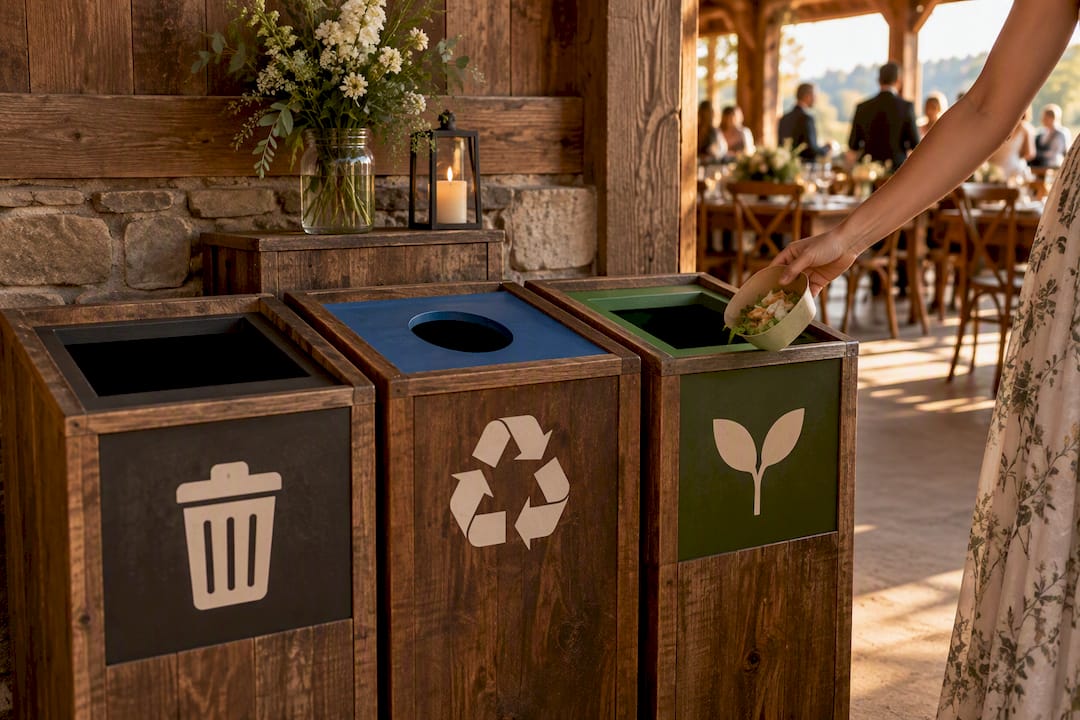
- Set up clearly labeled compost, recycling, and landfill stations, and assign someone to monitor them.
- Require vendors to separate their own waste and use compostable serviceware where disposables are unavoidable.
- Arrange donation pickup for leftover food and a reuse pickup for rented or borrowed decor before the night ends.
Pro Tip: Assign the waste-station duty to a specific person, a coordinator, a family friend, not "whoever notices." Unmonitored stations turn into regular trash cans by the second hour.
Budgeting: What to Prioritize First
Not every sustainable choice deserves equal budget or attention. Rank your spending in this order:
- Venue and guest count first, since they set your baseline footprint.
- Food and catering second.
- Rentals third.
- Waste management fourth.
- Flowers, attire, and stationery last, since they're the easiest to adjust without changing the whole plan.
| Priority | Move | Typical Impact |
|---|---|---|
| 1 | Venue selection and guest count | Sets the baseline for energy use and waste |
| 2 | Farm-to-table, plant-forward catering | Cuts emissions and leftover waste |
| 3 | Rented decor and tableware | Eliminates single-use purchases |
| — | Day-of waste diversion plan | Keeps waste out of landfill |
| — | Flowers, attire, stationery | Refines the details once the big pieces are set |
Lock in your venue and caterer first, then work down the list as you finalize vendors over the following months.
What Origins Ranch Sees Working on the Ground
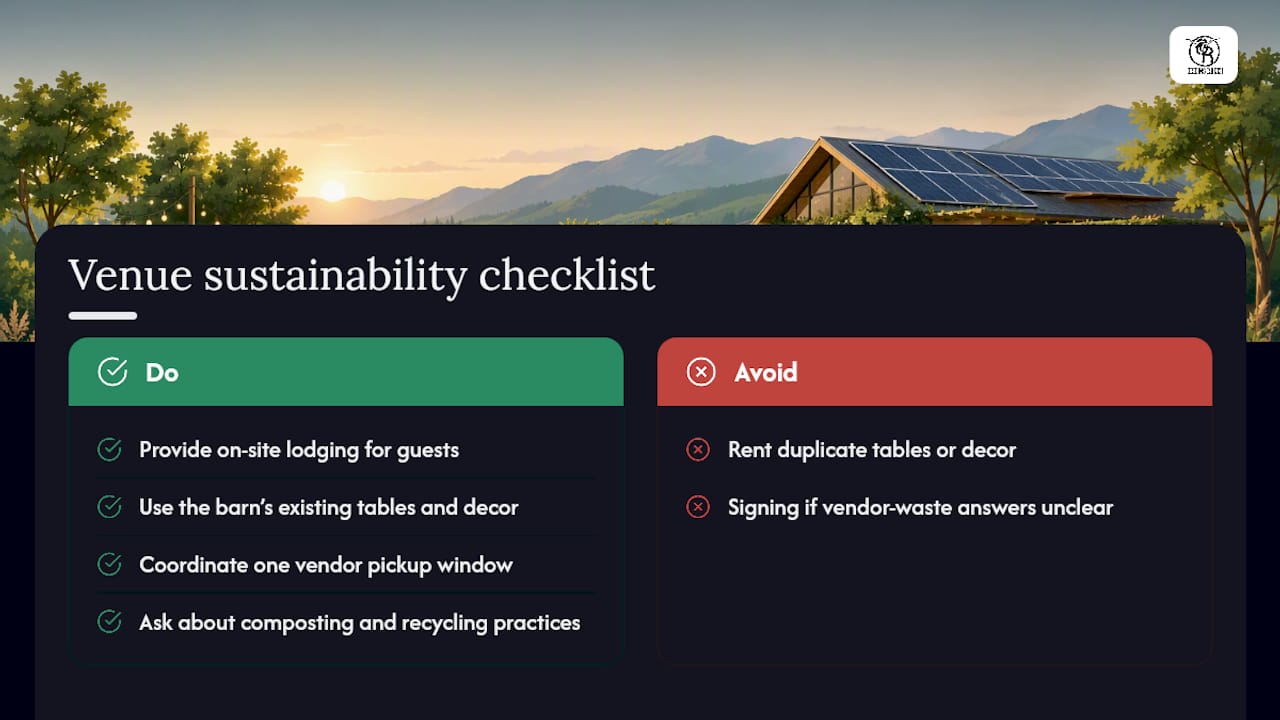
Real barn weddings teach you things no checklist can. At Origins Ranch, couples who ask us about sustainability usually get pointed toward the same handful of moves: use on-site lodging so guests aren't driving back and forth, lean on the barn's existing tables and decor instead of renting duplicates, and coordinate one vendor pickup window for anything rented. Our venue concepts guide covers more of these rustic-specific practices. When you tour a venue, ask directly how they handle composting, recycling, and vendor waste. If they can't answer clearly, that's worth knowing before you sign.
Water Conservation Strategies for Your Wedding Day
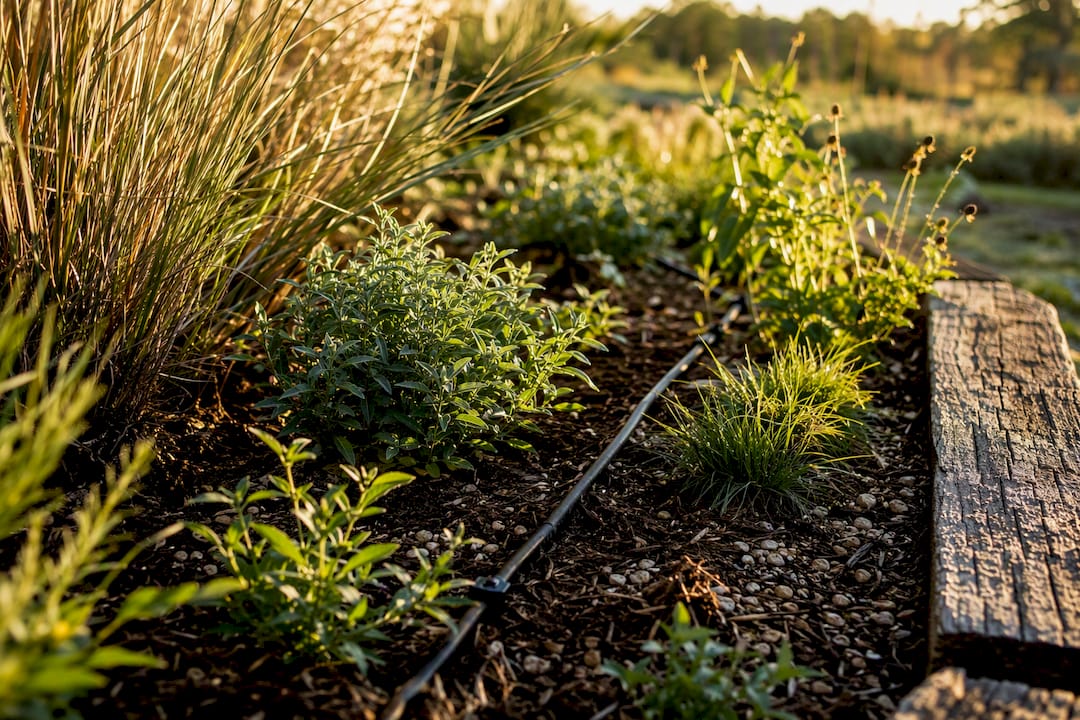
Water use rarely makes anyone's wedding-planning checklist, but it adds up fast across a full event. Landscaping and irrigation are the biggest lever: venues with drought-tolerant or native plantings need far less water than ones maintaining lush lawns purely for photos. Ask your venue how they irrigate their grounds and whether they water on a schedule tied to actual need rather than habit.
Inside the event itself, small choices matter more than couples expect. Skip the elaborate ice sculptures and decorative fountains that exist purely for visual effect; they burn through water for a few hours of photos. Choose caterers who run efficient dishwashing systems over hand-washing setups that leave taps running. If your reception includes a bar, ask bartenders to serve water on request rather than placing a full glass at every seat, since half of those glasses end up untouched and dumped.
Restroom setups deserve a look too, especially for outdoor or barn weddings using portable facilities. Low-flow fixtures exist even in rental restroom trailers, so ask your rental company what's available before assuming standard is your only option. And if your venue has on-site lodging, encourage guests staying over to reuse towels rather than requesting fresh ones daily, the same small nudge hotels have used for years to meaningful effect.
None of these choices are dramatic on their own. Together, they shave real water use off a day that, between catering, restrooms, and grounds maintenance, uses more than most couples ever consider.
Planning a Green Honeymoon That Matches Your Values
A wedding built around sustainable choices deserves a honeymoon that doesn't undo the effort. The biggest lever here is simple: fly less, stay longer. One long-haul international trip generates more emissions than several shorter regional trips combined, so consider a slower, closer destination instead of chasing the farthest place on your list.
Look for accommodations with credible sustainability practices, not just a green logo on their website. Certifications, published water and energy policies, and visible composting or recycling programs are better signals than marketing language alone. Eco-lodges, farm stays, and small locally owned inns often outperform large resort chains on genuine environmental practices, partly because they depend on the land around them staying healthy.
Choose experiences that support the places you visit rather than isolate you from them. Locally guided hikes, community-run tours, and restaurants sourcing from nearby farms put your money directly into the region's economy instead of a distant corporate office. If you're renting a car, consider a hybrid or electric option where charging infrastructure supports it.
Packing light matters more than people assume, since aircraft fuel use scales with weight across an entire flight. And if you want to offset unavoidable travel emissions, choose a verified offset program rather than an unregulated one; not all offset providers deliver what they promise, so a little research before you buy protects the intent behind the purchase.
A honeymoon doesn't need to be a research project. It just needs the same instinct you used to plan the wedding: pick the highest-impact choices and let the smaller details follow.
Telling Your Guests About Your Sustainable Choices
Guests notice effort, but only if you tell them what they're looking at. A composting station with no signage just looks like an extra trash can. A few words of context turn the same setup into something guests understand and often want to participate in.
Your wedding website is the easiest place to set expectations before anyone arrives. A short paragraph explaining your approach, seasonal flowers, a plant-forward menu, labeled waste stations, helps guests understand choices that might otherwise seem unusual, like why there's no printed program or why the favor is a small herb plant instead of a trinket.
On the day itself, simple signage does more work than a long explanation. Label your waste stations clearly with what belongs where, and consider a small handwritten note near the favor table explaining why you chose living plants over disposable gifts. If your officiant or a member of the wedding party is comfortable with it, a brief, warm mention during the ceremony or toasts, why this venue, why this menu, can turn your choices into part of the story instead of a footnote guests never notice.
Avoid turning this into a lecture. The goal is context, not a persuasion campaign. Guests respond better to "here's why we chose this" than to anything that feels like an assignment. Most people are quietly glad to be at a wedding that thought this far ahead, even if they never would have organized one themselves.
Sustainability Doesn't Require Perfection
Nobody plans a flawless zero-waste wedding, and chasing that standard usually backfires into stress instead of progress. Small, intentional choices compound faster than couples expect. Pick three priorities from this list, commit to them fully, and let the rest follow at whatever pace fits your planning timeline.
— Origins
How Origins Ranch Makes Sustainable Planning Easier
Most eco-conscious couples end up choosing between hunting down a dozen separate vendors or booking a venue that already handles the heavy lifting. Origins Ranch takes the second route. Our barn sits on land that's stayed working farmland instead of getting paved over, and our in-house tables, decor, and rental inventory mean you're not sourcing (and later disposing of) a separate set of everything.

Offering on-site lodging can help out-of-town guests reduce shuttle logistics and repeated car trips, which is an effective way to lower travel emissions. Our customizable packages, from venue-only bookings to all-inclusive planning, let you build a day around the priorities that matter most to you, whether that's a plant-forward menu, a foam-free floral setup, or a straightforward waste diversion plan for the reception. We also support military and veteran couples through Barry's charity, Weddings For Warriors, part of the reason this venue feels less like a rental and more like a place built with intention. If a barn wedding grounded in real farmland sounds like the setting you've been picturing, check our availability and start the conversation.
Sources
- How to Plan an Eco-Friendly Wedding: The Complete Guide (2026) - Bespoke-Bride: Wedding Blog
- 13 Ways to Plan a More Sustainable Wedding - Martha Stewart
FAQ
What are the top eco friendly wedding ideas to start with?
Focus on venue choice, a farm-to-table or plant-forward menu, and a real day-of waste diversion plan first. These three areas carry the most weight, according to Bespoke-Bride's sustainability guide, and everything else, decor, favors, stationery, builds on top of them.
How do I find a green wedding venue?
Ask directly about renewable energy use, composting or recycling programs, and existing rental inventory like tables and linens. Venues with these practices in place, rather than added as an afterthought, tend to reduce a wedding's footprint more than any other single choice.
Are zero waste wedding favors expensive?
Not usually. Living favors like succulents or herb starts, or edible favors packaged in reusable jars, often cost less than trinkets and get used long after the wedding instead of thrown away.
Does Origins Ranch offer sustainable wedding packages?
Origins Ranch offers venue-only and all-inclusive packages that include in-house tables and decor, reducing the need for separate rentals, plus on-site lodging that cuts guest travel. Current pricing details are available directly on the Origins Ranch site.
What is the easiest way to cut paper waste at a wedding?
Send digital save-the-dates and RSVPs, then pair them with one printed invitation on recycled or seed paper and a QR code for logistics, an approach The Knot recommends for keeping a tactile touch without the paper waste of a full traditional suite.