
TL;DR:
- A rustic wedding timeline must start with a fixed ceremony time and include buffers for outdoor transitions. Golden hour photography is a non-negotiable anchor, scheduled 6 to 12 months in advance based on sunset times. Building in 10 to 15 minute buffers between key events and prioritizing three to five focal moments help create a relaxed, enjoyable day.
A rustic wedding timeline is a carefully crafted schedule designed to complement the laid-back atmosphere of rustic venues while keeping your day organized and stress-free. Unlike a hotel ballroom wedding, a rustic setting introduces real variables: outdoor terrain, natural lighting, and vendor setup across open spaces. Getting the timing right means your guests stay comfortable, your photos look stunning, and you actually enjoy the day you spent months planning. A well-built rustic wedding schedule starts with knowing your ceremony time and working outward from there.
How to create your rustic wedding timeline from scratch
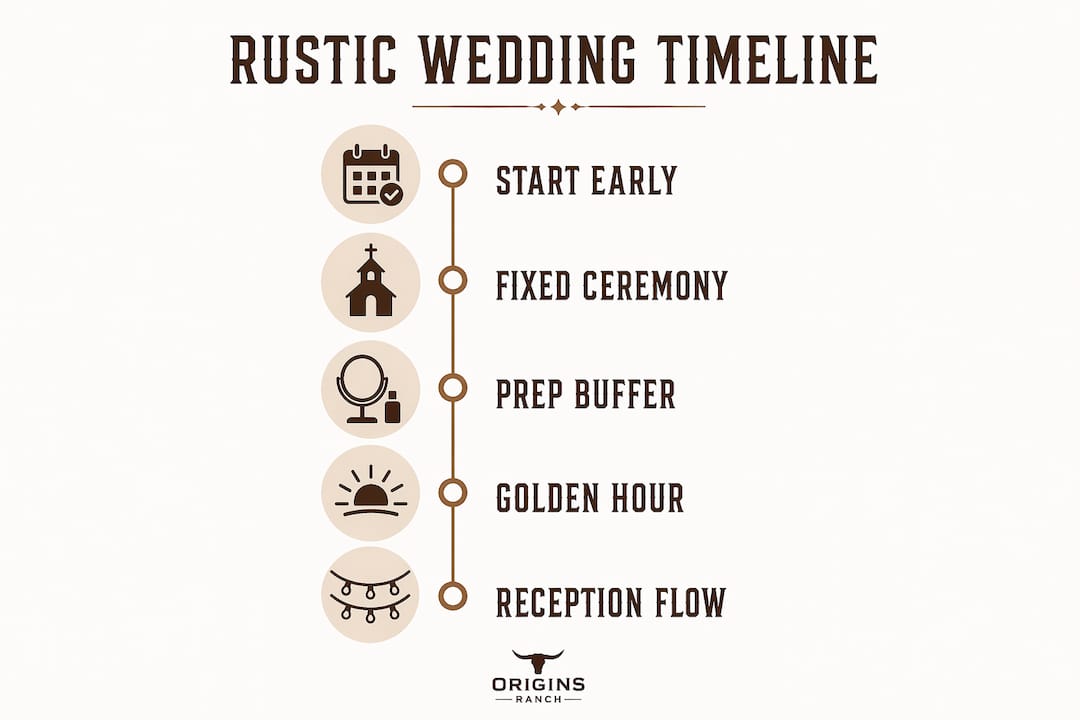
The foundation of any great rustic wedding timeline is a single fixed anchor: your ceremony start time. Everything else, from hair and makeup to the final send-off, gets built around that one moment. Rustic venues require flexible timelines because outdoor terrain slows guest transitions and vendor setup in ways that traditional venues simply do not. Plan for at least 6–7 hours of lead time before the ceremony begins. That buffer is not padding. It is the difference between a calm morning and a chaotic one.
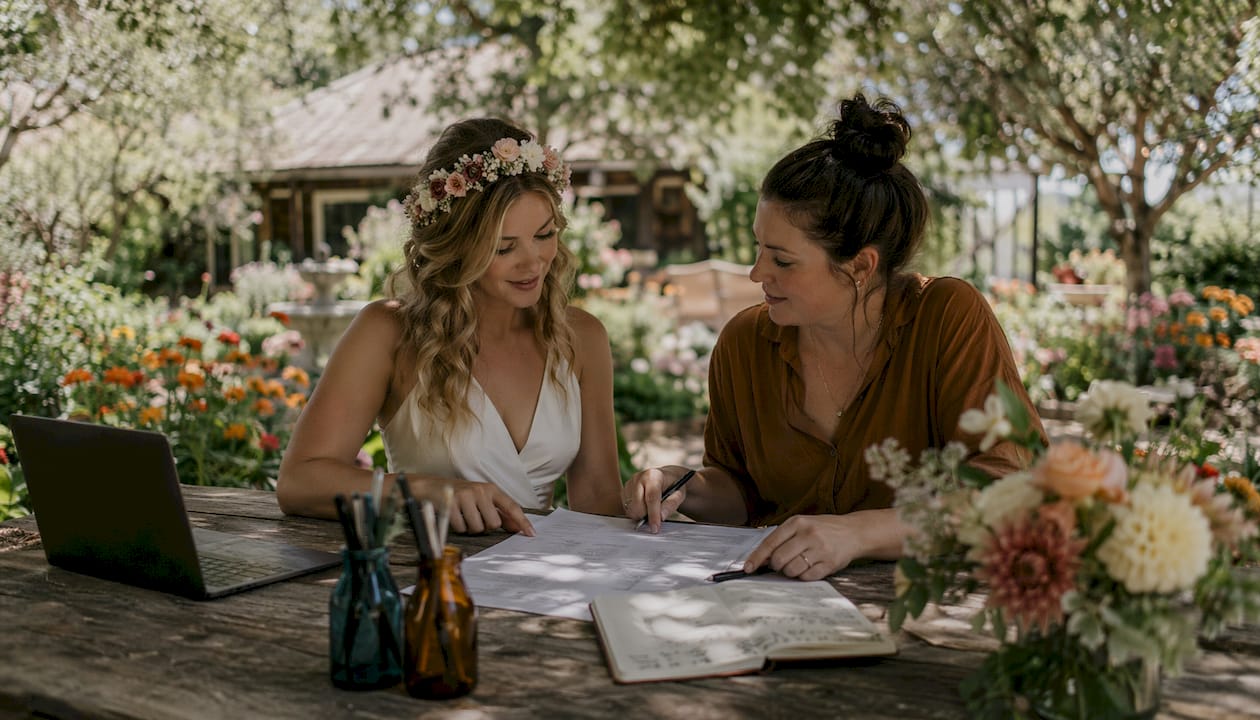
Golden hour photography is the other non-negotiable anchor. Plan golden hour photography 6–12 months in advance by locking in your venue's local sunset time. Missing that window at a rustic outdoor venue means losing the warm, glowing light that makes barn and meadow photos unforgettable. Build your dinner and speeches around that sunset window, not the other way around.
What key elements belong in a rustic wedding schedule?
A complete rustic wedding day timeline covers six major blocks: preparation, vendor setup, ceremony, cocktail hour, reception, and send-off. Each block has its own timing logic.
Preparation
- Allow 45–60 minutes per person for hair and 30–45 minutes per person for makeup. Add 20 minutes at the end for final touch-ups and dressing.
- Start the bridal party earlier than you think you need to. One late stylist can push your entire morning back by an hour.
Vendor setup
- Large floral and decor installations require 90 minutes to 3 hours of setup time. Confirm vendor arrival windows with your florist and caterer at least two weeks before the wedding.
- Caterers need access to the kitchen or prep area before guests arrive. Build that into your venue rental window.
Ceremony and cocktail hour
- Schedule guest arrival 20–30 minutes before the ceremony starts. Rustic venues with gravel paths or open fields take longer to navigate than paved venues.
- Cocktail hour ideally lasts 60–90 minutes. Shorter feels rushed. Longer causes restlessness, especially outdoors in warm weather.
Reception flow
- Dinner, toasts, first dances, and cake cutting each need a dedicated slot. Do not stack them back to back without breathing room.
- Plan your send-off time based on your venue's curfew and your guests' travel needs.
Pro Tip: Share a printed timeline with every vendor at least one week before the wedding. When your photographer, caterer, and DJ all work from the same schedule, the day runs itself.
How to build your rustic wedding timeline step by step
Follow this sequence to build a timeline that actually holds up on the day.
- Lock in your ceremony time. This is your anchor. Write it down and do not move it.
- Count backward to your prep start. Add up hair and makeup time for every person in the bridal party, then add 30 minutes for unexpected delays. That total tells you when the morning starts.
- Schedule vendor arrivals. Florists and decor teams arrive first, typically 2–3 hours before guests. Caterers follow. Confirm each vendor's required setup window in writing.
- Plan your first look or portrait session. A first look before the ceremony frees up your cocktail hour for guests. Post-ceremony portraits are more traditional but compress the timeline. Choose one approach and stick to it.
- Set your cocktail hour length. Sixty to ninety minutes works well. Use this window for couple portraits if you skipped the first look.
- Schedule dinner and speeches. Limit each speech to 10–15 minutes and ask speakers to prepare bullet-point notes. Long, unscripted speeches are the single most common cause of reception momentum loss.
- Block golden hour. Check your venue's sunset time and reserve 20–30 minutes for outdoor portraits during that window. This is the shot your photographer will talk about for years.
- Add 10–15 minute buffers between every major block. Buffers between major events absorb the small delays that are inevitable at any outdoor venue.
- Set your send-off time. Work backward from your venue's end time and build in 30 minutes for cleanup coordination.
Sample timeline framework
| Time | Event | Buffer included |
|---|---|---|
| 9:00 AM | Bridal party prep begins | Yes, 30 min flex |
| 12:00 PM | Vendor setup complete | Yes, 15 min flex |
| 2:30 PM | First look or portraits | Yes, 15 min flex |
| 4:00 PM | Guests arrive | Yes, 20 min flex |
| 4:30 PM | Ceremony begins | Fixed anchor |
| 5:15 PM | Cocktail hour starts | 60–90 min window |
| 6:45 PM | Reception dinner | Yes, 15 min flex |
| 7:15 PM | Golden hour portraits | 20 min window |
| 8:00 PM | Speeches and toasts | 30 min max |
| 9:30 PM | Dancing and send-off | Per venue curfew |
Pro Tip: Check your local sunset time for your wedding month and adjust the golden hour row in your timeline accordingly. A june wedding in Florida has a very different sunset window than an october wedding in the mountains.
What mistakes should you avoid in your rustic wedding timeline?
Over-scheduling is the most common mistake couples make. Rustic weddings benefit from prioritizing 3–5 focal moments and letting the venue set the relaxed atmosphere. Cramming in too many activities kills the laid-back energy that makes rustic weddings special in the first place.
- Underestimating outdoor transitions. Guests walking across gravel, uneven lawns, or unpaved paths move slower than guests in a hotel corridor. Add 10–15 minutes any time guests need to move between areas.
- Skipping weather contingencies. Rustic outdoor venues are beautiful and unpredictable. Have a rain plan and communicate it to your vendors before the day.
- Letting speeches run long. Unscripted toasts routinely stretch past 20 minutes. Structured speech times and pre-written notes preserve energy and prevent momentum loss during receptions. Brief speakers in advance and ask your DJ or emcee to signal when time is up.
- Ignoring daylight. Scheduling your ceremony too late in the day can eliminate your golden hour window entirely. Check sunset times before you finalize your ceremony start.
- Skipping vendor coordination. A florist who arrives late pushes back your entire setup window. Confirm arrival times with every vendor in writing, and follow up one week before the wedding.
A rustic wedding timeline that breathes is better than one that performs. Leave room for a quiet moment between you and your partner, a laugh with your grandparents, or a spontaneous dance before dinner. Those unscheduled minutes are often the ones you remember most.
How does venue choice shape your rustic wedding timeline?
The physical layout of your venue directly determines how much buffer time you need and how your guests experience the day. Not all rustic venues work the same way.
- Barn venues typically have ceremony, cocktail, and reception spaces in close proximity. Transitions are short, which compresses your buffer needs. The tradeoff is that setup windows are tighter because vendors share the same space.
- Farm venues with multiple structures spread guests across larger distances. A ceremony in an open field and a reception in a barn 200 yards away requires a dedicated transition plan, including clear signage and enough staff to guide guests.
- Meadow and outdoor-only venues are the most weather-dependent. These settings demand the most detailed contingency planning and the longest buffers for guest movement.
- Exclusive-use venues give you the most timeline flexibility. When no other events share the property, you can extend vendor setup windows, adjust ceremony timing without affecting other bookings, and use the full property for portraits.
Venue layout also shapes your catering timing and reception scheduling. A venue where the kitchen is far from the dining area adds time to every meal course. Confirm that detail with your caterer during the tasting.
Venue type comparison
| Venue type | Transition time needed | Weather risk | Timeline flexibility |
|---|---|---|---|
| Barn (single structure) | Low | Low to moderate | Moderate |
| Multi-structure farm | Moderate to high | Moderate | High with planning |
| Open meadow | High | High | Low without backup plan |
| Exclusive-use property | Low to moderate | Varies | Very high |
Rustic decor also affects pacing. String lights, lanterns, and floral arches create a warm atmosphere that naturally slows guests down in a good way. That ambiance encourages lingering, which means your cocktail hour and dinner may run a few minutes longer than a more formal setting. Build that expectation into your schedule from the start. For more on setting up a rustic venue, the details matter as much as the timing.
Key Takeaways
A rustic wedding timeline works best when it starts with a fixed ceremony time, builds in 10–15 minute buffers between every major block, and treats golden hour photography as a non-negotiable anchor.
| Point | Details |
|---|---|
| Start 6–7 hours early | Begin prep at least 6–7 hours before the ceremony to absorb delays without stress. |
| Buffer every transition | Add 10–15 minutes between major events to account for outdoor terrain and vendor timing. |
| Anchor to golden hour | Lock in your local sunset time months ahead and build dinner and speeches around it. |
| Limit speeches | Cap each toast at 10–15 minutes and ask speakers to use notes to protect reception energy. |
| Match timeline to venue type | Barn, farm, and meadow venues each require different buffer amounts and contingency plans. |
What we've learned about rustic wedding timing at Originsranch
After years of hosting weddings at Originsranch in Plant City, FL, the single clearest pattern we see is this: the couples who enjoy their day the most are the ones who planned for imperfection. They built in the buffers. They briefed their vendors. And they gave themselves permission to let the day breathe.
The couples who struggle are almost always the ones who treated their timeline like a performance schedule. Every minute accounted for, no room for a spontaneous moment, no grace when a vendor runs five minutes late. Rustic weddings are not corporate events. The whole point is that warm, unhurried feeling you get when the string lights come on and the barn smells like cedar and wildflowers.
Our founder Barry, with over 20 years in the event industry, has watched hundreds of timelines succeed and fail. His consistent advice: pick your three or four moments that matter most, protect the time around those moments fiercely, and let the rest of the day flow. Rustic wedding planners emphasize a "laid-back but structured" approach for exactly this reason. Structure prevents chaos. Laid-back prevents rigidity. You need both.
One thing we tell every couple: talk to your venue before you finalize anything. The venue team knows exactly how long it takes guests to walk from the ceremony arch to the cocktail space, where the light hits best at 7:00 PM, and which vendors need extra setup time. That local knowledge is worth more than any generic timeline template. Use it.
— Origins
Plan your rustic wedding at Originsranch
Originsranch sits on a property that was once a World Champion Horse Ranch in Plant City, FL. The space has been transformed into a warm, character-filled venue that gives couples real flexibility when building their wedding day schedule.
Whether you are still sketching out your rustic wedding planning checklist or ready to walk the property, our team is here to help you match your timeline to the venue's natural rhythm. Browse our wedding event gallery to see how other couples have used the space, from ceremony setups to golden hour portraits. If you are a veteran or active duty service member, learn more about our Weddings For Warriors program. We would love to help you plan a day that feels as good as it looks.
FAQ
How far in advance should I start my rustic wedding timeline?
Start building your timeline at least 6–7 hours before the ceremony to allow for preparation, vendor setup, and buffer time. Lock in your ceremony time first, then work backward.
How long should a rustic wedding cocktail hour be?
A cocktail hour of 60–90 minutes keeps guests engaged without losing momentum. Longer than 90 minutes often causes restlessness, especially at outdoor venues in warm weather.
What is the best time for golden hour photos at a rustic wedding?
Golden hour photos work best in the 20–30 minutes just before sunset. Check your local sunset time months in advance and build your dinner and speech schedule around that window.
How do I stop speeches from running too long?
Cap each speech at 10–15 minutes and ask speakers to prepare bullet-point notes ahead of time. Brief your DJ or emcee to give a signal when time is nearly up.
Does venue layout really affect my wedding day timeline?
Yes. Multi-structure farm venues and open meadow settings require significantly more buffer time for guest transitions than single-barn venues. Match your buffer amounts to your specific venue layout for the best results. For a detailed breakdown, the barn wedding timeline guide at Originsranch covers this in depth.