
The simplest, most effective way to incorporate prayer at a Christian wedding reception is a short, scripted benediction of 20–90 seconds placed before the meal or at the close of the evening. You do not need a pastor or a formal liturgy. A family member, the MC, or even the couple themselves can deliver it beautifully with a little preparation.
Here are three ready-to-use options you can copy right now:
- Short table grace (15–20 seconds): "Heavenly Father, thank You for the gift of this day and for bringing us together to celebrate [Name] and [Name]. Bless this food, bless this marriage, and fill this room with Your joy. Amen."
- Couple's blessing (30–45 seconds): "Lord, we thank You for the love You have placed in [Name] and [Name]'s hearts. May their home be filled with grace, their days with laughter, and their years with faithfulness. Bless all who have gathered here to celebrate them. Amen."
- Closing benediction (20–30 seconds): "Father, as this celebration draws to a close, we ask Your blessing on this new family. Carry them through every season ahead. Thank You for the gift of love. Amen — and please enjoy the rest of your evening!"
Pro Tip: Print the prayer on a small card and hand it to the reader 24 hours before the reception. Familiarity with the words is what separates a confident delivery from a nervous one.
Organizing your prayer around seven elements — thanksgiving, blessing, praise, intercession, protection, provision, and commitment — keeps it focused and purposeful without running long.
Key Takeaways
A short, scripted Christian prayer placed before the meal or at the close of the evening is the most practical and meaningful way to incorporate prayer at a wedding reception.
| Point | Details |
|---|---|
| Best placement | Before the meal or as a closing benediction; both work with a 15–90 second script. |
| Who should lead | A family member, pastor, or MC — anyone calm on a mic with a printed script in hand. |
| Denominational language | Match tone to your tradition: formal for Catholic, pastoral for Protestant, conversational for non-denominational. |
| AV and logistics | Mic test before guests arrive, cue the DJ and caterer, and write the transition phrase into the script. |
| Originsranch support | Originsranch hosts faith-centered receptions and provides run-sheet coordination to make prayer moments seamless. |
Table of Contents
- When is the best time to pray during a wedding reception?
- Who should lead the prayer, and how do you ask them?
- How tone and length change by denomination
- Copyable reception prayers: short, medium, and long scripts
- Practical AV and venue coordination for a smooth prayer moment
- How to handle prayer respectfully with mixed-faith guests
- Coordinating prayer with your officiant, DJ, and venue team
- Which scripture passages work best during a reception?
- How to involve guests in responsive or communal prayer
- Prayers for reception moments beyond the meal
- What we have seen work at real receptions
- Originsranch is ready to help you plan a faith-centered reception
- Sources
- FAQ
When is the best time to pray during a wedding reception?
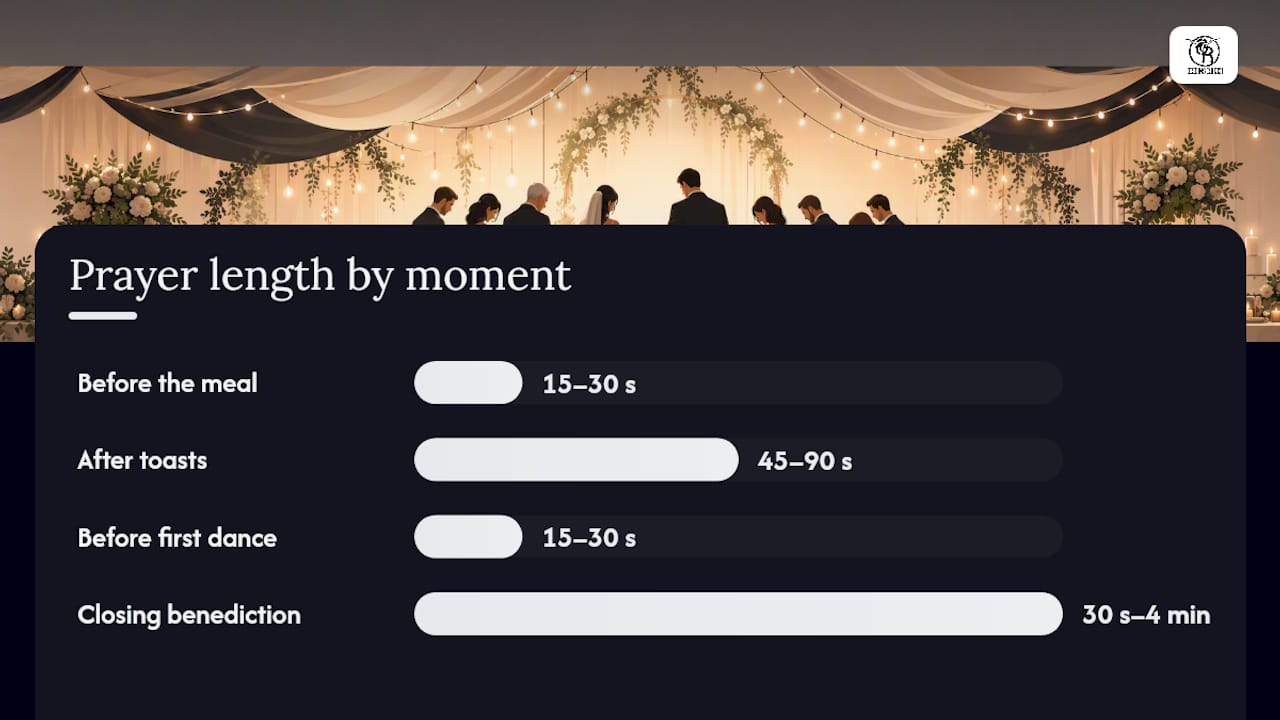
Four moments in a typical reception program work naturally for prayer, each with a different energy and ideal length.
Before the meal is the most traditional placement. Guests are seated, the room is quiet, and the transition from cocktail hour creates a natural pause. This is where a short table grace (15–30 seconds) fits perfectly. It sets a reverent tone before the celebration fully opens up.
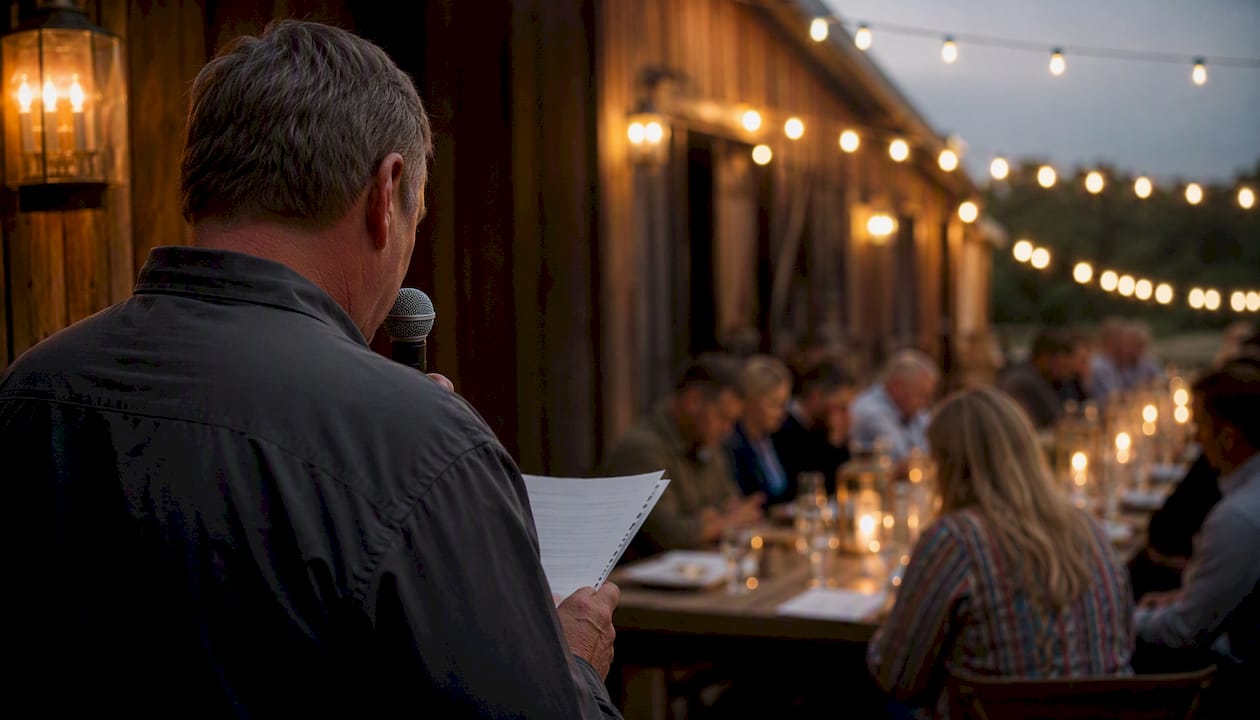
After toasts, before speeches works well for a medium-length couple's blessing (45–90 seconds). The room is already emotionally warm from the toasts, and a prayer at this point deepens that feeling rather than interrupting it.
At a transition moment such as just before the first dance, a brief prayer (15–30 seconds) can be surprisingly moving. It frames the dance as a sacred act rather than just a performance, and guests tend to receive it with genuine warmth.
A closing benediction near the end of the evening is the most flexible placement. It can run 30 seconds to 4 minutes depending on who is speaking and how formal the reception is. According to FaithTime's guidance on closing prayers, a closing reception prayer should name the couple, ask for blessing, and include a transition phrase so guests know what comes next.
| Program Moment | Ideal Length | Suggested Speaker |
|---|---|---|
| Before the meal | 15–30 seconds | Family member or MC |
| After toasts | 45–90 seconds | Pastor or officiant |
| Before first dance | 15–30 seconds | MC or close friend |
| Closing benediction | 30 seconds–4 minutes | Officiant, pastor, or family elder |
For most receptions, one prayer is enough. Two can work if they serve different purposes (a meal grace and a closing benediction), but more than two risks making the program feel like a church service rather than a celebration.
Who should lead the prayer, and how do you ask them?
Almost anyone with a calm voice and a genuine connection to the couple can lead a reception prayer. The key is choosing someone who will not be flustered by a microphone and who understands the tone you want.
Common choices:
- The officiant or pastor — natural fit for formal or liturgical prayers; already comfortable with public spiritual leadership
- A grandparent or parent — deeply personal and often the most emotionally resonant choice for guests
- The best man or maid of honor — works well for a conversational, heartfelt blessing
- A close family friend — good option when the couple wants someone outside the wedding party
- The MC — practical for short table graces when the program needs to keep moving
Sample invitation language you can use:
- Phone/text: "We'd love for you to offer a short prayer before dinner at the reception. We'll send you a script — it's only about 30 seconds. Would you be willing?"
- Email: "As someone whose faith means so much to us, we'd be honored if you'd lead a brief blessing for our guests. We'll provide the words and do a quick mic check beforehand."
- In person: "We're asking a few people to be part of the ceremony in small ways. Would you pray over us and our guests before the meal?"
Pro Tip: If your reader has never spoken into a microphone, schedule a 5-minute sound check at the venue before guests arrive. Pastoral advice consistently points to a brief rehearsal as the single most effective way to calm a non-professional reader's nerves before a wedding event.
How tone and length change by denomination
Different Christian traditions carry different expectations, and matching your prayer's tone to your guests' background makes it land more naturally.
Tone profiles by tradition:
- Catholic / Orthodox: Formal, liturgical language; structured intercessions; often references sacramental marriage. The USCCB provides multiple formal Nuptial Blessing texts that can be paraphrased for a reception when a full liturgy is not appropriate. Always consult your priest before using the full liturgical text outside Mass.
- Mainline Protestant (Methodist, Lutheran, Presbyterian): Pastoral and scriptural; references specific Bible passages; moderately formal but accessible.
- Non-denominational / evangelical: Conversational, warm, and personal; uses everyday language; often names the couple directly and speaks to their story.
For a Catholic reception, a paraphrased excerpt from the Nuptial Blessing works beautifully: "May God bless you in your joys and comfort you in your sorrows. May you find in each other the love you have sought, and may you remain faithful to each other and to God throughout your lives."
Length guidance by setting:
- Intimate family reception (under 50 guests): up to 2 minutes is comfortable
- Standard banquet-style reception (50–150 guests): 30–90 seconds is ideal
- Large formal reception (150+ guests): keep it to 30 seconds or less for the meal grace; save longer prayers for the closing
Pro Tip: The Church of England's Order of Service includes a Prayer of Preparation and intercessions that serve as excellent templates for longer, more formal reception prayers — even for non-Anglican couples who want liturgical structure.
Copyable reception prayers: short, medium, and long scripts
These scripts are ready to use. Swap in the couple's names, adjust one line to reflect something personal, and you have a prayer that feels written just for them.
Short table grace (15–30 seconds) "Lord, thank You for this day, for this food, and for the love that brought [Name] and [Name] together. Bless everyone gathered here. Amen."
Medium couple's blessing (45–90 seconds) "Gracious God, we come before You with grateful hearts. Thank You for the gift of [Name] and [Name]'s love — for the years that shaped them, the moment they found each other, and the life they are choosing together today. May their home be a place of grace. May their marriage reflect Your faithfulness. Bless every person in this room who loves them. Amen."
Long reflective or responsive prayer (2–4 minutes) Leader: "Lord, we thank You for the gift of marriage." Guests: "We give You thanks." Leader: "We ask Your blessing on [Name] and [Name] as they begin this new chapter." Guests: "Lord, hear our prayer." Leader: "May they know Your peace in every season — in joy and in difficulty, in abundance and in need." Guests: "Lord, hear our prayer." Leader: "We commit this marriage to Your care. Amen." All: "Amen."
| Script | Placement | Speaker | Duration |
|---|---|---|---|
| Short table grace | Before meal | MC or family member | 15–30 seconds |
| Couple's blessing | After toasts | Pastor or parent | 45–90 seconds |
| Responsive prayer | Closing | Officiant + guests | 2–4 minutes |
Quick personalization tips:
- Insert one specific memory or detail ("the morning they got engaged on the beach")
- Add one verse that is meaningful to the couple (Ecclesiastes 4:12, Ruth 1:16, or 1 Corinthians 13:4–7 all work well)
- Close with a transition phrase so guests know what comes next
Pro Tip: Keep a printed backup of the prayer at the podium even if the reader has memorized it. Nerves are real, and a glance at the page is far less disruptive than a long pause.
Practical AV and venue coordination for a smooth prayer moment
A prayer that cannot be heard is a prayer that does not land. These steps keep the moment clear and on schedule.
- Test the microphone with the reader at least 30 minutes before guests arrive. A lapel mic works best for readers who tend to look down at a script.
- Add the prayer to the printed run sheet with an exact start time and a note for the DJ or band to fade music two bars before.
- Cue the caterer not to begin service until after the "Amen." A simple note on the timeline ("Hold service until prayer concludes") prevents clinking plates during the blessing.
- Provide a printed script at the podium or in the reader's hand. Font size 14 or larger reads easily under reception lighting.
- Signal guests clearly. The MC can say: "Please find your seats — [Name] will offer a blessing before we begin the meal." Guests do not need to stand unless your tradition calls for it.
- Write the transition line into the script itself. The reader should end with something like "Amen — please enjoy your dinner!" so the room knows to move.
Pro Tip: Coordinate with your live band or DJ in advance about the exact cue to pause music. A two-bar fade sounds intentional; an abrupt cut sounds like a technical error.
Common venue challenges and simple fixes:
- Open floor plan with ambient noise: Use a handheld mic and ask guests to gather near the head table before the prayer begins.
- Outdoor ceremony space: A portable PA speaker pointed toward the seating area solves most coverage gaps.
- Large room with poor acoustics: Ask the reader to speak more slowly than feels natural — rooms with hard surfaces need extra time for sound to settle.
How to handle prayer respectfully with mixed-faith guests
Not every guest at a Christian wedding reception shares the couple's faith, and a thoughtful approach honors both the couple's beliefs and their guests' comfort.
Three tone options:
- Explicitly Christian: Uses the name of Jesus, references Scripture, and speaks directly from a Christian worldview. Appropriate when the majority of guests share the faith.
- Invitational: Opens with a brief explanation ("We'd like to offer a short Christian prayer now") before beginning. Gives non-Christian guests a moment to orient themselves.
- Inclusive blessing language: Uses "God" or "the Lord" without doctrinal specifics. Appropriate for highly mixed audiences.
Short inclusive script example: "We give thanks for this day, for the love that fills this room, and for the life [Name] and [Name] are building together. May they be blessed in every season ahead. Amen."
Simple etiquette guidelines:
- Let immediate family members know in advance that a prayer will be part of the program, especially if some family members are not Christian.
- Keep the prayer brief — a 20-second blessing rarely offends anyone, regardless of their background.
- Avoid theological debate or lengthy doctrinal explanation during the reception. The prayer speaks for itself.
Coordinating prayer with your officiant, DJ, and venue team
At Originsranch, we have hosted enough faith-centered receptions to know that the prayer moment goes smoothly when it is treated like any other program item: planned, communicated, and rehearsed. Here is the coordination checklist we recommend.
- Confirm placement in the run sheet at least two weeks before the event.
- Choose and confirm the reader and send them the script by email or text.
- Schedule a mic test during venue setup, before guests arrive.
- Confirm transition language with the reader so the Amen flows directly into the next activity.
- Add the prayer to the DJ/band cue sheet with a note to fade music 10–15 seconds before the prayer begins.
- Notify the catering manager to hold service until the prayer concludes.
Sample communication lines to send your vendors:
- To the DJ/band: "Please fade music to silence about 15 seconds before [time] for a short prayer. Resume after the Amen."
- To the catering manager: "Please hold dinner service until after the blessing, which will last approximately 30–60 seconds."
- To the officiant: "We'd love for you to offer a [short/medium] prayer at [time]. We'll have a printed script at the podium and a mic ready."
Pro Tip: Our guide to coordinating with your pastor or officiant walks through the full communication process, including what to share with your officiant weeks before the event.
Which scripture passages work best during a reception?
Scripture readings woven into or around a prayer give it depth without adding much time. The key is choosing passages that speak to marriage specifically, not just general faith.
Passages that pair naturally with reception prayers:
- Ruth 1:16 ("Where you go, I will go") — works beautifully in a couple's blessing as a line the reader quotes before praying
- 1 Corinthians 13:4–7 ("Love is patient, love is kind") — familiar to nearly every guest and universally resonant
- Ecclesiastes 4:12 ("A cord of three strands is not quickly broken") — short, visual, and perfect for a 30-second blessing
- Colossians 3:14 ("And over all these virtues put on love, which binds them all together in perfect unity") — works well in a closing benediction
The most effective approach is to quote one verse inside the prayer rather than reading a full passage separately. This keeps the moment unified and prevents the program from feeling like a Bible study. For a faith-centered wedding planning approach, scripture and prayer work best when they feel woven in, not bolted on.
How to involve guests in responsive or communal prayer
A responsive prayer turns a passive audience into active participants, and the effect on the room is remarkable. Guests who might feel awkward during a solo prayer often find it easier to engage when they have a simple line to say together.
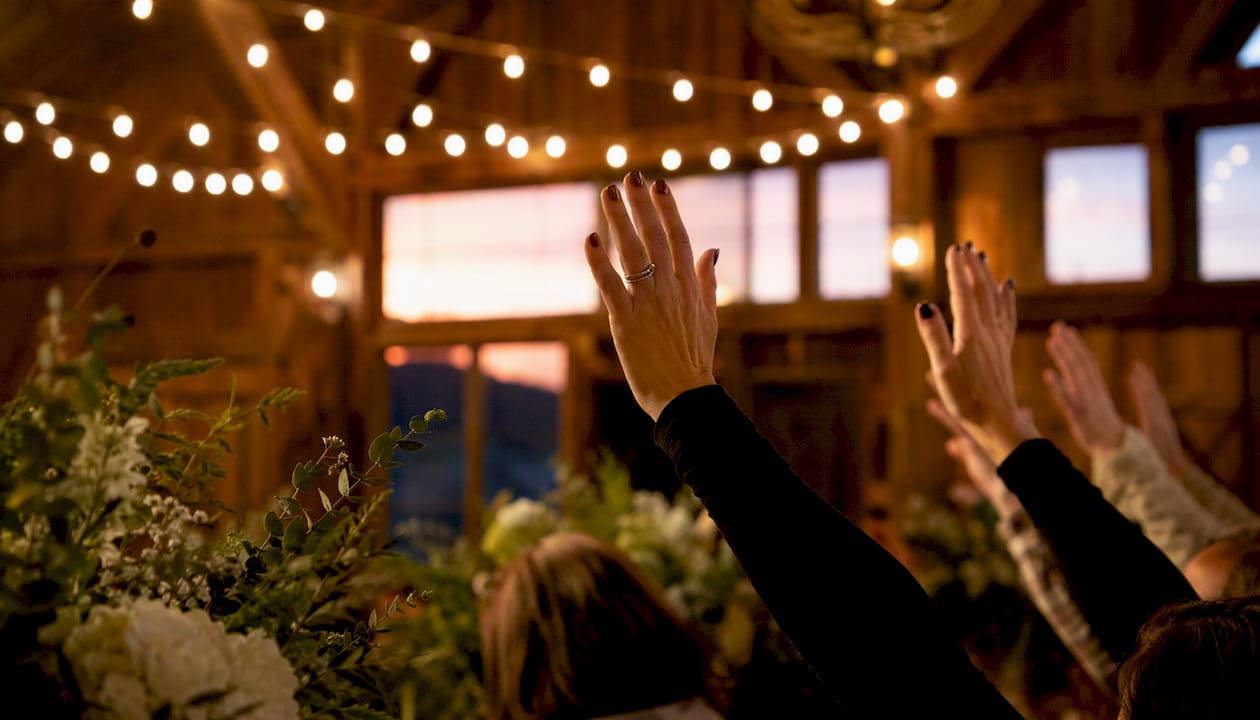
The format is straightforward: the reader speaks a line, and guests respond with a short phrase printed on their program or announced by the MC beforehand. Common response lines include "Lord, hear our prayer," "We give You thanks," or simply "Amen."
Tips for making it work:
- Print the response line on the dinner program or menu card so guests do not have to memorize it.
- Have the MC announce the response before the prayer begins: "When you hear [Name] say 'Lord, we pray,' please respond together with 'Lord, hear our prayer.'"
- Keep the responsive section to three or four exchanges — enough to feel communal, short enough to stay energized.
- Choose a response phrase that is comfortable for guests of varying faith backgrounds if your audience is mixed.
For unique and memorable reception moments, a responsive prayer ranks among the simplest to execute and the most emotionally resonant for guests.
Prayers for reception moments beyond the meal
Not every meaningful prayer belongs before dinner. Some of the most moving spiritual moments in a reception happen at unexpected points in the program.
Prayer before the first dance: "Lord, as [Name] and [Name] share this first dance as husband and wife, may every step remind them of the grace You've shown them. May they always choose each other. Amen."
Prayer at the cake cutting: "Father, as [Name] and [Name] share this moment, bless the life they are building together — sweet in joy, sustained in love, and rooted in You. Amen."
Prayer for the couple's first anniversary (spoken by a parent or elder at the reception): "Lord, one year from tonight, may [Name] and [Name] look back on this day with gratitude. May they have grown closer to each other and to You. Bless the year ahead. Amen."
Prayer before the bouquet toss or send-off: "We pray blessing over every person in this room who is still waiting for love, and over every couple here who has found it. May this night be a reminder that love is worth celebrating. Amen."
These short prayers take 15–30 seconds each and can be delivered by the MC, a parent, or the officiant. They add spiritual texture to moments that are often purely ceremonial, and guests consistently remember them.
What we have seen work at real receptions
After years of hosting faith-centered weddings at Originsranch, one thing stands out consistently: the prayer moments that guests remember are never the longest ones. They are the ones that feel personal.
We have seen a grandmother step to the microphone with a handwritten prayer on a notecard, her voice steady and warm, and bring an entire room to tears in under a minute. We have seen a best man deliver a 30-second table grace that made the couple laugh and then immediately reach for each other's hands. Neither of those moments required a pastor or a formal liturgy. They required someone who loved the couple and a few words that were genuinely meant.
The one change that consistently improves the experience: giving the reader a printed script and doing a mic check. Every single time we skip that step, something goes sideways. Every time we do it, the prayer lands exactly as intended.
Originsranch is ready to help you plan a faith-centered reception
At Originsranch, we know that a wedding is more than a party. It is a covenant celebration, and every detail of the program should reflect that. Our venue in Plant City, FL was built to hold moments like these — the quiet prayer before the meal, the responsive blessing that draws the whole room together, the closing benediction that sends a couple into their new life with grace.
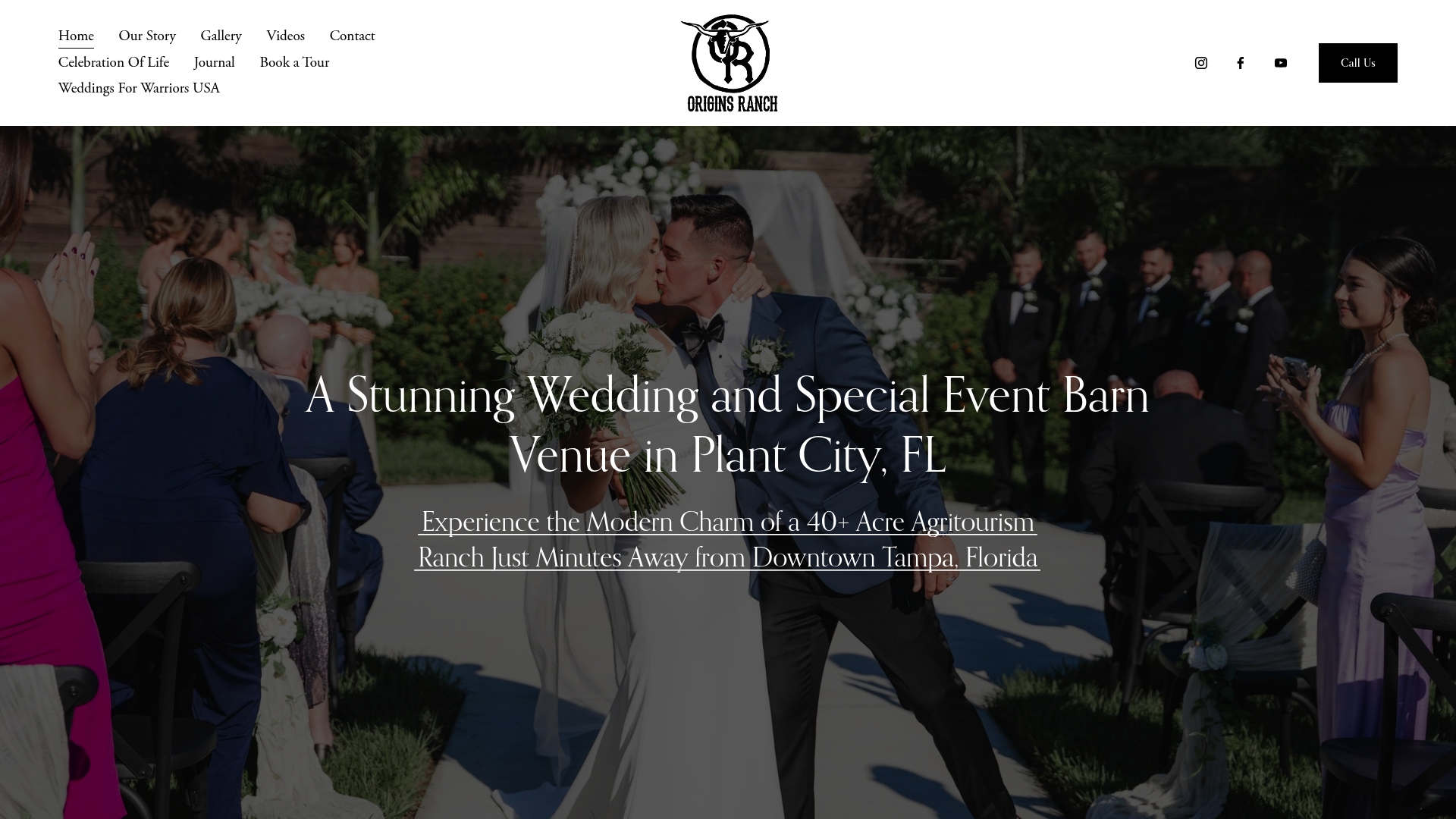
Our founder Barry brings over 20 years of event experience to every reception we host, and our Weddings For Warriors program means we have a particular heart for couples who have served. Whether you are planning a traditional Christian ceremony or a faith-centered barn reception, we will work with you to build a run sheet that honors your beliefs and keeps your guests engaged from the first prayer to the last dance. Visit our events page or reach out directly to start planning your day with a team that genuinely cares about getting it right.
Sources
These resources give you full texts, adaptable templates, and denominational guidance to go deeper than the scripts above.
- The Church of England: Order of Service (marriage excerpts)
- Closing Prayer for Wedding Reception: Blessings, Unity & Christian Marriage Prayers — FaithTime
- 7 Key Elements: Christian Prayer at a Wedding Reception - Made of Still
When in doubt about formal liturgical prayers, especially for Catholic or high-church Anglican receptions, consult your pastor or priest before the event. They can help you adapt the language appropriately for a reception context.
FAQ
What is a good prayer to say at a Christian wedding reception dinner?
A short table grace works best: thank God for the day, name the couple, bless the food and the guests, and close with "Amen." Keep it under 30 seconds so the room stays engaged.
What is a good opening prayer for a Christian wedding ceremony?
A brief Prayer of Preparation that asks for God's presence, blesses the couple, and invites guests into the moment works well. The Church of England's Order of Service includes adaptable intercessions that serve as strong templates.
How do you incorporate God into a wedding reception without alienating guests?
Use an invitational preface from the MC ("We'll offer a short prayer now — please feel free to join or observe"), keep the prayer brief, and choose language that is warm rather than doctrinal. A 20-second blessing rarely makes anyone uncomfortable.
Who typically leads the prayer at a Christian wedding reception?
The officiant, a pastor, a parent, or a close family friend are the most common choices. The most important factor is that the reader is comfortable on a microphone and has a printed script in hand.
Can you use a Catholic nuptial blessing at a reception?
Yes, in paraphrased form. The USCCB provides full Nuptial Blessing texts, but consult your priest before using the complete liturgical version outside of Mass. An abbreviated or paraphrased form is appropriate for a reception setting.