
TL;DR:
- Christian weddings are sacred covenant ceremonies where Christ is the central focus, not merely a background element. They follow a structured, reverent format that includes vows, Scripture readings, and blessings, with customization allowed within a biblical framework. Denominational differences, premarital counseling, and intentional reception practices all serve to honor Christ and build a strong, faith-based marriage foundation.
Christian weddings are sacred covenant ceremonies where Christ is the centerpiece, not simply a backdrop to the celebration. Unlike secular weddings focused primarily on aesthetics and entertainment, a Christian wedding ceremony is an act of worship, a public declaration of lifelong commitment made before God and community. Music, vows, and the pastor's message are all designed to glorify Jesus and reflect biblical truth about marriage. Planning one well means understanding its spiritual architecture before selecting a single flower arrangement or venue.
What are the essential elements of a Christian wedding ceremony?
A traditional Christian wedding ceremony follows a defined structure that balances reverence with personal expression. Ceremony outlines typically begin with the processional and move through welcome, opening prayer, scripture reading, vows, exchange of rings, and a closing blessing. Each element carries theological weight. The processional is not just a walk down the aisle. It signals the beginning of a sacred transition.
Here is the standard order most Christian ceremonies follow:
- Processional — Bridal party and bride enter, often to a hymn or worship song
- Welcome and opening prayer — Pastor greets guests and invites God's presence
- Scripture reading — One or two passages read by the pastor or a trusted family member
- Pastoral message — A short sermon on God's design for marriage and lifelong commitment
- Exchange of vows — Spoken directly to each other before God and witnesses
- Exchange of rings — A physical symbol of unending covenant
- Unity ceremony (optional) — Candle lighting, sand ceremony, or communion
- Closing prayer and blessing — Pastor pronounces the couple married and prays over them
- Recessional — Couple exits as husband and wife
Couples can personalize elements like the unity ceremony or choose specific scripture passages without compromising the ceremony's reverence. Pairing a brief, memorable verse with a longer congregational reading gives the ceremony both intimacy and depth. Passages from 1 Corinthians 13, Ruth 1:16, and Ephesians 5:25 remain among the most chosen for their clarity on covenant love.
Pro Tip: Ask your pastor to share the sermon outline with you in advance. Knowing the message's direction helps you select scripture readings and music that reinforce a single, unified theme rather than pulling the ceremony in multiple directions.
How do Christian weddings differ across denominations?
There is no single universal Christian wedding. Cultural and denominational diversity require contextual understanding and respectful adaptation, which is one of the most overlooked realities in wedding planning.
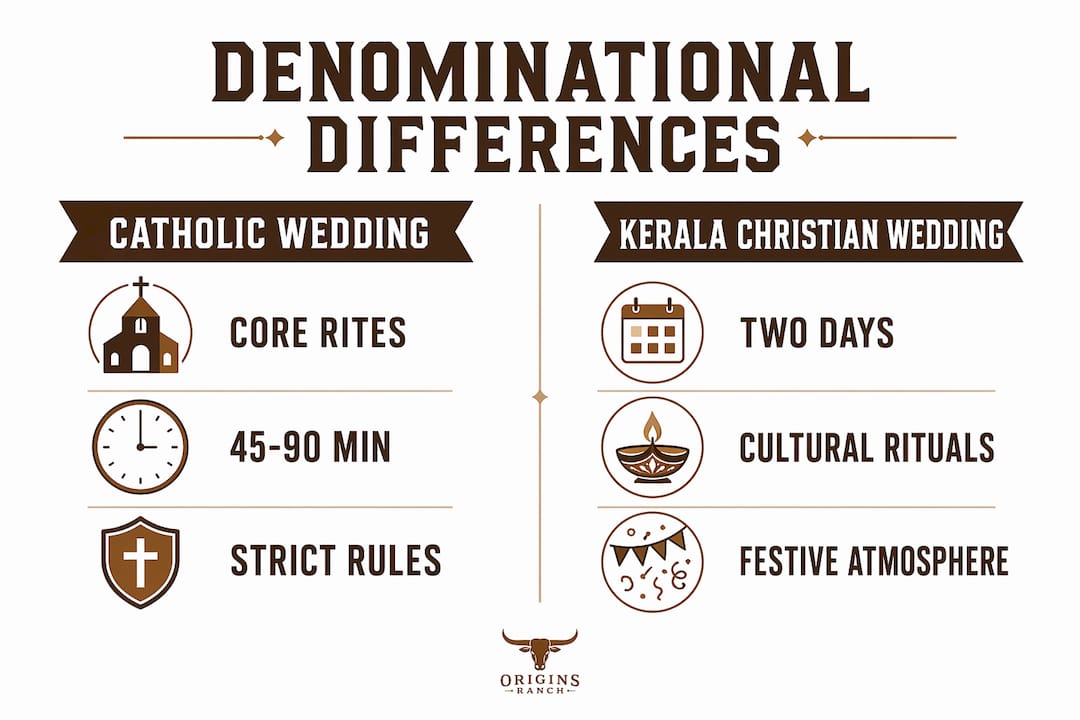
Catholic weddings carry some of the most specific requirements of any Christian tradition. Four core requirements govern Catholic marriages: premarital preparation, a prenuptial investigation, an appropriate venue, and strict adherence to liturgical form. Couples choose between a Nuptial Mass, which includes the full Eucharistic celebration, and the Rite of Marriage outside Mass, a shorter but equally valid option. Procession order and participant roles are confirmed with the parish during preparation to avoid last-minute confusion. Catholic liturgy offers more flexibility than many couples realize, allowing personalized music selections and readings within approved parameters.
Kerala Christian weddings represent a completely different expression of the same faith. Spanning two full days, these ceremonies include rituals like Madhuram Veppu (a sweet-feeding ceremony), Minnukettu (tying of the Minnu, a cross-shaped pendant), Manthrakodi (gifting of the wedding saree), and Crowning in some Orthodox traditions. The ceremony itself runs 45 minutes to 1.5 hours, but the surrounding cultural celebrations extend far beyond that. Denominations within Kerala Christianity include Syrian, Knanaya, Orthodox, Jacobite, and Latin Catholic, each with distinct customs.
| Feature | Catholic wedding | Kerala Christian wedding |
|---|---|---|
| Duration | 45–90 minutes (ceremony) | Two-day celebration with extended rituals |
| Key requirement | Prenuptial investigation, liturgical form | Denomination-specific rituals and regional customs |
| Distinctive element | Nuptial Mass or Rite outside Mass | Minnukettu, Manthrakodi, Crowning |
| Music style | Approved liturgical hymns | Traditional devotional songs and regional music |
| Attire | Formal bridal gown, modest coverage | Saree (bride), suit or traditional dress (groom) |
Pro Tip: If you are planning a cross-denominational Christian wedding, confirm early which liturgical requirements apply to each partner's tradition. Some denominations require specific documentation months in advance, and missing a deadline can delay your ceremony date.
What faith-based preparations matter most before the wedding?
Planning a Christ-centered wedding starts long before the venue is booked. Premarital counseling typically involves 8 to 16 sessions beginning about four months before the wedding and correlates with a 31% lower likelihood of divorce. That number reflects something real: couples who work through conflict, communication, and theology together before the wedding are building on a foundation, not just planning a party.
Faith-based preparation covers more than counseling. Consider each of the following areas before finalizing any vendor or detail:
- Music selection: Every song should reflect Christian doctrine and honor God. Hymns like "Great Is Thy Faithfulness," worship songs like "How He Loves" by John Mark McMillan, and classical pieces like Handel's "Hallelujah Chorus" all work beautifully. Avoid songs with secular or romantic-only themes that make no reference to God.
- Vow writing: Vows are lifelong sacred commitments spoken before God. Write them with that weight in mind. Reference Scripture if it feels authentic, and avoid language that treats marriage as conditional.
- Wedding party selection: Choose attendants who actively support your faith commitment. Their presence on that day signals something to your guests and to you.
- Attire: Modest dress reflects reverence before God and sets the tone for the entire ceremony. This applies to the bridal party, not just the bride.
- Scripture readings: Select one or two passages that speak directly to covenant and love. Balancing a short memorable verse with a longer congregational reading creates impact without extending the ceremony unnecessarily.
Pro Tip: Sit down with your partner and separately list the three traditions or elements that matter most to each of you. Then compare lists. Where you overlap is your non-negotiable core. Where you differ is where creativity and compromise can shine.
How can a Christian wedding reception honor Christ?
The reception is not a separate secular event that follows the sacred ceremony. It is an extension of the same worship, and it deserves the same intentionality. Reception ideas that honor Christ include opening with prayer, incorporating Scripture readings between courses, and inviting family members to offer spoken blessings over the couple.
Some traditional reception customs deserve a second look. The garter toss, for example, carries connotations that conflict with the modesty and reverence of a Christian ceremony. Replacing it with a meaningful alternative, like a parent blessing or a group prayer circle, keeps the energy celebratory without compromising the day's tone.
Here are reception ideas that align naturally with Christian values:
- Open with a pastoral prayer or a blessing from a family elder
- Play a curated worship playlist during dinner rather than secular pop
- Include a "letters to the couple" station where guests write Scripture-based encouragements
- Replace the garter toss with a unity candle lighting at the reception table
- Ask the best man or maid of honor to share a faith-centered toast that references the couple's spiritual journey
- Offer a designated prayer corner where guests can write prayers for the marriage
- Close the evening with a group hymn or a final blessing from the officiant
Hospitality is itself a biblical value. A reception that feeds guests well, creates genuine warmth, and centers on community rather than performance reflects the kind of love described in Romans 12:13. You can explore reception layout ideas that support both intimacy and celebration without sacrificing either.
Key takeaways
A Christian wedding is a covenant ceremony of worship, and every planning decision should reflect that singular purpose.
| Point | Details |
|---|---|
| Christ as centerpiece | Music, vows, and the pastor's message must all glorify Jesus, not just celebrate the couple. |
| Ceremony structure matters | Follow the processional-to-blessing order, then personalize within that reverent framework. |
| Denominational differences are real | Catholic and Kerala Christian traditions have distinct requirements; research yours early. |
| Counseling reduces divorce risk | Starting premarital counseling four months out correlates with 31% lower divorce likelihood. |
| Reception is part of worship | Replace secular traditions with prayer, Scripture, and community blessings to honor God throughout. |
Our honest take on planning a Christ-centered wedding
We have had the privilege of hosting many faith-centered celebrations here at Origins Ranch, and one pattern stands out clearly. The couples who feel most at peace on their wedding day are the ones who made decisions from their faith first and their preferences second.
That sounds simple, but it is harder than it looks. There is enormous pressure, from family, from social media, from wedding culture in general, to make the day visually spectacular above all else. We have watched couples spend months agonizing over centerpieces while spending twenty minutes on their vows. The ceremony deserves the same creative energy as the decor.
What we find most beautiful is when a couple uses the physical space to reinforce their spiritual intention. A barn venue like ours, with its natural light and open character, lends itself to ceremonies that feel grounded and genuine rather than staged. There is something about wood beams and open sky that strips away pretense and invites real worship.
We also believe strongly in the role of community. A Christian wedding is not a performance for guests. It is a covenant witnessed by people who will hold the couple accountable for decades. Invite people who will pray for your marriage long after the flowers have wilted. That is the real guest list criteria.
If you are feeling overwhelmed by the planning process, start with one question: what do we want people to say about this day ten years from now? The answer will tell you everything about where to invest your time and energy.
— Origins
Plan your Christian wedding at Origins Ranch
Origins Ranch in Plant City, FL was built to host celebrations that matter. Our barn venue carries the warmth and character that faith-centered weddings deserve, with modern amenities that make the planning process smooth and the day itself unforgettable.
Whether you are envisioning an intimate ceremony with close family or a full reception that celebrates your entire community, we offer customizable wedding packages designed to fit your values and your vision. Our founder Barry, a veteran and experienced event professional, brings over 20 years of care and expertise to every celebration. Browse our ceremony and reception gallery to see how couples have made Origins Ranch their own, and reach out to start planning a day that honors God from the first note of the processional to the final blessing.
FAQ
What makes a Christian wedding different from a secular wedding?
A Christian wedding centers on Christ as the primary focus, with music, vows, and the pastor's message all designed to glorify God rather than simply celebrate the couple. The ceremony is treated as an act of worship and a covenant before God, not just a legal or social event.
How many scripture readings should a Christian wedding ceremony include?
Most Christian ceremonies include one or two scripture readings, balancing a short memorable verse with a longer passage read to the congregation. This approach creates meaningful impact without extending the ceremony beyond a comfortable length.
Is premarital counseling required for a Christian wedding?
Premarital counseling is required for Catholic weddings and strongly recommended across most Protestant denominations. Research shows that couples who complete 8 to 16 counseling sessions before marriage are 31% less likely to divorce.
Can Christian wedding receptions include dancing and alcohol?
Christian couples approach this differently based on their denomination and personal convictions. Many choose to avoid alcohol entirely or limit it, and select music that reflects their faith. The guiding principle is avoiding anything that causes stumbling for guests or dishonors the covenant just made before God.
How long does a typical Christian wedding ceremony last?
A standard Protestant or non-denominational Christian ceremony runs 30 to 60 minutes. Catholic ceremonies with a Nuptial Mass typically run 60 to 90 minutes. Kerala Christian ceremonies last 45 minutes to 1.5 hours, though the surrounding two-day celebration extends well beyond the ceremony itself.