
TL;DR:
- A venue site visit involves an in-person inspection to verify layout, logistics, staffing, and atmosphere before booking.
- Perform two visits: a pre-contract assessment and a final walk-through 24 to 48 hours before the event to confirm details.
A venue site visit is the process of physically inspecting and experiencing an event location to evaluate whether it fits your wedding or celebration. Photos and virtual tours show you what a venue wants you to see. A site visit shows you what you need to know. Industry best practices recommend two types of visits: a pre-contract walkthrough to assess suitability, and a final walkthrough 24–48 hours before the event to confirm every logistical detail. Explaining venue site visit procedures clearly is the difference between a confident booking and a costly surprise on your wedding day.
What does a venue site visit actually involve?
A venue site visit is a structured, in-person inspection of a potential event location. The industry term for this process is a "site inspection," and it goes well beyond a casual tour. You are verifying that the space can physically, logistically, and emotionally support your event.
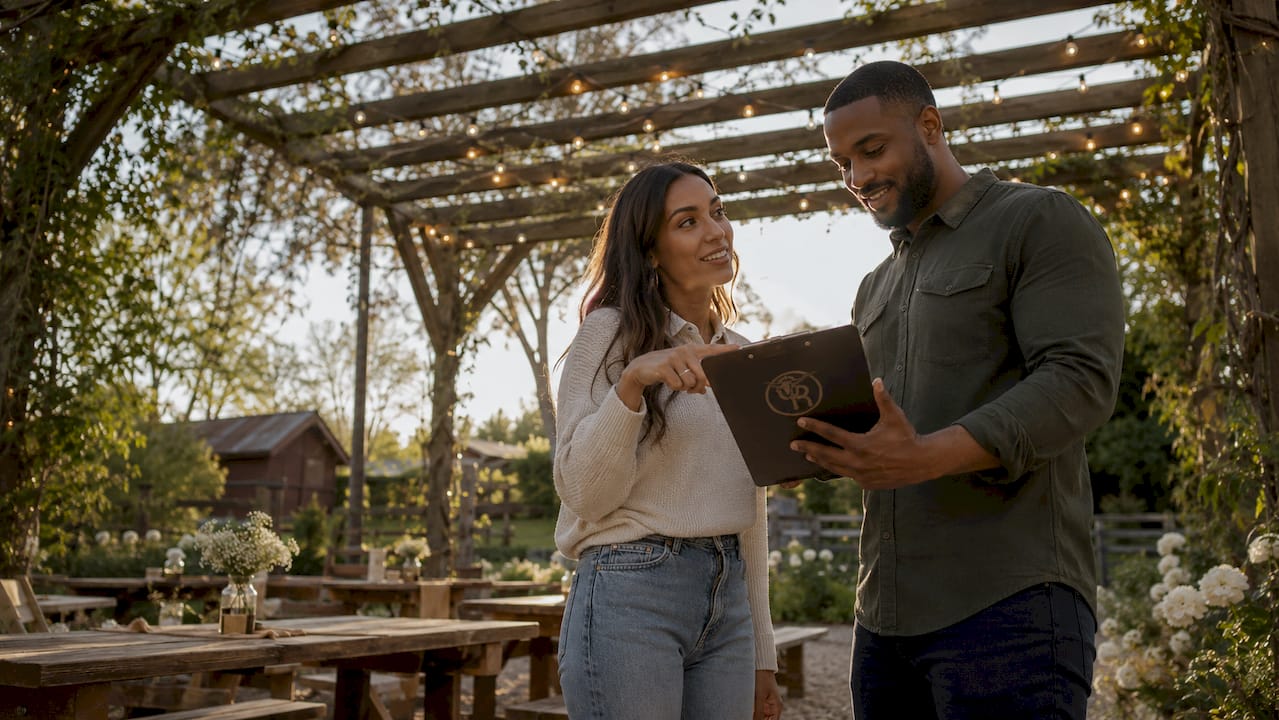
The goal is to experience the venue as your guests will. That means walking the full path from the parking lot to the ceremony space, not just admiring the decorated ballroom a sales coordinator prepared for your arrival. Treating the visit as verification of the real guest journey, rather than a staged presentation, is what separates couples who book confidently from those who discover problems after signing.
A thorough site inspection covers four core areas: space and layout, logistics and access, staffing and vendor policies, and the emotional feel of the location. Each area carries equal weight. A stunning barn with no accessible load-in route creates real problems on setup day.
How to prepare for a venue site visit
Preparation turns a casual tour into a productive assessment. Arrive with the right tools and the right questions, and you will leave with real answers.
Gear to bring:
- A measuring tape or laser distance measurer to verify room dimensions yourself
- A phone charger or portable battery to document everything on video and photos
- A printed venue assessment checklist covering power, AV, lighting, and load-in
- A notepad for writing down staff names, answers, and observations in real time
- Your guest count, table layout preferences, and vendor contact list
Questions to prepare in advance:
- What circuits are available, and do you have high-voltage drops for production equipment?
- Are there vendor restrictions in writing, and which vendors are approved?
- What is the full itemized cost breakdown, including service charges and catering minimums?
- Who is the day-of operations contact, and how does the handoff from sales work?
- What are the load-in and load-out windows, and are there overtime fees?
Couples should request fully itemized, written cost estimates before the tour, not after. Venues often reveal total costs only once you are emotionally attached to the space. Getting numbers upfront protects you from sticker shock.
Pro Tip: Schedule your visit on a day when another event is being set up or broken down. You will see the real operational pace of the staff and the actual condition of the space under working pressure.
What to observe and ask during the walkthrough
The walkthrough itself is where your preparation pays off. Move through the venue in the exact order your guests will experience it.
- Arrive from the parking lot. Count the spaces. Note the walking distance to the entrance. Check whether the path is accessible for guests with mobility needs.
- Enter through the main doors. Observe the first impression: lighting, temperature, smell, and noise from outside. Your body registers atmosphere before your brain does. Arriving early and sitting quietly in the space helps you gauge whether it feels welcoming or stressful.
- Walk to the ceremony or reception space. Note the flow. Are there bottlenecks at doorways? Is the signage clear? Would guests know where to go without staff guidance?
- Check the restrooms. Count the stalls relative to your guest count. Assess cleanliness and distance from the main event space.
- Measure the room yourself. Never rely exclusively on venue-provided floor plans. Use a laser distance measurer to verify actual dimensions, ceiling height, and any obstructions like chandeliers or rigging points.
- Walk the load-in route. Go from the delivery entrance to the event space. Measure elevator dimensions and hallway widths. Load-in logistics are a critical failure point. Narrow thresholds and level changes add setup time and labor costs.
- Ask about emergency exits and accessibility. Confirm that all exits are clearly marked and unobstructed. Verify ADA compliance for your specific guest needs.
Pro Tip: Ask to see the venue's AV rack and power panel yourself. Knowing whether you have standard circuits or high-voltage drops determines what production equipment your vendors can safely use.
Pay attention to how staff members interact with each other when they are not focused on you. The working relationship between the venue's sales and operations teams affects your event more than the physical space alone. A polished sales pitch paired with a disorganized operations team is a warning sign worth taking seriously.
How to conduct a final walkthrough before your event
The final walkthrough is a separate visit, not a repeat of the initial tour. Industry guidance places this visit 24–48 hours before the event. Its purpose is to confirm that every detail agreed upon in the contract is physically in place.
What to verify during the final walkthrough:
- Table, chair, bar, and food station placement matches your approved floor plan
- Sightlines from every seat to the ceremony focal point are clear
- Emergency exits are unobstructed and clearly marked
- Lighting levels and color temperatures match what was agreed
- All vendor access points are confirmed and unlocked at the correct times
- The day-of coordinator and operations lead are both present and aligned on the timeline
- Any contingency plans for weather or unexpected issues are documented and shared
This visit is also the time to walk every vendor through the space if they have not been on site before. Florists, photographers, and caterers all benefit from seeing the actual layout rather than working from a floor plan. Coordinate arrival times so each vendor gets a few minutes to ask questions and confirm their setup area.
Identify any potential dead zones, areas where guests may cluster and block flow, or spots where noise from a kitchen or HVAC system could disrupt speeches. Discuss these with the venue coordinator and agree on solutions before the day arrives.
Common pitfalls to avoid during venue site visits
Most couples make at least one of these mistakes. Knowing them in advance keeps you from repeating them.
- Over-relying on staged presentations. A venue set up for a showcase looks its best. Ask to see it during a reset or after a previous event to see its real condition.
- Skipping the financial conversation. Waiting until after the tour to ask about costs puts you at an emotional disadvantage. Request itemized cost estimates before you fall in love with the space.
- Ignoring staff dynamics. The relationship between sales and operations teams predicts how smoothly your event will run. Watch how staff communicate with each other, not just with you.
- Failing to measure load-in paths. A beautiful grand piano or a large floral installation may not fit through a standard elevator. Check elevator and hallway dimensions before committing to any oversized décor or equipment.
- Not getting vendor restrictions in writing. Verbal assurances about preferred vendors or outside catering mean nothing if they contradict the contract. Get every restriction documented before signing.
- Overlooking the atmosphere. The psychological feel of a space matters. If the venue feels cold or chaotic during a quiet tour, it will not magically transform on your wedding day.
Pro Tip: Visit at least two venues before making any decision. Touring multiple venues sharpens your ability to compare objectively and reduces the emotional bias that comes from seeing only one option.
Key takeaways
A successful venue site visit combines physical verification, financial transparency, and honest observation of staff and atmosphere before you sign any contract.
| Point | Details |
|---|---|
| Two visits are standard | Complete a pre-contract inspection and a final walkthrough 24–48 hours before the event. |
| Measure everything yourself | Verify room dimensions, ceiling heights, and load-in paths with your own tools, not venue-provided plans. |
| Request costs upfront | Ask for fully itemized estimates before touring to avoid emotional pricing pressure after the visit. |
| Watch the staff, not just the space | How sales and operations teams interact predicts your actual event-day experience. |
| Trust your gut on atmosphere | Sit quietly in the space early and notice whether it feels welcoming before the sales pitch begins. |
What we have learned from years of welcoming couples through our doors
The couples who feel most confident on their wedding day are the ones who asked the hard questions early. Not the ones who were dazzled by a decorated showroom and signed before they checked the restroom count or asked about overtime fees.
We have seen couples arrive at Originsranch having toured four or five venues and still feeling uncertain. That uncertainty almost always traces back to one thing: they were shown spaces, not given real information. A great venue tour should feel like a conversation between partners, not a sales performance.
What we tell every couple who walks our property is this: trust what you feel when you first step onto the grounds, and then verify everything that feeling is built on. The emotional connection to a space is real and worth honoring. But it works best when it is backed by confirmed dimensions, written vendor policies, and a coordinator who knows your name before the day of the event.
The people running your venue matter as much as the building itself. A warm, experienced team turns a beautiful space into a flawless event. A disorganized one turns even the most stunning venue into a stressful day. Visit early, visit more than once, and pay attention to how the staff treats each other when no one is watching.
— Origins
See Originsranch in person and picture your day
Originsranch is a barn wedding and special event venue in Plant City, FL, built on the grounds of a former World Champion Horse Ranch. We have transformed that history into a modern, elegant space that still carries its original warmth and character.
When you tour Originsranch, you get a real walkthrough, not a staged presentation. Our founder Barry brings over 20 years of event industry experience to every consultation, and our team walks you through every detail from load-in logistics to lighting options. Browse our venue photo gallery to get a feel for the space before you visit. If you are a veteran or active duty service member, learn how our Weddings For Warriors program can support your dream wedding. We would love to show you around.
FAQ
What is a venue site visit?
A venue site visit is an in-person inspection of an event location to assess whether it fits your needs. The industry term is a "site inspection," and it covers layout, logistics, staffing, and atmosphere.
When should the final venue walkthrough happen?
The final walkthrough should take place 24–48 hours before your event. This visit confirms table placement, vendor access, sightlines, and emergency exit clarity.
What should I bring to a venue site visit?
Bring a measuring tape or laser distance measurer, a printed checklist, a phone charger, and a list of financial questions. Request itemized cost estimates before the tour begins.
How do I assess the guest experience during a site visit?
Walk the full path your guests will travel, from parking to seating, and note any bottlenecks, poor signage, or accessibility gaps. Sit quietly in the main space to gauge the atmosphere before the sales presentation starts.
Why should I visit more than one venue?
Visiting multiple venues sharpens your ability to compare layouts, pricing, and staff quality objectively. It also reduces the emotional bias that comes from seeing only one option before making a decision.