
Yes, hosting your ceremony and reception in the same place is common, and it's usually simpler and less expensive than booking two venues. Couples choose it for the cost savings, the one-stop logistics, and the way guests can relax instead of driving between locations. What follows is the planning detail: timing, vendor coordination, and design tricks, plus a look at how a barn venue like Origins Ranch pulls it off.
TL;DR:
- Booking a single venue reduces costs related to rentals, setup, and transportation for vendors and guests.
- Proper planning involves scheduling photos before the ceremony and having a detailed flip plan to minimize disruption.
- A typical 60 to 90 minute room flip includes moving furniture, changing lighting, and staging the reception area, often supported by adjacent spaces or elevated platforms.
- Achieving distinct aesthetics with one space relies on lighting, linens, and reoriented decor, with extra flip time reserved for more dramatic transformations.
- Ensuring the venue has dedicated storage, rehearsed staffing, and a clear day-of timeline in writing prevents delays and helps manage the transition smoothly.
Table of Contents
- Why Couples Choose One Venue for Ceremony and Reception
- How Do You Plan the Day-Of Logistics?
- What Happens During the 60 to 90 Minute Room Flip?
- How Do You Design One Space for Two Different Moods?
- What Should You Ask Your Venue Before Booking?
- How a Barn Venue Handles the Ceremony to Reception Flip
- Rules of Thumb From Venue Staff
- How Origins Ranch Makes One Venue Weddings Simple
- Sources
- FAQ
Why Couples Choose One Venue for Ceremony and Reception
The math is simple. One venue means one rental fee, one set of parking instructions, and no guest shuttle between an aisle and a dance floor. You cut transportation costs for your wedding party, your florist, and often your caterer, since everything gets delivered and set up once instead of twice. Booking a single site for both events also reduces overall wedding costs compared with renting two separate sites, largely because you're not paying two venue minimums or doubling up on setup and breakdown labor.
There's a coordination payoff too. You deal with one venue manager who already knows the space, the sightlines, and where the outlets are, rather than juggling two teams who've never worked together.
Guests notice the difference. Older relatives, out-of-town guests, and anyone unfamiliar with the area benefit enormously when there's no travel between locations to plan around.
The trade-off worth naming honestly: you may not get two dramatically different backdrops. A garden ceremony and a ballroom reception create two distinct visual moments; one venue asks you to get creative within a single footprint.
- Lower transportation and vendor delivery costs
- One point of contact for logistics and troubleshooting
- Easier for guests with mobility issues, young kids, or tight schedules
- Simplified parking and timeline coordination
- Trade-off: less contrast between ceremony and reception aesthetics
How Do You Plan the Day-Of Logistics?
Smooth execution comes down to a handful of decisions made weeks before the wedding, not scrambled the morning of.
- Schedule a first look or staggered portraits. Taking photos before the ceremony frees your photographer and planner to focus entirely on the room flip once guests move to cocktail hour, an approach Junebug Weddings recommends specifically for same-space weddings.
- Get a written flip plan from your venue or planner. Ask exactly which vendor moves what, and in what order.
- Confirm staff counts in writing. "A few extra hands" is not a staffing plan. Get a number.
- Set up hidden storage or pre-set tables where possible. If your venue has a side room or hallway, use it.
- Brief your guests. Signage and a quick word from your emcee prevent forty people from wandering into a room mid-flip.
Pro Tip: Give your emcee or DJ a specific line to say before cocktail hour, something like "We need about an hour to get the barn ready for you, so grab a drink and enjoy the porch." Guests relax the moment they know there's a plan.
What Happens During the 60 to 90 Minute Room Flip?
Most planners point to a 60 to 90 minute window as the realistic time it takes a vendor team to fully reset a room, and that estimate holds up across venue types because it accounts for food service prep running in parallel.
In that window, your team is typically:
- Moving or flipping ceremony chairs into reception seating
- Swapping altar or aisle florals onto the head table or bar
- Laying linens and placing centerpieces
- Adjusting lighting cues from ceremony mode to reception ambiance
- Staging the dance floor and DJ or band setup
If your venue can't support a full flip, you have options. Some spaces use adjacent rooms for ceremony and reception so nothing needs to move at all. Others build an elevated platform that gets cleared quickly, or sequence an outdoor ceremony into an indoor reception so the two spaces never compete for the same square footage.
Keep guests occupied during the wait with a cocktail hour built around something interactive, whether that's a live pianist or a dessert station guests can browse instead of standing around watching a clock.
How Do You Design One Space for Two Different Moods?
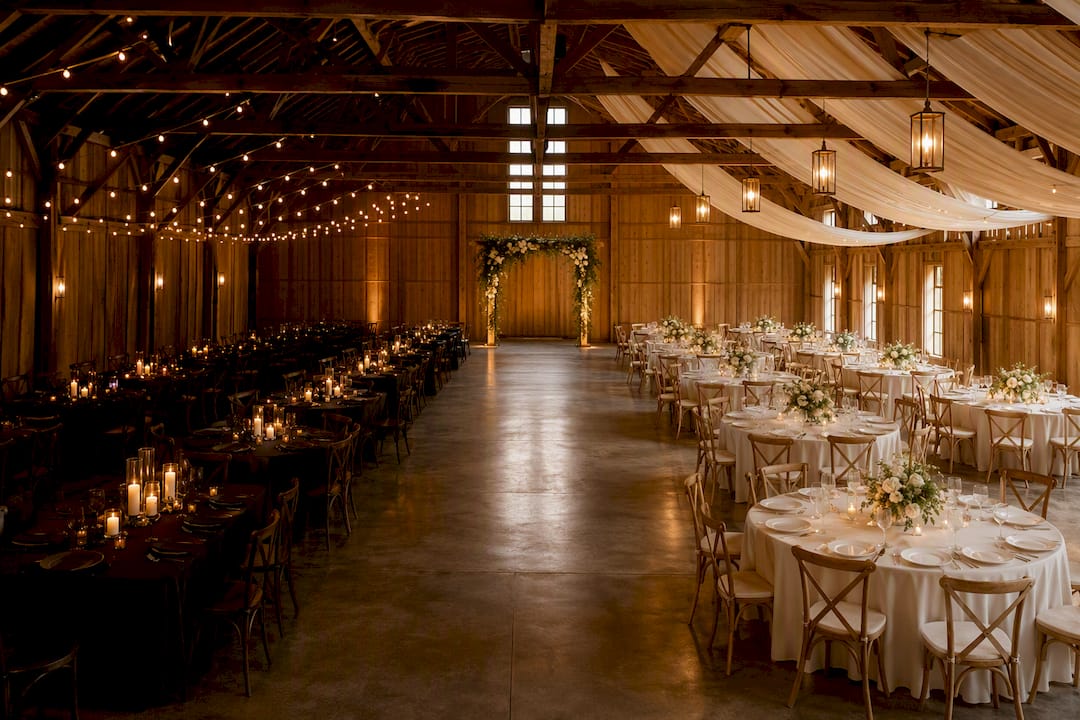
The best-looking same-venue weddings don't attempt a full transformation. They pick a handful of anchor pieces and reorient them.
Your ceremony arch, for instance, can become the backdrop behind your head table. Aisle florals move to the bar or cake table. This kind of design continuity is not just a shortcut, it's often the more polished, cohesive-looking choice, and it's dramatically easier on your florist's back.
- Choose florals and props that work in both settings, not single-use pieces
- Skip elaborate tablescapes unless your venue can pre-set tables elsewhere
- Change the room's mood with lighting, linen swaps, and chair covers rather than a full redesign
- If you want two truly distinct looks, budget extra flip time or staff
Pro Tip: If your venue offers a hallway or side room for pre-setting tables, as some do, you can layer in more elaborate tabletop details without adding a single minute to your flip window.
Want two wildly different aesthetics, moody and candlelit for the ceremony, bright and festive for the reception? You can do it, but expect to lean on lighting and linens rather than a full swap, and build in extra flip time to pull it off cleanly.
What Should You Ask Your Venue Before Booking?
Bring this list to every venue tour and vendor call.
- Does the venue have storage or a side room for pre-set tables and decor?
- What's the realistic flip time, and has staff actually rehearsed it before?
- How many staff hands are included, and are there overtime fees past a certain hour?
- What's the weather backup plan if part of the day is outdoors?
- How's parking and shuttle logistics handled for guests?
- Can you get a sample day-of timeline and a staffing roster in writing?
- What are the restroom and ADA access options during cocktail hour?
- Are there accommodations for kids or elderly guests while the room resets?
Getting straight answers here tells you fast whether a venue is genuinely set up for same-space weddings or just says yes without a real plan behind it.
How a Barn Venue Handles the Ceremony to Reception Flip
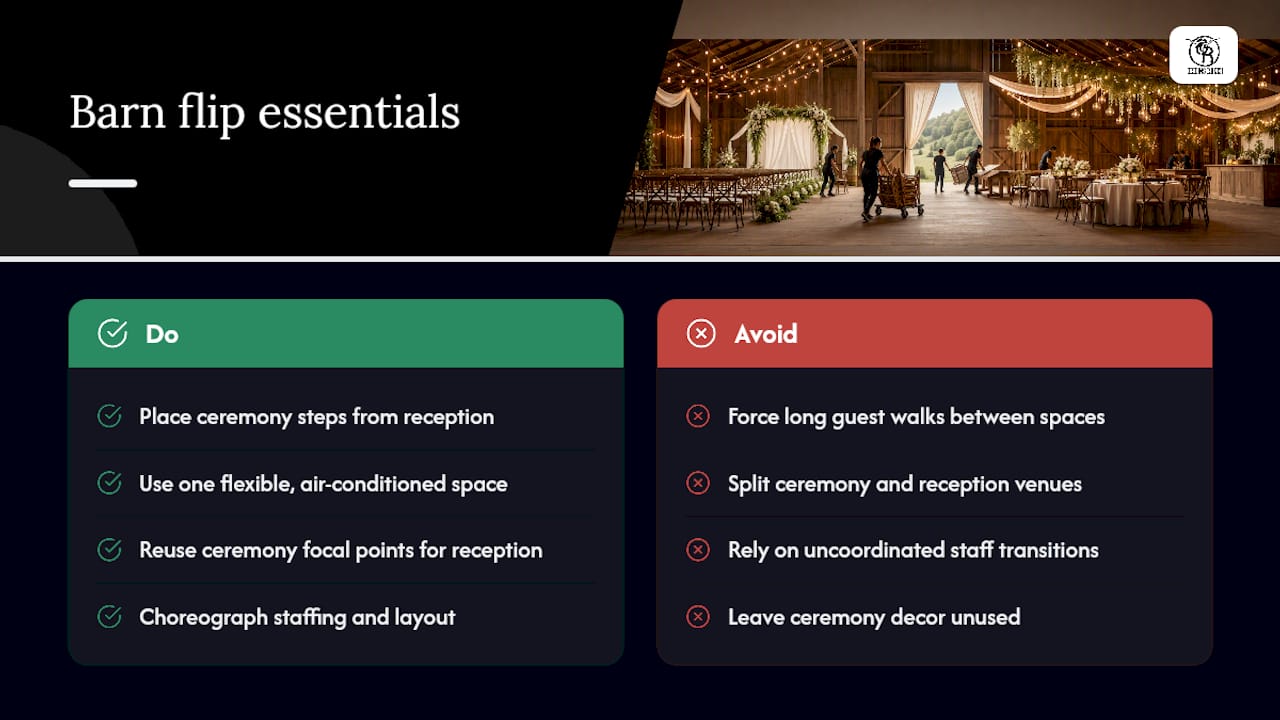
Origins Ranch was built to make this exact transition easy. Our barn started as sugar sand and a former World Champion Horse Ranch; today it's a flexible, air-conditioned space with an outdoor ceremony area steps from the reception hall, so there's no long walk and no wasted flip time.
Founder Barry brings over 20 years as a DJ and event professional to how our team choreographs staffing and layout, and his charity, Weddings For Warriors, helps veterans and active duty service members have their dream weddings. You can see how our ceremony focal points get reused in reception setups in our ceremony gallery, or browse our barn workflow guide for more on how we handle staffing behind the scenes.
Rules of Thumb From Venue Staff
Choose one venue when budget and guest convenience matter most. Book two venues only if you need dramatically different aesthetics and can afford the extra time and staff that requires. Whatever you choose, get staffing and timeline commitments in writing, plan for at least two hands per major vendor during the flip, and double check sightlines so no guest loses their view of the altar or the toast.
How Origins Ranch Makes One Venue Weddings Simple
You've seen what it takes to pull off a same-place wedding well: staff who know the flip cold, a layout that doesn't require a hallway sprint, and a team that's coordinated this exact transition before. That's the gap Origins Ranch fills for couples who don't want to manage three separate vendor contracts just to get a ceremony and a reception under one roof.
Our barn offers onsite staff who run the room flip as a rehearsed routine, a layout flexible enough for indoor or outdoor ceremonies, and catering and vendor collaboration built into the booking rather than bolted on. If you're a veteran or active service member, our Weddings For Warriors program was built specifically to help make your day possible. Ready to see the space for yourself? Book a tour and check pricing to get a sample day-of timeline and a straight answer on flip logistics for your date.
Sources
- How to Have Your Wedding Ceremony and Reception in the Same Space — Brides
- How to Have Your Wedding Ceremony and Reception in the Same Room — Junebug Weddings
- Wedding venue cost 2026 guide — GreatEvent
FAQ
Are the Ceremony and Reception Usually at the Same Place?
Yes, it's increasingly common and often the more affordable choice, since one venue eliminates travel time and duplicate rental costs that come with booking two separate sites.
Is It Normal to Have the Ceremony and Reception at Different Locations?
It's normal too. Couples pick two venues mainly when they want distinctly different settings, like a church ceremony followed by a ballroom reception, and are willing to manage the added transportation and timing.
Do You Change Rooms Between the Ceremony and Reception?
Often, yes. Many venues, including barn-style spaces like Origins Ranch, use the same room but flip chairs, florals, and lighting during a 60 to 90 minute cocktail hour while guests mingle elsewhere.
Which Comes First, the Ceremony or the Reception?
The ceremony always comes first. The reception follows once vows are exchanged, typically after a cocktail hour that also doubles as the room-flip window.