
TL;DR:
- A hybrid wedding venue combines both outdoor and indoor spaces close together, providing weather flexibility and seamless guest flow. Both areas should be equally beautiful, with reliable transition logistics and consistent capacity to ensure a smooth celebration regardless of weather conditions. Effective evaluation requires testing the indoor space quality, transition ease, and understanding vendor, capacity, and weather policies before booking.
A hybrid wedding venue is defined as a location that integrates both outdoor and indoor spaces within the same property, giving couples the freedom to celebrate outside while keeping a fully equipped, equally beautiful indoor space ready at any moment. This is the industry's preferred term for what many couples search for as "indoor-outdoor venues" or "venues with indoor backup." About 30% of U.S. weddings are fully or partially outdoors, which means weather flexibility is no longer a luxury. It's a practical requirement. Defining hybrid wedding venues correctly helps you ask the right questions, avoid costly surprises, and choose a space that works beautifully no matter what the sky decides to do.
What are the key features that define hybrid wedding venues?
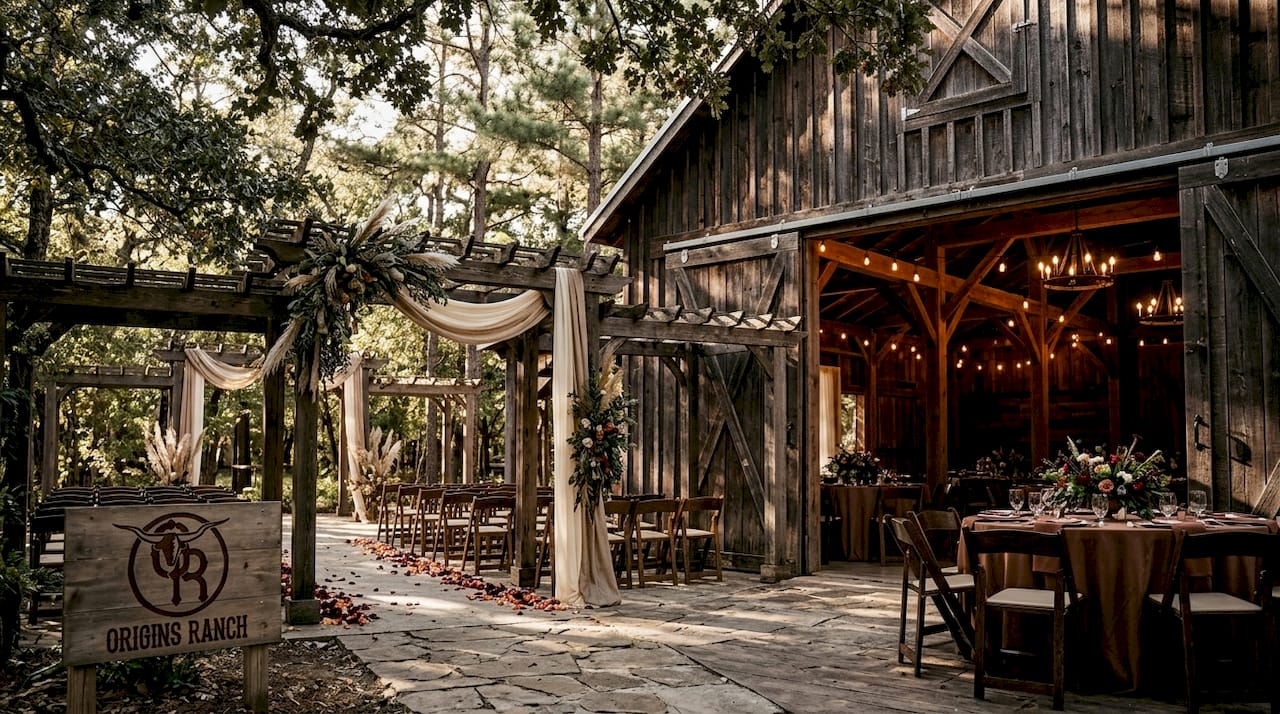
Defining hybrid wedding venues goes beyond simply having a tent and a ballroom on the same property. The defining characteristic is adjacency. The indoor and outdoor spaces must sit close enough together that guests can move between them naturally, without a long walk, a shuttle, or a confusing route through a parking lot.
The second defining feature is equal quality. Some venues' indoor backup rooms are windowless spaces that feel like a downgrade rather than a true alternative. A genuine hybrid venue treats both spaces as primary options. The indoor area should have comparable lighting, décor potential, and sightlines to the outdoor setting.
Here are the core features that separate a true hybrid venue from one that simply has a backup room:
- Proximity of spaces. Indoor and outdoor areas should be connected or immediately adjacent, supporting natural wedding guest flow without confusion.
- Consistent capacity. Both spaces should accommodate your full guest count. A venue that fits 150 outdoors but only 80 indoors is not a true hybrid option.
- Climate control indoors. Air conditioning or heating in the indoor space is non-negotiable, especially for summer or winter weddings in regions like Florida.
- Vendor accessibility in both zones. Catering, photography, and audio equipment must be able to operate effectively in either space.
- Sheltered transition areas. Covered walkways, porticos, or verandas between spaces protect guests during weather shifts.
- Restroom access from both areas. Bottlenecks at bathrooms are one of the most common logistical failures in hybrid venue events.
Common venue types that naturally support hybrid setups include barn estates, hotel properties with garden courtyards, winery estates like Mayacama, and purpose-built event ranches. Each of these property types offers the architectural bones needed to make both spaces feel intentional rather than improvised.
Pro Tip: During your venue tour, ask to see the indoor space first, before you fall in love with the outdoor area. If the indoor space doesn't impress you on its own, it won't impress your guests on your wedding day either.
How do hybrid wedding venues benefit couples and guests?
The benefits of hybrid wedding venues extend well beyond weather protection. They reshape the entire guest experience, the event timeline, and your budget planning.
The most popular hybrid wedding format is an outdoor ceremony followed by an indoor reception. This structure gives you the romance of exchanging vows under open sky while moving guests into a climate-controlled space for the hours-long celebration that follows. Guests experience the best of both environments without enduring heat, humidity, or unexpected rain through dinner and dancing.
Here are the primary benefits, ranked by how often they influence couples' final venue decisions:
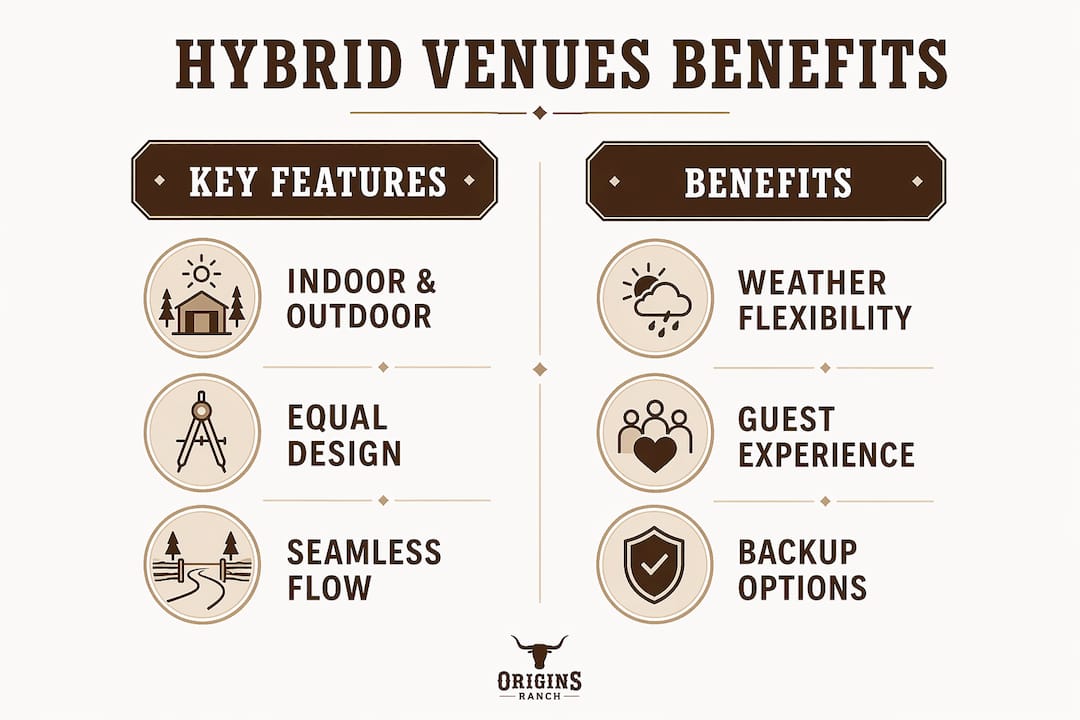
- Weather contingency without aesthetic sacrifice. You get the outdoor beauty you want with a genuine indoor alternative that feels equally special, not like a consolation prize.
- Guest comfort across all ages. Elderly guests, young children, and guests with mobility considerations benefit significantly from easy indoor access and climate control.
- Logistical flexibility for vendors. Caterers, photographers, and DJs can stage equipment in both zones, reducing scramble time if conditions change.
- Multi-phase event flow. Cocktail hour outdoors, dinner indoors, or dancing under the stars after an indoor meal. Hybrid venues support creative event structures that single-environment venues cannot.
- Cost efficiency. Renting a separate tent for weather protection can add anywhere from $0 to $8,000 to your budget. A hybrid venue often includes both spaces in one package.
"The best hybrid venues make a weather shift feel like a choice rather than a disaster. When both spaces are equally stunning, couples and guests barely notice the transition."
That mindset is the gold standard. If you find a venue where moving indoors feels like an upgrade option rather than a fallback, you've found the right place.
How to evaluate indoor and outdoor spaces at a hybrid venue
Evaluating a hybrid venue requires more than a quick walkthrough. You need to simulate your wedding day as closely as possible during the tour. Venue tours should test the indoor backup experience the way a guest would encounter it, including the route, the lighting, the ambiance, and the sightlines from every seat.
Checking indoor space quality
Walk into the indoor space and ask yourself three questions. Does it feel like a celebration space or a storage room? Is the natural or artificial lighting flattering? Could your florist and decorator work with this room to create something beautiful? If the answer to any of these is uncertain, that's a red flag.
Testing guest transition ease
Walk the path from the outdoor ceremony area to the indoor reception space. Time it. If it takes more than two minutes at a relaxed pace, your guests will feel the distance. Transitions in hybrid weddings are logistics problems as much as aesthetic ones. Bottlenecks at doorways, catering lines, and restrooms are the most common sources of delay.
Key questions to ask during your venue tour
- What is the weather call policy, and how much notice do you give before switching spaces?
- Are both spaces included in the base rental price, or does the indoor space carry an additional fee?
- Can vendors access both areas for setup simultaneously?
- What is the maximum capacity in each space, and are they consistent?
- Is there a covered transition area between the two spaces?
Pro Tip: Ask the venue coordinator to show you photos or videos from a real event that used both spaces. Seeing how the layout actually functions during a wedding tells you far more than an empty room tour.
| Evaluation Factor | What to Look For |
|---|---|
| Indoor lighting quality | Natural light or warm artificial lighting that flatters guests and photography |
| Capacity consistency | Indoor and outdoor spaces should hold the same guest count |
| Transition path | Short, covered, and clearly marked route between spaces |
| Vendor staging access | Loading areas and power access available in both zones |
| Weather call timeline | Clear policy with advance notice of at least 2 to 3 hours |
Hybrid venues versus traditional indoor or outdoor-only venues
Understanding the differences between hybrid venues and traditional single-environment venues helps you decide which option fits your priorities.
| Feature | Hybrid Venue | Indoor-Only Venue | Outdoor-Only Venue |
|---|---|---|---|
| Weather flexibility | High. Full indoor backup included | Complete. No weather risk | Low. Tent rental required |
| Aesthetic variety | Two distinct environments | One controlled environment | One natural environment |
| Guest comfort | High across all conditions | High. Climate controlled throughout | Variable. Dependent on weather |
| Event flow options | Multi-phase celebrations supported | Linear flow within one space | Linear flow with weather risk |
| Cost structure | Often bundled. One venue fee | Typically straightforward pricing | May require tent and generator rental |
| Logistical complexity | Moderate. Requires transition planning | Low | Moderate to high |
The clearest advantage of a hybrid venue is flexibility without compromise. An indoor-only venue removes weather risk entirely but limits the visual storytelling of your day. An outdoor-only venue delivers natural beauty but carries real financial and logistical risk. Hybrid venues sit at the intersection of both, which is why volume and quality of hybrid wedding venues are increasing as couples prioritize weather flexibility without sacrificing elegance.
The one genuine challenge of hybrid venues is that they require more planning. You need a documented backup timeline, clear vendor communication, and a venue team experienced in managing transitions. Couples who treat the hybrid format as a passive safety net rather than an active part of their event design often run into avoidable delays.
Practical tips for choosing the right hybrid wedding venue
Choosing a hybrid venue well means going beyond the visual appeal of the outdoor space. Here is what experienced planners consistently recommend:
- Prioritize equal beauty in both spaces. If the indoor area feels like an afterthought, it will look like one in your photos. The best hybrid venues treat indoor and outdoor spaces as equally beautiful and viable options.
- Document your backup plan in writing. Get the venue's weather call policy, transition timeline, and any associated fees in your contract before you sign.
- Communicate plans to guests and vendors. Communicating weather contingency plans on your wedding website reduces confusion and helps guests dress and prepare appropriately.
- Consider your season and location. A Florida summer wedding has very different risk factors than a spring wedding in the Pacific Northwest. Match your venue choice to your specific weather profile.
- Think through catering logistics. Where will the catering team stage food and equipment if the event moves indoors mid-reception? Ask this question explicitly.
- Visit the venue at the same time of day as your wedding. Lighting changes dramatically between noon and 6 p.m. What looks golden at sunset may feel harsh at midday.
You can also explore outdoor ceremony planning in depth to understand how the outdoor component of a hybrid wedding functions as its own carefully designed experience. And if you're working through reception layout options, knowing how indoor space configurations interact with your guest count will sharpen your venue evaluation significantly.
Key takeaways
A hybrid wedding venue succeeds when both indoor and outdoor spaces are equally beautiful, logistically connected, and supported by a clear transition plan.
| Point | Details |
|---|---|
| Equal space quality | Both indoor and outdoor areas must feel like primary options, not a backup and a fallback. |
| Capacity consistency | Confirm both spaces hold your full guest count before signing any contract. |
| Transition logistics | Test the guest path between spaces and ask about vendor staging in both zones. |
| Cost transparency | Clarify whether indoor space use is included in the base fee or billed separately. |
| Backup plan in writing | Document weather call policies, transition timelines, and fees in your venue contract. |
What we've learned from watching hybrid venues work and fail
After years in the event industry, the pattern is clear. Couples who struggle with hybrid venues almost always made the same mistake: they fell in love with the outdoor space and assumed the indoor area would be fine. It often isn't. We've seen beautiful ceremonies followed by receptions in rooms that felt like conference halls, and the photos tell the story honestly.
The venues that get it right share one quality. They designed both spaces with the same intention. The indoor area has character, warmth, and visual depth. It doesn't feel like a contingency. It feels like a room someone genuinely wanted you to celebrate in.
We also believe the logistics conversation gets skipped too often. Managing transitions between zones is the real work of a hybrid wedding. A venue that has hosted dozens of hybrid events will have a practiced system for moving guests, repositioning vendors, and keeping the energy of the day intact through a space change. Ask how many hybrid events they've run. Ask what went wrong once and how they handled it. That answer tells you everything.
The couples who enjoy their hybrid weddings most are the ones who planned for both spaces equally. They decorated both. They briefed their vendors on both. They told their guests about both. When the day arrived, whether they stayed outside or moved in, it felt like a choice they made together.
— Origins
Experience the magic of Origins Ranch for yourself
Origins Ranch in Plant City, FL is built for exactly this kind of wedding. Our property combines a stunning outdoor ceremony space with a beautifully restored barn interior that carries the warmth and character of a World Champion Horse Ranch. Neither space is an afterthought. Both are designed to make your day feel extraordinary.
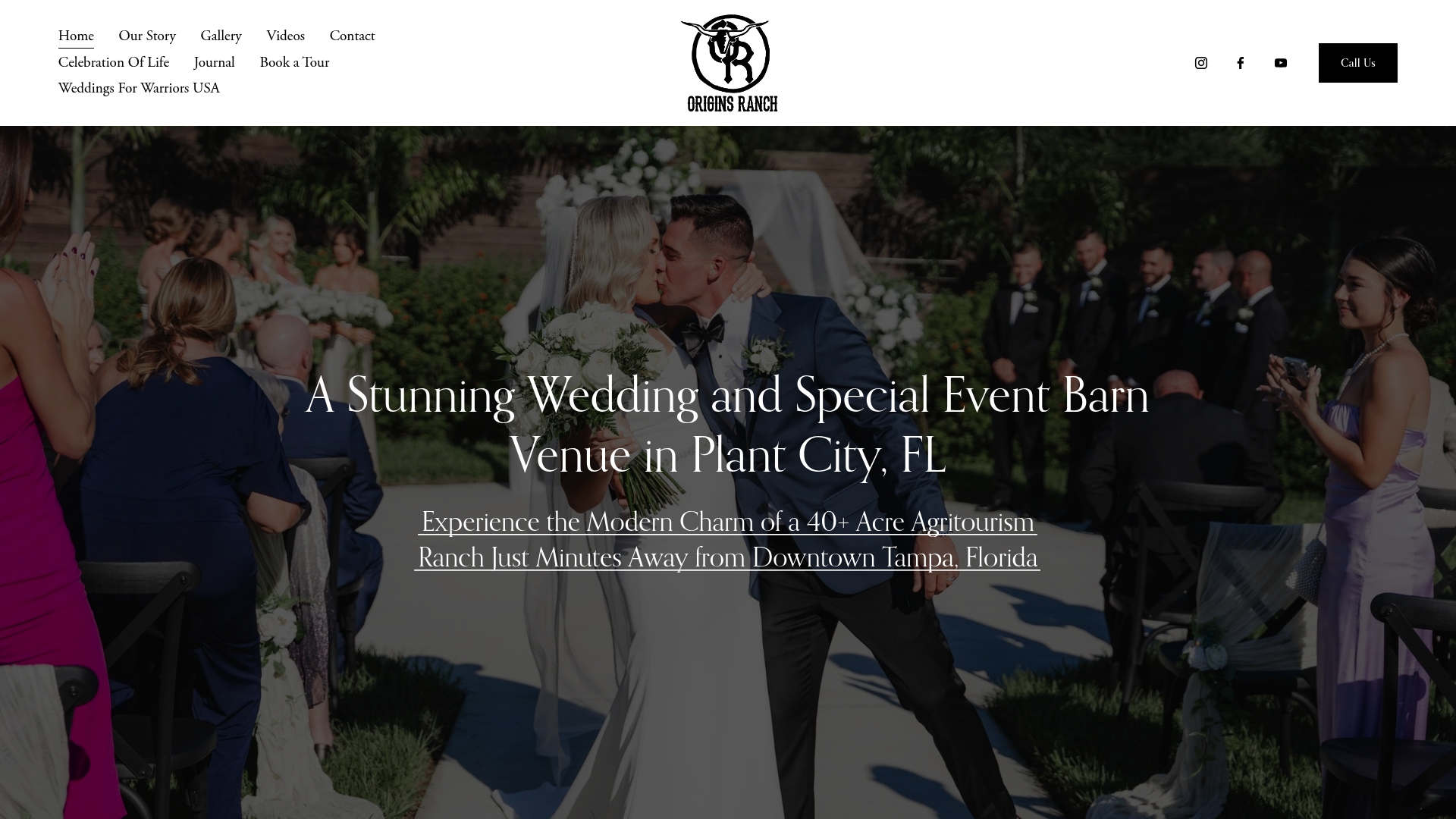
Browse our wedding photo gallery to see how couples have used our indoor and outdoor spaces together, and how the transitions between them look in real celebrations. If you're ready to walk the property and feel the flow for yourself, we'd love to book your tour and show you what a true hybrid venue experience looks like. Our founder Barry and our team bring over 20 years of event expertise to every consultation, and we're here to help you plan a day that works beautifully no matter what the weather brings.
FAQ
What is a hybrid wedding venue?
A hybrid wedding venue is a property that integrates both outdoor and indoor event spaces in close proximity, allowing couples to hold ceremonies or receptions in either environment. The defining feature is that both spaces are equally functional and aesthetically appealing, not just a primary space and a backup room.
How do hybrid venues differ from venues with an indoor backup?
A true hybrid venue treats both spaces as equally designed primary options, while a venue with an indoor backup often provides a secondary room that is less attractive or smaller. The distinction matters because some indoor backup spaces are windowless rooms that feel like a downgrade rather than a genuine alternative.
What should I ask when touring a hybrid wedding venue?
Ask about capacity consistency across both spaces, the weather call policy and timeline, whether indoor space use is included in the base rental fee, and how vendors access both areas for setup. Also walk the transition path between spaces yourself to assess guest flow.
Are hybrid wedding venues more expensive than traditional venues?
Not necessarily. Hybrid venues often bundle both spaces into one rental fee, which can be more cost-effective than renting an outdoor venue and adding a tent, which can cost up to $8,000 extra. Always confirm what is included in the base price before comparing costs.
What is the most popular format for a hybrid wedding?
The outdoor ceremony followed by an indoor reception is the most widely used hybrid wedding format. It gives couples the natural beauty of an outdoor vow exchange while moving guests into a climate-controlled space for the longer reception portion of the day.