
Military wedding traditions center on a handful of recognizable rituals: the saber or sword arch, dress uniforms for the wedding party, rank acknowledgement on invitations, and a ceremonial cake-cutting with a sword. These customs vary by branch and are optional, but most require venue permission and a real rehearsal. The single biggest logistical hurdle is the weapons rule: swords and sabers almost always have to be moved outdoors.
TL;DR:
- The saber or sword arch must be rehearsed and usually performed outdoors due to weapon restrictions inside venues.
- Dress uniforms are mandatory for the wedding party, with grooming and insignia standards strictly maintained as in official duties.
- Invitations must display full rank and name for officers and enlisted guests, with senior guests served at reserved front tables.
- Rehearsals should include a designated leader for the saber arch, precise staging, and early confirmation of venue weapons policies to prevent last-minute issues.
- Military wedding traditions like branch songs or flag displays are optional but add meaningful honor, with logistics tailored to each branch’s specific customs.
Table of Contents
- What Are the Most Common Military Wedding Traditions?
- How Do Military Wedding Customs Differ by Branch?
- Getting Invitations and Seating Etiquette Right
- Rehearsing the Saber Arch Safely and On Time
- Reception Moments That Honor Military Service
- Your Planning Timeline for Military Wedding Traditions
- Why Origins Ranch Understands Military Wedding Traditions
- Tradition Deserves Room to Breathe
- How Origins Ranch Supports Military Couples
- Sources
- FAQ
What Are the Most Common Military Wedding Traditions?
If you're marrying into the military, or marrying a service member, these are the customs you'll run into most often, along with what to plan for.
-
Arch of Sabers (or Arch of Swords). Several fellow service members raise ceremonial blades to form a tunnel the couple walks through after the ceremony. The U.S. Military Academy's guidance on military weddings treats this as the signature moment of a military wedding, and because bare blades are involved, it's almost always staged outdoors, right after the recessional.
-
Dress uniforms for the wedding party. Service members in the ceremony typically wear their dress uniform rather than rented tuxedos. Grooming standards stay active on the wedding day. That means haircuts, shaves, and insignia placement follow the same rules as any official function, even for the groomsmen who aren't the one getting married.
-
Rank and title on invitations. A guest's rank is not optional information. It signals seniority and respect, and leaving it off can read as a real slight to career officers and enlisted guests alike.
-
Seating and arrival logistics for distinguished guests. Commanding officers and senior enlisted guests often get reserved seating near the front, separate from general family seating.
-
Reception customs. A ceremonial sword slices the wedding cake, a branch song may play with service members standing at attention, and the flag frequently appears at the altar or head table. According to Brides, many of these touches are add ons rather than requirements, which gives couples real room to pick what fits their day.
How Do Military Wedding Customs Differ by Branch?
Army, Navy, Marine Corps, Air Force, and Coast Guard weddings share a common backbone, but the details shift enough that copying a friend's ceremony from a different branch can get awkward fast.
- Army weddings call the ritual the "Arch of Sabers" and typically pull saber bearers from the groom's or bride's own unit, since Army officers carry sabers as part of their formal kit.
- Navy and Marine Corps weddings use the term "Arch of Swords," and Marine Corps swords have a different hilt and blade profile than Army sabers, a detail experienced photographers will notice even if guests don't.
- Air Force weddings follow the same sword arch format but draw bearers from squadron mates, and uniform color coordination (mess dress versus service dress) matters more here than in other branches.
- Coast Guard weddings are the least standardized of the group, and couples often borrow Navy conventions since the two branches share ceremonial traditions closely.
- Uniform seasons matter across every branch. Navy dress blues in winter versus dress whites in summer need to match across the entire wedding party, not just the groom.
- Academy chapels and base chapels often carry their own eligibility rules. Brides notes that facilities like the Naval Academy Chapel restrict use to certain alumni or active-duty categories, so a military wedding does not have to happen on base at all if that access isn't available.
Cross-referencing a resource like Operation Military Kids' branch guide before you finalize wording or staging saves you from mixing conventions that don't belong together.
Getting Invitations and Seating Etiquette Right
Rank etiquette trips up more couples than any other part of military wedding etiquette, mostly because civilian guests don't realize it's a real protocol, not a nice-to-have.
- On outer envelopes, use full rank and full name: "Captain James Whitfield," never a shortened version.
- On inner envelopes, you can drop to rank and surname only: "Captain Whitfield."
- Spouses of service members get listed by their own name and title, not folded into "and guest."
- Seat commanding officers and the most senior guests at a designated table near the front, similar to how you'd handle a head table for family.
- If you're inviting uniformed guests, tell them clearly whether the event calls for full dress uniform or a more relaxed variant. Appearance standards for uniformed guests don't relax just because it's a wedding.
Pro Tip: Before the big day, sit down with the highest-ranking guest attending or the officiating chaplain and walk through seating, saber timing, and any toasts. A five-minute conversation weeks out prevents an awkward correction in front of 150 people.
Rehearsing the Saber Arch Safely and On Time
A saber arch that looks effortless in photos is the result of a genuinely rehearsed sequence, not improvisation.
- Assign one rehearsal lead. West Point's ceremonial guidance recommends designating a single saber-bearer lead who calls the commands: carry, present, arch, return.
- Line up bearers by height for a clean visual arch, then stage sabers, gloves, and any cases in a fixed spot so nothing gets fumbled mid-ceremony.
- Brief the photographer on where the couple will pause under the arch, since that's the shot everyone wants.
- Confirm the venue's weapons policy early. Bare blades are typically barred inside houses of worship, which is why the arch happens outdoors immediately after the ceremony in most cases.
- Have a backup plan if you're short on uniformed bearers or a participant can't attend. A smaller arch, or swapping the ritual for another tradition entirely, is a completely acceptable adjustment.
Reception Moments That Honor Military Service
The reception is where military wedding traditions get personal, and where a little coordination goes a long way.
- The same ceremonial sword used for the arch often reappears for the cake cutting. Assign one person to handle the blade safely and brief your photographer on the angle beforehand.
- Playing a branch song and inviting service members to stand is a genuine crowd moment. Give your DJ or bandleader a heads up so it doesn't catch guests off guard.
- Flags belong at the altar or head table, not scattered decoratively around the reception. Restraint reads more respectful than volume.
- Send-offs with flags or sparklers work well; skip alcohol near anyone still in uniform, since most branches restrict drinking in dress uniform at official functions.
Your Planning Timeline for Military Wedding Traditions
- Months out: Confirm your venue or chapel's weapons policy and request color guard or military honors if you want them. This is also when you check Military OneSource's guidance on getting married in the military for anything base-specific.
- Weeks out: Assign saber bearers, run at least one full rehearsal, and lock in invitation wording and seating charts.
- Days out: Stage sabers and gloves, confirm photographer cues, and reconfirm distinguished-guest seating and parking.
- Day of: Do a final headcount of bearers, and have a simple backup ready in case weather or a last-minute policy blocks the outdoor arch.
Why Origins Ranch Understands Military Wedding Traditions
Origins Ranch is founded by Barry, a veteran with 20-plus years in the event industry who runs Weddings For Warriors, a program built for veterans and active-duty couples. Ask any venue about saber staging space, rehearsal time, and outdoor ceremony insurance before you book.
Tradition Deserves Room to Breathe
Sabers and dress uniforms carry real weight for the families who've lived that service. Rehearse the ceremony, talk to your uniformed participants honestly, and adjust small details for comfort and safety without losing what the moment means.
— Origins
How Origins Ranch Supports Military Couples
The venue is operated by a team that understands what these rituals mean firsthand, shaping its approach to hosting military weddings. Through Weddings For Warriors, veteran and active-duty couples can access support toward the wedding they've earned, not just a rental agreement.
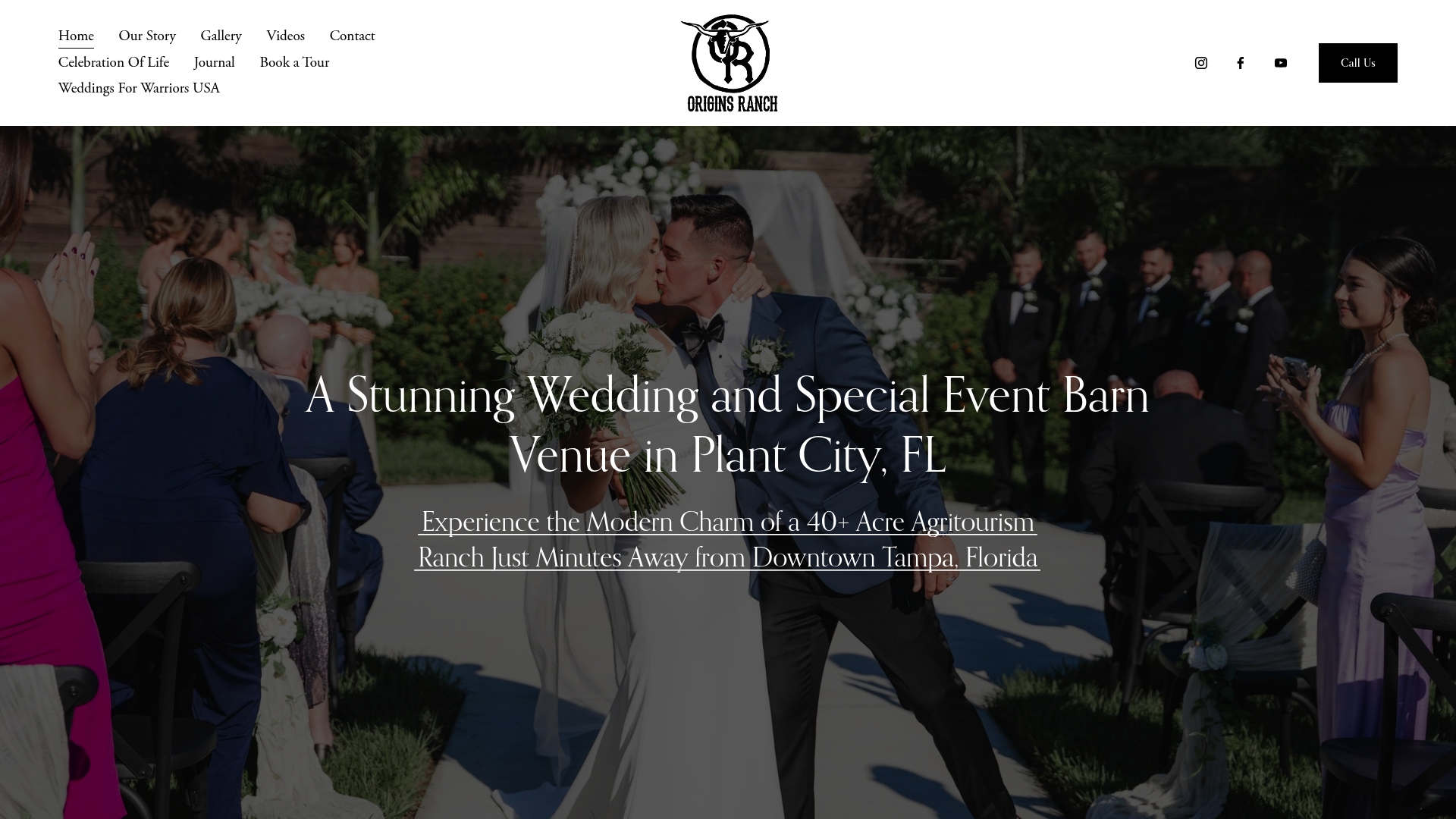
The venue offers key elements a saber arch and dress-uniform ceremony need: open outdoor space suitable for the arch, rehearsal time included in bookings, and staff coordination with saber bearers and photographers to ensure smooth staging. Our outdoor rustic wedding planning guide walks through staging logistics in more detail, and our military-friendly wedding packages spell out exactly what's included. If you're planning a reception toast, Broken Tee Vodka's guide to signature drinks is worth a look too. Ready to see the space? Check availability and book a tour at Origins Ranch.
Sources
- Military Weddings | U.S. Military Academy West Point
- Getting married in the military | Military OneSource
- These are 9 traditions you can expect to see at a military wedding | Brides
- Military wedding traditions for all branches (OperationMilitaryKids)
FAQ
What are the etiquette rules for a military wedding?
The core rules cover rank on invitations, dress uniform grooming standards, seating priority for distinguished guests, and confirming weapons policies for any saber or sword arch in advance.
What are five military wedding traditions?
The five most common are the saber or sword arch, dress uniforms for the wedding party, rank acknowledgement on invitations, a ceremonial sword used for cutting the cake, and branch songs played at the reception.
Why do people in the military get married quickly?
Deployment schedules, permanent change of station moves, and benefits timelines often push military couples toward shorter engagements than civilian couples typically have.
What are the rules for marriage in the military?
There's no special legal marriage rule tied to service itself. Couples still follow standard state marriage license requirements, though Military OneSource recommends checking base-specific guidance on housing, benefits, and family readiness support early.
Do I have to include military traditions in my wedding?
No. Traditions like the saber arch, branch songs, and flag display are optional additions couples can pick and choose from, not requirements for a valid military wedding.