
If you want fresher food, one point of contact, and fewer moving pieces on your wedding day, on-site catering at a venue built for it is the stronger choice. If you need total menu freedom, a specific cultural cuisine, or a caterer you already love, an outside vendor may serve you better. Venues that support on-site cooking and offer military-friendly service through organizations like Weddings For Warriors show what that balance looks like in practice.
TL;DR:
- On-site catering offers fresher food and simplifies coordination, with most packages including tastings, staff, setup, and cleanup for a set price.
- Venue support for kitchen access and staging is critical, especially for outdoor or rustic locations where mobile kitchens may be necessary to maintain quality.
- External caterers are better suited when specific cuisines, dietary needs, or signature dishes are a priority, often involving higher costs and menu restrictions inside venue packages.
- Pricing varies based on service style, guest count, menu complexity, and rentals, with buffet or family-style service generally being more cost-effective than plated dinners.
- Always request an itemized proposal and conduct a tasting in the actual kitchen to ensure food quality and avoid surprises on the wedding day.
Table of Contents
- What Does On-Site Catering Actually Mean?
- Why Couples Choose On-Site Catering
- When an Outside Caterer Fits Better
- What's In a Typical On-Site Catering Package
- Service Style Determines Your Staffing and Cost
- Your Vendor Call Checklist: Questions and Red Flags
- The Logistics That Make or Break the Day
- How Origins Ranch Approaches On-Site Catering
- Book Your Tasting and See the Space
- Sources
- FAQ
What Does On-Site Catering Actually Mean?
On-site catering covers a few different setups, and the terms get used loosely. In-house venue catering means the venue's own kitchen staff cooks and serves. A venue partner caterer is an outside company the venue has vetted and built into its packages. Then there's the outside caterer cooking on site, who trucks in equipment and prepares food in whatever kitchen or staging area the venue provides.
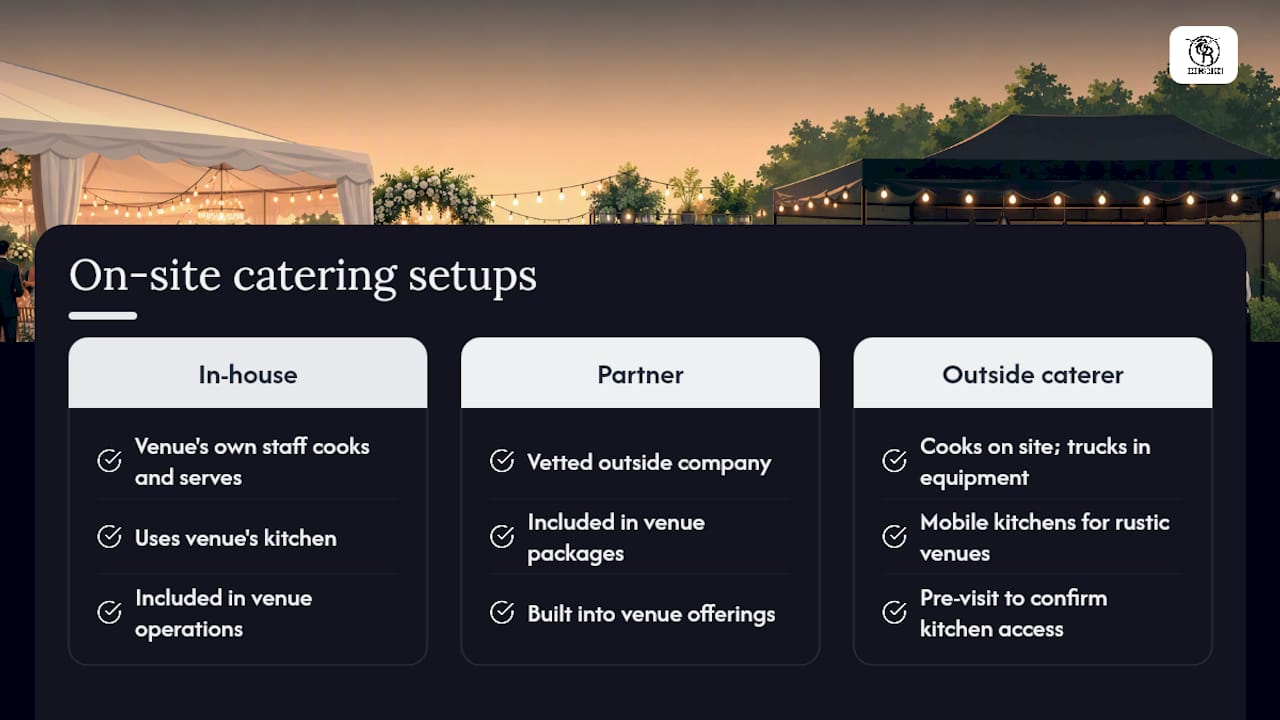
For rustic properties like barns, tented lawns, and converted estates, a full commercial kitchen rarely exists. That's where mobile kitchens come in, letting caterers deliver plated-service quality without permanent kitchen infrastructure. Full-service caterers typically visit the venue beforehand to confirm kitchen access and map out service flow.
Why Couples Choose On-Site Catering
Cooking happens minutes before service instead of hours before transport, and that gap shows up on the plate. Food arrives hot, sauces haven't separated, and nothing has spent an hour steaming inside a chafing dish in a van.
Beyond taste, on-site catering simplifies who answers your questions. The venue and kitchen team share responsibility for load-in, insurance, and kitchen access, which cuts down on the back-and-forth between two separate vendors trying to coordinate a timeline neither fully controls.
- Fresher food with less time between cooking and serving
- One contract and one point of contact instead of juggling venue and outside caterer schedules
- Tastings, staffing, and cleanup often bundled into the package
- Easier last-minute timeline shifts since the kitchen team is already on-site
Pro Tip: Ask whether your tasting happens in the same kitchen that will cook your wedding meal. A tasting prepared off-site or by a different chef won't tell you much about your actual wedding-day food.
When an Outside Caterer Fits Better
On-site catering isn't automatically the right call for every couple. Some venues lock you into a limited menu or a single approved vendor, and if you're set on a specific cuisine or a caterer with a signature dish, that exclusivity can feel like a wall.
Custom stations, imported ingredients, or a menu built around a family recipe often cost more inside a fixed venue package than they would with an independent caterer who prices dish by dish. Watch for contractual language that hints at hidden restrictions.
- Menu limits or a required approved-vendor list with no exceptions
- Premium pricing on specialty items outside the standard package
- Corkage fees, outside cake fees, or vendor clauses buried in the fine print
- Little room to bring in a specialty vendor for a specific cultural or dietary need
What's In a Typical On-Site Catering Package
Most on-site packages bundle several things into one price: a tasting session, waitstaff, basic serviceware, setup and cleanup, and either a flat site fee or a catering minimum tied to guest count. Pricing shifts based on guest count, service style, protein choices, rental upgrades, and how far the kitchen team has to travel, plus any overtime if your reception runs long.
Buffet-style service tends to run less per person than plated dinners, since fewer staff are needed to manage the room. Stations and family-style setups land somewhere in between, depending on how elaborate the menu gets. Farm-to-table packages that advertise per-person pricing starting around $70 give a useful anchor, though your final number depends heavily on protein and rental choices.
When a venue sends you a proposal, ask for it broken into line items rather than one bundled total.
- Food and beverage cost per person
- Staffing and service fees
- Rentals (linens, chairs, glassware) if not already included
- Travel or delivery fees for outside vendors
- Taxes, service charges, and gratuity, listed separately
Itemized proposals catch problems before they become arguments. Vendors who break out staffing, rentals, and travel fees up front tend to have fewer disputes on the wedding day itself, because nobody's surprised by a line they didn't expect.
Service Style Determines Your Staffing and Cost
Plated service means guests sit and are served a preselected meal course by course, which creates the most formal experience but requires the most staff. Buffet service cuts labor costs since guests serve themselves, though the line can slow your reception timeline if not managed well. Family-style lands guests at the table with shared platters, and stations let guests wander to different food setups throughout the night.
Staffing ratios shift with each style. For plated dinners, caterers commonly estimate one server per 15 to 20 guests, and that number climbs if you're running multiple courses with timed clearing. Buffets and stations generally need fewer servers but more attendants restocking food.
- Plated: highest staffing need, most formal, tightest timing
- Buffet: lower staffing cost, guest-paced, needs line management
- Family-style: moderate staffing, communal feel, faster than plated
- Stations: flexible staffing, casual flow, works well with cocktail-hour energy
Your bar staff need to sync with whichever style you choose, since drink service either pauses for course clearing or runs continuously through a station-based night.
Your Vendor Call Checklist: Questions and Red Flags
Before you sign anything, walk through a short set of questions with the venue or caterer:
- Can we schedule a tasting in the actual kitchen that will cook our meal?
- What's your staffing ratio for our guest count and chosen service style?
- How do you handle dietary restrictions and allergies, and is there a dedicated-meal process?
- Do you carry liability insurance, and what does the venue require from outside vendors?
- What triggers overtime charges, and how is that billed?
- Is exclusivity required, and if so, what's the cap on add-on fees in writing?
A caterer who can't answer the allergy question with a clear process, or who avoids giving you an itemized quote, is telling you something about how the wedding day will run. So is a venue that won't commit to a firm load-in window.
Pro Tip: If a venue requires exclusive catering, negotiate tasting access and a written cap on add-on fees before you sign. Verbal promises about "we'll work something out" rarely survive contact with the actual invoice.
As a rule of thumb, lean on-site if you want fewer vendors to manage and a kitchen team that already knows the space. Lean outside caterer if a specific cuisine, dietary need, or vendor relationship matters more to you than convenience.
The Logistics That Make or Break the Day
Kitchen access and staging space need confirming well before your wedding date, not the week of. Firm load-in windows matter because catering teams plan around 30 to 60 minute staging blocks, and a venue that can't commit to a specific window is often signaling weaker coordination overall.
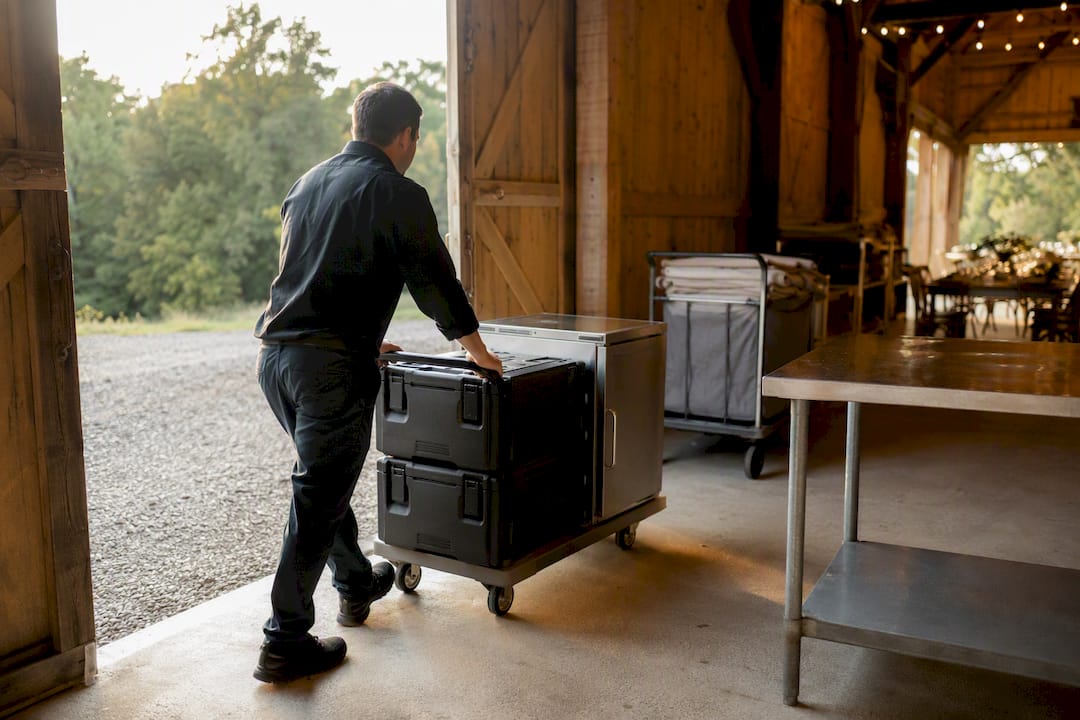
Power capacity and hot-holding equipment matter more than most couples expect, especially for outdoor or tented setups where refrigeration and warming stations need dedicated outlets. Permits, health department rules, and insurance requirements vary by venue and by caterer, so confirm who's responsible for what in writing. Unresolved logistics tend to resurface later as unexpected line items in your proposal, from generator rentals to extra labor for awkward load-in paths.
How Origins Ranch Approaches On-Site Catering
We built our venue catering options around personalized packages and proposals that spell out costs before you sign anything, not after. Coordination between our team and your catering choice happens early, so kitchen access and load-in timing are settled well before your wedding week.
Supporting military and veteran couples through Weddings For Warriors shapes a lot of how we think about service. It means clear communication, flexible planning, and no assumptions about budget or timeline. When you come for a tasting or site visit, bring your guest count and invitations, dietary needs, and a rough sense of the service style you want. It speeds up everything that follows.
— Origins
Book Your Tasting and See the Space
Reading about service styles and staffing ratios only gets you so far. At some point, you need to stand in the actual space, taste the actual food, and get a proposal with real numbers attached to it.
Some venues offer on-site catering support built around transparent proposals, avoiding vague estimates you have to chase down later. This approach can reduce the need for you to coordinate between the property and a separate catering company, limiting the messages you need to relay back and forth. You can browse real event setups in our photo gallery to see how catering, rentals, and reception layouts come together on our grounds, and if you're a military or veteran couple, Weddings For Warriors is worth a look too. If your celebration falls outside a traditional wedding, our other events page covers what else we support.
Before you reach out, jot down your estimated guest count, preferred service style, and any dietary needs your group has. It'll get you a faster, more accurate proposal. From there, booking a site visit or tasting is the fastest way to see whether Origins Ranch fits your day.
Sources
- Wedding Catering in Denver | Custom Menus & Full Service - TBD Foods
- Custom Culinary Experiences for My Wedding or Private Event - Food By DeLeo
- Wedding Catering Corona, CA | Farm-to-Table From $70/Person
- Wedding Catering Service - Bowtied Catering - Full Service
FAQ
How much does it usually cost to cater a wedding?
Cost per person varies with service style, protein choices, and rentals, but farm-to-table packages that include staffing and setup often start at a price point referenced by some vendors, with plated dinners and specialty stations running higher.
What is the 50/20/30 rule for weddings?
Exact splits vary widely based on your priorities.
What is the cheapest catering option for a wedding?
Buffet-style service typically costs less than plated dinners because it requires fewer servers per guest, and choosing budget-friendly proteins or a limited menu keeps per-person costs down further.
What is the cheapest way to feed 100 people at a wedding?
Buffet or family-style service with a simplified menu and one or two protein options tends to be the most cost-effective route for a guest count that size, since it minimizes staffing needs while still feeding everyone a hot, coordinated meal.
Do I need a tasting before booking a caterer?
Yes. A tasting confirmed in the actual kitchen that will cook your wedding meal is one of the clearest signals of how your food will actually taste on the day, and any caterer avoiding this request deserves a second look.