
Yes, you can significantly reduce allergy risks at an outdoor wedding by collecting guest allergy data early, requiring written caterer controls for flagged meals, and having a practiced day-of emergency plan. Planning cannot eliminate every risk, especially outdoors, where pollen timing and stinging insects add variables an indoor venue never faces. Start with those three priorities and build everything else around them.
TL;DR:
- Add allergy, severity, dietary, and epinephrine questions to private RSVPs; include children and plus ones, then share one tracking sheet with vendors.
- Require written controls for each flagged meal, covering ingredient lists, equipment separation, cleaning, labeling, and a named server; serve higher risk dishes plated.
- Tree and grass pollen often peaks on spring and summer evenings, while ragweed tends to peak on late summer and early fall mornings.
- Give epinephrine immediately, call 911, stay with the guest, and ensure emergency department assessment even if symptoms improve; assign responders and record access details beforehand.
Table of Contents
- Gather guest medical and dietary information early
- Coordinate with your caterer on cross-contact and labeling
- Plan around pollen timing and stinging insects outdoors
- Build a day-of emergency protocol before you need one
- Communicate clearly with guests without singling anyone out
- Put it all on a timeline you can actually follow
- What we've learned helping couples plan allergy-aware outdoor weddings
- Let our venue team take the planning load off your hands
- FAQ
- Sources
Gather guest medical and dietary information early
The sooner you know who needs what, the more time your caterer and venue have to prepare, and the less scrambling happens the week of your wedding. Medical-safety details, unlike seating charts, need real lead time: swapping a sauce or re-plating a dish is simpler when done well ahead of the wedding and can be difficult at the last minute.
Build allergy questions directly into your RSVP card or online form. Simple checkbox language works best:
- "Do you have any food allergies? Check all that apply: milk, eggs, fish, shellfish, peanuts, tree nuts, soy, wheat, sesame."
- "Please describe severity and any other dietary needs in the space below."
- "Will you be carrying your own epinephrine auto-injector? Yes / No."
Keep a simple tracking sheet once responses come in. A working spreadsheet needs just a handful of columns:
- Guest name and party
- Meal choice
- Allergens flagged
- Severity (mild, moderate, severe/anaphylaxis history)
- Carries epinephrine (yes/no)
- Emergency contact name and number
This sheet becomes the single reference your caterer, venue coordinator, and day-of allergy lead all work from, so nobody is relying on memory or a scribbled note.
Children and plus-ones need the same attention as named guests, since a last-minute plus-one with a severe peanut allergy is just as serious as one you've known about for months. Ask parents directly about any child's allergies rather than assuming a kids' meal is automatically safe.
Privacy matters here too. Collect this information through a private form or a quiet conversation, never a group text or a public comment on your wedding website. Guests disclosing a serious allergy are trusting you with something personal, and treating it that way builds the kind of goodwill that makes the rest of the planning easier.
Coordinate with your caterer on cross-contact and labeling
A verbal promise that "we'll be careful" is not a plan. FDA guidance treats allergen control as a process-control issue, meaning shared equipment, prep sequencing, sanitation, and labeling all matter, and a caterer who takes this seriously should be able to walk you through each step in writing.
Ask your caterer for a written ingredient and preparation plan for every flagged meal, and attach it to your vendor contract. This protects both sides: your caterer has a clear standard to meet, and you have documentation if something needs to change later.
A few questions worth putting in writing before you sign:
- Who is the named lead server responsible for allergy-flagged meals on the day of the event?
- What separation and cleaning steps happen between preparing a standard dish and an allergen-free version?
- Will flagged meals be plated and hand-delivered, or served buffet-style?
Pro Tip: Ask for plated service or a staff-served station for any high-risk item. A guest reaching into a shared buffet with the same tongs used for a peanut-topped salad is a cross-contact risk that plating avoids entirely.
Buffets and dessert tables need their own labeling system. Small cards naming the dish and its major allergens, placed directly in front of each item, let guests self-screen without asking a server to recite ingredients from memory. For dessert stations specifically, portioning and plating choices matter as much as the recipe; wedding dessert alternatives and food-safety guidance offer practical ideas for keeping individually wrapped treats separated and clearly marked.
At place settings, a simple colored sticker or printed tag on the plate or napkin ("GF," "no nuts," or a guest's initials matched to your tracking sheet) lets kitchen and service staff confirm the right meal reaches the right person without announcing anything to the table.
Plan around pollen timing and stinging insects outdoors
Outdoor ceremonies add exposure sources an indoor venue never has to think about: the landscape itself. ACAAI guidance notes that brightly colored, insect-pollinated flowers usually produce heavier, stickier pollen that stays close to the plant, while wind-pollinated trees, grasses, and weeds release the fine, airborne pollen that actually triggers most seasonal allergy symptoms. In other words, your bouquet is rarely the problem. The lawn and tree line around your ceremony site are.

Pollen levels shift by season and by time of day. ACAAI timing guidance notes that during spring and summer tree and grass seasons, pollen is often highest in the evening, while in late summer and early fall, ragweed tends to peak in the morning. That one detail can shape whether your ceremony works better at 4 p.m. or 10 a.m.
Ask your venue a few direct questions before you lock in a ceremony time:
- What's planted or growing near the ceremony site, and is any of it known to trigger allergies?
- When is the lawn mowed relative to your event date?
- Is there a hardscape area or covered space as a backup if pollen counts run high?
Layout choices help too. Favor hardscape patios or covered areas over open lawn when possible, keep floral arrangements lower and less exposed to breeze, and cover drink stations rather than leaving sweet beverages open to the air.
Stinging insects deserve their own line item. Keep open sugary trays and trash or compost bins well away from seating, since both draw wasps and bees. A small insect first-aid kit (sting relief, antihistamine, and a spare epinephrine auto-injector if a guest has consented to one being on hand) costs little and solves a real problem fast.
For couples still deciding between a fully outdoor ceremony and a hybrid setup, why outdoor weddings are popular walks through the trade-offs worth weighing before you commit to a layout.
Build a day-of emergency protocol before you need one
Anaphylaxis moves fast, and the right response in the first few minutes matters more than any other part of this plan. FARE's emergency care guidance is direct: administer epinephrine intramuscularly immediately, call 911, stay with the person, and send them to the emergency department even if symptoms appear to improve. Improvement after epinephrine is not the same as resolution, so the person still needs emergency medical care.
Decide in advance who carries epinephrine and who is trained to use it. This should be a named person or two, not "whoever's closest," and their names belong on your written run sheet alongside everyone else's day-of responsibilities.
Record the practical details your venue coordinator and wedding party will need in the moment:
| Item | What to record |
|---|---|
| Venue address | Full address for 911 dispatch |
| Ambulance access point | Entry point closest to ceremony/reception site |
| Nearest ER | Name, address, and phone number |
| Epinephrine location(s) | Who is carrying it, and backup location |
| Allergy lead | Named person coordinating response |
Guests with a documented history of severe reactions should talk with their own allergist before the wedding, confirm their prescribed medication is current, and let your planning team know they'll have it with them. This isn't a step you can take for them, but it's worth including in your pre-event communication so nobody shows up without their own auto-injector.
Communicate clearly with guests without singling anyone out
A short pre-event email does most of the work here. Something like: "To help us plan safely, please let us know by [date] about any food allergies, and if you carry your own epinephrine, please bring it with you," tells guests exactly what you need and why, without making anyone feel like they're asking for a favor.
Day-of, discretion matters as much as accuracy. A few low-key ways to flag a special meal or need:
- A small symbol or colored dot on a meal ticket or place card, tied to your tracking sheet
- A quiet word from the couple or a parent to the catering lead rather than a public announcement
- A wristband color code for guests who prefer that system, explained privately beforehand
Before service starts, brief every server on three things: who the named allergy lead is, where the written ingredient lists are kept, and where epinephrine is stored on-site. A staff briefing helps prevent a server from guessing under pressure.
Signage should stay simple: short allergen notices at buffet stations ("Contains tree nuts") with a note on where to find the full ingredient list or who to ask. Guests who need more detail can find it fast, and guests who don't need it aren't slowed down by a wall of text.
Put it all on a timeline you can actually follow
A plan only works if it's attached to dates. Here's a sequence that holds up for most outdoor weddings:
- Set your RSVP deadline early enough to collect allergy and dietary information before the wedding.
- Lock allergen details with your caterer and venue once you have a near-final guest list.
- Confirm final headcounts and flagged meals with every vendor shortly before the event.
- Hold a quick vendor huddle before service to walk through flagged meals and the emergency plan one more time.
Your day-of run sheet should list the named allergy lead, epinephrine storage locations, which meals are labeled and for whom, the server briefing time, and ambulance access notes for your site.
A small host kit rounds things out:
- Epinephrine auto-injector(s), if arrangements have been made for one on hand
- Antihistamines
- Insect-sting relief supplies
- A printed list of emergency contact numbers and the nearest ER
None of this takes long to assemble, but it's the difference between a plan that lives in your head and one your whole team can follow without you.
What we've learned helping couples plan allergy-aware outdoor weddings
Couples who feel calm on their wedding day often sort out layout, indoor backup, and staff briefings well ahead of time. Our team works alongside couples and their caterers to discuss those logistics. We're glad to help with the planning side of things, but any medical decision, including epinephrine use or a guest's prescribed treatment, belongs with healthcare providers.
— Origins
Let our venue team take the planning load off your hands
Coordinating pollen timing, caterer logistics, and a day-of emergency plan is a lot to manage on top of everything else a wedding requires. That's exactly where having a venue partner to discuss layout and backup planning can help make the week more manageable.
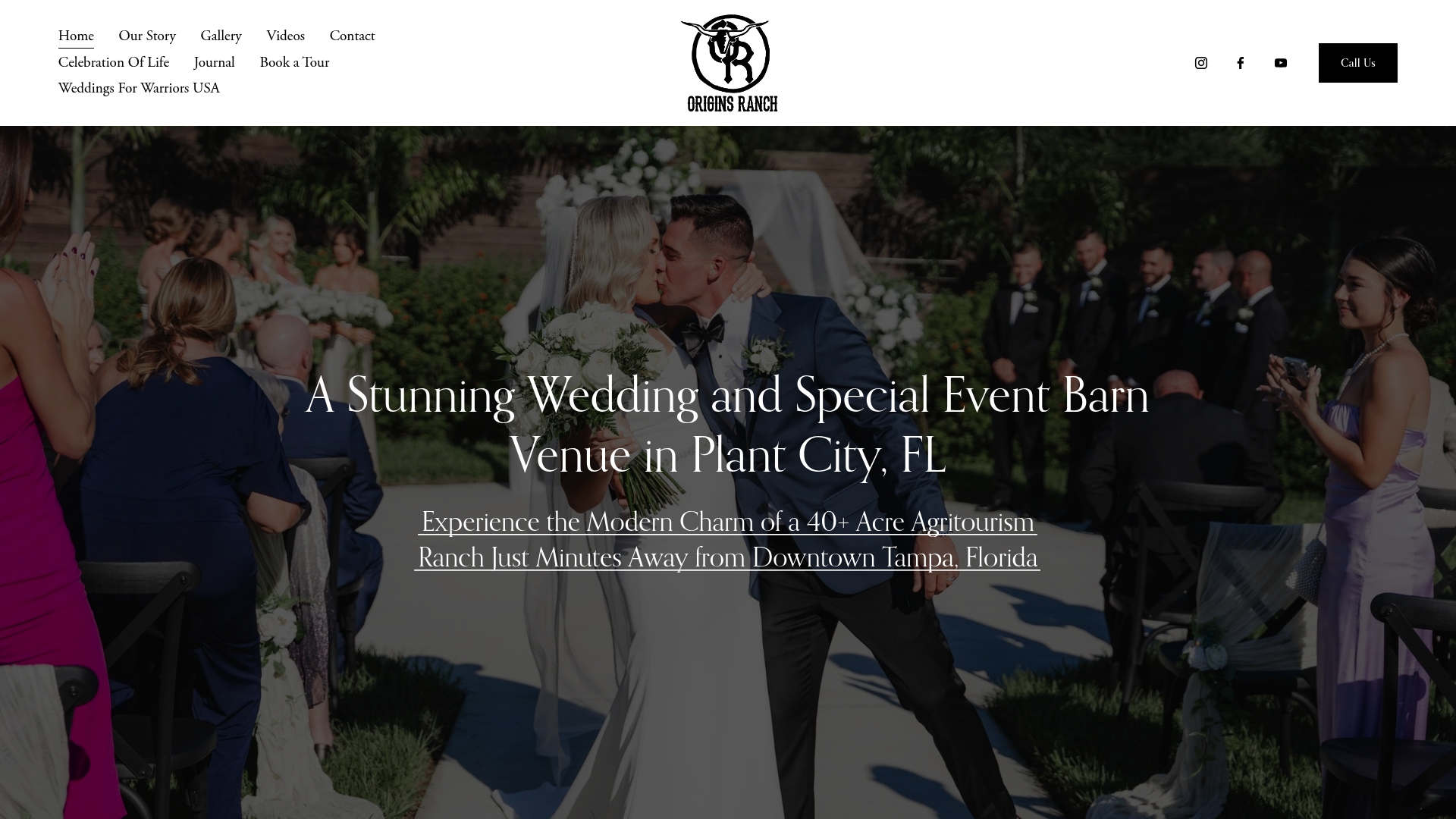
At Origins Ranch, our barn gives you an indoor backup if pollen counts or weather turn on ceremony day, so you have an alternative to your outdoor vision.
- Air-conditioned barn space as a ready alternative to an open-lawn ceremony
- A team that can discuss your event plans with you
- Personalized attention to your event planning
Reach out to our team for availability and a walk-through, and let's talk through how your layout and backup plan can come together.
This article is general information, not a substitute for advice from a qualified doctor. Consult a qualified healthcare professional about your own circumstances before acting on anything here.
FAQ
Can pollen enter your house after an outdoor event?
Yes, pollen clings easily to hair, clothing, and fabric, and it can travel indoors on guests returning from an outdoor ceremony or reception. Changing clothes and showering soon after an outdoor event reduces how much pollen gets tracked into cars and homes.
Can you provide an example of a food allergy disclaimer for a wedding?
A simple, honest version works best: "We've done our best to label common allergens, but our kitchen isn't allergen-free. If you have a severe allergy, please bring your own epinephrine and speak with our catering lead." This follows FARE's guidance to give guests enough information to make their own informed decisions rather than promising a risk-free event.
How do you keep guests warm at an outdoor wedding?
Patio heaters, fire pits, and lightweight blankets or wraps set out near seating are the most common solutions for cooler evenings. Choosing a covered or hardscape area for part of the event also helps block wind without sacrificing the outdoor feel.
What is an allergen control plan?
An allergen control plan is a written set of steps a caterer or kitchen follows to prevent cross-contact between allergen-containing and allergen-free foods. FDA guidance frames this around shared equipment, prep sequencing, sanitation, and labeling, all of which a caterer should be able to explain clearly before your event.
Sources
For readers who want to verify the guidance above directly, the sources below cover pollen timing, emergency anaphylaxis response, and allergen labeling rules from the organizations that publish them.
- Epinephrine Dose:□ 0.1 mg IM (intramuscular) □ □ 0.3 mg IM □ □ Patient may self-carry □
- CPG Sec 555.250 Statement of Policy for Labeling and Preventing Cross-contact of Common Food Allergens | FDA