
TL;DR:
- A wedding vendor selection workflow is a systematic process to identify, evaluate, and hire vendors. It helps reduce decision fatigue, avoid last-minute costs, and ensure a wedding day that matches the couple's vision.
A wedding vendor selection workflow is a systematic process for identifying, evaluating, and hiring the right professionals to bring your wedding vision to life. Without a clear process, couples often face decision fatigue, missed booking windows, and costly last-minute choices. A structured approach gives you a wedding planning checklist you can actually follow, with scoring criteria, shortlists, and trust signals built in from the start. The result is less stress, better vendors, and a day that reflects exactly what you imagined. A standard wedding involves over 370 tasks, and vendor selection is where the most consequential decisions live.
What is a wedding vendor selection workflow?
A wedding vendor selection workflow is the industry term for what planners call a "vendor procurement process." It covers every step from identifying what you need to signing the final contract. The workflow has four core phases: discovery, shortlisting, evaluation, and booking. Each phase builds on the last, and skipping one creates gaps that show up on your wedding day.
The workflow matters because vendor decisions are not reversible on short notice. Photographers, DJs, and officiants can only serve one wedding at a time. Single-client vendors like these should be booked 10–12 months in advance. Missing that window often means settling for your third or fourth choice.
What vendors do you need and when should you book them?
The vendor selection process starts with knowing which categories apply to your wedding. Not every couple needs every vendor. A backyard ceremony has different needs than a 200-person barn reception.
The most common vendor categories fall into two groups: single-client vendors and multi-client vendors. Single-client vendors serve one event per day and fill up fast. Multi-client vendors can scale across events and have more flexibility.
| Vendor Category | Type | Booking Lead Time |
|---|---|---|
| Photographer | Single-client | 10–12 months |
| Videographer | Single-client | 10–12 months |
| DJ or band | Single-client | 10–12 months |
| Officiant | Single-client | 10–12 months |
| Caterer | Multi-client | 6–8 months |
| Florist | Multi-client | 6–8 months |
| Hair and makeup | Single-client | 8–10 months |
| Rental company | Multi-client | 4–6 months |
| Photo booth | Multi-client | 3–6 months |
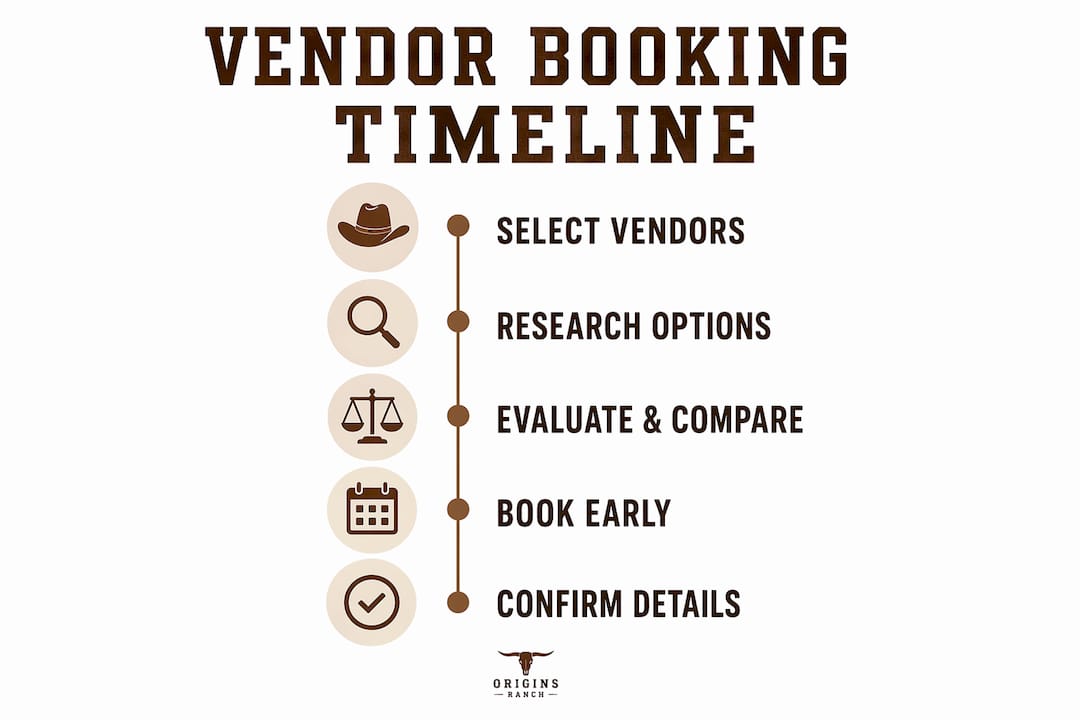
Prioritize vendors based on your venue's requirements first. A barn wedding venue, for example, may have specific rules about outside caterers or sound systems. Knowing those constraints early shapes your entire vendor list. Your venue coordinator is often the best first call you can make.
Pro Tip: Book your photographer and DJ before any other vendor. These two categories fill the fastest and have the biggest impact on how your guests experience the day.
How do you research and build a vendor shortlist?
The best starting point for vendor research is your venue's preferred vendor list. Venue referrals are more reliable than general directory searches because those vendors already know the space, the acoustics, the load-in logistics, and the staff. That familiarity reduces friction on your wedding day.

After your venue list, expand your search using platforms like Zola, Instagram, and Google reviews. Instagram is particularly useful for photographers and florists because you can see their actual style, not just curated portfolio shots. Google reviews reveal how vendors handle problems, which matters more than how they handle perfect days.
Limit your shortlist to 3–5 vendors per category. Decision fatigue is real, and comparing more than five options in any category leads to worse decisions, not better ones. A shorter list forces you to be intentional about your criteria before you start reaching out.
Once you have your shortlist, send each vendor the same standardized inquiry. Include your date, guest count, venue, and a specific question about their availability and pricing range. This approach gives you comparable responses and saves hours of back-and-forth. Wedding planning tools like vendor listing platforms can help you organize these inquiries in one place.
- Confirm your wedding date and venue requirements before reaching out.
- Pull 3–5 names per category from your venue's preferred list and Instagram searches.
- Send a standardized inquiry to each vendor with the same core questions.
- Note response time. Vendors who reply within 24 hours show you how they will communicate throughout planning.
- Schedule consultations only with vendors who meet your budget range and style criteria.
Pro Tip: Save every vendor's Instagram handle, website, and email in a shared spreadsheet with your partner. Losing track of a vendor you loved costs time and sometimes the booking window.
How do you evaluate and compare wedding vendors effectively?
Objective comparison is the part most couples skip. They fall in love with a vendor's Instagram feed and book without comparing proposals. A vendor comparison framework that rates each candidate on price, style fit, communication, reviews, and availability gives you a defensible decision you will not second-guess later.
A weighted scoring system takes roughly 15 minutes per vendor. Rate each factor on a scale of 1–5, then multiply by a weight that reflects your priorities. If style fit matters most to you, give it a higher weight than price. The vendor with the highest total score is usually the right call.
| Evaluation Factor | Weight | Vendor A Score | Vendor B Score |
|---|---|---|---|
| Price vs. budget | 25% | 4 | 3 |
| Style fit | 30% | 5 | 4 |
| Communication speed | 20% | 5 | 3 |
| Reviews and references | 15% | 4 | 4 |
| Experience at your venue | 10% | 3 | 5 |
During consultations, ask vendors to walk you through their process from start to finish. Effective vendors listen closely, explain their workflow clearly, and ask questions about your vision. A vendor who talks only about their packages without asking about your day is a warning sign.
Watch for red flags. Common warning signs include vendors who take days to respond, avoid putting agreements in writing, give vague pricing, pressure quick decisions, lack liability insurance, or cannot show full event galleries. Any one of these signals a vendor who may not deliver under pressure.
Full-service vendors reduce your coordination burden significantly. For catering, audiovisual, and decor, a vendor who handles setup, service, and breakdown is worth the premium. You can also find helpful guidance on event decor vendor selection to understand what full-service decor providers actually include in their proposals.
What should you review before signing a vendor contract?
A signed contract is your only protection when something goes wrong. Every vendor agreement should include these elements before you put pen to paper.
- Scope of services: What is included and what is explicitly excluded. Vague scopes lead to surprise charges.
- Cancellation and rescheduling policy: Who owes what if the date changes or the vendor cancels.
- Payment schedule: Deposit amount, due dates for remaining payments, and accepted payment methods.
- Backup plan: What happens if the vendor has an emergency on your wedding day. Who covers for them?
- On-site personnel: The name of the specific person who will be at your wedding, not just the company name.
- Liability insurance: Confirmation that the vendor carries coverage for your venue's requirements.
Contract essentials like cancellation policies and backup plans are non-negotiable. A vendor who resists including these terms is not a vendor you want on your wedding day.
After signing, create a master vendor document. List every vendor's name, contact, contract location, payment due dates, and arrival time. Professional planners track these details post-hiring to keep day-of coordination smooth. This document becomes your command center in the final weeks before the wedding. For more on how to manage this coordination, the guide on coordinating wedding vendors covers the day-of logistics in detail.
Trust your gut alongside the data. If a vendor scores well on paper but leaves you feeling unheard in the consultation, that feeling is information. The best vendor relationships feel like a collaboration, not a transaction.
Key Takeaways
A structured wedding vendor selection workflow, built on clear booking timelines, shortlists of 3–5 candidates, weighted scoring, and thorough contract review, is the most reliable way to build a wedding team you trust.
| Point | Details |
|---|---|
| Start with single-client vendors | Book photographers, DJs, and officiants 10–12 months out before they fill up. |
| Limit your shortlist | Keep 3–5 candidates per category to avoid decision fatigue and stay focused. |
| Use a scoring system | Rate vendors on price, style, communication, and reviews to compare objectively. |
| Watch for red flags | Vague pricing, slow responses, and missing portfolios signal unreliable vendors. |
| Lock down contracts | Every agreement needs a scope, cancellation policy, backup plan, and named on-site personnel. |
What 20 years in events taught us about vendor trust
After more than two decades in the event service industry, one truth stands out above all the checklists and scoring systems: the vendors who show up for you on the hard days are the ones who communicated clearly from the very first email.
We have seen couples book vendors with stunning portfolios who went silent three weeks before the wedding. We have also seen modest-budget vendors deliver extraordinary results because they asked the right questions in the consultation and followed through on every detail. The portfolio gets you in the door. Communication keeps you there.
The other thing experience teaches you is that referrals compound. When you work with vendors who know your venue, who have loaded in through the same barn doors and tested the same sound system, the whole day runs differently. There is a shorthand that only comes from shared experience. That is why we always encourage couples to start their vendor search with their venue's trusted network before turning to open directories.
Objective scoring matters. Use it. But do not ignore the moment in a consultation when a vendor makes you feel genuinely heard. That feeling is a data point too.
— Origins
Planning your wedding at Originsranch
Originsranch is a barn wedding venue in Plant City, FL, built on the grounds of a former World Champion Horse Ranch. We bring together rustic charm and modern elegance, and we back every event with personalized attention from our team.
When you book with Originsranch, you get more than a beautiful space. Our founder Barry brings over 20 years of event industry experience, and our team connects couples with trusted vendors who already know our venue inside and out. That means fewer surprises and more of the magic you planned for. Visit our wedding day services page to see how we support your full vendor team from start to finish, or browse our making memories gallery to see what a well-coordinated wedding day looks like here.
FAQ
When should you start the vendor selection process?
Start your vendor selection process 12–18 months before your wedding date for a full-size event. Single-client vendors like photographers and DJs book up fastest and should be secured first.
How many vendors should you shortlist per category?
Shortlist 3–5 vendors per category, then narrow to 2–4 finalists using a weighted scoring method. Keeping the list short prevents decision fatigue and leads to more confident choices.
What are the biggest red flags when choosing wedding vendors?
Red flags include slow response times, vague or missing pricing, no liability insurance, pressure to book without a contract, and an inability to show full event galleries. Any of these signals a vendor who may not perform reliably under pressure.
What must every wedding vendor contract include?
Every contract should include the scope of services, cancellation policy, payment schedule, backup plan, the name of the on-site personnel, and proof of liability insurance. Missing any of these terms creates risk on your wedding day.
Is a venue's preferred vendor list worth using?
A venue's preferred vendor list is one of the most reliable starting points in the vendor selection process. Those vendors already know the space, the logistics, and the staff, which reduces coordination problems on the day of your event.