
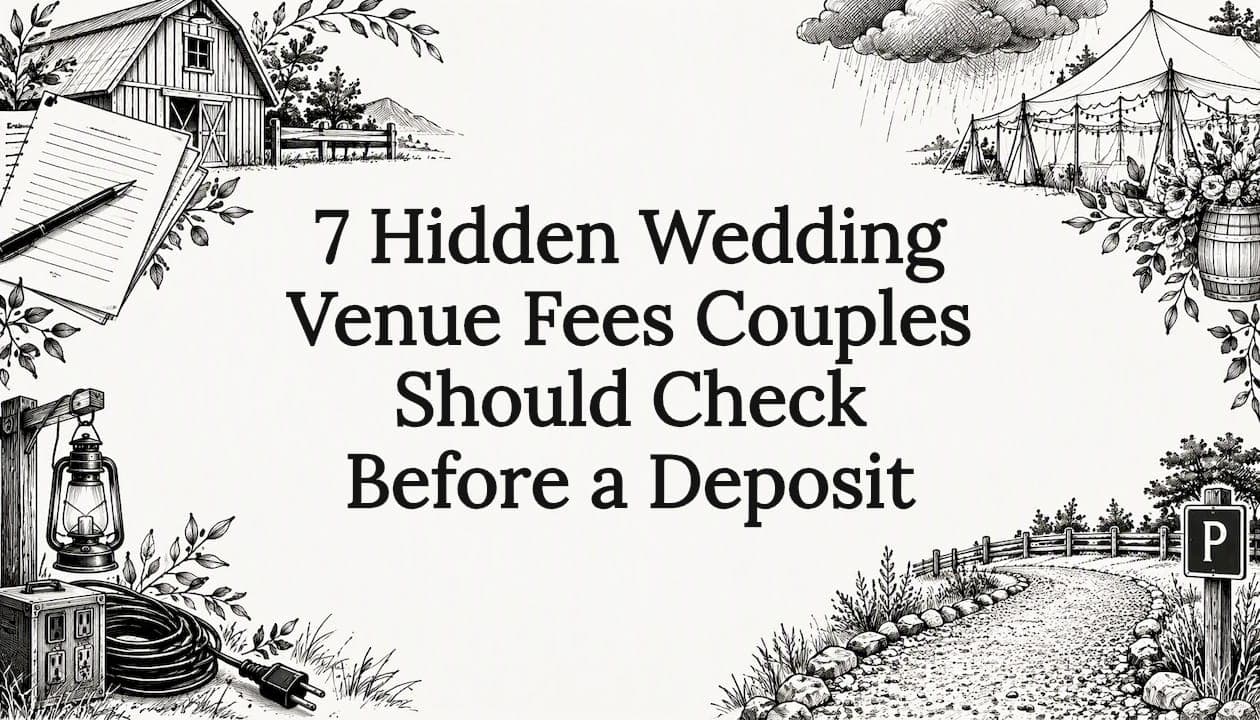
Common venue hidden fees include setup and cleanup, overtime, catering service charges and gratuities, rentals, outside-vendor fees, parking and transportation, insurance and permits, and security. A useful way to protect yourself is to ask for an all-in, itemized total in writing before you pay a deposit. Federal fee-disclosure rules back you up.
TL;DR:
- Request an itemized total for your date and guest count before paying a deposit, including taxes, gratuities, overtime, rentals, transportation, insurance, and required staffing.
- Replace vague contract clauses with named fees and dollar caps, attach referenced policies, and put refund rules in writing before signing.
- The FTC fee rule took effect May 12, 2025, but covers live event tickets and short term lodging, not necessarily private wedding rentals.
- Ask for caps on overtime or cleanup and compare weekdays or dates in less popular months, which may lower rates, minimums, and extra charges.
Table of Contents
- What does each common venue fee actually cover?
- How do you read a venue contract and spot fees hidden in the language?
- What should you ask on a tour or in an email?
- What does the FTC's fee rule mean for venues and couples?
- How can you negotiate fees, and when should you accept them?
- What unexpected fees show up at barn and outdoor venues?
- How do peak season and holiday dates change what you pay?
- A note from Origins on showing every fee up front
- Ready for a quote with no surprises?
- FAQ
- Sources
What does each common venue fee actually cover?
Most surprises come from fees that sound small on a tour and add up on the final invoice. Here is what each one usually means and when you tend to meet it.
- Setup, teardown, cleanup, and overtime: Some venues fold these into the rental price. Others bill hourly or as a flat fee. Overtime is the sneaky one. A late florist, a slow photo session, or a multi-day event can push you past your contracted window, and the hourly rate often runs higher than the base rate.
- Catering and bar extras: Look for service charges, mandatory gratuities, cake-cutting fees, corkage for outside wine or champagne, food and beverage minimums, and extra staffing fees for bars or late-night service. A service charge and a gratuity are not always the same thing, so ask where the money goes.
- Rentals: Find out who supplies tables, chairs, linens, and place settings. Some venues include them. Others charge per item or per guest, and a large guest count can turn small per-person fees into a substantial line.
- Outside-vendor or preferred-vendor fees: Venues that limit you to a vendor list may charge a fee if you bring your own caterer, DJ, or bartender. They usually cite insurance, coordination, or kitchen access.
- Security, valet, parking, and shuttles: These may be flat fees or per-guest charges. A venue with limited lots may require a valet or an off-site shuttle, and that gets billed to you.
- Insurance, permits, and taxes: Many venues require event liability insurance, and some outdoor or amplified events need permits. Taxes and fees often appear as "plus tax" at the bottom of a quote.
- Small miscellaneous fees: Trash removal, restroom attendants, and power or generator surcharges rarely show up in a brochure, yet each one can add to the total.
If you want to see how a site fee fits into this picture, our guide on what a wedding site fee covers is a good companion read. Catering can be a significant variable, so our post on avoiding hidden fees in on-site wedding catering lists questions worth asking, and our breakdown of wedding catering minimums shows how a minimum can quietly inflate a budget. For transportation, van rental pricing shows how mileage and surcharges can change what a shuttle really costs.
How do you read a venue contract and spot fees hidden in the language?
The contract is where unclear pricing becomes a legal obligation. Meeting planners and legal experts describe hidden venue charges as often the result of "drip pricing," where costs trickle in after you are committed. They recommend requiring an itemized invoice and clear contract language to guard against surprise charges.
Before you sign, take these steps:
- Circle "additional charges as may be incurred." This phrase leaves the door open to any cost the venue decides to add later. Ask to replace it with a named list of fees and a dollar cap.
- Question "plus taxes and fees." If the rate is not stated, you cannot budget for it. Ask for the exact percentage and what it applies to.
- Watch for terms "incorporated by reference." The contract may point to a separate policy sheet or website that you have never seen. Ask for a copy and attach it to the agreement.
- Ask for an itemized list of mandatory fees, with the final amount displayed clearly, before you pay a deposit.
- Add fee caps and refund rules in writing. State what happens to your deposit if a fee changes or the date moves.
Pro Tip: Ask the venue to email a single "final total" line that includes every mandatory fee for your date and guest count, then save that email with your contract.
For help translating the jargon, our explainer on wedding venue terminology defines the line items you are most likely to see.
What should you ask on a tour or in an email?
You do not need to be confrontational. Clear questions get clear answers, and a good venue expects them. Confirm each of these:
- Is the site fee all-in, and what is on the list of mandatory fees?
- What are the overtime rule and hourly rate?
- Are there outside-vendor fees?
- Are gratuities or service charges added to catering and bar?
- Is there a payment-processing fee?
- Are parking, valet, or shuttle charges required?
- What insurance is required, and who pays for it?
On a tour, say: "Can you walk me through every mandatory charge for a Saturday with my guest count, so I can see the final total?"
In a follow-up email, write: "Thank you for the tour. Could you send an itemized quote that includes all mandatory fees, taxes, and gratuities, plus the refund policy, before we discuss a deposit?"
Watch for vague answers like "it depends" or "we figure that out later." Follow up politely: "Could you put that in writing so I can budget accurately?" It also helps to tour more than one venue so you can compare quotes side by side.
What does the FTC's fee rule mean for venues and couples?
The Federal Trade Commission's rule sets a legal baseline for honest pricing. As the FTC explains in its fee rule FAQ, the rule took effect May 12, 2025 and covers businesses that advertise prices for live-event tickets and short-term lodging.
Businesses covered by the rule must disclose the total price up front, including mandatory fees they can calculate. They may leave out only government charges, shipping charges, and optional extras, and any excluded charge must be disclosed before payment.
The rule is written for ticketed events and lodging, so a private wedding rental may fall outside its scope. Still, it shows the standard that regulators expect, and several states have passed their own, often broader, fee disclosure laws. If a venue advertises a price but will not share the calculable mandatory fees before you pay, you have a stronger footing to insist on a full, itemized total.
How can you negotiate fees, and when should you accept them?
Many fees are flexible when you ask early and ask kindly. Try these approaches:
- Roll mandatory items into one all-in site fee, so nothing trickles in later.
- Request a cap on any fee that depends on usage, such as overtime or cleanup.
- Offer flexible dates, since off-peak days give venues more room to adjust.
- Trade small waivers for a signed deposit. A waived parking fee is a reasonable ask when you are ready to commit.
- Bundle services. Using the venue's catering can lower your total if it removes outside-vendor or corkage charges.
Some fees are fair. Staffing for a large guest count or a permit required by a third party can be legitimate, so ask for an explanation and a receipt.
Pro Tip: Any waiver or cap you win in conversation only counts once it is written into the contract.
What unexpected fees show up at barn and outdoor venues?
Barns and open-air properties bring costs that a ballroom never would. These are worth asking about by name, because they rarely appear on a first quote.
Weather contingency charges. If rain threatens your outdoor ceremony, some venues bill for a tent, a backup indoor setup, or staff to flip the space. Ask whether a rain plan is included and what the flip costs.
Pest control. Open fields and barns in warm climates may need fly, mosquito, or ant treatments before your event. Some venues pass this cost along.
Climate comfort. Heaters, fans, or portable air conditioning can be billed separately when the building is not fully climate controlled. At Origins Ranch, our large barn is air conditioned, but you should still ask every venue how comfort is handled and priced.
Power and lighting. Generators, extension runs, and string-light installation can add power surcharges when the property lacks enough outlets.
Grounds and animal care. Mowing, grading, trash hauling, and restroom trailers may be extra on rural land. Ranches with farm animals may also have rules about where guests and photographers can go.
Access and parking. Gravel or grass lots can require staff to direct cars, and wet ground may call for a shuttle from a hard-surface lot. Event parking options such as flat-rate tickets help explain how venues price this service.
A simple rule works here: ask the venue to walk the property with you and name every service the land needs on your date.

How do peak season and holiday dates change what you pay?
Date choice affects your total in more ways than the base rental. Saturdays in spring and fall, holiday weekends, and dates near major local events are in highest demand, so venues often charge more for them. Some add a holiday surcharge on top of the higher rate, and others raise minimums for food and beverage on those days.
The knock-on effects are easy to miss. Peak dates can mean mandatory longer rental windows, higher vendor rates, extra staffing charges, and stricter overtime rules because the next event may be right behind yours. A Friday, a Sunday, or a weekday in an off month can lower both the rental rate and the odds of surprise fees, and venues are often more open to waiving small charges when the calendar is empty.
Ask these questions about timing:
- Does the quoted price change by day of the week or month?
- Is there a holiday or peak-weekend surcharge?
- Do food and beverage minimums rise for popular dates?
- When are fees billed: at booking, at final payment, or after the event?
Getting the answers in writing means your date choice becomes a budgeting tool rather than a gamble.
A note from Origins on showing every fee up front
We believe a quote should never feel like a puzzle. At Origins Ranch, we listen to what each couple needs, and the additional guest fee is $25 per person. If you want to see how that looks, ask us for an itemized quote or schedule a tour, and we will walk you through every line.
— Origins
Ready for a quote with no surprises?
Origins Ranch is a barn wedding venue in Plant City, FL, and we would love to show you around. Our team prepares personalized quotes, and through our Weddings For Warriors charity we support veterans and active duty service members planning their dream weddings.

- Request a transparent, itemized quote
- Book a tour and ask us anything on this list
- See our ceremony gallery to picture your day
Start at our venue page and tell us your date and guest count.
FAQ
What does "no hidden fees" mean for a wedding venue?
It means every mandatory charge appears in the quote you receive before you pay. Treat the phrase as a claim to verify, not a promise, and ask for an itemized total in writing that lists taxes, service charges, and gratuities.
What is the difference between a service charge and a gratuity for catering?
A service charge is a fee the caterer or venue sets, and it may go toward operating costs rather than directly to staff. A gratuity is meant as a tip for servers, but it can also be added automatically. Ask where each one goes and whether both apply.
How do I avoid venue hidden fees before signing?
Ask for an all-in, itemized total, strike vague clauses like "additional charges as may be incurred," and add fee caps and refund rules to the contract. Keep the final-total email with your paperwork.
Is a venue's advertised price the final price?
Not always. Advertised rates often leave out taxes, service charges, overtime, or add-ons, so confirm the final total for your date and guest count before paying a deposit.
Sources
- The Rule on Unfair or Deceptive Fees: Frequently Asked Questions | Federal Trade Commission
- Watch for Hidden Fees on Your Meeting's Master Bill | Meetings & Conventions