
The single biggest wedding seating chart mistake is starting too late and displaying it in a format guests can't use quickly. Fix that by finalizing an alphabetical A-Z guest lookup once RSVPs close and assigning one live editor, whether that's your planner or your venue coordinator, to manage last-minute changes. We've watched a five-minute lookup delay turn into a thirty-minute bottleneck at the entrance more than once.
TL;DR:
- Starting the seating chart early and creating an alphabetical lookup helps prevent entrance bottlenecks and allows last-minute adjustments without chaos.
- Group guests by shared interests and relationships rather than using a singles or leftover table to avoid feeling like an afterthought.
- Consider family tensions, accessibility needs, and cultural customs upfront to ensure guests feel comfortable and respected during seating arrangements.
- Use a single, live digital platform managed by one person to minimize errors and facilitate quick updates on the wedding day.
- Communicate seat assignments in advance through printed cards, a wedding website, or direct notices to prevent confusion and address specific needs early.
Table of Contents
- The 9 Wedding Seating Chart Mistakes That Wreck Receptions
- Alphabetical or By-Table? Getting Your Display Format Right
- What We've Learned Running Seating Charts at Origins Ranch
- Guests Need to Know Where They're Sitting Before They Arrive
- Your Seating Chart Only Works If Your Planner and Venue Staff Have It
- Building a Contingency Plan for No-Shows and Last-Minute Changes
- Cultural and Religious Customs Change How You Seat Guests
- Isolating Guests Instead of Encouraging Them to Mingle
- Why the Seating Chart Deserves More Attention Than It Gets
- Templates and Etiquette Guides Worth Bookmarking
- Sources
- FAQ
The 9 Wedding Seating Chart Mistakes That Wreck Receptions
Most seating chart disasters trace back to the same handful of decisions, made too fast, too late, or without the right information. Here's what actually goes wrong and how to fix each one before it becomes a problem on your wedding day.
1. Waiting for final RSVPs to start charting. Couples routinely delay their seating chart until every RSVP lands, then panic when they have four days to place 150 guests. Start a draft chart the moment your invitations go out, using best-guess placements for the "maybe" guests. Lock in a firm deadline, ideally three weeks before the wedding, where the chart moves from draft to near-final regardless of a few stragglers. Pro Tip: Build your chart in tiers: confirmed guests get locked seats first, then slot the "likely yes" RSVPs into flexible spots you can adjust without reshuffling the whole layout.
2. Creating a singles table or a leftover table. Grouping every unattached guest together, or worse, dumping distant cousins and plus-ones nobody knew where to place into one catchall table, reads as an afterthought to the people sitting there. Guests notice when they've been sorted by "doesn't fit anywhere else" instead of shared interests or relationships. Group by connection instead: college friends with college friends, work colleagues with other work colleagues, even if that means smaller, mixed tables rather than one oversized miscellaneous table.
3. Ignoring family tension between divorced parents, exes, or feuding relatives. This is the mistake that turns a seating chart into a diplomatic negotiation. When seating divorced parents, the goal isn't proximity, it's equal prominence, with separate tables of comparable importance or distinct meaningful roles so neither parent feels sidelined, according to etiquette guidance from Margo & Bees. Communicate your reasoning to both parents ahead of time rather than letting them discover the arrangement at the reception. You are not responsible for managing every relative's feelings, but a short, honest explanation prevents most blowups before they start.
4. Forgetting accessibility and mobility needs. Elderly guests, wheelchair users, pregnant guests, and anyone with hearing difficulty need seats near clear paths, away from stairs, and within a reasonable distance of restrooms. Placing a guest with a walker at a table wedged behind the dance floor speakers, three tables from the nearest accessible exit, is the kind of oversight that ruins someone's night without anyone intending it. Walk your venue's floor plan and physically trace the route from parking or drop-off to each table before finalizing placements.
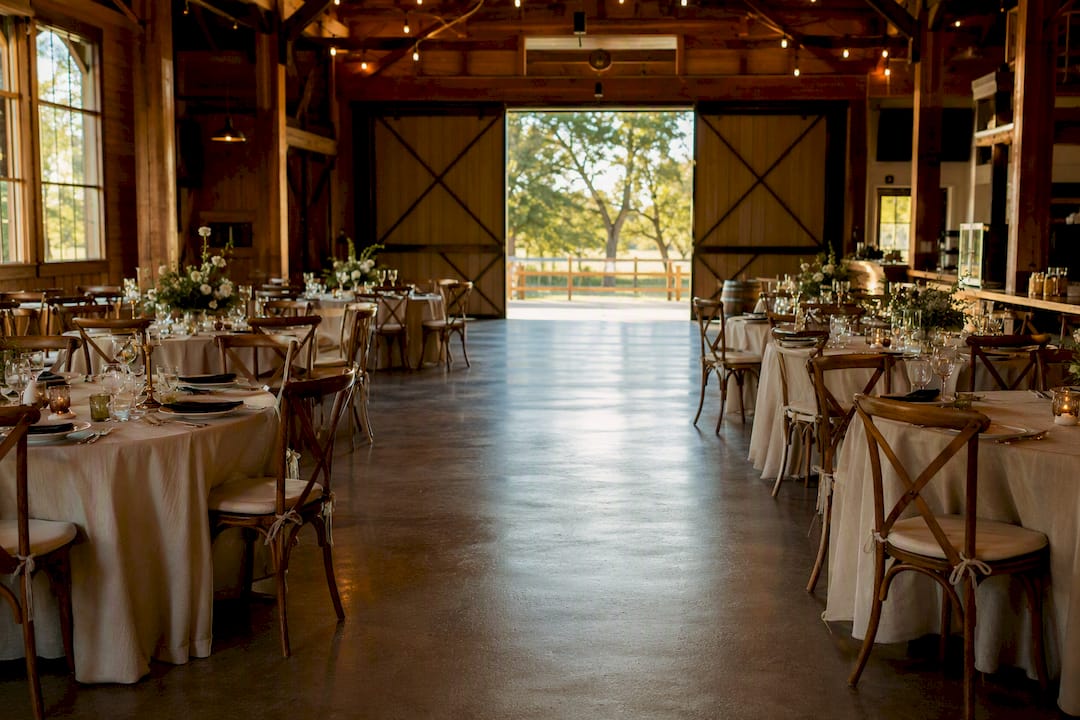
5. Overcrowding tables or mismatching table sizes to guest counts. A 60-inch round comfortably seats eight; cramming ten place settings around it means elbows knocking and chairs backed into the aisle. Match your table inventory to your actual headcount per table, and build in a few inches of breathing room, especially at tables near a buffet line or dance floor where guests will be getting up and down all night.
6. Relying on paper-only charts or juggling disconnected spreadsheets. A chart scrawled on paper the week before the wedding, disconnected from your spreadsheet and your caterer's meal counts, guarantees mismatched numbers somewhere. A hybrid workflow works better: capture guest data in a spreadsheet first, then import it into a seating app for layout and exports, which reduces manual errors and speeds up day-of edits compared to paper-only planning. Keep one master file as the single source of truth, and never let two people edit different versions at once.
7. Not planning for kids and plus-ones. Unaccompanied kids need supervision, which usually means seating them near their parents rather than at a distant "kids table" with no adult oversight. Plus-ones need a clear policy stated on your invitations, not a vague assumption that guests will figure it out, so you're not scrambling to add a chair the week of the wedding.
8. Placing guests too close to the DJ, speakers, bar line, or service paths. Grandma at the table directly in front of a subwoofer, or a table blocking the path servers use to clear plates, creates problems all night long. Check your reception layout against speaker placement and bar traffic before you finalize table numbers, not after.
9. Sorting by first name or using inconsistent naming formats. A chart alphabetized by first name forces guests to scan the entire list for "Smith" under "J" for John. Last-name alphabetical sorting is the standard for a reason: it's how people actually look each other up, and it's the format most alphabetical templates default to for exactly this reason.
Alphabetical or By-Table? Getting Your Display Format Right
Guest count should decide your display format, not personal preference. For weddings under roughly 50 guests, a by-table chart works fine since everyone can scan a short list quickly. Once you cross into the 80-plus guest range, alphabetical A-Z lookup by last name prevents the entrance bottleneck that by-table charts create when dozens of guests are searching row by row for their name.
Board sizing follows guest count too. An 18x24 board handles small guest lists cleanly, while 24x36 is the standard for mid-size weddings, and very large receptions often need multiple boards or a wide-format print near separate entrance points.
Your workflow should run in one direction: intake guest data into a spreadsheet, import it into a seating app for layout, then export a final PDF for printing. On the day itself:
- Designate exactly one live editor, usually your planner or venue coordinator, who owns all changes.
- Apply a minimal-change rule: swap one seat, not a whole table, whenever possible.
- Edit from a phone or tablet connected to the master file, never a second paper copy.
- Notify catering and escort staff of any change within minutes, not after the fact.
A single point of control matters more than the tool itself. Seating apps reduce errors largely because they eliminate the duplicate-edit problem that paper and shared spreadsheets create when two people update different versions at once.
What We've Learned Running Seating Charts at Origins Ranch
Assign one person, whether your coordinator or a trusted family member, to own the seating chart on the wedding day itself. When two or three people start moving name cards independently, you end up with cascading changes that nobody can track, and by the time cocktail hour ends, half the chart no longer matches the printed board.
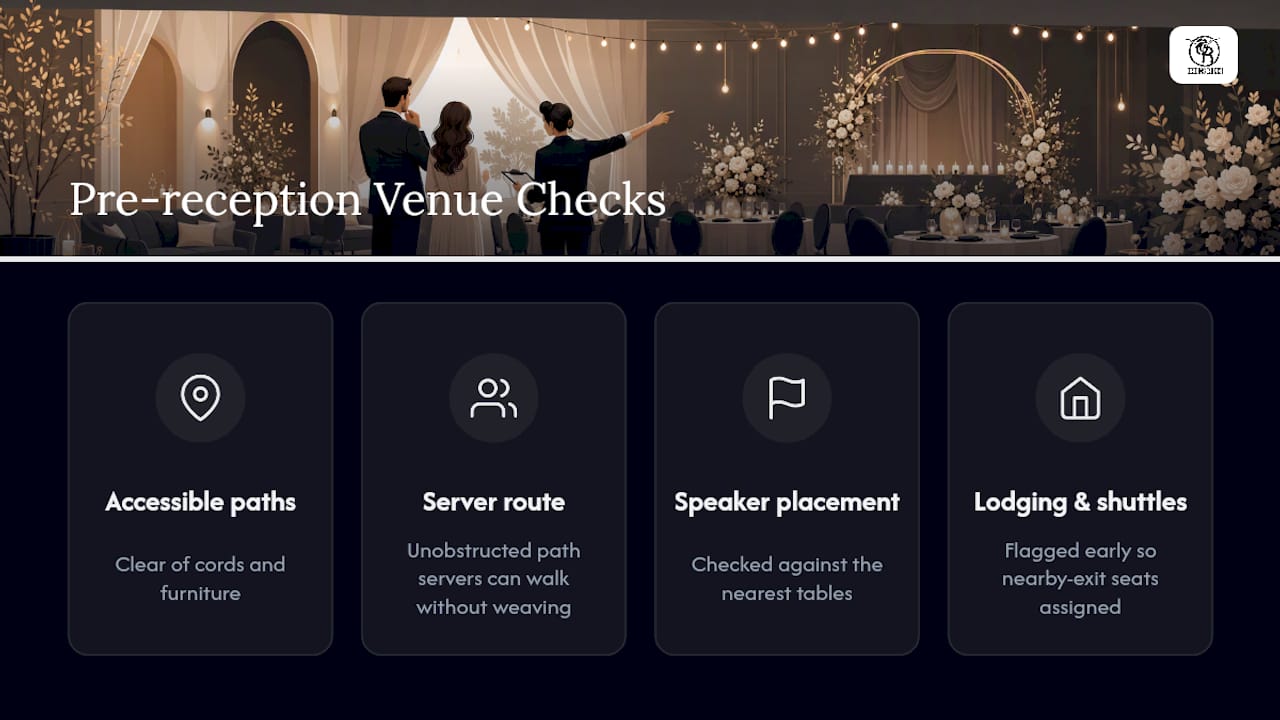
Our venue checklist before any reception starts covers the same ground every time: accessible paths clear of cords and furniture, a service route servers can walk without weaving through guests, and speaker placement checked against the nearest tables. We also flag any lodging or transportation connections early, since guests staying on-site or arriving by shuttle often need seats closer to those exits.
Pro Tip: Give your live editor a single laminated master copy as backup. Battery dies, apps glitch, and a paper fallback with the final locked layout has saved more than one reception from a stalled entrance line.
When something shifts last minute, our staff relays the update directly to catering and escort teams verbally, then confirms it against the master file, rather than waiting for a reprint.
Guests Need to Know Where They're Sitting Before They Arrive
A seating chart that only exists on a board at the entrance leaves guests confused the moment they walk in, especially if that entrance also has a receiving line or a bar backing up behind it. Communicate seating decisions before the wedding whenever it's practical: table assignments printed on escort cards, mentioned in a wedding website FAQ, or included in a day-of text to the wedding party who can help direct confused relatives.
This matters most for guests with dietary restrictions or accessibility needs, since they may need to confirm their table lines up with the accommodations they requested. It also helps to flag major shifts, like combining two smaller tables into one, in advance rather than letting guests discover the change by wandering the room.
For large families or blended wedding parties, a short heads-up to key relatives, particularly parents on both sides, prevents the awkward moment of someone finding out where they're seated at the same time as everyone else. A five-minute phone call two weeks out costs far less than a tense exchange during cocktail hour.
If you're working with a coordinator, ask them to build guest communication into the week-of timeline rather than treating the chart as something that only matters once it's printed and propped on an easel.
Your Seating Chart Only Works If Your Planner and Venue Staff Have It
A seating chart that lives only on your laptop does nothing for the catering team plating meals or the venue staff directing guests to tables. Share your near-final chart with your planner and venue coordinator at least a week before the wedding, not the morning of, so they can flag logistical problems you might miss, like a table blocking a fire exit or sitting directly under a speaker stack.
Venue staff also need meal counts tied to specific seats, not just a total headcount, so servers know which plate goes where without asking guests to repeat their order. If your venue offers in-house table settings and layout support, loop them in early enough that they can flag spacing issues before the floor plan is locked.
Coordination failures usually show up as small gaps: the DJ doesn't know where the head table sits, the bar staff don't know which side guests will approach from, or catering has a different final count than the chart shows. None of these are dramatic on their own, but they compound fast during a live event when nobody has time to problem-solve on the fly. A fifteen-minute walkthrough with your coordinator and venue staff, chart in hand, catches most of these before they happen.
Building a Contingency Plan for No-Shows and Last-Minute Changes
Guests cancel, get sick, or simply don't show up, and a seating chart with no flexibility for that turns one empty chair into a visible gap at an otherwise full table. Build in a small buffer: a few flexible seats you can consolidate or fill without reprinting the entire chart, especially at tables seated by relationship rather than by family unit.
Decide in advance who has authority to make same-day changes. If a table ends up with two empty seats because of last-minute cancellations, your live editor should have a default rule, like pulling one chair and closing the gap rather than leaving a visibly incomplete table for photos.
Keep a short list of "float" guests, distant cousins or plus-ones without a firmly assigned seat, who can be moved without disrupting anyone else's placement. This gives your coordinator room to absorb small surprises, whether that's an unexpected extra guest or a family member who didn't confirm until the morning of the wedding.
The goal isn't to predict every possible change. It's to make sure one no-show doesn't require rebuilding half the chart an hour before dinner service starts.
Cultural and Religious Customs Change How You Seat Guests
Seating customs vary widely across cultures and religious traditions, and assuming a generic Western reception layout fits every family is one of the more overlooked mistakes couples make. Some traditions call for separate seating by gender at certain portions of the event, others prioritize extended family hierarchy over friend groupings, and some place specific relatives, like grandparents or religious officiants, at positions of visible honor near the head table.
If your families come from different backgrounds, have an early conversation with parents or elders about which customs matter most to them. This is far easier to accommodate when you know about it during the planning stage rather than adjusting the floor plan the week of the wedding.
Religious dietary requirements often tie directly into seating too. Guests keeping kosher, halal, or other dietary practices may need to sit together near a designated serving station, particularly if your caterer is preparing separate meals for those requirements. Loop this into the same conversation with your caterer where you discuss meal service logistics, so seating and service line up cleanly rather than becoming two separate plans that don't match on the day.
Isolating Guests Instead of Encouraging Them to Mingle
A seating chart built purely around convenience, seating everyone next to whoever RSVP'd around the same time, tends to isolate quieter guests and strand people who don't know anyone else at their table. Balance matters more than most couples expect: aim for at least one familiar face per guest at every table, even if that means splitting up a large friend group across two tables instead of one.
Mixing guests with shared interests, rather than just shared relationship categories, tends to spark better conversation than grouping strictly by "your side" or "my side." A table of your college roommate, your aunt who loves hiking, and your partner's coworker who's also into hiking works better than three disconnected pairs who have nothing in common beyond knowing the couple.
Watch for guests who don't fit neatly into any group, like a distant relative attending solo or a friend from a different chapter of your life. Rather than isolating them at a leftover table, seat them with the friendliest, most socially easy group you have, even if the connection to the rest of the table is loose.
Why the Seating Chart Deserves More Attention Than It Gets
We've seen a five-minute seat swap, made calmly by one person with the full picture, prevent what could have become a tense scene between two family members who hadn't spoken in years. That's the real value of getting this right early.
Prioritize guest comfort, clear sightlines for your first dance and toasts, and smooth service flow over engineering the perfect social chart. You cannot control every relationship in the room, but you can control whether people can see, hear, and move comfortably. Small decisions made a month out, not a week out, save real stress on the day itself.
— Origins
Templates and Etiquette Guides Worth Bookmarking
For hands-on tools, the alphabetical seating chart maker and the seating app comparison guide cover formatting and workflow decisions in more depth than a single article can.
Sources
- Planning
- Wedding Seating App vs Spreadsheet: The Real Cost of Manual Planning | SeatLogic Blog
- Seating your divorced parents at the wedding: a practical guide | Margo & Bees
FAQ
What Is the 30-5 Rule for Weddings?
The 30-5 rule suggests giving guests downtime significantly longer than formal programming, like toasts or speeches, to keep the reception from feeling rushed or overly scheduled. It's a pacing guideline rather than a strict rule, and it applies more to your reception timeline than your seating chart directly.
What Are Common Mistakes in Seating Arrangements?
The most common mistakes are starting the chart too late, creating a catchall "leftover" table, ignoring family tension between divorced parents or feuding relatives, and forgetting accessibility needs for elderly or mobility-limited guests. Overcrowding tables and relying on paper-only charts without a single master file round out the list of frequent errors.
Who Usually Sits at Table 1 at a Wedding?
Table 1 traditionally seats the newlyweds, often alongside the wedding party or, in some layouts, immediate family, depending on which format the couple chooses. Many modern couples now opt for a sweetheart table for just the two of them, with the wedding party and family seated at adjacent tables instead.
What Are the Traditional Etiquette Rules for a Wedding Seating Chart?
Traditional etiquette calls for seating guests by relationship and shared interests rather than convenience, giving divorced parents equal prominence instead of forcing proximity, and keeping close family near the head table. Modern etiquette adds accessibility, dietary needs, and clear plus-one policies as standard considerations alongside these older customs, per guidance from family seating resources.