
TL;DR:
- Visiting wedding venues in person helps couples assess acoustics, lighting, and vendor access. Multiple tours and a two-stage process ensure informed decisions, negotiations, and smooth logistics. Preparation and detailed checklists maximize in-person inspections, leading to confident wedding day outcomes.
Yes, you should absolutely visit wedding venues in person before signing anything. Photos and virtual tours show you the best version of a space on its best day. An in-person visit shows you the truth: how the light actually falls at 5 PM, whether the parking lot can handle your expected guest count, and whether the team you'd be trusting with your wedding day is genuinely responsive or just polished in sales mode.
Several reasons matter most:
- Atmosphere and flow. A room that photographs beautifully can feel cramped or acoustically dead when you're standing in it. You need to feel the space, not just see it.
- Logistics and infrastructure. Load-in access, power capacity, restroom count, and vendor pathways are invisible in a brochure and non-negotiable on your wedding day.
- Contract and service clarity. Questions about hidden fees, overtime rules, and vendor restrictions are far easier to resolve before you sign than after.
Your immediate next step: schedule a pre-contract tour, bring a printed checklist, and treat the visit as a working session, not a social call.
Table of Contents
- Why touring venues matters for your wedding
- How many venues should you tour?
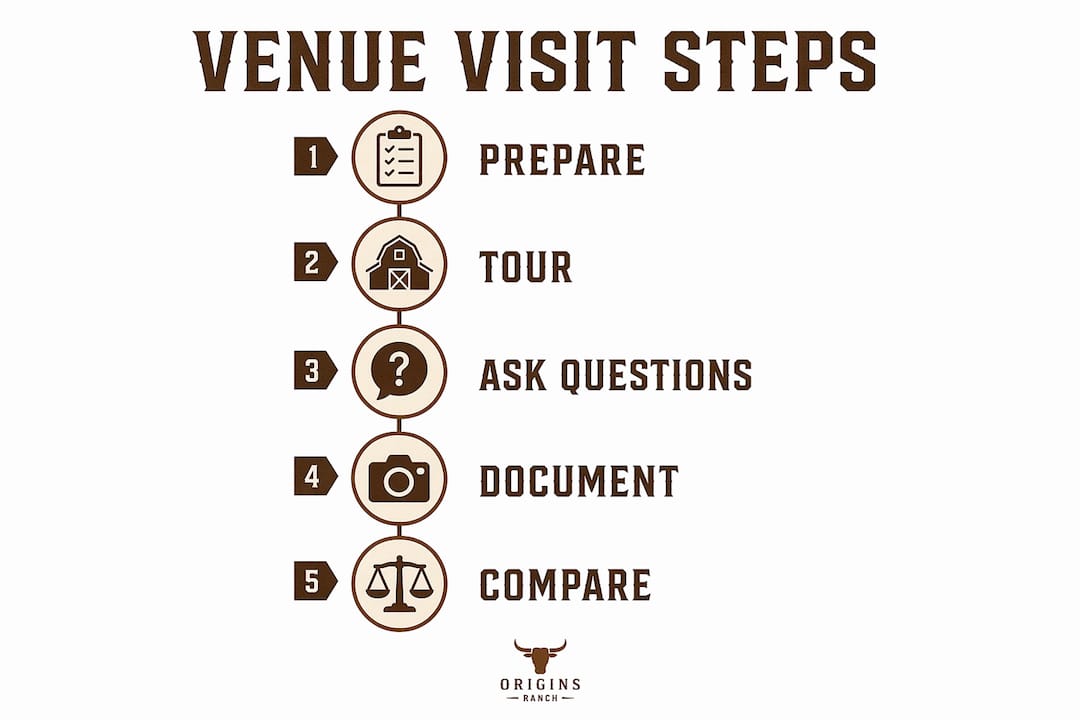
- Prepare before the visit so your time counts
- What to look for during a venue tour
- Essential questions to ask on a venue tour
- How to document and compare venue visits
- Signs you've found the right venue and red flags to watch for
- The two-stage site-visit process planners recommend
- Key Takeaways
- What a venue visit is really about
- See the magic of Originsranch in person
- Useful sources and further reading
- FAQ
Why touring venues matters for your wedding
A floor plan is a diagram. A site visit is an intelligence-gathering mission that converts assumptions into operational facts. That distinction is the whole case for going in person.
What photos and brochures can't tell you
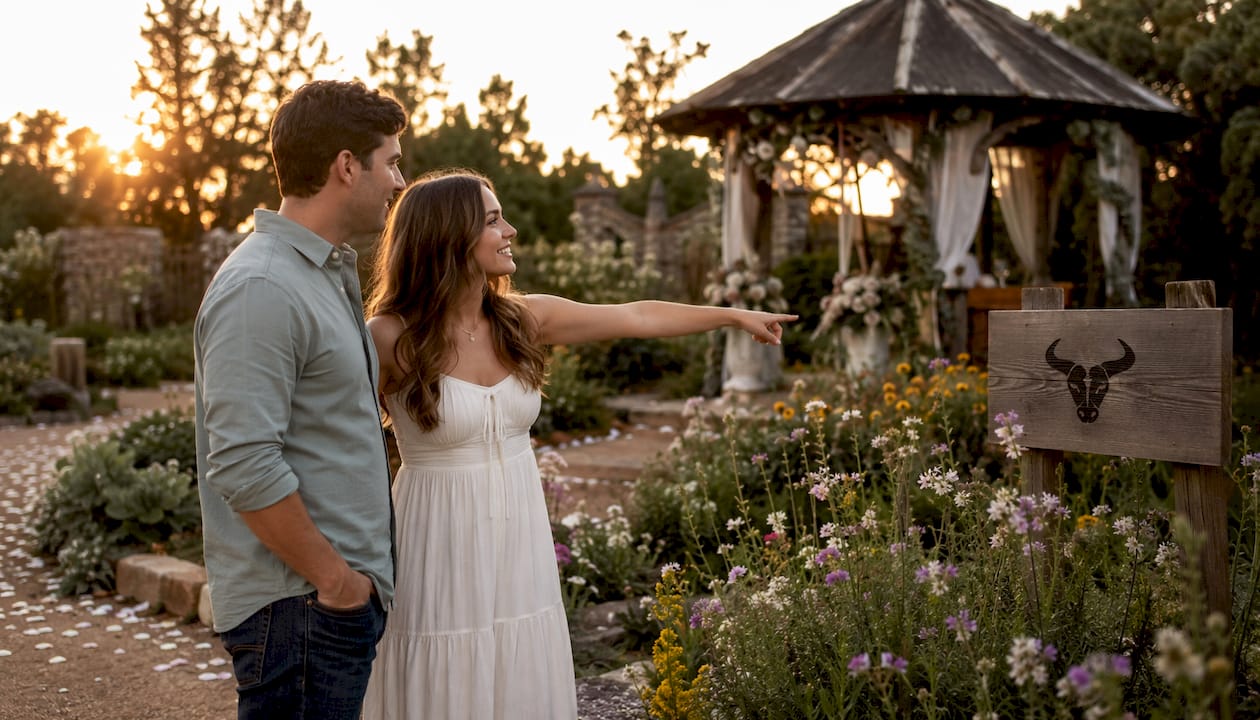
Lighting is the most common surprise. A venue that looks warm and golden in professional photos may rely on equipment the rental fee doesn't include, or the windows face west and flood the ceremony space with harsh afternoon glare. Standing in the room at the time of day your ceremony is planned tells you immediately what you're working with.
Acoustics are the second. A high-ceilinged barn or a converted warehouse can sound stunning or echo-heavy depending on wall treatments, flooring, and ceiling height. Your DJ or band will thank you for checking this before the contract is signed.
Logistics that only show up in person
Vendor access is a detail that can quietly blow your budget. If the catering team has to carry equipment up two flights of stairs because there's no freight elevator, expect a surcharge. If the florist's delivery window conflicts with a venue-mandated setup schedule, you're paying for extra labor. These realities are invisible on a floor plan and entirely visible the moment you walk the property.
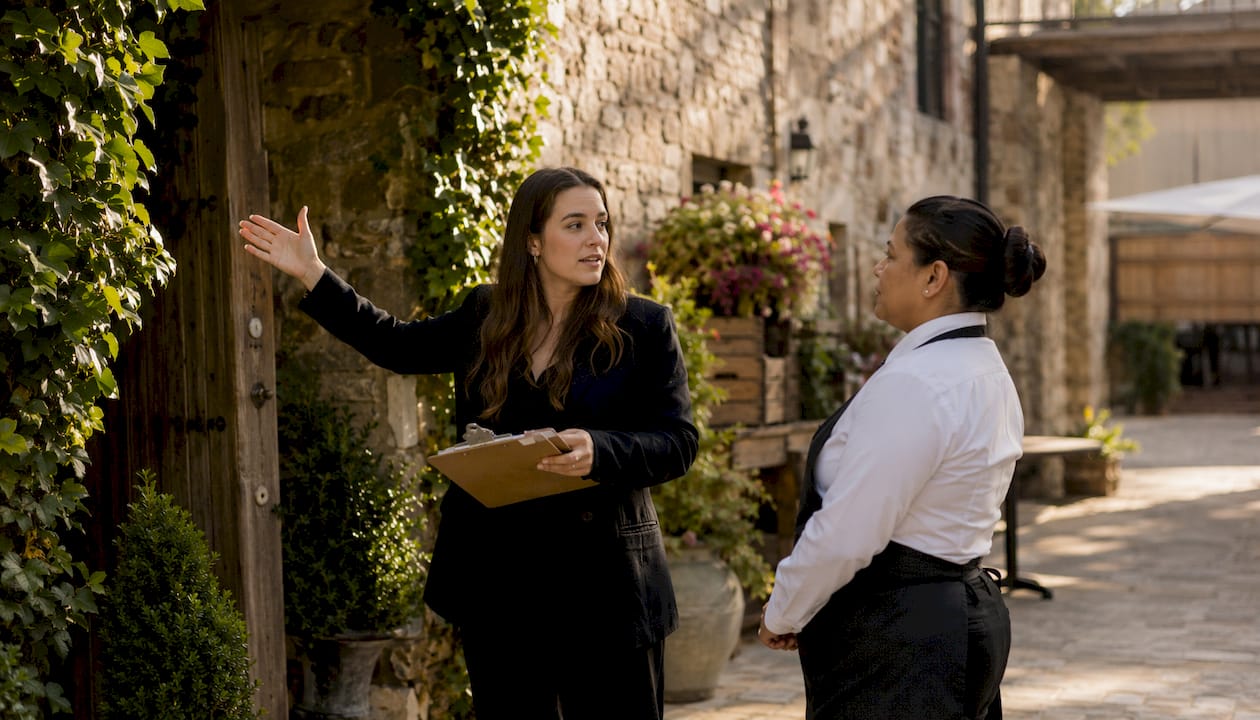
Restroom count matters more than couples expect. A single-stall restroom serving 150 guests creates a line that disrupts your reception timeline. Parking capacity and proximity to the entrance affect whether elderly guests or guests with mobility needs can actually get inside comfortably.
Reading the venue team
Long-serving, engaged staff signal a stable, well-managed venue. When the coordinator who greets you has been there for years and can answer operational questions without checking with someone else, that's a meaningful sign. When the sales rep can't tell you who handles day-of logistics, that's worth noting.
How many venues should you tour?
Several is the practical range for most couples. Fewer than three and you risk anchoring too hard on the first space you loved. More than five and decision fatigue sets in, details blur together, and the visits stop producing new information.
Narrow your list before you book any tours:
- Set your guest count first. A venue that maxes out at 80 guests is off the list if you're inviting 150. Define your headcount and budget before you open a single venue website.
- Filter by budget bracket. Rental fees vary widely. Know your ceiling and ask for an all-in estimate (rental, service charges, required minimums) before scheduling a tour.
- Check date availability. There's no point touring a venue that's already booked on your preferred date. Confirm availability by phone or email first.
- Match must-have features. Outdoor ceremony space, air conditioning, on-site catering, barn aesthetic, or specific capacity thresholds: list your non-negotiables and filter against them.
- Consider geographic convenience. A venue that's 45 minutes from where most of your guests live will pull lower attendance than a comparable one 15 minutes away. Location affects who actually shows up.
On virtual tours: a live video walkthrough with recent photos and reviews is a reasonable fallback when an in-person visit isn't possible, but virtual tours don't fully replace in-person inspection for wedding-specific details like acoustics, lighting quality, and vendor access. Use them to screen out clear mismatches, not to make a final decision.
Prepare before the visit so your time counts
Arriving prepared signals seriousness to the venue team and tends to produce clearer, more useful answers. Venues that see a couple walk in with a checklist and specific questions shift into a more collaborative mode almost immediately.
Pre-visit checklist
Before each tour, confirm you have:
- Guest count target (firm number, not a range)
- Budget cap including all fees, not just the base rental
- Preferred ceremony and reception layout
- Vendor must-haves (outside caterer, specific DJ, preferred florist)
- Non-negotiables (air conditioning, outdoor space, bridal suite, etc.)
- Your preferred wedding date plus two backup dates
What to send the venue before you arrive
Email the coordinator a day or two before and request a current floor plan, recent event photos (not just professional shoots), and a basic pricing sheet. Ask whether you can see the space set up for an event similar in size to yours. This saves time on the tour and gives you something concrete to compare against what you see in person.
Timing matters. Visit at the same time of day your wedding will actually run. A noon tour of an evening venue tells you almost nothing about how the space feels when it matters.
Pro Tip: Bring a printed checklist and score each venue on the same criteria during the visit. Venue staff notice the preparation, and couples who arrive organized consistently report getting more direct, detailed answers from coordinators.
What to look for during a venue tour
Walk every space your guests will use, not just the ceremony room and reception hall. The full picture includes the paths between them.
Room-by-room checks
- Ceremony site: sightlines from every guest seat, sun angle at your ceremony time, microphone placement options, and whether the backdrop photographs well from the back row
- Reception and dance floor: square footage relative to your guest count, floor surface (hardwood vs. concrete affects dancing and acoustics), and proximity to the bar and catering pass-through
- Cocktail hour space: flow from ceremony to cocktail area, shade or shelter if outdoors, and whether it feels connected or isolated from the main event
- Bridal and groom suites: size, natural light, mirror placement, and whether there's a private entrance so the couple doesn't cross paths before the ceremony
- Restrooms: count the stalls relative to your guest count, check cleanliness and condition, and note distance from the reception floor
- Guest flow paths: walk the route from parking to entrance to ceremony to reception. If it's confusing or physically demanding, your guests will feel it
Systems checklist
- Power access: number of circuits and amperage available for catering equipment, DJ or band, and lighting rigs
- Wi-Fi reliability and whether bandwidth is shared or dedicated
- AV rigging points and what's included versus rented separately
- Lighting control: dimmers, color options, and whether the venue has a house system or expects vendors to bring everything
- HVAC: temperature control by zone, and whether the system can handle a full room of dancing guests in July
Vendor logistics
Ask specifically about load-in access: Is there a dedicated entrance? What are the setup and cleanup windows? Is there on-site storage for vendor equipment overnight? These details directly affect vendor quotes and your day-of timeline.
Pro Tip: Visit during an active event or at the time of day that matches your planned timeline. Daytime visits often mask noise bleed, lighting gaps, and flow bottlenecks that only appear when the space is in full use.
Essential questions to ask on a venue tour
Ask these directly and write down the answers. Vague responses are themselves useful data.
On inclusions and fees:
- What's included in the rental fee? Tables, chairs, linens, AV, lighting?
- Are there mandatory service charges or gratuity percentages on top of the rental?
- What triggers overtime fees, and what's the per-hour rate?
- What's the payment schedule and deposit amount?
On vendors:
- Can we bring outside vendors, or are we required to use your preferred list?
- Is there a fee to use an outside caterer or bartender?
- Do vendors need to be licensed and insured, and does the venue verify that?
On technology and infrastructure:
- What AV equipment is included, and what do vendors need to bring?
- Is Wi-Fi available for guests, and is there a dedicated line for production?
- Is there an on-site technician available during the event?
On contingency and operations:
- What's the backup plan if the weather turns for an outdoor ceremony?
- What's the staff-to-guest ratio on the wedding day?
- What's the cancellation and rescheduling policy, and what are the financial terms?
Contract items to flag in your notes: deposit amount and refund conditions, payment deadlines, insurance requirements (many venues require event liability insurance), and who controls the final room layout and assignment.
Understanding venue terminology before you walk in makes these conversations much more productive. Terms like "exclusive use," "minimum spend," and "preferred vendor list" carry specific financial implications that aren't always spelled out in the initial pitch.
How to document and compare venue visits
Memory is unreliable after three tours. A lightweight system of photos, notes, and a scored comparison keeps your decision grounded in facts rather than whichever venue you happened to visit last.
What to photograph
- Entrance and arrival experience from the parking area
- Ceremony sightlines from the back row of guest seating
- Dance floor and reception layout at full capacity
- Kitchen pass-through and catering staging area
- Restroom condition and stall count
- Parking lot size and surface condition
- Any infrastructure detail that surprised you (a low ceiling, a narrow doorway, a beautiful lighting fixture)
Sample venue comparison scorecard
Use this framework to score each venue on a 1–5 scale, then weight the categories by what matters most to you:
| Category | What to evaluate | Weight (your priority) |
|---|---|---|
| Price and inclusions | All-in cost vs. what's included | High / Medium / Low |
| Usable capacity and layout | Does the space fit your guest count comfortably? | High / Medium / Low |
| Date flexibility | Is your preferred date available? Any backup options? | High / Medium / Low |
| Vendor policy | Outside vendors allowed? Any fees or restrictions? | High / Medium / Low |
| Backup plan | Weather contingency for outdoor spaces? | High / Medium / Low |
| Parking and accessibility | Adequate parking, accessible entrance, restroom count? | High / Medium / Low |
| Setup and cleanup windows | How much time do vendors have before and after? | High / Medium / Low |
A structured checklist lets you compare venues on the same dimensions rather than relying on gut feeling alone. It also surfaces dealbreakers while you still have leverage to negotiate or walk away.
Ask the coordinator for a marked-up floor plan during the tour, or sketch approximate vendor positions yourself. Knowing where the DJ booth, bar, and photo booth will land relative to the dance floor changes how the whole layout reads.
How venue choice shapes photo opportunities is worth evaluating on the scorecard too. Natural light sources, architectural backdrops, and outdoor spaces all affect what your photographer can do.
Signs you've found the right venue and red flags to watch for
The right venue feels like a match on paper and in person. The coordinator answers questions directly, the documentation is clear, and the logistics make sense for your vendors and guests.
Positive signals:
- Transparent, specific answers to fee and policy questions
- Venue staff who've been there long enough to know the space's quirks and solutions
- A layout that naturally supports your guest experience goals without requiring expensive workarounds
- Clear, written documentation of everything discussed
- Reasonable load-in windows that work for your vendor team
Red flags that should give you pause:
- Different answers from the sales coordinator and the operations team about the same policy
- Fees that only appear when you ask specifically, not in the initial pricing sheet
- Poor vendor access (narrow doorways, no freight path, short setup windows)
- Noticeable noise bleed from adjacent spaces or street traffic
- Deferred maintenance: stained carpet, broken fixtures, or restrooms that haven't been updated in years
A single red flag isn't always a dealbreaker. Checking the role of customer service in hospitality helps you assess whether a venue team will be genuinely responsive or just polished in sales mode. A narrow load-in door might be manageable with the right vendor team. But a pattern of evasive answers or hidden fees is a signal about how the relationship will go once you've signed. Venue staff responsiveness during the tour is one of the most reliable previews of what your wedding day support will actually look like.
The two-stage site-visit process planners recommend
Professional planners consistently use a two-stage approach, and for good reason. Each visit has a different purpose, and conflating them means missing something important at both stages.
Stage 1: Pre-contract verification tour
- Schedule this visit before you sign anything or put down a deposit.
- Walk every space with your checklist and ask all the fee, vendor, and contingency questions.
- Request a floor plan and confirm capacity numbers in writing.
- Use this visit to negotiate: hidden costs and infrastructure limitations are far easier to resolve before signing than after.
- Score the venue on your comparison spreadsheet the same day, while details are fresh.
Stage 2: Pre-event logistics walkthrough
- Schedule this visit a few weeks before the wedding, after contracts are signed and vendors are confirmed.
- Walk the space with your venue coordinator and key vendors (caterer, DJ, florist if possible).
- Confirm load-in timing, final floor plan, staffing assignments, and technical placements (speaker positions, lighting rigs, catering staging).
- For destination or remote bookings, involving a local coordinator at this stage helps verify logistics and vendor fit before the wedding day.
- Walk the guest arrival path one more time and flag any signage or accessibility gaps.
Recommended timeline:
- 12–18 months out: complete pre-contract tours and sign your venue contract
- 4–6 weeks before the wedding: schedule the pre-event walkthrough
- 1–2 weeks before: confirm any final changes in writing with the coordinator
The two-stage walkthrough preserves your negotiation leverage at the selection stage and eliminates day-of surprises at the confirmation stage.
Key Takeaways
Visiting venues in person before booking is the single most effective way to verify fit, protect your budget, and build the working relationship that makes your wedding day run smoothly.
| Point | Details |
|---|---|
| Visit in person before signing | Photos and virtual tours miss acoustics, lighting, vendor access, and staff quality. |
| Tour three to five venues | Fewer risks anchoring on one option; more than five creates decision fatigue. |
| Use a two-stage process | Pre-contract tour preserves negotiation leverage; pre-event walkthrough confirms logistics. |
| Score venues on the same criteria | A comparison scorecard keeps decisions grounded in facts, not whichever venue you visited last. |
| Originsranch offers guided tours | Originsranch walks couples through floor plans, vendor logistics, and staging during every visit. |
What a venue visit is really about
Most couples approach a venue tour like a shopping trip: they're evaluating a product. The venues that produce the best wedding days are the ones where the couple and the venue team approached the first visit as the beginning of a working relationship.
Preparedness changes the dynamic immediately. When you arrive with a checklist, specific questions, and a clear sense of your priorities, the conversation shifts. You're no longer a prospect being pitched; you're a collaborator working through a shared problem. Venue coordinators respond to that differently. The answers get more specific, the flexibility increases, and the small accommodations that make a wedding feel personal become easier to ask for.
What most guides underestimate is how much the visit reveals about the venue's culture, not just its infrastructure. A coordinator who can walk you through three contingency scenarios for a rainy outdoor ceremony without hesitating is telling you something important about how that team operates under pressure. A coordinator who deflects the same question is telling you something equally important.
The checklist, the scorecard, the two-stage process: all of it is in service of one goal. You want to walk into your wedding day knowing exactly what to expect from the space and the people running it. That confidence doesn't come from a brochure. It comes from doing the work in person, early, and with the right questions.
See the magic of Originsranch in person
If you're ready to put this process into practice, we'd love to show you what Origins Ranch looks like in real life. Our guided venue tours cover everything this guide recommends: a full floor-plan walkthrough, a conversation about vendor logistics and setup windows, and honest answers to every question on your checklist.
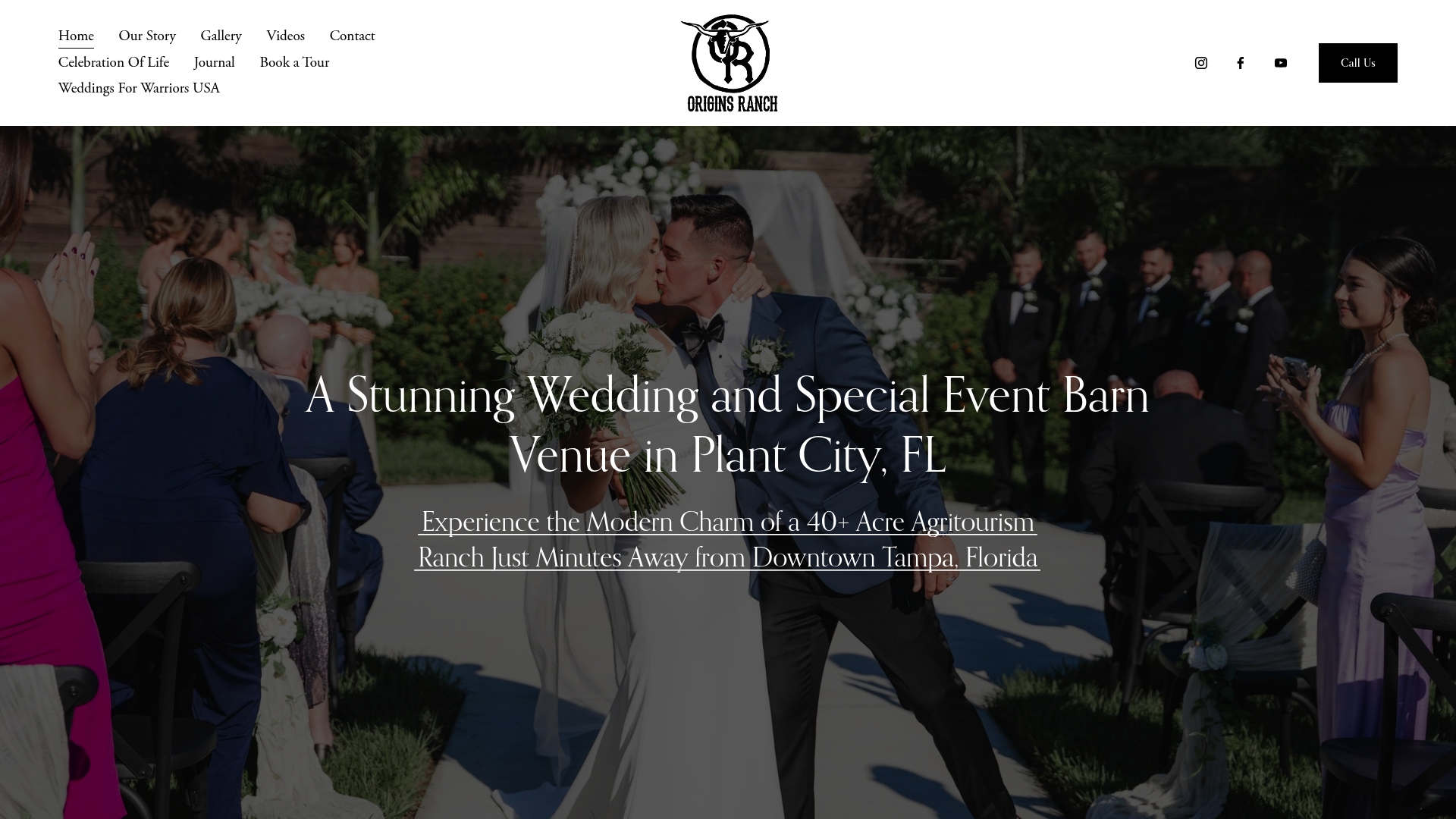
Originsranch is a barn wedding venue in Plant City, FL, built from a World Champion Horse Ranch into a modern, air-conditioned event space that keeps its original character. Our founder Barry brings over 20 years in the event service industry to every tour, which means you get operational answers, not just a sales pitch. We also proudly support veterans and active duty service members through our Weddings For Warriors program, helping military couples have the wedding day they deserve.
Schedule your guided tour and see why couples who visit Origins Ranch in person leave with a clear picture of exactly what their day will look like.
Useful sources and further reading
These resources informed the guidance in this article and are worth bookmarking for deeper reading:
- The Complete Venue Walkthrough Checklist (Expo Pass): A detailed pre-contract and pre-event checklist covering infrastructure, logistics, and negotiation leverage. Practical and printable.
- Making Site Visits More Meaningful (The Meeting Magazines): Planner interviews on relationship-building during site visits and how staff tenure signals venue quality.
- The Art of the Site Visit (Conference Innovations): Event-planner perspective on why floor plans are abstract and what in-person visits actually reveal.
- Best Corporate Event Site Selection Checklist (GoGather): A structured framework for defining guest count, budget, and core requirements before touring.
- How to Find the Perfect Venue (Tagvenue): Covers when virtual tours are acceptable and when in-person verification is necessary.
FAQ
Why is a site visit to a venue important?
A site visit reveals what photos and floor plans can't: acoustics, lighting quality, vendor access, staff responsiveness, and the real flow of the space. On-site inspection converts assumptions into facts before you commit financially.
Should you visit a venue before or after getting engaged?
Most couples begin touring venues after getting engaged, but there's no rule against exploring options earlier. What matters is having a firm guest count and budget before you tour, so you're evaluating venues against real requirements rather than a vague wish list.
Should you decide on the venue or guest list first?
Guest list first. Your guest count determines which venues can physically accommodate your wedding, so narrowing the list before you tour saves time and prevents falling in love with a space that simply can't fit your crowd.
Is it normal to book a venue before finalizing other wedding details?
Yes, and it's often necessary. Popular venues in most U.S. markets book 12–18 months in advance, so securing your date early is standard practice. Just confirm the venue fits your guest count and budget before signing, and use the pre-contract tour to resolve any open questions.
What is the 50/20/30 rule for weddings?
The 50/20/30 rule is a general budget guideline some planners reference: roughly half of the wedding budget on the venue and catering, around one-fifth on photography and video, and the remainder on everything else. It's a starting framework, not a universal standard, and your priorities may shift those allocations significantly.