
A wedding grazing table is a big, abundant spread of cheeses, cured meats, fruit, breads, dips and sweets laid across a table so guests can help themselves, mingle and snack for hours. Done well, it becomes the centerpiece of your cocktail hour or a relaxed reception. Done carelessly, it runs out early or sits too long in the Florida heat. This guide covers how to plan the food, how much to order, how to style it, and how to keep it safe.
TL;DR
- A grazing table is a full-table spread for 20 to 200 guests. A charcuterie board is a single platter for roughly 4 to 12 people.
- Plan about 2 to 3 ounces each of meat and cheese per guest, plus bread, vegetables and dip.
- Perishable food should not sit out more than two hours, or one hour above 90°F. Outdoor and barn settings need ice and a timer.
- A grazing table suits casual, mingling receptions. A seated dinner suits a more formal, structured evening.
- Label allergens and set aside vegan and gluten-free choices so every guest can eat.
Table of Contents
- What a wedding grazing table really is
- Grazing table or buffet: which fits your day
- How much food to plan
- Food safety: the part nobody photographs
- Styling ideas that suit a barn or farm wedding
- Dietary needs and allergens
- Budget: what drives the cost
- Bringing a grazing table to your Origins Ranch wedding
- A simple planning checklist
- FAQ
- Sources
What a wedding grazing table really is
Think of it as a charcuterie board that grew up and took over the whole table. Fork and Flare describes the difference mainly as scale: a board is one platter for about 4 to 12 people, while a table covers a full table or counter and serves 20 to 200.
Brides describes wedding grazing tables as abundant, self-serve arrangements where guests choose the items and amounts they like, and where conversation happens naturally around the food.
A few other differences matter when you are booking:
- Setup. Grazing tables are usually built and styled on site to keep food fresh, while charcuterie boards are often delivered pre-assembled.
- Range of food. A table can include charcuterie plus salads, breads, desserts and other dishes. Boards are more limited in quantity and variety.
- Timing. Setup commonly takes one to two hours depending on how elaborate the design is, so your venue access time matters.
If you searched "charcuterie table wedding" or "grazing board," you are in the right place. The terms overlap, but for a crowd, you want the table.
Grazing table or buffet: which fits your day
A buffet is structured: guests line up, fill a plate and sit down to eat. A grazing table is built for flow. It favors conversation and informal eating rather than structured courses.
Brides notes that cocktail-style receptions can use a grazing table so guests can mix and snack, but that this style involves more standing and needs some planning so guests understand how the service works. Couples should also provide vegan, vegetarian, dairy-free and gluten-free choices.
| Question | Grazing table | Buffet |
|---|---|---|
| Feel | Casual, social, mingling | Organized, sit-down |
| Guest movement | Guests drift and return | Guests queue once or twice |
| Best for | Cocktail hour, cocktail-style receptions | Full dinner with assigned seats |
| Food range | Cold and room-temperature items mostly | Hot entrees, sides, carved items |
| Planning need | Seating for some, a clear sign for service style | Table flow, line management |
Savery Grazing suggests grazing tables work best at casual, flow-heavy events rather than formal seated occasions. Many couples split the difference: a grazing table for cocktail hour, then a plated or buffet dinner. If you are weighing options, our guide to venue catering options walks through how each style works in practice.
How much food to plan
Running short is the most common grazing table mistake. A useful starting point comes from Kansas State University: 2 to 3 ounces of meat and 2 to 3 ounces of cheese per person. The same guidance recommends, per person:
- 4 to 6 ounces of bread or crackers
- 4 to 8 ounces of vegetables
- About 1/2 cup of dip
Tasting Table's wedding guidance adds a balance to aim for: meat and cheese, something acidic like pickles or olives, and something crunchy like crackers, sourdough, vegetables or grapes.
A worked example for 100 guests
Using the 2 to 3 ounce range for a table that serves as the main food, 100 guests means roughly 200 to 300 ounces of meat (12.5 to 18.75 pounds) and the same of cheese. Bread and crackers at 4 to 6 ounces each come to 25 to 37.5 pounds. Those are the numbers when the table is the meal.

If the table is only a cocktail-hour appetizer before a seated dinner, your caterer can scale down. Ask them how they size it and what they assume about the rest of your menu.
Table space
Plan for the spread, plus room for guests to reach it from both sides if possible. Crowding a single side creates a line, which defeats the purpose. For larger guest counts, consider two smaller stations rather than one long table. Our reception layout guide can help you place it where traffic flows.
Food safety: the part nobody photographs
Grazing tables sit out for hours, and a ranch in Florida is not a cool conference room. Follow the federal rules.
- The two-hour rule. FoodSafety.gov says perishable foods should not sit at room temperature more than two hours, or one hour if the temperature is above 90°F.
- Cold foods. The FDA says to keep cold foods at 40°F or colder, and to put cold foods on ice if they will be out longer than two hours.
- Hot foods. Keep them above 140°F in chafing dishes, slow cookers or warming trays, per FoodSafety.gov. Cold items can be nestled in bowls of ice or set out on small trays that are replaced often.
- Meat, cheese and cut fruit. K-State says these should not stay at room temperature for more than two hours.
A practical tip: start the clock when the food leaves refrigeration, not when the event begins. Ask your caterer who tracks the time and when they will refresh or remove the table. Cured meats and cheeses count as ready-to-eat foods under the FDA Food Code, so no cooking step will make up for a table that has been out too long. The USDA also recommends planning for safe preparation, transport and holding temperatures from the menu stage.
This is where an air-conditioned space helps. At Origins Ranch, our large barn is fully air-conditioned, so your table is not baking in afternoon sun while guests mingle. Even so, the two-hour clock applies indoors, and your caterer should still replenish in small batches.
Styling ideas that suit a barn or farm wedding
Good styling is about height, color and abundance.
- Build height. Use risers, cake stands or crates so the spread is not a flat sheet of food. Wooden crates and barrels feel natural in a rustic space.
- Fill the gaps. Small items such as nuts, berries and herbs make the table look abundant.
- Use greenery and seasonal produce. Brides ideas include greenery, wooden barrels or coordinated serving dishes, and multiple trays for a cleaner layout.
- Alternate colors and textures. Place deep reds, bright citrus and pale cheeses next to each other so the eye keeps moving.
- Match your decor. Pull linen, florals and signs from the rest of the room. Our barn wedding decor guide and rustic styling steps show how to keep everything cohesive.
Menu ideas that feel country
A balanced table includes cheeses, charcuterie, fruits and vegetables, breads and crackers, and accompaniments, according to CaterCamp. For a farm feel, think seasonal fruit, honey with comb, local jams, pickled vegetables, cornbread bites, and a few savory dips. For more menu inspiration, see our rustic wedding menu ideas.

Dietary needs and allergens
A grazing table is easy to make inclusive, but only if you plan for it.
- Ask about dietary restrictions on your RSVPs. Tasting Table recommends offering separate plant-based, gluten-free or nut-free options when needed, keeping them apart from the main spread and labeling them.
- Use separate tongs, spoons and serving boards for each dish to avoid cross-contact.
- For guests with severe allergies, consider packaging items separately and have the caterer use separate utensils.
- Offer a vegetable-focused section with dips for vegan and vegetarian guests, an idea Brides also suggests. If you serve seafood, keep it on ice.
If a guest has a serious allergy, talk to your caterer directly before the wedding and ask how they handle cross-contact. Guests with medical allergy concerns should also check with their own doctor.
Budget: what drives the cost
Grazing tables are priced by guest count, by how elaborate the design is, and by what goes into it. Imported cheeses, premium cured meats and seafood raise cost. Fresh fruit, breads and seasonal vegetables can stretch the table without losing the look.
Two habits keep costs honest. First, ask each caterer exactly what a per-person figure includes: food only, or also boards, risers, signage, setup and teardown. Second, check minimums before you fall in love with a menu. Our piece on catering minimums explains how a $10,000 plan can turn into $15,000.
Food is rarely your only beverage-and-bites decision. If you are balancing the food table against drinks, this look at open vs cash bar costs is worth reading before you set your reception budget.
Our perspective: why a grazing table belongs on a ranch
We have spent years watching how guests behave at a barn wedding. They drift outside to see the animals, wander back in to hug a cousin, and gather around wherever the food is. A grazing table fits that rhythm. Nobody is stuck in a line, and nobody is waiting on a plated course while the music plays.
That is why we pair it with our space. The barn is fully air-conditioned, which gives your table a comfortable home, and it has both indoor and outdoor areas so guests can graze, mingle and step out for fresh air. Our founder, Barry, is a veteran and a DJ with more than 20 years in the event industry, so he knows how food, music and timing work together on the day.
Our advice: choose the table when you want a warm, social reception, and plan it like a main feature, with clear labels, real portions and a caterer who watches the clock. We offer personalized attention for every event, and that includes helping you think through how your food fits the room.
Origins
Bringing a grazing table to your Origins Ranch wedding
If you are picturing a country celebration with a generous food spread, we would love to show you the barn. We offer venue-only and all-inclusive options, onsite catering options, indoor and outdoor ceremony spaces and on-site lodging. Pricing is not published, so contact us for details on what fits your guest count and style.
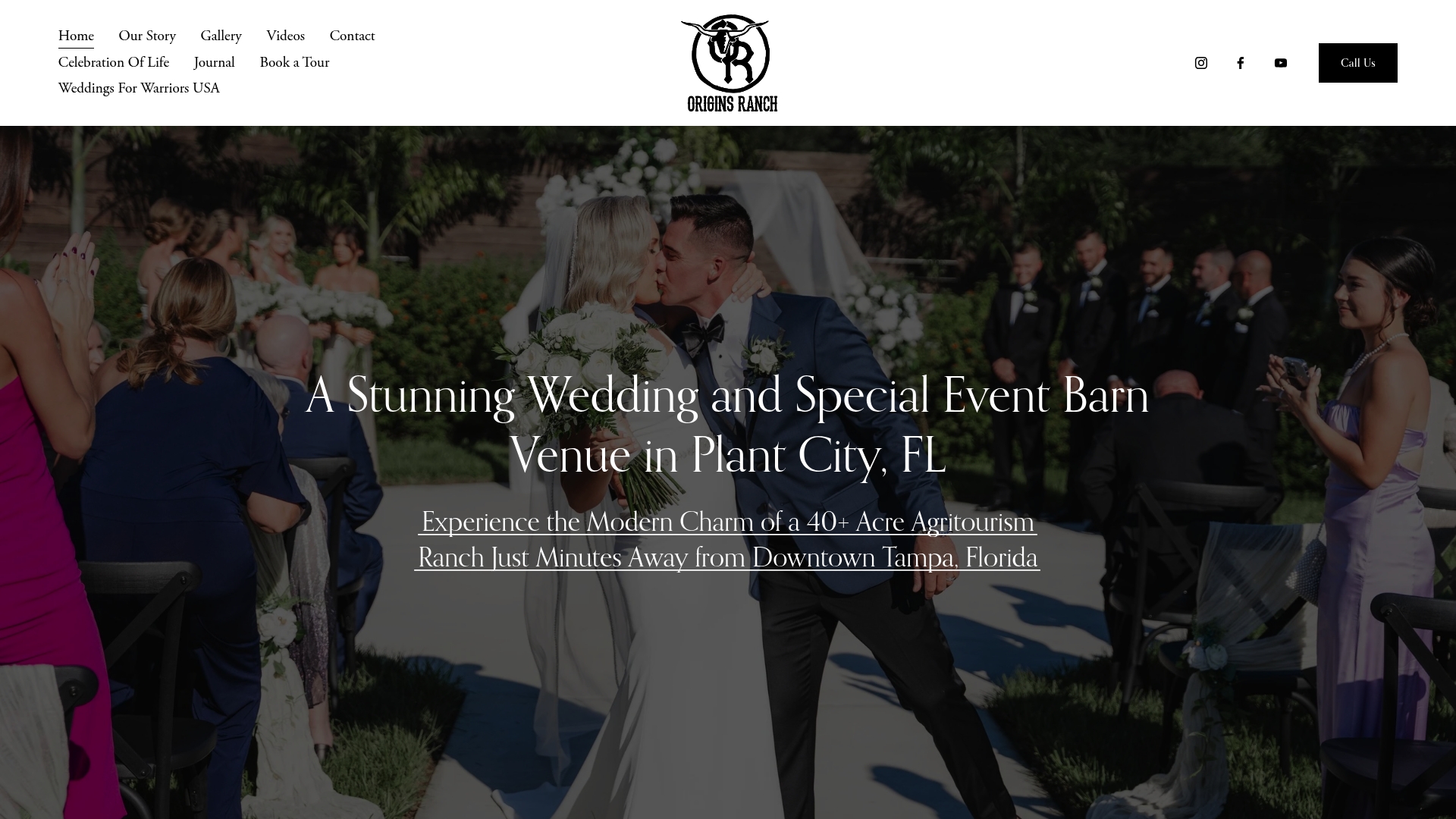
See the barn wedding venue and packages or browse our ceremony gallery to picture your day. Planning a reception timeline? Our tips for memorable wedding receptions and sweetheart table ideas are good next reads.
A simple planning checklist
- Decide whether the table is an appetizer, or the main meal.
- Confirm your guest count and add vegan, gluten-free and nut-free needs from RSVPs.
- Ask your caterer about portions per guest, setup time and who handles replenishing.
- Confirm ice, warming equipment, and how the two-hour clock is tracked.
- Plan seating nearby, because a standing-style reception still needs places to rest.
- Coordinate decor, signs and allergen labels with your venue.
FAQ
What is the difference between a grazing table and a charcuterie table at a wedding?
The difference is mostly scale and setup. A charcuterie board is a single platter, often delivered pre-assembled, while a grazing table is styled on site across a full table and can include breads, salads and desserts as well as meat and cheese.
How much food do I need for a wedding grazing table?
A common guideline is 2 to 3 ounces each of meat and cheese per person, plus 4 to 6 ounces of bread or crackers, 4 to 8 ounces of vegetables and about 1/2 cup of dip. Ask your caterer to adjust based on whether the table is the main meal or an appetizer.
How long can a grazing table sit out?
Perishable foods should not stay at room temperature longer than two hours, or one hour when it is above 90°F. Use ice for cold items, and ask your caterer to replace trays in small batches.
Is a grazing table cheaper than a buffet?
It depends on the menu, guest count and what is included, so compare written quotes. Ask what each per-person price covers, and check for minimums before you commit.
Sources
- Fork and Flare FAQ
- Brides: 20 Grazing Table Ideas for Your Wedding
- Evolved Catering: Grazing Table vs. Charcuterie Board
- The Grazing Company FAQ
- Amayesing Graze: Boards vs. Grazing Tables
- Forget Me Not Journals: Grazing Tables Guide
- Brides: Wedding Food Styles
- Savery Grazing: Grazing Tables
- K-State: Tips for a Festive Charcuterie Board
- Tasting Table: Wedding Charcuterie Board Tips
- FoodSafety.gov: Catered and DIY Wedding Food
- FDA: Serving Up Safe Buffets
- FDA Food Code 2022
- USDA FSIS: Catered and DIY Wedding Food
- CaterCamp: Grazing Table Catering
- PassMyKitchen: Catering Food Safety Checklist
- Sortra: Planning a Charcuterie Table